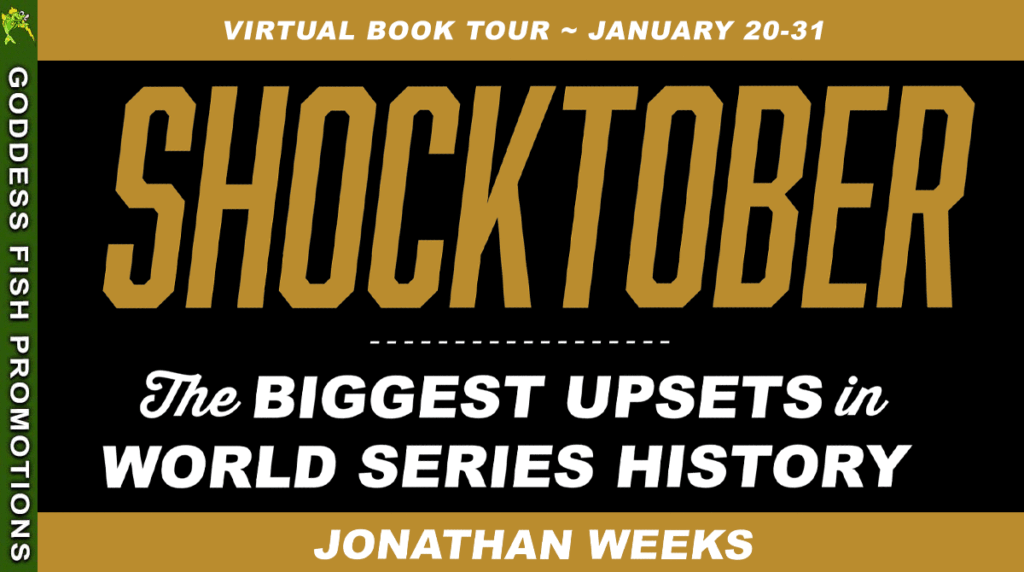
This post is part of a virtual book tour organized by Goddess Fish Promotions. Jonathan Weeks will be awarding a $25 Amazon/BN gift card to a randomly drawn winner. Click on the tour banner to see the other stops on the tour.
There are a variety of ways you can “turn your brain on” and generate creative energy. Though it works a little differently for everyone, here are a few simple suggestions to get started:
GO FOR A WALK
Being outside on a warm, sunny day or even on a cool, foggy night can produce a stream of conscious thought. The brain reacts dramatically to setting and tone. Harness those thoughts into something useful.
PAY ATTENTION TO THE PEOPLE AROUND YOU
Have you ever tried just sitting in a public place and discreetly watching others? You will notice a lot of very interesting details. This might trigger some useful associations.
TAKE ON A NEW HOBBY
It’s never too late to pick up a new skill or engage in a new activity. Learn how to play a musical instrument. Get involved in an arts and crafts project. Take some photos of subjects that interest you. Get your creative powers flowing.
YOU CAN’T HAVE OUTPUT WITHOUT INPUT
No great idea is created in a vacuum. Exposing yourself to the creativity of others will enhance you own abilities. Read books. Watch movies. Listen to music. Be an active, not a passive watcher or listener.
THE POWER OF DREAMS
Some of my best ideas have come to me in dreams. But those ideas are fleeting. Dreams typically fade from our consciousness within minutes of waking. If you feel so inclined, keep a sleep journal near your bed and write your dreams down in it when you wake up. There may be a brilliant idea buried somewhere beyond the wall of sleep.
There is no right or wrong way to shake out a good idea. Whatever works for you is fine. Don’t be afraid to try something unusual. Ernest Hemingway often wrote standing up, believing it kept him clear and alert. Leonardo da Vinci slept in brief intervals throughout the day, claiming that it increased his productivity. Ideas come from outside and within. You need to be prepared to grab them when they present themselves.
Good luck!
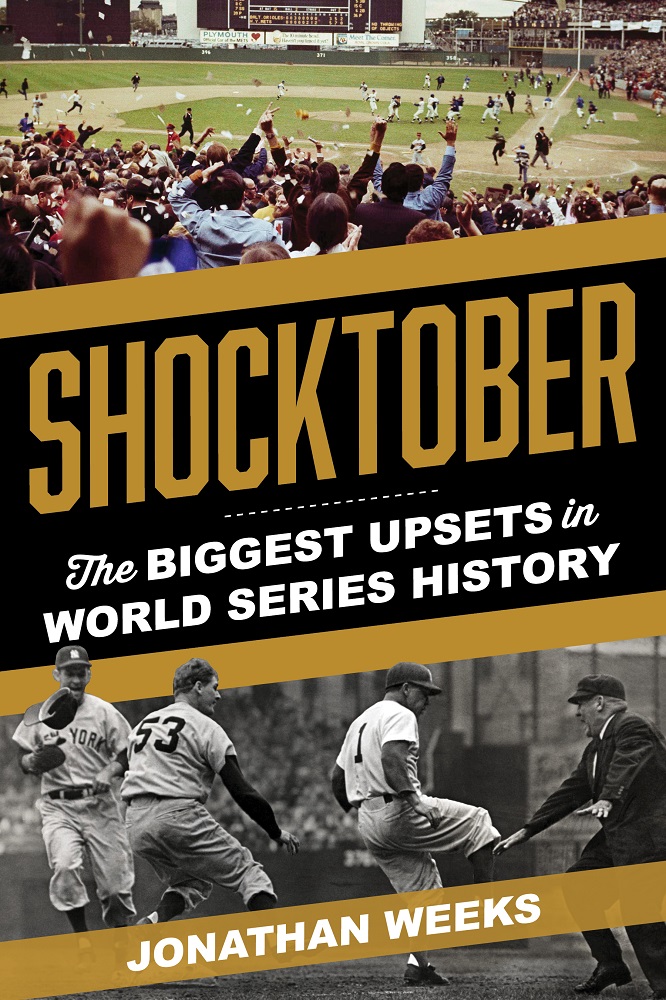
Mays’s spectacular catch in 1954, Bill Mazeroski’s walk-off homer in 1960, and Kirk Gibson’s pinch-hit blast in 1988 are just a few of the memorable moments that have dominated highlight reels. The outcome of the Series has not always been terribly surprising—especially during the late 1940s and early 1950s when the Yankees captured five consecutive championships, breaking their previous record of four straight titles from 1936 to 1939. But despite its predictability at times, the Fall Classic has taken many unexpected turns. The 1906 Cubs lost to the weak-hitting White Sox after establishing a new regular season record for
wins. The 1955 Dodgers avenged seven prior October failures with an improbable victory over the seemingly invincible Yankees. And in 1969, the Mets finally shed their image as “loveable losers,” dethroning the powerful Orioles. In more than a century of World Series plays, a number of similar scenarios have emerged; twenty-two of those stories are told in Shocktober.
Enjoy an Excerpt
To understand why members of the White Sox conspired with gamblers to throw the 1919 World Series, one must take into account the financial climate of baseball in the early-20th century. Players weren’t paid exceptionally well (at least in comparison to today). Before the advent of free agency, owners held most of the advantages when it came to negotiating contracts. Players were more or less stuck with the clubs they had signed with until team executives decided it was time to get rid of them. Typical deadball stars were minimally educated and rough around the edges. In their free time, many gravitated to bars and pool halls, where men of questionable integrity could be found. Some players developed relationships with members of the underworld—especially bookmakers who were willing to tamper with the outcome of games in order to turn a profit.
Ty Cobb, one of the biggest names of the era, was paid $20,000 in 1919—equivalent to about $348,000 today. No one else was making that much at the time—not even Babe Ruth. Pitcher Eddie Cicotte, at a little over $9,000, was the highest paid member of the Chicago conspirators. The others were earning significantly less.
A common misconception among contemporary fans is the idea that Chicago team owner Charles Comiskey was a nefarious miser who drove his men to commit the crime of the century. Multiple myths have persisted regarding Comiskey’s penny-pinching ways—the most salacious being the story about how he delivered a case of flat champagne to his players as a World Series bonus in 1917. Other fallacies have been handed down over the years.
In reality, Comiskey was prone to acts of generosity. He allowed a number of Chicago organizations to use his ballpark for free and gave out complimentary grandstand tickets to school children. During World War I, he donated a significant portion of his annual income to the Red Cross. While it’s true that he could also be frugal, charging players for laundry fees, he actually paid his men pretty well. The White Sox Opening Day payroll in 1919 was among the highest in baseball.
While the specific motivations of each conspirator have been endlessly debated, it’s safe to assume that the primary incentive was financial gain. By his own account, it was first baseman Chick Gandil who approached gamblers with the idea of a fix. At the time, the club was divided into two social cliques with tension existing between the two. The educated players fell under the influence of Ivy League graduate Eddie Collins. The rest of the joiners cast their lot with Gandil—a former boxer with an attitude toward authority. Shortstop Swede Risberg played a major role in the fix as well, helping Gandil lure other players (ones who could be trusted to keep their mouths shut) into the fold. Boston-based bookmaker Joseph “Sport” Sullivan convinced New York underworld kingpin Arnold Rothstein to bankroll the plot. Others involved included “Sleepy Bill” Burns (a former pitcher) and Abe Attell (a former featherweight boxing champion). Both were associates of Rothstein’s.
About the Author: Jonathan Weeks has written several sports biographies and two novels, one of which was a posthumous collaboration with his late father. He grew up in the Capital District region of New York State and currently works in the mental health field.
Buy the book at Amazon.
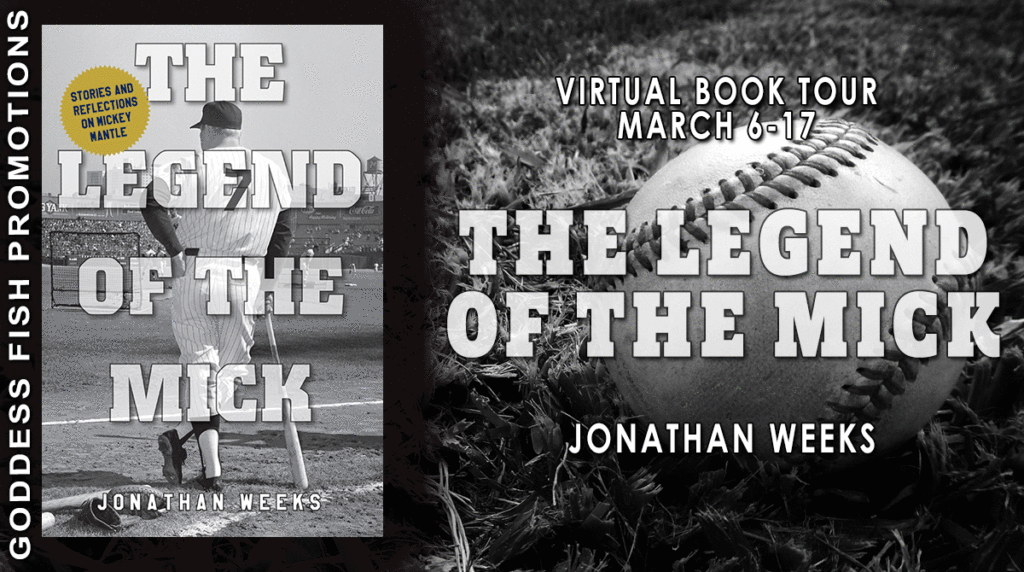
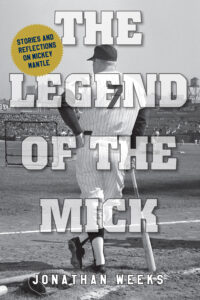 In the 1950s, America entered the television age. And Mickey Mantle, a country boy from Commerce, Oklahoma, was made for the moment. Signed by the New York Yankees as a teenager, he made his major league debut in 1951 as a right fielder alongside Joe DiMaggio. When DiMaggio retired at the end of the season, Mantle inherited not only Joltin’ Joe’s position in centerfield but also his stature as the face of the franchise. His boyish good looks, breathtaking power from both sides of the plate, and blazing speed on the basepaths made him an instant superstar. He won league MVP three times, came in second three times, was a 16-time All-Star, a Triple Crown winner in 1956, and a seven-time World Series champion.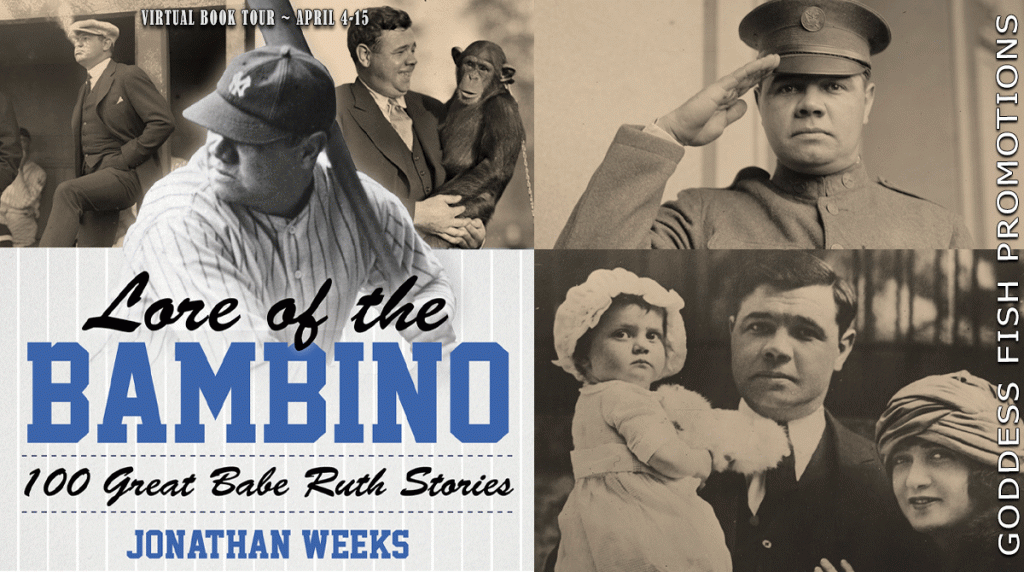
 More than seventy years after his death, Babe Ruth continues to fascinate generations of fans. His exciting adventures on and off the field have become essential reading for students of baseball and pop culture. While most Ruth biographies are filled with mundane facts, Lore of the Bambino is the equivalent of a greatest hits compilation. Ruth’s extraordinary (and at times incredulous) tales carry readers on an enthralling journey through the life of the most celebrated sports figure of the twentieth century. All of the most popular anecdotes (such as the Babe’s alleged “called shot” in the 1932 World Series) are thoroughly covered along with many lesser known narratives.
 A lifelong sports fan, Weeks has published several non-fiction books on the topic of baseball. Additionally, he has two novels to his credit–one of them a posthumous collaboration with his father. His latest project: Best of the Bruins: Boston’s All Time Great Players and Coaches, is due out in 2021.
 Among the “original six” NHL clubs to survive the Great Depression, the Boston Bruins have a vibrant history. Entering the 2020-’21 campaign, the team ranked fourth all-time with six Stanley Cup championships. Some of the most gifted players in NHL history have skated for the Bruins over the years. Best of the Bruins: Boston’s All-Time Great Players and Coaches tells the individual stories of the players and coaches who have helped make the Bruins perennial contenders for close to a century. Profiles of current players are included in this sweeping survey.
 A lifelong sports fan, Weeks has published several non-fiction books on the topic of baseball. Additionally, he has two novels to his credit–one of them a posthumous collaboration with his father. His latest project: Best of the Bruins: Boston’s All Time Great Players and Coaches, is due out in 2021.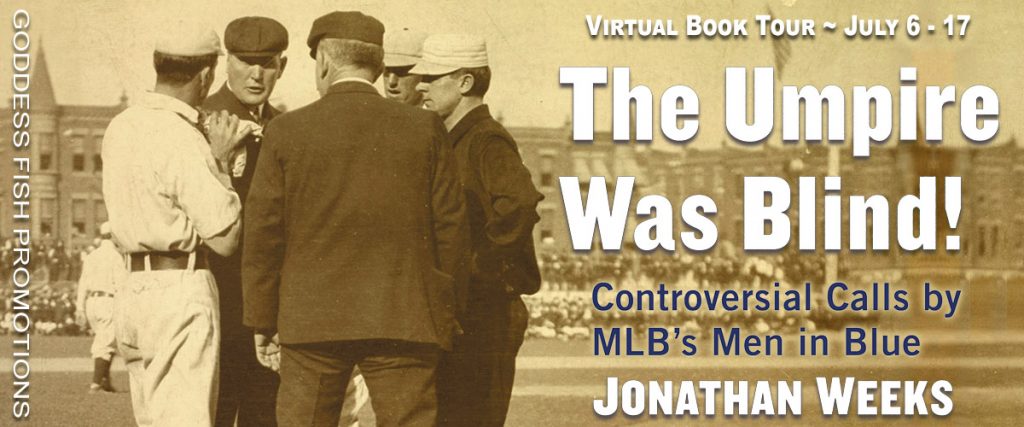
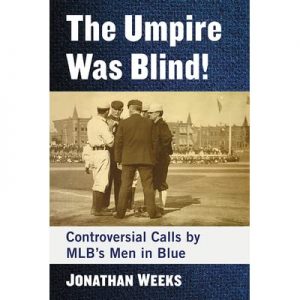 In the words of former American League umpire Nestor Chylak, umpires are expected to “be perfect on the first day of the season and then get better every day.” Forced to deal with sullen managers and explosive players, they often take the blame for the failures of both. But let’s face it—umpires are only human.
 Weeks spent most of his life in the Capital District region of New York State. He earned a degree in psychology from SUNY Albany. In 2004, he migrated to Malone, NY. He continues to gripe about the frigid winter temperatures to the present day. He has published several books on the topic of baseball. He would have loved to play professionally, but lacked the talent. He still can’t hit a curve ball or lay off the high heat. In the winter months, he moonlights as a hockey fan.