BLURB BLITZ: UNEASY LIES THE CROWN by N. Gemini Sasson

1_18 BBT Uneasy Lies the Crown Banner

This post is part of a virtual book tour organized by Goddess Fish Promotions. N. Gemini will be awarding a $20 Amazon gift certificate to a randomly drawn commenter during the tour, and a a $20 Amazon gift certificate to a randomly drawn host. Click on the tour banner to see the other stops on the tour.

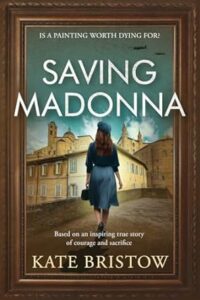
1_18 ULtC_Cover

For centuries, the bards have sung of King Arthur’s return, but is this reluctant warrior prince the answer to those prophecies?

In the year 1399, Welsh nobleman Owain Glyndwr is living out a peaceful gentleman’s life in the Dee Valley of Wales with his wife Margaret and their eleven children. But when Henry of Bolingbroke, the Duke of Lancaster, usurps the throne of England from his cousin Richard II, that tranquility is forever shattered. What starts as a feud with a neighboring English lord over a strip of land evolves into something greater—a fight for the very independence of Wales.

Leading his crude army of Welshmen against armor-clad columns of English, Owain wins key victories over his enemies. After a harrowing encounter on the misty slopes of Cadair Idris, the English knight Harry Hotspur offers Owain a pact he cannot resist.

Peace, however, comes with a price. As tragedies mount, Owain questions whether he can find the strength within himself not only to challenge the most powerful monarch of his time, but to fulfill the prophecies and lead his people to freedom without destroying those around him.

Read an excerpt:

Lord Reginald de Grey of Ruthin leered at his discovery. Swarming around him was a full corps of fifteen huntsmen, lesser lords eager to impress. One rushed in and rammed a spear into the deer, although it was a task that need not have been done.

“Aha! My gratitude, good men, for bringing down my prize,” Grey proclaimed.

“Your prize?” Owain started forward. “These are my lands you’re on. And well you know it. You are beyond your bounds. Parliament has upheld my claims on Croesau.”

“Richard’s parliament.” Grey clucked his tongue in admonishment. “’Tis a hard task to wield influence from a dungeon.”

Owain’s arms were locked stiffly at his side, though they had the strength to heave the dripping, dog-shredded carcass at Grey’s head. “Take it. Take the hide and the meat and the bloody set of antlers. But don’t come back. This land is not yours.”

“I’ll come as often as I please. These are my lands now, everything you see. The Welsh sympathizer is not long to wear the crown and Bolingbroke owes me a good turn.” One hand upon his hip, he flexed the gloved fingers of his other hand and nodded with satisfaction. “This hunting ground will do, littered though it is with Welsh beggars. Incidentally, I took liberty to evict some troublesome peasants of yours in the next valley.”

Owain sprang forward. “You have no right!”

“Yes, yes… hmmm. We shall see who has rights. Anyway, they were a little, shall we say, obstinate. A torched roof is very convincing. It has a tendency to make people into believers.”

About the Author:SONY DSCN. Gemini Sasson is the author of six historical novels set in 14th and 15th century Scotland, England and Wales, including The Bruce Trilogy and Isabeau, A Novel of Queen Isabella and Sir Roger Mortimer (2011 IPPY Silver Medalist in Historical Fiction). Her latest release is Uneasy Lies the Crown, A Novel of Owain Glyndwr. Long after writing about Robert the Bruce and Queen Isabella, Sasson learned she is a descendant of both.

Find the author online at

Amazon.com – http://www.amazon.com/Uneasy-Crown-Novel-Glyndwr-ebook/dp/B00A27A1UA

Amazon.co.uk – http://www.amazon.co.uk/Uneasy-Crown-Novel-Glyndwr-ebook/dp/B00A27A1UA

Barnes and Noble – http://www.barnesandnoble.com/w/uneasy-lies-the-crown-n-gemini-sasson/1113730727?ean=2940015940381

Smashwords – http://www.smashwords.com/books/view/252017

Web site – http://www.ngeminisasson.com

Facebook – http://www.facebook.com/NGeminiSasson

Blog – http://ngeminisasson.blogspot.com

GUEST BLOG: C.S. FUQUA

Photobucket
The Willful Ignorance Factor: Denial in Fiction and Reality
By
C.S. Fuqua
(Author’s note: Many thanks to Long and Short Reviews for allowing me to contribute to the guest blog series. It’s much appreciated.)
He stands on the tracks.

“There is no train.”

The rails tremble.

“There is no train.”

The whistle blasts.

“There is no…”

Tick.

Characters in the fiction I write reflect qualities and values of people I’ve met along the way. One quality I find intriguing to explore is the ability to deny reality. Whether failing or frailty, we humans exhibit a propensity for choosing fancy over reason, the mystical over reality. That’s why I base so many of my stories in dark fantasy to explore real-world problems, views, and reactions, creating a speculative world that seems possible even though it isn’t. Through dark fantasy’s hocus-pocus, the negative quality of denial occasionally spawns positive results, and everyone lives happily ever after. But real life isn’t hocus-pocus.

As a species, we’ve advanced rapidly via science and have recently verified through observation the Higgs boson, the so-called “God particle,” and yet many of us believe the Earth is no older than 6,000 years, that planetary alignment will initiate Armageddon, that God speaks directly to Billy Graham or Pat Robertson or Pope Benedict XVI or Ayatollah Ali Khamenei or Aunt Gerdie or Brother Jimbo because the great creator obviously supports our particular political and social agendas—whatever side we’re on; their god is always wrong—while shunning the rest of the world as it descends further into chaos, starvation, war, and environmental peril. Our television programming reflects our values in so-called “reality shows,” elevating the worst traits of our species into goals supposedly worth attaining. We’re a simple, narcissistic lot, and repeatedly we gleefully employ willful ignorance over rational thought and education. As long as we have our iPhones, a good connection, and Facebook, we’re content to exist in a virtual life and be led by liars who pander to our personal prejudices, even as we follow them off the cliff into the abyss.

Tick.

Time and again, like people you and I know, the characters in my stories deny the truth, even when it’s overwhelmingly indisputable, but how can a character deny facts? More important, how can we deny facts, especially when denial is against our best interests and will ultimately cause us pain and loss?

The U.S. in 2012 experienced its warmest spring on record. That’s a small fact in a sea of alarming scientific data. And yet many of us—perhaps a majority—are convinced that global warming is something one can choose to or not to believe. We can thank organizations like the conservative policy group American Legislative Exchange Council (ALEC) and fair-and-balanced news media for convincing so many of us that scientific theory—for example, gravity—is faith based rather than built upon empirical scientific data. While ALEC has convinced many state lawmakers to curtail air pollution rules and to teach climate change skepticism in schools, various news media highlight freak spring snowstorms as “evidence” that, if anything, Earth is cooling instead of warming, even though those freak storms are direct results of the very reality talking heads deny. Some states have even targeted renewable energy mandates for elimination, insisting on the continuation of wasteful, environmentally destructive policies that only exacerbate a rapidly growing quandary.

Do we really harbor a planetary death wish?

Tick.

Like those of fictional characters, our reactions to problems have severe consequences. The denial of global warming, for instance, has pushed the planet to a tipping point. Based on increasingly reliable data, 22 internationally known and respected scientists warn in a paper in the June 7 issue of Nature that climate change, coupled with explosive population growth and widespread destruction of natural ecosystems, is pushing Earth dangerously close to an irreversible change in the biosphere that will result in destructive consequences without adequate preparation and palliation. Even the recent Berkeley Earth Surface Temperature project, funded in part by the Charles Koch Charitable Foundation, a source for backing conservative organizations and initiatives to dispute global warming science and fuel denial, confirmed to the Koch foundation’s chagrin that global warming is indeed a rapidly worsening situation, primarily the result of human-induced greenhouse gas emissions. The project confirmed findings highlighted in previous accounts such as the 2007 report by the United Nations’ Intergovernmental Panel on Climate Change. The report compiled data from work by 2,500 scientists from more than 130 countries, concluding humans have caused most of the current planetary warming, with industrialization, deforestation, and pollution the greatest human-made culprits in altering the planet’s natural cycles.

The past two decades have been the planet’s warmest in the last 400 years, with 11 of the past 12 years among the dozen warmest since 1850. The average global temperature since 1880 has risen 1.4 degrees Fahrenheit (0.8 degree Celsius), primarily in recent decades, according to the Goddard Institute for Space Studies. The rise in the average Arctic temperature, however, is double the global average. And as Arctic temperatures rise, ice-melt increases, unlocking even more greenhouse gases now trapped in sea ice, permafrost, and undersea deposits. As a result of rising temperatures, glaciers and mountain snows are vanishing rapidly. Glacier National Park in Montana, for example, had 150 glaciers in 1910; now it has 27. Shorelines are retreating as waters rise. In one case soon to be followed by others, the populated island of Lohachara, where the Ganges and the Brahmaputra rivers empty into the Bay of Bengal, has vanished under rising water levels caused by global warming. And each year, increasingly bizarre and extreme weather worldwide makes headlines, from major snowstorms to vast outbreaks of tornadoes, from extreme droughts to massive typhoons and flooding. More than a million species already face extinction from current climate change effects. And yet, our political leaders conduct us in a chorus of denial that anything is wrong as they delay or prohibit action to remedy the situation because it might adversely affect corporate profits.

In a dying world, when does survival outweigh the bottom line?

Tick.

Willful ignorance is a considerable impediment for fictional characters to overcome. A few of the characters in my stories prevail, but most accept the truth only after it’s too late. The problem is the decisions we make in real life are little better than those made by characters in fiction. To make better decisions, we’ll have to discard the arrogant belief that we own this planet when, in fact, it owns us and we are simply squatters in time.

Like characters rapidly approaching the climax of a story, we have a quickly vanishing window of opportunity to act. We’ve arrived at the moment we must decide whether this planet is worth saving, whether the generations that could follow deserve the same shot at existence that we’ve had.

Tick.

The rails shudder.

The whistle wails.

Tock.

About the Author:

C.S. Fuqua’s latest book, Rise Up , his second collection of short fiction, will be published October 2012 by Mundania Press. His published books include Alabama Musicians: Musical Heritage from the Heart of Dixie, If I Were, Big Daddy’s Gadgets, Trust Walk short fiction collection, Notes to My Becca, and Divorced Dads, among others. His stories, poems, and articles have appeared widely in publications as diverse as Bull Spec, Slipstream, Pearl, The Year’s Best Horror Stories, Christian Science Monitor, Honolulu Magazine, Naval History, The Writer, and many others. His short fiction and poetry collections have earned several “Year’s Best” honors. He is a musician and craftsman of Native American flutes which are sold through WindPoem flutes athttp://www.fluteflights.com. For more information about his writing, please visit his website at http://csfuqua.comxa.com.

To hear “(Set the Self-Destruct) Again,” a song about global warming denial, written and performed by C.S. Fuqua, click here: http://csfuqua.comxa.com/again.mp3.

Anniversary Blog Fest: Margaret Fieland

Photobucket
Europe on Ten Words a Day
During my sophomore year at the University of Michigan, now many years ago, I discovered an organization that placed students in math and science in other countries for practical work – for what would now be called co-oping. The organization’s primary objective was to exchange students among the various European countries, but somehow we managed to start a branch at U of M. I eagerly joined, and successfully lobbied a couple of professors who agreed to sponsor a foreign co-op student for the summer.

When I applied myself, hoping for a placement the summer between my sophomore and junior years, I thus had a preferred status; as someone who had worked for the organization, I went to the front of the queue, so to speak. Since I speak fluent French, I asked for France, Belgium, Luxembourg, or Switzerland, countries where French is spoken.

But placements for students from the United States were limited, and I was offered a spot in the Netherlands, at the Agricultural University of Wageningen, assisting a professor of mathematics.

Dutch has several levels of gutterals, with pronounced somewhat like the German “ch” and a couple more that are deeper in the throat. Gouda, the cheese, for example, is pronounced something like “How-da.” It took me a week to learn to pronounce the name of the town, and until I could, I didn’t dare go anywhere. Most people my age and younger spoke English, but many of the older folks in the towns surrounding Wageningen did not.

I still remember my excitement that first weekend when I boarded the bus for a nearby, larger, town, Ede (pronounced Ay-da).

In relatively short order, I found a ballet class in town – I was passionately fond of ballet at the time – and signed up for lessons. It was there that I had my first lesson in cultural insularity.

“I’m an American,” I responded when asked where I was from.

“Oh, so am I,” a diminutive student replied. “I’m from Nicaragua. How about you?”

“I’m from the United States.” And that is how, to this day, I respond when asked what country I’m from.

But soon, being then as now, a voracious reader, I faced the knotty problem of finding reading material in a town without any large bookstores. Hurrying down to the local library, I asked what I needed to do to join: pay a small fee and fill out a form.

The library’s supply of books in English was quite small, but fortunately they had a couple of bookcases full of books in French, including a lot of Georges Simenon. So I spent my summer reading through the library’s entire supply of Simenon’s Maigret novels, some of his others, various memoirs about the war, a memoir by a French doctor, and several French science fiction novel, as well as a French translation of Ray Bradbury’s Fahrenheit 451.As my father was an attorney, I was familiar with the difference between the French legal system and ours: under French law, the accused is guilty until proven innocent, making Maigret’s investigations, the ones leading up to his arresting the guilty party, all the more important.

I very much enjoyed my summer reading. You simply never know when being fluent in a foreign language well will come in handy.

About the Author:

Margaret Fieland is the author of Relocated, recently released by MuseItUp Publishing and of the companion book of poems, Sand in the Desert.. She is one of six Poetic Museling. Their poetry anthology, Lifelines, was released by Inkspotter Publications last November. She is presently at work on two more novels set in the universe of Relocated.You may visit her website, http://www.margaretfieland.com or http://poetic-muselings.net/. You can find her on Twitter as @madcapmaggie and on Facebook as madcapmaggie.

Anniversary Blog Fest: Jane Toombs

Photobucket
THE LIVING AIN’T EASY

So, yes, it’s summertime, but the days aren’t long enough for me to get everything done. I converted the house for handicapped and brought my SO, who has Parkinson’s, home from Long Term Care. He’s in a wheelchair, but transfers easily and can tend to his toilet needs and also get from wheelchair to his lounge chair by himself. But this is a guy who used to help me with everything from bed-making to meals, shopping with me for groceries and did everything for our cat, including changing the sandbox.

He still helps me as much as he can, but cannot do everything he used to be able to do. As a result, I’m busier. Though I wouldn’t change having him home, my writing time is restricted. Even with Home Health, which includes PT and a shower gal.

Oddly enough being busier has helped my own health because I’m now stronger physically. Partly from doing the PT exercises along with him, but also because I’m far more active. But I miss writing without interruptions. I’m back to the days when my writing was always being interrupted because I had five kids to raise. But I wrote then and I’m writing now, though much, much slower. I was a lot younger then. Now I’ll be eighty-six two days after Christmas and the years do take a toll.

Of course neither of us expected it to be this way. But love isn’t only about sex, love continues on regardless of age or illness. And that’s the point I wanted to make. I think because we, as authors, do write about sex as a part of love, we sometimes may tend to leave out the caring part of love, which is even more important. Because that’s what holds us together and keeps us going no matter what.

My Viking may now be in a wheelchair, but he’s still my Viking.

www.JaneToombs.com

Jane Toombs takes you back to a time shortly after Confederation and then, book by book, follows two powerful families in this fast moving dramatic saga about the people–Spanish, Anglo, Mexican and Indian–who struggled, fought, made mistakes, loved and survived to build America’s Golden State.

All in one book compilation you will find:

The Bastard – Book 1

The Interloper – Book 2

The Dancer – Book 3

The Rebel – Book 4

The Fixer – Book 5

The Deceiver – Book 6

The Wild Card – Book 7

Available now on Amazon.

GIVEAWAY: LILY

Photobucket
One commenter on this post will receive the eBook — The Quest For Reason: Lily. Open to all readers. Remember, comments will also enter you into the contest for the $50 Amazon GC!! Congratulations, Debby!

ANNIVERSARY BLOG FEST: PRINT BOOK GIVEAWAY

Photobucket
Congratulations elaing8

Commenters on this post will have a chance to win an autographed print copy of Wet, Wild, Wicked by Nikki Duncan (who has autographed it), Mackenzie McKade, and Catherine Fox. US/Canada only please—but international commenters are entered into the drawing for the $50 Amazon GC.

Print Book Giveaway

Photobucket
Leave a comment for a chance to win a print copy of Modern Wicked Fairy Tales: The Complete Collection by Selena Kitt (US and Canada only please). Congratulations Jane Greenhill

Autographed Book Giveaway

Photobucket
Leave a comment on this post for a chance to win an autographed print copy!! US and Canada only please. Congratulations Patti P

Some Halloween History

Here’s a fun Halloween fact: The ancient Celts thought that spirits and ghosts roamed the countryside on Halloween night. They began wearing masks and costumes to avoid being recognized as human.

Article: You Don’t Need To Be Perfect, But Your Writing Does 

by Dana Blozis

How to Proofread, Edit and Fact-Check Your Own Work

Having written since I was a kid, I’ve met many authors, writers and journalists along the way. While we don’t all fit the stereotype of the robed, sleepless, alcoholic writer hunched over a typewriter in the attic, we do have much in common. In addition to being the winners of spelling bees and hoarders of dictionaries and other books, we love words. We love to read them, hear them, speak them and write them. We love them to a fault.

We must have the right words in the right place at the right time. And, perhaps more importantly, they must be written flawlessly. We won’t accept typos, spelling errors or grammatical snafus, because mistakes interrupt the flow and the meaning of our words. As a result, we expect perfection and we don’t tolerate errors from ourselves or others. This philosophy makes it difficult to be a writer at times, but we can’t help ourselves. We are obsessed with perfection.

Living this way can make it difficult to meet deadlines, however, as we await the ideal word, headline or introductory paragraph. Sometimes we must settle for less. Sometimes we even have to settle for pretty good. It’s a harsh reality, but at some point, we have to complete our latest assignment or project and turn it in so we can get paid. We have to let go of the perfection we covet, because it isn’t going to bless us with its presence today.

Our editors, however, see it differently. They will expect perfection, not because they are masochists but because it makes their jobs easier. If our work is flawless, they have less to do. They can focus on another writer’s work or planning their next issue or project. To endear ourselves to them (and to get more work), we must dutifully comply. The issue is trying to balance our desire to be perfect with the reality that we will never be. We can come close though by carefully proofreading, editing and fact-checking our work prior to submission. Here’s how.

Proofreading—checking for spelling, punctuation, grammatical and formatting errors—can be a tedious, cumbersome task, particularly when attempting to proof your own work, but it can be done. I usually proofread on my computer screen first, making edits as I go. When done, I print off a hard copy and go through line by line, reading out loud as I go. I find that I notice errors in print that I don’t see on screen, and reading out loud helps me to find words that I’ve missed or used incorrectly (e.g., there instead of their). For really important assignments, I’ll ask someone else to proof it as well. In fact, I have an editing buddy with whom I trade proofreading help. I have also tried reviewing the copy backwards and reviewing for a different item during each pass through the text. For example, the first time I read through it, I might focus on spelling, the next time on grammar, etc. Make sure you have your dictionary and grammar guide handy too during this stage.

Editing. In addition to proofreading, I also copyedit my work, meaning I check for misplaced modifiers, review style, check for flow, etc. This process is more intense than proofreading and can take awhile. It is also difficult to do immediately after finishing an assignment, so I will set it aside until morning when I can look at it with “fresh eyes.” Often major errors will jump off the page, begging to be corrected. During this phase, you’ll need to have your handy stylebook out (AP, APA, Chicago Manual of Style, etc.) to be sure that you’ve followed the appropriate guidelines for things like capitalization, numbers (figures versus text) and references.

Fact-checking. Many publications, particularly magazines, will fact-check your work. In other words, they’ll verify the spelling of proper names, check dates, key facts, website addresses, phone numbers and more. While publications often hire someone to do this task, by doing it yourself first, you can save the publication time and money, again making it easier to work with you. When I fact-check my writing, I first double-check the spelling of all names and places. I look at reference materials (brochures, bios, business cards, etc.) that I’ve been given, and I search online. If I am unsure, I’ll phone the original source to confirm a spelling. I do the same thing with dates. For key facts, I do an Internet search, marking my source to either provide to the fact-checker up front or for my own reference should I be questioned later. This was particularly helpful when I wrote an article about a coal mine explosion in the early 1900s. My editor wanted to confirm that a particular mining town was second in size only to Seattle. Before she was willing to allow me to make that statement, she wanted verification.

In spite of these techniques, we are human and it is still possible that an error will occasionally slip through the cracks. However, if you are diligent in your attempt to submit well-written, well-documented work without obvious errors, your editors and publishers will be more likely to turn to you rather than the other guy – you know who I mean – the writer who thinks he’s brilliant but who can’t spell his way out of a paper bag. Make sure you are the one they turn to for stellar, (nearly) flawless work.

Happy Writing!

Copyright (c) 2007 Dana Blozis

About The Author: Dana Blozis of Virtually Yourz is a freelance writer, editor and marketing based in the Seattle area. In addition to writing for publication, she writes, edits and markets for small businesses and nonprofits. To learn more about her services, visit http://www.virtuallyyourz.com