My Take on Critique Groups by Beth Ford – Guest Post and Giveaway

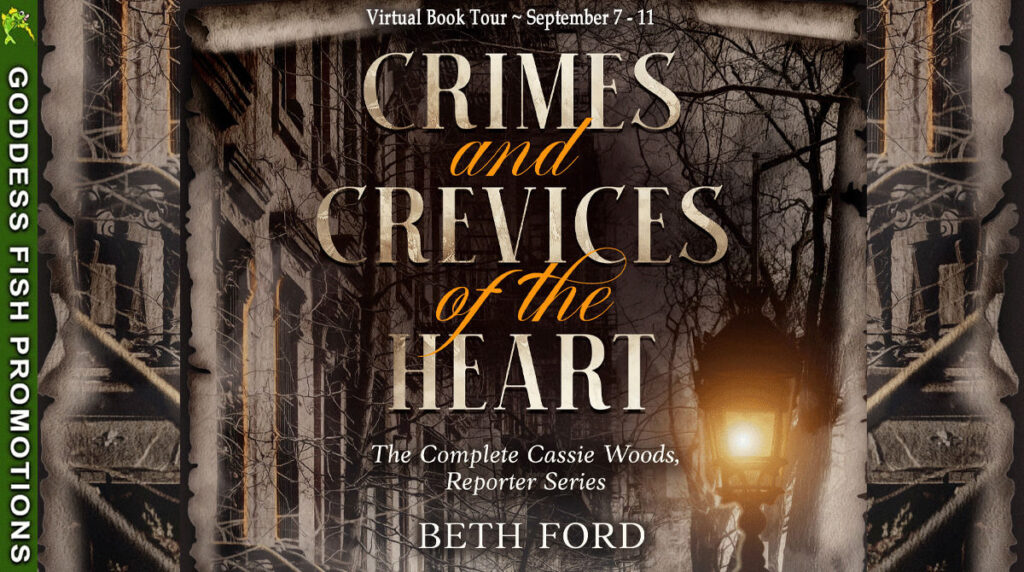
This post is part of a virtual book tour organized by Goddess Fish Promotions. Beth Ford will be awarding a $10 Amazon/BN gift card to a randomly drawn winner. Click on the tour banner to see the other stops on the tour.

My Take on Critique Groups

As a writer, putting yourself out there by letting someone else read your work can feel scary, especially the first time you do it. It’s like revealing your heart’s deepest desire for critique. However, critique groups are an absolutely necessary part of the process.

I’ve participated in a number of critique groups over the years. Some have lasted only as long as a writing retreat, some have hung on locally for several months, and some have maintained themselves over Zoom for years. All are valuable.

Critiques are also incredibly useful not just for the feedback you get on your own work but for the process of crafting and listening to critiques of other people’s works. Like many things in life, it’s often easier to see the flaws in someone else’s work than your own. Often, you can also draw parallels between the other piece being critiqued and your own. If a group offers an insight to someone else’s work around dialog, for example, you might recall that the next time you’re writing a dialog heavy scene, or it might even prompt you to revise a scene you’ve been struggling with.

As is the case with other forms of critique from beta readers, editors, etc., part of the challenge is knowing how to respond. Of course, you should always try to accept critique with grace rather than be defensive, as difficult as that can feel. But some of the hardest work comes after the critique, when you have to make a plan for revisions.

When I receive feedback, I generally read through it all first. I might make some initial notes to myself, but I don’t act yet. I let it sit for a couple of weeks. During that time, while I might actively be working on another project, my brain is often spending its downtime working on the problem of how to address the critique so answers start to emerge.

One thing to keep in mind is that you don’t have to address everything. It’s your book and if a point of feedback doesn’t fit with your vision, then disregard it, though you should try to articulate the reason why to make sure it’s not just because you refuse to kill your darlings. If multiple people have provided similar feedback, though, you should think about it carefully. Sometimes, even if you don’t agree with the specific feedback or the solution they’ve proposed, the critique is highlighting an underlying problem. Make sure you understand the underlying problem before discarding the feedback.

I’ll give you an example. The very first book I wrote (which remains unpublished), had an opening line from the main character’s first-person point of view that mentioned him struggling with a duvet. Many people, including agents and editors, told me they assumed the character was a woman based on that first line. How ignorant, I thought! How sexist! Until I asked a non-writer friend what he thought about the line after reading the first few pages, and he said, “I know because it’s mentioned first it must be important so I should pay attention to it.” That was a thunderbolt moment. I realized that what everyone had actually been trying to tell me was that they were struggling to attach meaning to something that I didn’t think was terribly important. That revelation forced me to change the opening sentence so the duvet didn’t have such prominence.

Critique groups are essential part of a writer’s life. You may have to try out a few before you find one that works for you, but don’t be afraid to put yourself out there!
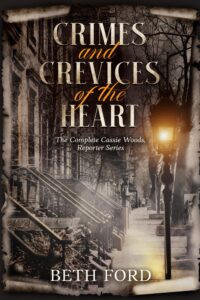
Cassie Woods yearns to be a real journalist. But in 1880s New York City, her only assignments are women’s interest stories. Until, that is, a cookbook author she’s meant to interview goes missing and Cassie finds herself in the midst of a police investigation involving one of the city’s major crime families. Surly but handsome Detective O’Neill threatens repercussions to her career if she continues to interfere. Will Cassie get in over her head or will she save the day and solve the mystery?

This collection contains seven connected stories, each centered on an exciting new case for Cassie to solve while navigating the highs and lows of her relationship with Detective O’Neill.

Enjoy an Excerpt

“A lady reporter?” the policeman at the front desk asked her. “Are you serious?”

“Quite serious, I assure you.” She pointed at the card he held in his hand.

“Anyone could have these printed.”

“Are you going to let me talk to the detective who’s investigating her case or not?”

The man scowled, making his bushy blond eyebrows meet in the middle. Without a word, he walked through a door and out of sight. He returned a few minutes later followed by a fortyish man with strong cheekbones and striking green eyes. The first policeman returned to his duties at the front desk while his handsome superior continued into the lobby. Cassie turned her most charming smile on him.

“Are you the detective?”

“I can’t have reporters interfering in my case.” He spoke in a rough Irish brogue.

Her face fell. Clearly this man was not one to be charmed. “I’m merely asking for information.”

“What does the News Desk want with this story anyway? And why send you?”

“I’m the women’s editor—”

“Women are reading missing persons cases now, are they?”

“I’m simply trying to ascertain where the investigation currently stands. Mr. Walker’s lawyer—”

“What lawyer has he got?”

“Mr. Greene—”

The detective harrumphed. “No good swindler, that one.”

“I’m sure such a description applies to many lawyers you encounter, Mr.…”

The man glared at her. “O’Neill.”

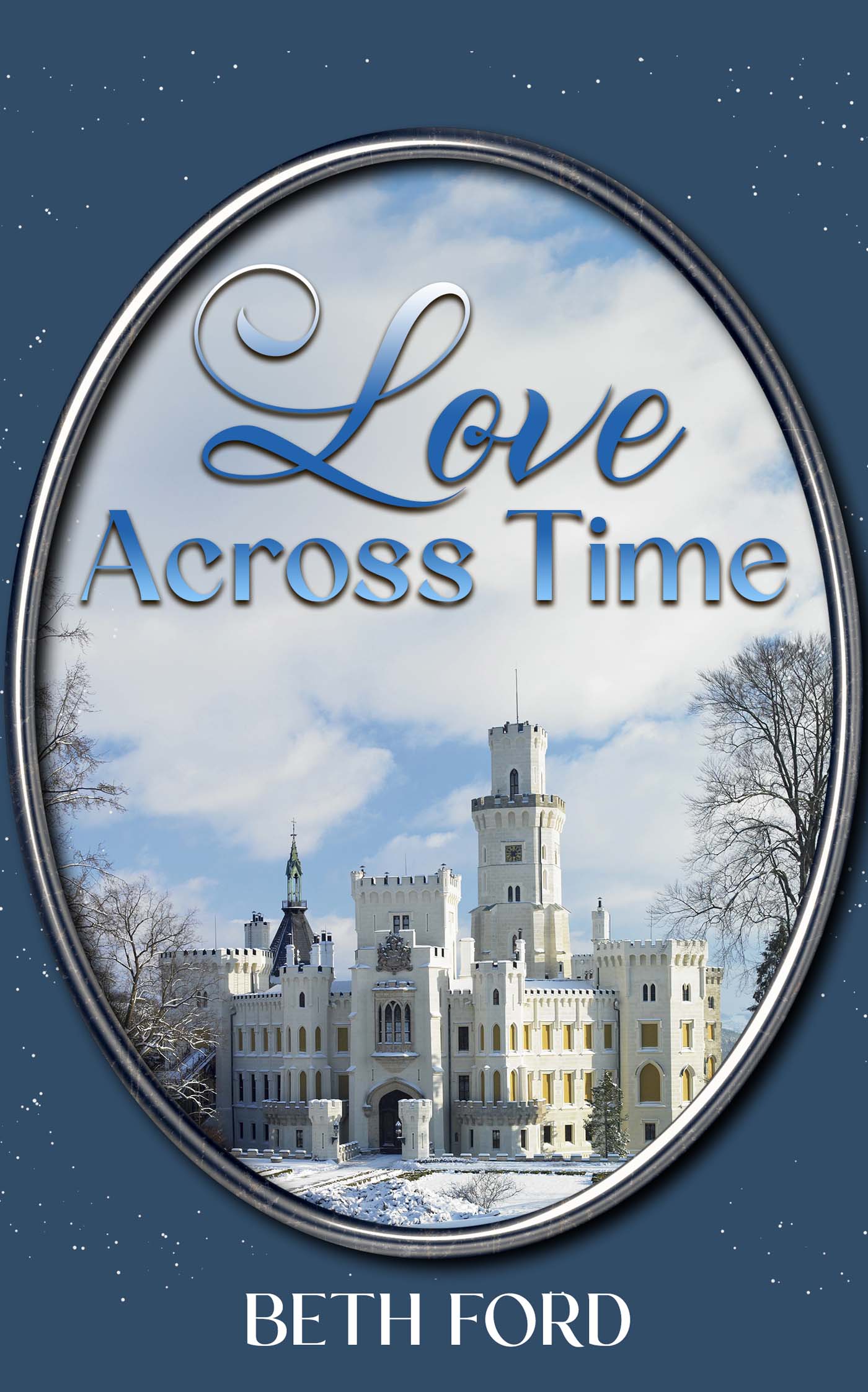
About the Author: Beth Ford writes historical and time travel stories that transport you in time. She is the author of the novels In the Times of Spirits, Love Between Times, Love Across Time, and After the Spirits Come: A Continuation of Dickens’s A Christmas Carol. She also writes the Cassie Woods, Reporter historical mystery romance novella series. Her work has also appeared in a variety of literary journals. She lives in the beautiful Shenandoah Valley of Virginia.

Website | Twitter | Bluesky

Buy the book at Amazon.

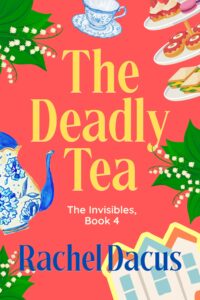
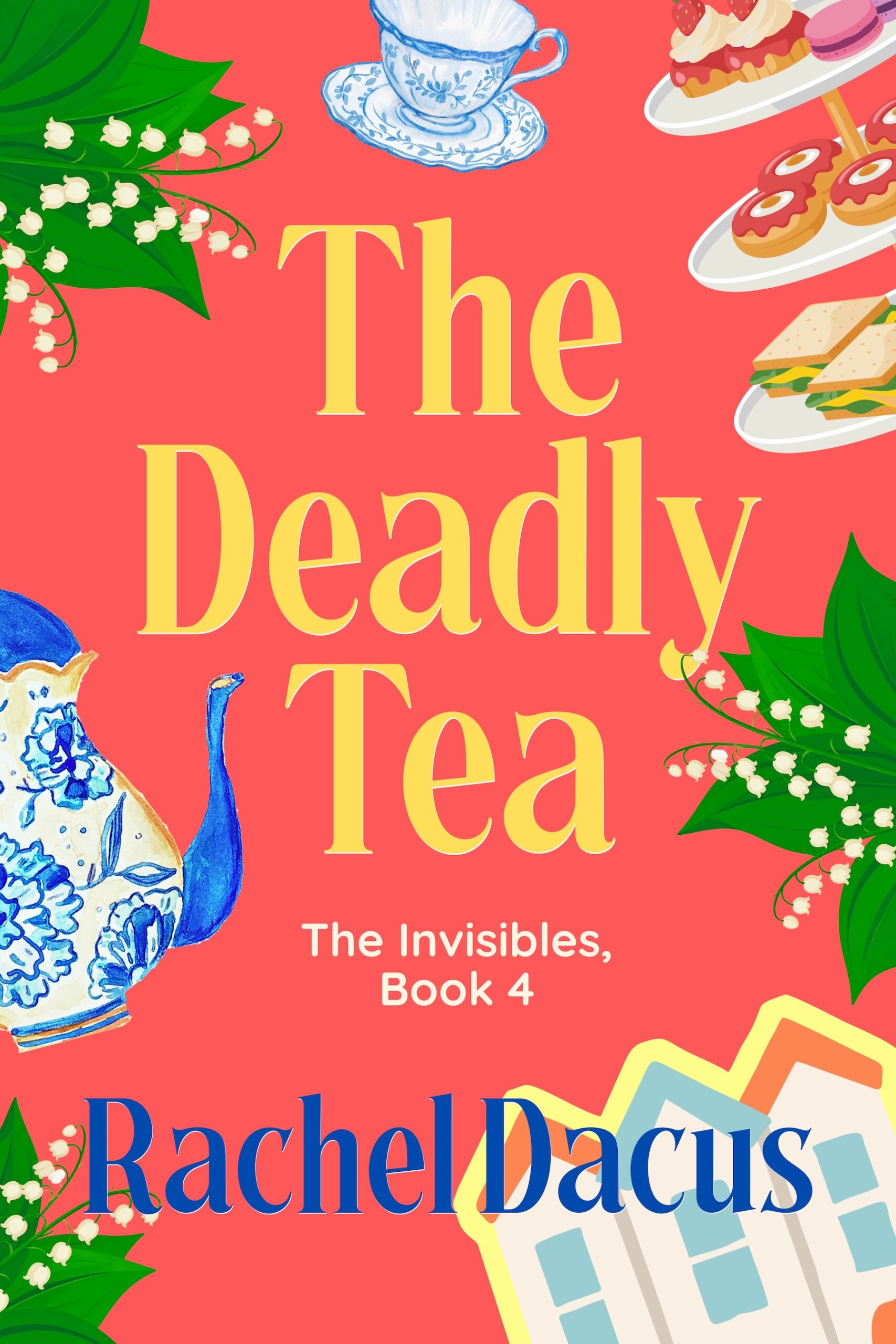
The Deadly Tea by Rachel Dacus – Spotlight and Giveaway

This post is part of a virtual book tour organized by Goddess Fish Promotions. Rachel Dacus will be awarding a $20 Amazon/BN gift card to a randomly drawn winner. Click on the tour banner to see the other stops on the tour.

Most sleuths don’t have the advantage of talking to the murder victim for clues, but Saffron has a window into the afterlife. The problem is, she’s not a detective and has no wish to be.

In the charming heart of London’s Notting Hill, Saffron juggles motherhood, running an animal welfare foundation, and counseling recently deceased spirits—the invisibles. But her peaceful routine is upended when a spirit insists she solve the mystery of his untimely death. Lucas Troy pops into her awareness claiming he was killed and demanding she figure out who did it. He wants justice before he’ll agree to move on. ButSaffron’s role isn’t to play detective, but to help each invisible plan for the next adventure in living. She asks Lucas if he suspects anyone in the circle at his aunt’s tea party where he died. He can’t imagine anyone wanting to kill him, but he persuades Saffron to interview them all.

She feels for Lucas, who had hardly begun his life, and she tries to persuade him that he can have a great future next lifetime, but finally she gives in and agrees to a little investigating. If she finds out something, perhaps he’ll agree to move forward. But the closer she gets to the possible killer, the more she’s in danger. Saffron has no wish to join Lucas in The Room Over There.

Settle in to a cozy mystery with a touch of the supernatural, the heartwarming chaos of family, and the charm of London’s Notting Hill. “Interesting characters, intriguing mystery.”

Enjoy an Excerpt

It was glorious to dawdle around the bohemian and vintage shops on Portobello Road, and the addition of rare April sunshine in London made it seem to Saffron like her spa day. Not that she ever got to have those, as most mothers of young children didn’t. But today, browsing and shopping, she indulged herself in a glorious solitude amid the crowds. This busy street was her paradise, and she needed just a few more things for the children’s Easter outfits, but hoping not to find them too quickly.

Traffic and people swirled around her, and she thrilled to the bright colors, food stalls, brushes of music wafting out of open doors. She would forever be a tourist in her adopted city of London. Notting Hill was so like her San Francisco Bay Area, but snootier. In many ways, more exciting.

Peering into windows, she thought about the perfect bow tie she wanted for Percy’s suit, so her seven-year-old son didn’t look like a tiny banker. Four-year-old Freida could use a flower pin for her pinafore dress. Focusing on these ideas was such a pleasure. Saffron tried to wipe the smile off her face, remembering that Londoners did not walk around smiling, though Californians often did.

A passerby jostled her, and as she stopped to check her bag, a low voice drifted down. “Hey! Anyone here?”

Hella damn. An invisible. Another drifting spirit.

“I’m here,” she whispered. “I’m busy, as you can see. You can see me, right?”

“I see a lot of hair. Curly. Are you some kind of animal?”

Saffron huffed. “You’re looking at the top of my head. Come down lower, so you can see my face.”

Some might call it being haunted, but Saffron called it helping invisibles. She wasn’t often contacted by newly dead people, but occasionally one popped into her vicinity. They always needed orientation and comfort after the trauma of dying.

About the Author: Rachel Dacus is the author of eight novels and five poetry collections. Her fiction features love and relationships, exotic locations and intrepid heroines, and emotional journeys of self-discovery, all with a touch of the supernatural. Her poetry, stories, and essays have appeared widely in print and online literary journals and anthologies. She enjoys life in the beautiful San Francisco Bay Area, with its coast and trails where she walks her tiny but mighty Silky Terrier with her architect husband.
Website | Facebook | Twitter | Instagram

Buy the book at Amazon.

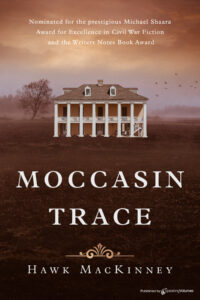
Moccasin Trace by Hawk MacKinney – Exclusive Excerpt and Giveaway

This post is part of a virtual book tour organized by Goddess Fish Promotions. Hawk MacKinney will be awarding a $15 Amazon/BN gift card to a randomly drawn winner. Click on the tour banner to see the other stops on the tour.

…it was about the land.

It is July of 1859, a month of sweltering dog days and feverish emotional bombast. Life is good for widower Rundell Ingram and his hazel-eyed, roan-haired son, Hamilton. Between the two of them, they take care of Moccasin Hollow, their sprawling ancestral plantation home in the rolling farming country outside Queensborough Towne in east Georgia. Adjoining Ingram lands is Wisteria Bend, the vast slave-holding plantation of Andrew and Corinthia Greer, their daughter Sarah, and son Benjamin. Both families share generations of long-accepted traditions, and childhood playmates are no longer children. The rangy, even-tempered Norman-Scottish young Hamilton is smitten with Sarah, who has become an enticing capricious beauty—the young lovers more in love with each passing day, and only pleasant times ahead of them.

…but a blood tide of war is sweeping across the South, a tide that will forever change everyone and everything.

Enjoy an Excerpt

Wisteria Bends, the Greer Plantation—thousands of acres of cake-icing cotton rolling over the gentle foothills of east Georgia that bordered the somewhat lesser acreage of Moccasin Hollows. The Hollows and its vested lands weren’t extensive by cotton standards. Hard work by Rundell and Hamilton, and jealously guarded with the usual Southroner passion for land. Ingrams and Greers were bred, borne and nurtured on old family crown grant lands. Money was vulgar. All that mattered was the land.

About the Author: With postgraduate degrees and faculty positions in several medical universities, Hawk MacKinney has taught graduate courses in both the United States and Jerusalem. His professional writing includes articles on chordate neuroembryology, and aerospace research on muscle metabolic behavior in multi-orbital environments.
In addition, Hawk has authored several works of fiction including a historical romance Moccasin Trace which was nominated for both the prestigious Michael Shaara Award for Excellence in Civil War Fiction and the Writers Notes Book Award. His Cairns of Sainctuarie Science Fiction Series and his Moccasin Hollow Mystery Series have received national and international attention. He is currently working on a series of horror/suspense novels.

Website

Buy the book at Amazon.

What Remains After by Pauline J. Grabia – Spotlight and Giveaway

This post is part of a virtual book tour organized by Goddess Fish Promotions. Pauline J. Grabia will be awarding a $10 Amazon/BN gift card to a randomly drawn winner. Click on the tour banner to see the other stops on the tour.

SOME STORIES DO NOT END WHEN THE DANGER PASSES.
Beth Clark has not returned to her hometown in decades, since the childhood she survived there nearly destroyed her.

When her estranged mother dies, Beth comes back to rural Alberta for a funeral that feels carefully rewritten. The eulogies are tidy. The past is sanitized. But inside the abandoned bungalow where she and her brother once lived, Beth finds objects that shatter the illusion—and awaken memories of abuse, neglect, and the systems that failed to protect her.

When Beth’s younger brother is critically injured in a sudden accident, the present collides with the past. Keeping vigil at his hospital bedside, Beth is drawn back into the summer that changed everything: the violence in their home, the silence of those who should have intervened, and the foster family whose quiet faith offered the first real safety either child had known.

Told across dual timelines, What Remains After is a literary psychological suspense novel about trauma and memory, belief and betrayal, and the long, unfinished work of survival. It asks what it truly means to forgive—and what remains when the truth is finally spoken.

Enjoy an Excerpt

Frigid cold seeped through Beth’s gloves from the steering wheel of her rental car to her fingers; her arthritis flared. The ache in her joints echoed the pain in her heart. Why, after all this time, with her specialized education and training as well as years of personal trauma therapy, couldn’t she shake the anxiety and hatred that still clung to Virgie’s name, and to that of her Uncle Gary?

Otto was composed. Somehow, he’d managed to recover. But she was still a mess. As a trained therapist, she told herself she should be able to work it out, but she couldn’t.

She drove up and down the quiet streets of the town. Except for a new grocery store that had replaced Gordon’s after it burned down about five years earlier, not much had changed. Like the church, the community seemed frozen in time. Truck models were newer, and teens wore different clothes, but the vibe of Coverville stayed the same: slow, conservative, and decaying. Around here, stories were currency, and nothing else. They didn’t step on others’ toes. Mind your own business. Keep moving.

Beth didn’t understand why she paused in front of the small, condemned bungalow with its rotting fence, missing shingles, and boarded-up windows. It looked like the only creatures that had lived there in years were cockroaches and mice. But they had been there long before the human residents moved out. Virgie was the last to leave when, six years before, Alzheimer’s had left her unable to care for herself any longer, and she ended up in a home.

Rebecka told Beth that Otto had thought about taking Virgie in, but Rebecka stood her ground. She wasn’t going to live under the same roof as his mother. Forgiveness was one thing; sharing a home was another. Otto did what he always did—sacrificed. He found a great nursing home, but it was also expensive. Beth suspected her brother had made up the difference out of his own pocket, since Old Age Security and Canada Pension didn’t cover the entire cost.

About the Author Pauline J. Grabia is a Canadian novelist whose work explores trauma, memory, faith, and the moral consequences of silence. Writing under the Stories of Consequence banner, she is drawn to stories that face difficult truths without spectacle and seek light without sentimentality. What Remains After is a literary psychological suspense novel rooted in rural Alberta and shaped by questions of survival, forgiveness, and what endures.

Instagram | Website | Goodreads

Buy the book at Amazon.

Her Silence by S.T. Ashman – Spotlight and Giveaway

This post is part of a virtual book tour organized by Goddess Fish Promotions. S.T. Ashman will be awarding a $20 Amazon/BN gift card to a randomly drawn winner. Click on the tour banner to see the other stops on the tour.

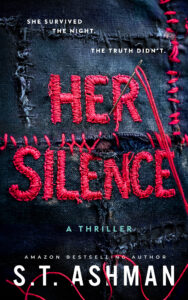
She survived the night. The truth didn’t.
Nicole gets the call at 4 a.m. Her daughter Lacey was found in the woods beside her friend’s dead husband. He was stabbed forty-four times. Lacey is barely alive. Covered in his blood. And completely mute.

She hasn’t said a word since. Not to the police. Not to her husband. Not even to Nicole.

Nicole had Lacey at seventeen and swore her daughter would have a good life. Now Lacey is sitting in a cell, and Nicole’s three grandchildren are left behind with a father who is losing it.

But Nicole knows her daughter. She isn’t a cold-blooded murderer. Guilt didn’t silence her. Fear did. Whatever happened in those woods scared Lacey more than prison.

So Nicole starts digging. But some secrets don’t save people. They destroy them.

Enjoy an Excerpt

I strode past carts and nurses, straight down the hall, and yanked open the door to room 12.
But I wasn’t ready for what was waiting inside. My body jerked back as my hand shot up to my neck. “Dear God.”

Lacey sat upright on the bed, wearing a hospital gown. A doctor stood over her, shining a light into her eyes. Two nurses flanked him.

I almost didn’t recognize her.

Her hair was soaked in dried blood. Matted. Tangled with dirt and leaves. Thick blood streaks ran down her neck and across her temple like Viking war paint. Her face and arms looked like someone had tried to wipe her clean with a wet napkin and given up halfway. Just smears of pink and red everywhere.

The bandage on her forehead was already smudged with red too.

Her eyes met mine. Brown, blank, dull. Nothing behind them.

“Sweetheart!” My voice fell apart. Tears burst out of me as I crossed the room in two desperate strides and grabbed her. Held her. Pressed her to my chest so tight nothing could tear her away again.

Not even the nurse who latched onto my arm.

“Ma’am, you can’t be in here right now.” Her voice was sharp and demanding.

I didn’t move.

The other nurse came at me from the side. Hands on my other arm.

“You need to wait outside,” she said, yanking at me.

“Get off me,” I growled.

About the Author:S. T. Ashman is an American-German author who calls the beautiful U.S. Seacoast home. A graduate of the University of Pennsylvania, she spent years working as a psychotherapist in the criminal justice system. The work gave her a rare window into the human mind, both the beautiful and the deeply shadowed. It’s no wonder readers often say her characters feel real enough to step off the page.

When she’s not crafting her next twisty tale, you’ll find her chasing after her kids, nose-deep in a book, or curled up late at night with a horror movie and a husband who always falls asleep on the couch before the scary parts.

TikTok | Instagram | Facebook | Website

Link to ARC on Netgalley

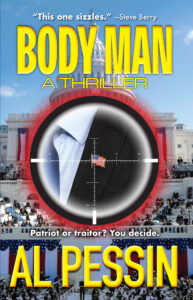
Body Man by Al Pessin – Spotlight

Soon to be released!

A country doesn’t fracture all at once—it happens in stages, through rising tension, conflicting beliefs, and decisions that carry unintended consequences. As those pressures build, individuals on opposite sides begin to act with increasing urgency. In Body Man by Al Pessin, those forces converge.

A divided America becomes the backdrop for a chain of events triggered by a failed assassination attempt on a newly elected president. The incident intensifies already growing tensions, setting off a wave of unrest that spreads across the nation.

Spencer, the president’s closest aide, steps into a role that grants him unprecedented proximity to power. As the administration responds to rising threats, he must balance loyalty with the realities unfolding around him.
Carl, a disgraced Marine sniper, is recruited by a militia movement that believes drastic measures are justified. His mission begins with clarity but gradually loses definition as circumstances spiral beyond control.

As cities erupt and authority begins to splinter, both men continue forward, guided by their own understanding of duty. In the chaos, the distinction between patriot and traitor becomes increasingly difficult to define.

A “Thought-Provoking” Story From a Former White House Press Corps Member

Steve Berry says Body Man is “crisply plotted, thought-provoking and troubling in its take on our new reality.”

In this incredibly timely new political thriller, former White House and Pentagon press corps member and multi-award-winning author Al Pessin takes readers inside the corridors of power, on deployment with a Marine Corps unit, and into the secret world of militias willing to commit violence to “defend America.”

Jon Land calls Body Man “a taut, terrifying, terrific political thriller that cuts to the bone . . . an all-too-credible cautionary tale ripped from tomorrow’s headlines.”

Body Man reads like the true story it could easily be, told by its two main characters. Spencer is the Body Man, close personal aide to a liberal senator who catapults to the presidency. Carl is a body man of a different sort, a Marine Corps sniper with a bad conduct discharge who gets drawn into the Alt-Right movement and recruited to assassinate the new president.

As America’s real-life tensions explode, there are mass shootings, riots in the streets, and mutinies in the military―all things that could actually happen if we let them. And two young men have more power to determine the course of American history than they should ever have.

Body Man is a “chilling cautionary tale,” says NY Times bestselling author T. Jefferson Parker. “Al Pessin has done it again. Don’t miss this one from a terrific writer.”

Enjoy an Excerpt

I woke up to what was really happening in America, and I did something. I defended it. I gave everything.

Because that’s what American patriots do.

And that’s what I continued to do, no matter what you think, even when the Corps fucked me, even when the world turned upside down and inside out, even when “defend the Constitution of the United States against all enemies foreign and domestic” became more of a curse than an oath.

I’m Carl Reddy and this is my story.

I know you’ll remember my name. Everybody will.

But also remember that I’m an American patriot. Always was. Always will be.

About the Author Al Pessin is an award-winning author and veteran foreign correspondent whose decades of frontline reporting fuel his high-tension political thrillers. He’s covered war zones from Iraq to Afghanistan, interviewed militants in Gaza, and was once expelled from China for “fomenting counter-revolutionary rebellion.”
Before turning to fiction, Pessin spent nearly four decades with Voice of America, serving as a White House and Pentagon correspondent and reporting from global hotspots across Asia, the Middle East, and Eastern Europe. His debut thriller Sandblast launched the Task Force Epsilon series and was followed by Blowback and Shock Wave.

He lives in Florida with his wife and their Labrador, Rory.

Visit Al at his website and follow him on Facebook and Instagram.

Website | Facebook | Instagram | Goodreads

The book will be available April 21, 2026 at Amazon.

Five Must-Haves in the Cozy Mystery Genre by Kirsten Weiss – Guest Blog and Giveaway

This post is part of a virtual book tour organized by Goddess Fish Promotions. Kirsten Weiss will be awarding a $10 Amazon/BN gift card to a randomly drawn winner. Click on the tour banner to see the other stops on the tour.

Five Must-Haves in the Cozy Mystery Genre

If you’re a cozy mystery fan (or writer), you know the genre delivers something special: a comforting escape wrapped around a clever puzzle. Cozy mysteries aren’t about gritty realism or high-stakes thrillers—they’re gentle, witty, satisfying reads that leave you feeling good when the final page is turned. But what exactly makes a story qualify as a great cozy mystery? Over years of reading and writing in the genre (including my Perfectly Proper Paranormal Museum series), I’ve boiled it down to these five essential must-haves. These elements show up in the best cozy mysteries time and again, creating that signature “cozy” feel readers crave.

  1. An Amateur Sleuth Readers Can Root For:
    Every cozy mystery needs a relatable protagonist who’s not a professional detective. She’s usually a woman (though not always) with a day job that conveniently gives her access to gossip and clues—think bakers, librarians, museum curators, or innkeepers. In my series, Maddie Kosloski runs a quirky paranormal museum in wine-country San Benedetto, stumbling into murders while managing cursed exhibits. She’s smart, stubborn, a little flawed, and deeply human—making her easy to root for. The best cozy mysteries let readers see themselves in the sleuth: ordinary people using wits, intuition, and community to solve crimes.
  2. A Charming, Contained Setting That Feels Like Home:
    Cozy mysteries thrive in picturesque, small-town or village environments where everyone knows everyone (and their secrets). Though recently, these mysteries are starting to move into contained urban neighborhoods (think Murders in the Building). With quaint streets, local shops, vineyards, or historic buildings, the setting becomes a character in its own right. My fictional San Benedetto, inspired by Lodi, California, offers wine-country charm with historic downtowns, Delta breezes, and tight-knit neighborhoods. This contained world keeps suspects limited and stakes personal, amplifying that cozy, escapist bubble readers love.
  3. No Graphic Violence, Gore, Explicit Sex, or Heavy Profanity:
    This is the golden rule of cozy mysteries. Crimes happen “off the page”—the murder might be discovered, but readers don’t witness graphic details. The focus stays on the puzzle, not the brutality. In my Paranormal Museum series, the emphasis is on clues, motives, and resolution, not blood. This “clean” approach makes cozy mysteries perfect comfort reads—ideal for curling up with tea without nightmares.
  4. A Clever, Fair-Play Puzzle with Red Herrings:
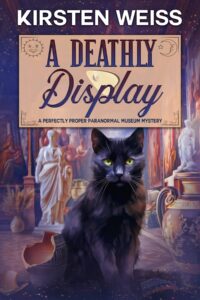
    Cozy mysteries are all about the whodunit. The plot must be logical, with clues scattered fairly so readers can solve it alongside the sleuth. Red herrings (false leads) add fun misdirection, but the reveal should feel earned and satisfying. In A Deathly Display, suspects include shadowy curators and jealous collectors, with clues hidden in exhibits and conversations—classic cozy mystery structure that rewards attentive readers.
  5. An Uplifting Resolution and Themes of Justice/Hope:
    Cozy mysteries end positively: the killer is caught, order restored, and characters grow. Themes of second chances, friendship, and good triumphing gently are key. The villain often faces consequences that feel fair, not vengeful. This “feel-good” payoff is why readers return—cozy mysteries reassure us that puzzles (and life) can resolve happily.

Ultimately, cozy is a feeling, and a cozy mystery is a promise of a certain reader experience. Together, these five must-haves create cozy magic: comfort, cleverness, and connection. They keep the genre accessible and addictive while allowing for creativity (like my light paranormal twists).

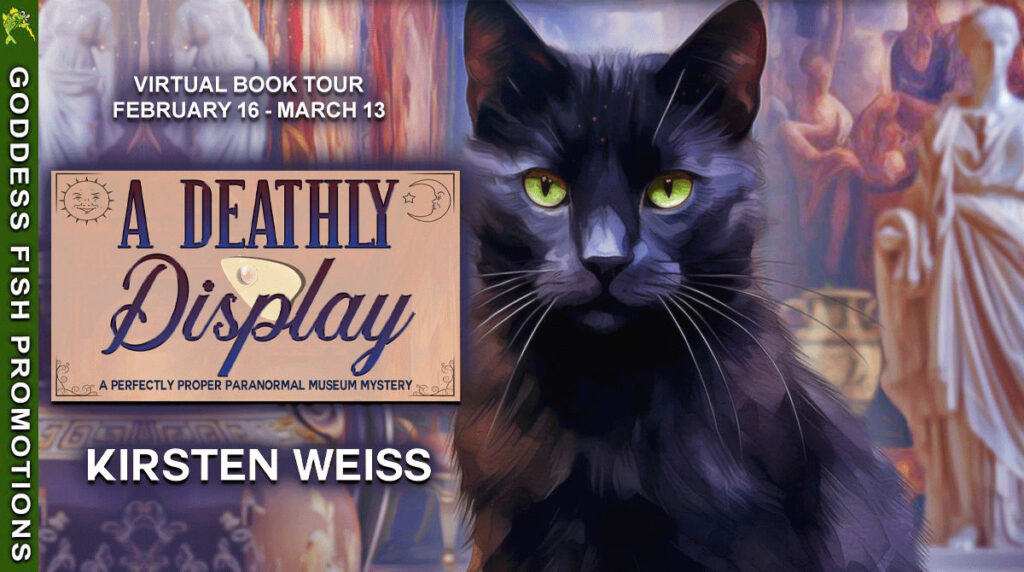
Speaking of cozy mysteries, my latest, A Deathly Display (book 11 in the Paranormal Museum series), hits all these notes: Maddie solves a museum murder with art-world intrigue, subtle haunts, humor, and heart. If you’re craving a cozy mystery with a whisper of the paranormal, grab it now!

What’s your favorite cozy mystery must-have? The amateur sleuth, the setting, or something else? Drop a comment—I love hearing from fellow cozy mystery fans!

Happy reading,
Kirsten Weiss

A killer stalks her sister.
A mysterious painting holds the key.
Can Maddie unravel the mystery before Melanie meets a deadly fate?

When Maddie and Herb attend a curation class at the upscale Domus Vinea museum, the mood turns darker than a gothic portrait after Maddie’s opera-singing sister, Melanie, discovers the museum director’s body. Now, with a cunning killer targeting Melanie next, Maddie must act fast.

Racing against time, Maddie and friends investigate a gallery of suspects, including a dashing vintner with a haunted painting that may hide a deadly secret. If Maddie can’t crack the case, and fast, her sister’s life could end in one fatal stroke.

A Deathly Display, the latest in the Paranormal Museum series, blends quirky sleuthing, small-town chills, and paranormal thrills with a dash of humor. Perfect for fans of cozy mysteries!

Grab A Deathly Display and start reading this hilarious whodunit!

For readers who crave a cozy mystery about a woman finding belonging through small-town wine-country sleuthing and the gentle absurdity of everyday hauntings. Perfect if you like breezy pacing, light supernatural quirks, and warm humor over gritty tension—think vintage charm, quirky neighbors, and just-enough chills to keep pages turning without losing sleep. Book 11 in the series.

Enjoy an Excerpt

There are a few things in life you can be sure of. Death. Taxes. And divas being divas.

“Why?” Melanie sobbed. “Why is this happening to meeeee?”

I jogged to the fallen man and knelt beside him in the courtyard. Pressing a finger to his neck, I tried to find a pulse.

“Another body,” my sister hiccupped. “Why here?”

I sat back on my heel. The dead man faced the pristine marble fountain. And he was definitely dead. Though his skin was still warm, his eyes stared, as blank as the nearby statue of Hermes.

Yanking my phone from the rear pocket of my khakis, I called 9-1-1. The scent of orange blossoms billowed in the warm night air, but now the odor seemed sickening.

My mother appeared at my side. “Oh, my God. That’s—” She gripped my shoulder, her nails digging in. Just as suddenly, she released me and edged the toe of her low camel-colored shoes away from the pooling blood.

“I just f-found him there.” Melanie pointed.

“And it’s a terrible shock,” my mother said in a low voice. “Now, we need to pull ourselves together.” She looped one arm around Melanie’s hourglass waist.

“Nine-one-one, what is your emergency?”

“Murder, I think,” I said. “My sister found a dead man. His head is—” I swallowed and looked away. “There’s a lot of blood. We’re at the Domus Vinea Museum, in the smaller courtyard.”

“Are you in danger?” the operator asked.

“No. There’s a reception going on here. There are lots of people…” I glanced toward the opening to the courtyard. Guests had begun to gather, staring, in its arched entrance.

“Why does this always happen?” Melanie wailed. “First Sicily and now this. Am I cursed?”

“No, no,” my mother murmured, touching the squash blossom necklace beneath the collar of her denim shirt. “It’s just bad luck.”

“Help is on the way,” the dispatcher said. “Is the man you found breathing?”

“No. He’s dead.” I knew dead, and I knew what came after for the people left behind.

About the Author: Kirsten Weiss writes laugh-out-loud, page-turning mysteries, and now a Tarot guidebook that’s a work of experimental fiction. Her heroes and heroines aren’t perfect, but they’re smart, they struggle, and they succeed. Kirsten writes in a house high on a hill in the Colorado woods and occasionally ventures out for wine and chocolate. Or for a visit to the local pie shop.
Kirsten is best known for her Wits’ End, Perfectly Proper Paranormal Museum, and Tea & Tarot cozy mystery books. So if you like funny, action-packed mysteries with complicated heroines, just turn the page…

Website | Instagram | TikTok | YouTube | Perfectly Proper Paranormal Museum on X

Buy the book at Amazon, Apple Books, Barnes and Noble, Google Books, Kobo, or your favorite online venue

Background of the Book by Victoria Weisfeld – Guest Blog and Giveaway

This post is part of a virtual book tour organized by Goddess Fish Promotions. Victoria Weisfeld will be awarding a $25 Amazon/BN gift card to a randomly drawn winner. Click on the tour banner to see the other stops on the tour.

Background of the Book

Mysteries and thrillers are what I write. They’re considered a genre, of course, but as Swedish crime writer Henning Mankell said, “Every good story has a mystery in it.” It’s the unknown outcome—will the hero succeed, will the woman find happiness, who is the real enemy?—that keeps us turning pages. It’s the desire to find out “what happens next?” I like to ground the mysteries in my stories in aspects of real life that I’ve experienced, though fortunately, I haven’t experienced everything I write about!

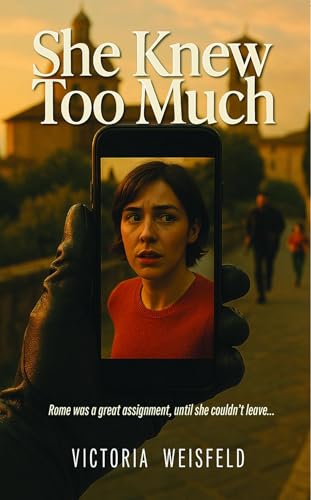
She Knew Too Much, my new thriller, is set in Italy, mostly in Rome. Yes, I’ve been there several times, exploring the city with my husband and on my own. It’s certainly one of my favorite places, so was fun to “revisit” it by writing about it. My main character is a travel writer and blogger. I engage in both those activities, so writing about them feels natural to me. When she’s attacked, she spends a few days in the hospital—and for that I drew on an episode in which my husband’s horseback riding accident led to two weeks in an Arizona hospital. Those experiences and many, many more end up woven together (dressed in new garments, as it were) in the novel.

In addition, I do a lot of research, because I love doing it. A lot of it is very specific or situational, like how long would it take to walk from x to y? And some is deep background. I stumbled on Douglas Preston’s The Monster of Florence about a northern Italian serial killer and the botched prosecutions of various suspects. This was very helpful in understanding how the Italian justice system works and how it differs from ours. I used Word Reference to help with translations and that site’s forums to interact with Italian speakers about slang and idioms.

I am an only child, so I never had a brother who was important to me, like Genie’s brother Robbie is so important to her. But I certainly have observed many siblings and how they interact. Also key to the novel, I’ve observed how people who must work together have to set aside personal feelings for the good of the project.

When people say, “It must be liberating to write fiction. You can just make it up!” I know they’ve never tried to write any. At least not the way I do. I work hard to stay grounded in a core of truth, a bedrock of shared understanding, so that I can connect with my readers. Once they trust me, I can stretch things a bit.

You might be thinking that science fiction and fantasy are two genres where the “shared understanding” idea doesn’t apply. But I believe it still does. My favorite contemporary science fiction writer is Neal Stephenson, and his science is impeccable. With that solid base, his characters can do . . . anything! Fantasy writers put people in unfamiliar worlds, with supernatural powers, but with familiar motivations and interactions: they’re on a quest, they’re fighting enemies, they’re seeking love or power. While we might not resonate with how they look or their unusual abilities, we can understand what they’re all about.

This is probably an oversimplification, but I believe it’s generally the case that people like stories and characters they can relate to. That was one of the joys of writing She Knew Too Much. I related not only to the main character, but to a good number of the diverse supporting cast, as well.

I hope your readers take the opportunity to read She Knew Too Much. I think they will find it a fast-moving story with touches of romance, humor, and a big dose of humanity. I welcome their responses. Thank you for inviting me to share these few words about its creation.

Travel writer Genie Clarke arrives in Rome seeking inspiration, but her trip turns deadly when she overhears two mafia operatives discussing a secret “Project.” Before she can escape, she’s attacked and left for dead. Awakening in a hospital-alive but hunted-Genie finds the police unwilling to believe her. Only Detective Leo Angelini takes her seriously, uncovering ties between her assault, a murdered woman, and a powerful criminal network.
With the threat escalating, Leo moves Genie into hiding, where she becomes both key witness and prime target. Cut off from safety and unsure who to trust, Genie must outthink the conspirators determined to silence her.

From Rome’s bright piazzas to its shadowed alleys, she faces a terrifying fight for survival-and an unexpected connection with the detective risking everything to protect her. She Knew Too Much is a lean, suspenseful psychological thriller about fear, courage, and the price of knowing too much.

Enjoy an Excerpt

I crossed the one-way traffic to reach the Piazza del Popolo’s spacious central rectangle. People ambled toward one or another of the half-dozen streets that converged on the Piazza or to the steps leading up to the Villa Borghese Gardens, where I’d spent the afternoon. I was aiming for the Via del Babuino, street of the Baboon, which got its name from a particularly hideous sculpture. In a few blocks, that street ended at the Piazza di Spagna and the always-crowded Spanish Steps, a half block from my hotel.

On the far side, I again negotiated the circling rush of traffic and chanced a look behind. What the hell? The spiky-haired blond had crossed the first stream of traffic. Now he jostled through the crowd, coming straight my way. He was tracking me, and he didn’t care if I knew it.
I was in trouble. And, if I didn’t want to believe my eyes, the hair on the back of my neck confirmed it. I picked up my pace, walking as fast as I could in my flimsy sandals.

Dozens of times I’d traveled the few blocks connecting the two piazzas. Now this familiar street radiated hostility, and the stones of the Sunday-shuttered buildings reflected no warmth. Surely something, some business, would be open. I sped past my favorite stationery store, the gallery whose owner I’d interviewed. Shut tight as oysters.

Why hadn’t I asked someone near the piazza for help? Could I have made myself understood? Would they have agreed to get involved? I shook my head in frustration.

About the Author: Vicki Weisfeld is a Midwesterner (Go Blue!) transplanted to New Jersey. Her short stories have appeared in leading mystery magazines, including Ellery Queen, Sherlock Holmes, and Black Cat. Find her work also in a variety of anthologies: Busted: Arresting Stories from the Beat, Seascapes: Best New England Crime Stories, Murder Among Friends, Passport to Murder, The Best Laid Plans, Quoth the Raven, and Sherlock Holmes in the Realms of Edgar Allan Poe. She’s a member of Sisters in Crime, Mystery Writers of America, the Short Mystery Fiction Society, which awarded “Breadcrumbs” a best short story Derringer in 2017, and the Public Safety Writers Association, which gave a similar award to “Who They Are Now” in 2020. She’s a reviewer of New Jersey theater for TheFrontRowCenter.com and crime/mystery/thriller fiction for the UK website, crimefictionlover.com.

Website | Amazon Author Page | Goodreads

Buy the book at Amazon.

Where Do Ideas Come From? by GG Calpo – Guest Blog and Giveaway

This post is part of a virtual book tour organized by Goddess Fish Promotions. GG Calpo will be awarding a $10 Amazon/BN gift card a randomly drawn winner. Click on the tour banner to see the other stops on the tour.

Where Do Ideas Come From?

Coming up with an idea for a storyline is easy. Inspiration is everywhere. You find it in news headlines, overheard conversations of strangers, text messages, social media rabbit holes, your pet’s antics, your neighbor’s griping, a personal memento you thought lost but found in the most unlikely place, stories you’ve read, shows you’ve watched…I can go on and on and on.

The real challenge is putting together the pieces your imagination has come up with. And turning these pieces upside down, right side up, and inside out. Because storytelling is giving the reader that extra emotional punch they didn’t even know they wanted. It’s not just delivering on the premise but in making it resonate with the reader. For cozy mysteries, that means offering not only a whodunit but raising the emotional stakes so the mystery stops being about what happened and becomes about what it meant.

And for a writer to do that, they have to keep asking themselves why their characters act the way they do. There is always more than one choice for any action. Why did they choose that one—and what does that choice reveal about their fear, flaw, or desire? Answering this question allows a writer to go deeper into the character, becoming more creative with the character and making the character relatable, thus drawing the reader in.

Ideas are cheaper by the dozen. It’s what you do with them that makes you a writer. Because emotional honesty is what transforms a fleeting spark into a story readers truly remember.

What does Meg, a retired kindergarten teacher, do when the killer of her husband and only child still walks free a year after dirt had covered their graves? Go rogue, of course!

When the detective responsible for Meg’s nightmares takes over the murder investigation of her former student, Meg hunts the killer down with help from her friends. Their cozy lunches at Sweet Buns Café turn into tactical meetings while these retired grade school teachers get themselves in trouble better suited to those in their twenties. And to put the icing on their cream scones, someone is after Meg. Is it the killer? Or has Meg uncovered secrets better left buried with her loved ones?

Enjoy an Excerpt

The day was beautiful, with clear skies and a mild snap in the air. It was cold yet warm with the right amount of heat from the sun, making it the perfect spring day. Motorboats and sailboats dipped in and out of the water, out by Poet’s Bay. And at the edge of the harbor were the fishermen, alone or in groups of two or three, a rod in their hands and their tackle boxes opened beside them. We rounded the corner, almost done with our walk, when we saw mothers dragging their children away and fathers covering the eyes of the children in their arms. Pushing against the stream of parents scrambling away were others whose eyes were fixed on the man by the harbor’s edge. A man on whose fishing line dangled a catch with, what I thought were, red fins and a red tail swaying lazily around the hook.

Red? In the salt waters of Poet’s Bay? As I stood there trying to figure out what I was seeing, Barbara shoved her way into the crowd. I followed, my curiosity getting the better of me. Murmurs of “Good morning” and “Good to see you, Mrs. B” trailed behind me, changing to “You sure you want to see this, Mrs. B?” and “I wouldn’t go any further if I were you, Mrs. B.” We fetched up to the front and looked down on the ground before us while the fisherman beside us puked his guts out.

It wasn’t a fish he had caught.

Instead, on the ground was a hand. Just a hand. Nothing else.

About the Author A retired CPA and lawyer, GG Calpo now writes cozy mysteries and urban fantasies. She blends her experiences as a Filipino American immigrant with the everyday stories of life around her. She spends her time reading, crocheting blankets and sweaters for her five grandchildren, watching mystery TV shows and taking long walks in her neighborhood. She resides in Central New Jersey, with her husband and two corgis, Whiskey and Nugget.

Website | Facebook | Instagram | Goodreads

Buy the book at Amazon, Barnes and Noble, or iBooks.

Winter Blogfest: Victoria Weisfeld

This post is part of Long and Short Reviews’ Winter Blogfest. Leave a comment for a chance to win a pdf copy of three of my award-winning short mystery/crime stories: a woman trying to escape her violent husband, a hurricane that masks a nursing home murder, and sheriff’s deputy’s trap for animal abusers. 

My Best Christmas Present

If you’re a writer, your desk is probably loaded with coffee mugs and collections of pens, pencils, notepads and paperclips, while grammar guides, marketing manifestos and the like spill from your bookshelf. That’s certainly how my “work area” looks.

Bucking the tendency to default to such perennial gifts, my grandchildren surprised me a few years ago with what may be my favorite Christmas present, well, ever. I write crime and mystery fiction (two novels, the second, She Knew Too Much, coming early in 2026), and have some 45 published short stories in that genre. In 2019, when my grandkids were 11, 10, and 8, they made a video version of my story “The West Texas Rookie,” published that year in Mystery Weekly Magazine.

This was the first of four published stories about young, tiny, and fearless Japanese American reporter Brianna Yamato making her mark in the macho newsroom of the Sweetwater, Texas, Register. Assigned to write a wrap-up story about a four-victim homicide that even the police believe needs no further investigation, Brianna proves theres always more to find out.

The kids took this story, turned it into a play, created props and (minimal) costumes, and acted it out, making strategic adaptations. At one point in the story, Brianna climbs into her car and a kid bikes up to the driver’s window to deliver a key piece of neighborhood gossip. In their version, my younger grandson rolls up on his skateboard—easier to keep in frame that way. Locations around the house were adapted to serve as newsroom, Brianna’s apartment, and the crime scene. They enlisted their mom to play the nosy neighbor. My older grandson served as principal videographer, using his mom’s cell phone, and my granddaughter (the middle child) played the intrepid Brianna. Somehow, they even created a main title and closing credits.

In their hands, the story was funny and entertaining, it still worked, and it was one of the best gifts I’ve ever received!

In She Knew Too Much, American travel writer Genie Clarke is in Rome on assignment and overhears planning for a major crime. When the gangsters realize what’s happened, they go on the attack. What she’s learned is just the first hint of a deadly criminal conspiracy that must be stopped.

More than 45 of Victoria Weisfeld’s short stories have appeared in leading mystery magazines and anthologies, including Mystery Magazine, Ellery Queen MM, Black Cat MM, Sherlock Holmes MM, Alfred Hitchcock MM, and Soul Scream, with awards from the Short Mystery Fiction Society and Public Safety Writers Association. Her first mystery-thriller, Architect of Courage, was published June 2022.

Website | Facebook | Goodreads

Buy the book at Amazon.