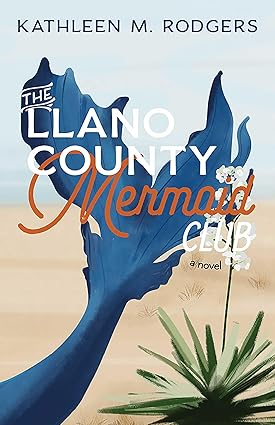
The Llano County Mermaid Club by Kathleen M. Rodgers


The Llano County Mermaid Club by Kathleen M. Rodgers
Publisher: University of New Mexico Press
Genre: Mystery/Suspense/Thriller, Contemporary, Historical
Rating: 4 Stars
Reviewed by Astilbe

Growing up in the desert town of Sandhill, New Mexico, Marigold Hubbard and her friends wanted only one thing: to see the ocean. The community pool and the nearby Santa Rosa Blue Hole are the closest they can get, and they dream of mermaids while swimming these rare waters. When Marigold learns of the affair between her father and the mother of her best friend, Melody Calloway, the betrayal tears the girls apart. Unmoored from both friends and family, Melody meets a tragic and mysterious end on the shores of the Blue Hole, leaving Marigold no chance to ever reconcile the friendship.

Forty years later, Marigold returns to Sandhill to care for her elderly father, but an envelope of old letters and a cryptic message in an abandoned church leads her on a quest to find answers about what really happened to Melody. Threading between past and present, Marigold must piece together the tragic chain of events that led to Melody’s death, pursuing questions that may have no easy answers.
It’s difficult to keep a secret forever.

The character development was excellent. All of the main characters were well-rounded individuals whose flaws made a genuine difference in how not only their own lives but also the plot turned out. They felt like real people to me, especially later on once their personalities and past mistakes began to have an ever bigger influence on what was happening. I loved them in many scenes but was also exasperated with them in others. This is exactly the sort of fiction that makes it impossible for me to stop reading!

I would have liked to see more time developing the mystery elements of the storyline. There were some aspects of Melody’s death that never quite made sense to me, especially given how her personality had been described in the years leading up to that day. Some of the clues we were given felt out of place, and the explanations for them weren’t quite satisfying enough for me to choose a full five-star rating. With that being said, I still deeply enjoyed reading this book and getting to know all of the characters.

The 1960s and 1970s were not always easy eras for women and girls to live in. It was interesting to explore how the female characters reacted to the sexism and racism in their community and how they found ways around those prejudices in order to achieve as many of their dreams as possible. This was not a sugar-coated version of the past by any means, but it also left plenty of space for the characters to find joy in little things like visiting the library or swimming together. I appreciated the fact that the narrator balanced it all out and made this reader feel as thought I truly had stepped into a time machine to see what life was like sixty years ago.

The Llano County Mermaid Club was a heartwarming saga.
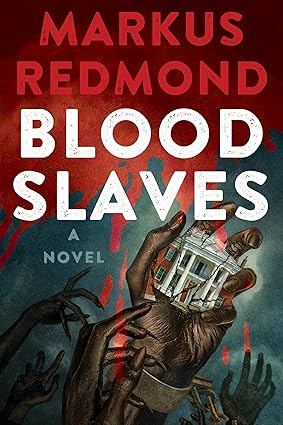
Blood Slaves by Markus Redmond


Blood Slaves by Markus Redmond
Publisher: Dafina
Genre: Historical, Mystery/Suspense/Thriller, Paranormal
Rating: 5 stars
Reviewed by Ginger

What if nobody ever freed the slaves…because they freed themselves – 150 years before the Civil War?

In the Province of Carolina, 1710, freedom seems unattainable for Willie, for his beloved Gertie, and for their unborn child. They live, suffer, and toil under their brutal master, James “Big Jim” Barrow, whose grand plantation was built by the blood, sweat, and tears of the enslaved. To flee this hell on earth is be hunted and killed. Until one strange night Willie is offered a dark hope by Rafazi, an enigmatic slave with an irresistible and blood-chilling path to liberation.

Hailing from the Kingdom of Ghana, Rafazi is the lone survivor of the Ramanga, an African vampire tribe rendered nearly extinct by plague. Rafazi has roamed the world for centuries with an undying desire to replenish the power that once defined his heritage. In Willie, Rafazi has found his first biddable subject to be turned and to help in a hungry revolt. And Willie desires nothing more than to free his people from malicious bondage. Whatever it takes.

One by one, as an army of blood slaves thirsting for revenge is gathered, the headstrong Gertie fears that no good can come from the vampiric legacy that courses through Rafazi’s veins. Willie knows that only evil can fight evil. And when the woman he loves stands between the reemergence of the Ramanga and the justified slaughter of the oppressors, Willie must make an irreversible decision. Only one thing is certain: on the Barrow plantation, and beyond, blood will spill.

Part historical drama, part supernatural horror, and part alternate history, Blood Slaves is an ingenuous and defiant new creation myth of the vampire, one rooted in both justice and the sometimes-violent means necessary to achieve it.

If given the chance to fight for freedom from slavery, what would you be willing to sacrifice to achieve it?

Markus Redmond’s exceptional storytelling seamlessly blends American history with supernatural horror in a deeply satisfying fight for freedom. I kept telling everyone they had to get a copy of this book the moment it released. I am convinced this would be incredible as either a movie or a TV series. It has everything: love, betrayal, plenty of action, and a classic good-versus-evil theme.

Blood Slaves is a tough read at times, but a necessary one. It’s much more than just a book about vampires and slaves; it’s thought-provoking and opens up vital discussions. I appreciated the way Redmond explores the differing opinions among slave owners and the complex arguments among the enslaved. Even though Robert Callowhill, James Barrow’s (Big Jim) house guest, owned slaves, he didn’t share Big Jim’s particularly vicious justifications for slavery. The novel delves into the difficult question of violence versus non-violence, and the multifaceted nature of freedom and its cost. Gertie’s verbal stance, weighing enslavement by white men against enslavement to blood, and questioning if being undead equates to true freedom, is particularly compelling. If you had the opportunity to fight for freedom from slavery, would you do so, and to what extent?

I also appreciated Redmond’s portrayal of Rafazi, who admitted his fear and acknowledged that, while not a natural leader himself, he recognizes and respects Willie/Kwadzo’s leadership. I like Redmond’s inclusion of how the enslaved people honored and shared the land with the Indigenous people. I felt that the violence and revenge in this story were not portrayed as the actions of heartless killers, but of a need to survive and change the narrative of the mistreatment of humans for the color of their skin.

Redmond also raises important points about the significance of identity and heritage, and how profoundly the loss of one’s birth name, as experienced by Willie and the other enslaved, can impact a person.

Redmond successfully built the Barrow Plantation, vividly depicting the plantation, the lives of the slaves, and the characters. I found it interesting how little Big Jim valued his chief overseer, Monroe Washington, almost less than his slaves, and how that dynamic fueled Monroe’s hatred for Willie. Redmond also provides a rich history of the Ramanga Tribe, and through Rafazi, we learn about the nature of their blood and how humans respond to it.

From every angle, the story maintains a compelling and intriguing pace, building towards the action and rebellion. Readers seeking a traditional vampire story may not find this book to their taste. But those who enjoy historical fiction with an alternative blend of supernatural horror will find Blood Slaves full of depth, entertainment, and characters that readers will both love and hate.

This novel receives my highest recommendation for readers willing to engage with challenging themes presented without sugar-coating. Potential readers should be aware that the story is set in 1710 in the province of Carolina. It contains triggers and content warnings, including violence, blood/gore, murder, abuse, sexual abuse, child abuse, racism, hate speech, racial slurs, and systemic racism.

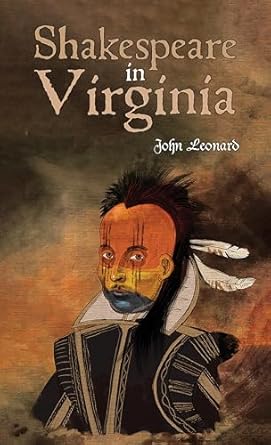
Shakespeare in Virginia by John Leonard


Shakespeare in Virginia by John Leonard
Publisher: Self-Published
Genre: Historical
Rating: 3 Stars
Reviewed by Astilbe

In February 1616, William Shakespeare finds himself on the brink of financial ruin and trapped in an unhappy marriage. Desperate for a way out, he agrees to resume his clandestine work for the English secret service. His mission: to report on the Virginia Company and their activities in the Virginia Colony. To maintain his cover, Shakespeare must fake his own death and assume a new identity. As he embarks on this dangerous journey, Shakespeare befriends John Rolfe and his wife Matoaka (Pocahontas), who are visiting England. The couple provides invaluable insights into Virginia, Powhatan society, and the complex situation unfolding in the Colony. Following Mataoka’s tragic death, Shakespeare accompanies Rolfe to Virginia, taking on the guise of a tobacco planter. In this new world, Shakespeare must navigate the treacherous waters between the avaricious English colonists and the hostile, embittered Powhatans. Can his experience as a renowned actor and playwright help him survive and thrive in the Colony? And how will the most famous life in history come to an end?

Pretending to be dead is easy, right?

Shakespeare was a complicated character whom I had all sorts of reactions to. There were scenes when I was impressed by how open-minded he was to new experiences only to shake my head in exasperation at his stubbornness a few pages later. It was almost like spending time with an uncle who was so set in his ways that he couldn’t quite see how his actions were affecting others. As much as one loves relatives who act like that, they also might wish for five minutes of clarity to help smooth things over. Honestly, I think it’s wonderful when a protagonist can evoke so many different types of emotions in me as a reader, and I’d happily read a sequel if the author ever writes one.

I found myself wishing for more character development in this novel. For example, some of the characters held surprisingly modern opinions about slavery and race that I would have loved to dig into deeply in order to understand where they came up with those ideas and how they had been able to develop them in a society that often firmly disagreed with them. It would have also been easier for me to keep track of everyone if I had stronger impressions of their personalities and interests.

Some of my favorite passages were the ones that described Powhatan culture in vivid detail. Their reactions to English culture, especially when it came to topics like cleanliness, the afterlife, or how one should spend a long, cold winter, were completely understandable. Honestly, I could have read an entire book about their tribe and still wanted to learn more about how they thought about the world.

Shakespeare in Virginia made me smile.

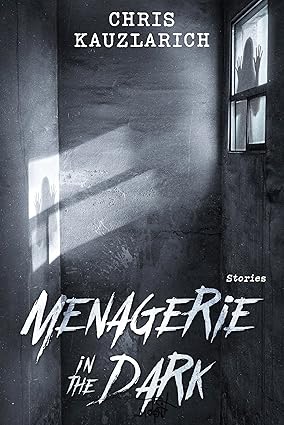
Menagerie in the Dark-Stories by Chris Kauzlarich


Menagerie in the Dark-Stories by Chris Kauzlarich
Publisher: Phantom Quill Press
Genre: Mystery/Suspense/Thriller, Sci-Fi/Fantasy, Paranormal, Holiday, Contemporary, Historical
Rating: 5 Stars
Reviewed by Astilbe

Life often appears darkest just before the dawn of a new day.

In Menagerie in the Dark, Chris Kauzlarich immerses us in a speculative journey that explores the darker aspects of the human condition before bringing us back to the surface with the light of a new day. Through fourteen stories, this menagerie of characters faces trials of sorrow, death, loneliness, regret, deception, murder, delight, wonderment, and bliss, revealing what will either strengthen them enough to survive or plunge them to their demise. A boy’s home burns down, forcing him to confront a terrifying new world. A man enters a door where he witnesses his wife’s death, leaving him devastated; yet, he cannot stop returning to the scene, convinced he can save her. A nurse’s patients continue to perish under her care, but she harbors a dark secret—an administered cocktail for nefarious purposes.

These and other stories will stretch the limits of your emotions, from heartbreak to horror, leaving you yearning for more.

Fear comes in many mysterious forms.

Katelyn was in severe pain and desperately seeking more medication in “Echoes.” What I found most interesting about her tale was how many different ways it could be interpreted. Yes, she had a back injury that could explain why she needed her pain pills so regularly, but she also showed some signs that her reliance on them had possibly grown past what they were originally prescribed for. There were also inconsistencies in her memories that had multiple possible meanings as well. Other readers should decide for themselves which explanations they think fit the clues best, but I sure enjoyed the process of coming up with my own theories.

I loved the twist on what zombies are like in “Scalpel.” This was actually one of the biggest reasons why I chose a full five-star rating for this collection as the cause of the outbreak was as creative as it was original. It’s not easy to surprise me with this subgenre, so I must tip my cap to the author for pulling it off and making horror feel so relevant to life in 2025. The references that were included about current events from the past several years not only fit into the storyline nicely, they also made me chuckle in a few places which isn’t easy to do when I’m simultaneously scared.

While they were walking around trick-or-treating, Connor told his friends a terrifying local legend about a supernatural killer in “The Legend of Chucky Mudd.” What made the tale even more memorable was that the main character lived in the same house Chucky used to live in! I enjoyed seeing how Connor’s friends reacted to this conversation and how they changed their Halloween plans as a result of it. These scenes reminded me of things like Bloody Mary that used to scare me as a kid, although, of course, these characters were in serious danger and didn’t realize what their games were going to lead to. This was deliciously spooky, just the right amount of gory, and made me want a sequel.

Menagerie in the Dark was a perfectly balanced mixture of genres.

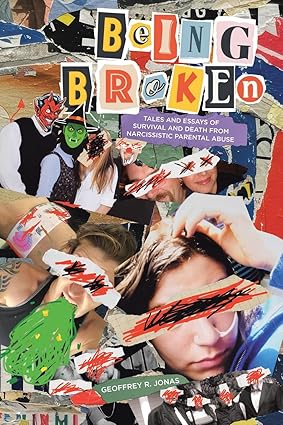
Being Broken – Tales and Essays of Survival and Death from Narcissistic Parental Abuse by Geoffrey R. Jonas


Being Broken – Tales and Essays of Survival and Death from Narcissistic Parental Abuse by Geoffrey R. Jonas
Publisher: Self-Published
Genre: Non-Fiction, Contemporary, Historical
Rating: 5 Stars
Reviewed by Astilbe

A young woman dies alone in a hotel room, her fentanyl-poisoned cocaine still on the desk. She had been missing for nearly 2 weeks. Social Services had been trying to find a place for her to live with her 3-year-old son, whom she had left with her parents. Six months later her father fights for his life in intensive care, but succumbs to his illness because of a lifelong use of alcohol and tobacco. A month after his death her mother is assessed by doctors to be unable to care for herself because of her Alzheimer’s and mental health issues brought on by benzodiazepine and alcohol addiction.

The son, brother, stepson is the only one left to pick up the pieces. He begins a journey of the self and finds out the truth of his family. After going over letters, notes, emails, videos, and text messages, he uncovers a disturbing picture of the abuse his sister suffered at the hands of their parents. He also begins to better understand his own struggles with mental health and substance addiction because of the trauma and abuse he also suffered from their parents.

Follow the son as he looks through his family history to discover the generational abuse that trickled down through the years. Learn about how parents who suffer from narcissistic personality disorder emotionally abuse and manipulate their children. See how the abuse and trauma becomes mental illness in the abused, and how they fall into vicious traps of addiction, eating disorders, self-harm, and complex post-traumatic stress disorder. Witness the transformational change of the son as he works on the recovery of his inner child and tries to become the man he was meant to be.

Every choice has consequences, and some terrible choices echo through families for generations.

I appreciated the author’s thoughts about how medical providers and society in general could improve the way they treat people who are struggling with mental illness, domestic abuse, trauma, and Substance Use Disorder. His ideas were sensible and included plenty of straightforward advice on everything from changing the way one thinks of someone who is struggling with these challenges to ideas for legislation that could make treatment and recovery easier for this population as well. These are not easy problems to fix by any means, but there are things people from every walk of life can do to make the world slightly better for everyone affected by the sorts of things that Mr. Jonas experienced as a child, teen, and young adult.

While I loved this book in general, my all-time favorite scenes were the ones that showed how people who have Narcissistic Personality Disorder can manipulate nearly any conversation or situation to their own benefit, especially in cases when their victims are not already well-versed in how this disorder can destroy relationships. This isn’t always an easy topic to talk about, so I appreciated the care the author took in describing what his childhood was like without demonizing anyone or downplaying the deep trauma this mental illness caused in his life. It was a delicate balance to maintain, but it added extra layers to his story that were necessary in order to understand why everything unfolded the way it did.

One of the most remarkable things about this memoir was how brutally honest Mr. Jonas was about his faults. He shared multiple stories about things he had done that hurt other people or, in a couple of cases, animals without making any excuses for his choices or softening the blow by passing the blame to others. This is a difficult thing for many people to do, especially for someone who had such a traumatic start to life, so I have to commend him for doing all of the hard work that is necessary in order for a person to not only face up to their worst moments in life but also to genuinely apologize for them. He is a talented writer, and I hope to read more of his work in the future.

Being Broken – Tales and Essays of Survival and Death from Narcissistic Parental Abuse was exactly what it needed to be in order to tell this tale.

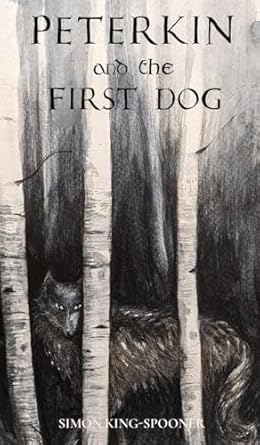
Peterkin and the First Dog by Simon King-Spooner


Peterkin and the First Dog by Simon King-Spooner
Publisher: Self-Published
Genre: Young Adult (14 – 18 y.o.), Sci-Fi/Fantasy, Historical
Rating: 4 Stars
Reviewed by Astilbe

In an ancient world an orphan boy in sheep-farming country tames a wolf.

The two become outcasts, fleeing to a foreign country. Powerful figures determine their fortunes: a holy crone, a demonic bandit, a ruthless baron fleeing a paranoid king.

All travel down a great river till ill-luck blocks their journey.

Then tensions build to a violent climax.

Every journey should begin with a fresh loaf of bread.

This was some of the best world building I’ve read in a long time. Mr. King-Spooner created an intricate and immersive setting that made me feel as though I’d actually travelled to another time and place to learn about Peterkin’s life in a small, superstitious village where bread was the best part of any meal and the adventures he had with his pet wolf when such a staple food wasn’t always an option. It was especially interesting to see how someone who would still be considered to be a child in our version of Earth was treated in a society where adulthood began sooner and where teenagers were generally assumed to be capable of doing just about anything older folks could do. It was one of countless examples of both minor and major things that were radically different between his culture and my own, and it kept me guessing about what I might learn next.

As emotionally invested as I was in Peterkin’s story, I struggled with the slow pacing at times. There were vivid descriptions of where the protagonist travelled to and who he met in various places. While they were extremely important to the plot in the long term, I also found myself wishing for a little more action and conflict to keep my interest levels higher as I waited to discover where the characters might go next.

The themes surrounding death and the rituals and cultural beliefs surrounding it were handled nicely in this book. Obviously, a rural community that only had access to basic herbal remedies could not treat many diseases and injuries as easily as we would. While I don’t want to give away too many hints about how this affected the plot, I’m glad the author spent so much time thinking about how characters who live in such an era would think about things like mortality, grief, and what the gods expected of them. These scenes were well done and fascinating.

Peterkin and the First Dog made me wish for a sequel.

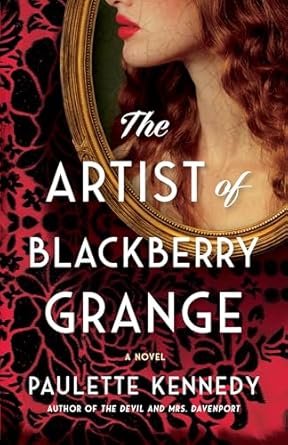
The Artist of Blackberry Grange by Paulette Kennedy


The Artist of Blackberry Grange by Paulette Kennedy
Publisher: Lake Union Publishing
Genre: Fiction, Historical, Mystery/Suspense/Thriller, Sci-Fi/Fantasy
Rating: 4 stars
Reviewed by Lavender

In the summer of 1925, the winds of change are particularly chilling for a young woman whose life has suddenly become unbalanced.

Devastated by her mother’s death and a cruel, broken engagement, Sadie Halloran learns that her great-aunt Marguerite, a renowned artist now in the throes of dementia, needs a live-in companion. Grasping at newfound purpose, Sadie leaves her desolate Kansas City boardinghouse for Blackberry Grange, Marguerite’s once-grand mansion sitting precariously atop an Arkansas bluff. Though Marguerite is a fading shell of the vibrant woman Sadie remembers, Marguerite is feverishly compelled to paint eerie, hallucinatory portraits of old lovers—some cherished, some regretted, and some beastly. All of them haunting.

With each passing night, time itself seems to shift with the shadows at Blackberry Grange. As truth and delusion begin to blur, Sadie must uncover the secrets that hold Marguerite captive to her past before reality—and Marguerite’s life—slips away entirely.

The novel introduces us to Sadie Halloran, a young woman adrift after profound personal losses—her mother’s death and a sad broken engagement. Seeking a new purpose, she accepts the role of live-in companion for her great-aunt Marguerite, a celebrated artist now grappling with the disorienting grip of dementia, at the secluded, once-grand Blackberry Grange.

Kennedy excels at crafting layered characters. Sadie’s journey from desolation to determination is compelling, but it is Marguerite who truly captivates. Her fragmented memories and feverish compulsion to paint haunting portraits of her past lovers—some cherished, some monstrous—provide a fascinating and unsettling window into her fractured mind. This blurring of truth and delusion is exquisitely handled, making you question what is real alongside Sadie.

The decaying grandeur of Blackberry Grange itself acts as a character, with time seemingly shifting alongside the shadows. This creates a palpable sense of suspense that builds steadily as Sadie delves deeper into the estate’s — and Marguerite’s — dark secrets. The plot is cleverly constructed, unfolding with a careful pace that keeps the reader thoroughly engaged, hungry to uncover the mysteries that hold Marguerite captive to her past. It’s clear that Kennedy has written this novel with care, evident in the rich historical detail and the sensitive portrayal of dementia alongside the ghostly elements.

While the narrative is largely gripping, there were occasional moments where the exploration of Marguerite’s disjointed memories felt a touch repetitive. However, this minor point does little to detract from the overall immersive experience.

Ultimately, The Artist of Blackberry Grange is a well-crafted tale of family secrets, sacrifice, and the enduring power of love and loss. It’s a novel that will appeal to readers who enjoy atmospheric historical fiction with a ghostly twist, well-developed characters, and a mystery that keeps you guessing until the end. Paulette Kennedy delivers another compelling story that resonates long after the final page.

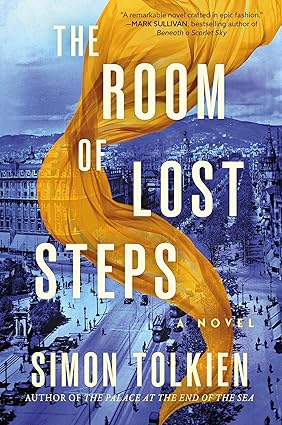
The Room of Lost Steps by Simon Tolkien


The Room of Lost Steps by Simon Tolkien
Publisher: Lake Union Publishing
Genre: Historical, Fiction
Rating: 4 stars
Reviewed by Lavender

Barcelona 1936. Theo helps the Anarchist workers defeat the army that is trying to overthrow the democratically elected government, and he is reunited with his true love, Maria. But all too soon, his joy turns to terror as the Anarchists turn on him, led by a rival for Maria’s affection.

Lucky to escape with his life, Theo returns to England to study at Oxford. But his heart is in Spain, now torn apart by a bloody civil war, and he is quick to abandon his new life when his old schoolmate Esmond offers him the chance to fight the Fascists. He is unprepared for the nightmare of war that crushes his spirit and his hope until, back in Barcelona, Theo is confronted with a final terrible choice that will define his life forever.

As Theo’s tumultuous coming-of-age journey reaches its end, can his dream to change the world—so far from home—still hold true?

The Room of Lost Steps” by Simon Tolkien, the second installment in the Theo Sterling series, is an engaging historical coming-of-age epic that plunges readers into the turbulent Spanish Civil War. Following an exciting start where Theo Sterling, an American boy with big dreams, finds himself in Barcelona in 1936, the novel immerses you in the chaos and uncertainty of the era.

The narrative picks up from its antecedent, “The Palace at the End of the Sea,” and continues Theo’s notable journey. We witness him aiding the Anarchist workers in their fight against the invading military forces. The reunion with his true love, Maria, adds a layer of personal stake and emotional depth to the unfolding political drama. However, Tolkien doesn’t shy away from the brutal realities of conflict, and Theo’s joy is quickly replaced by dread as internal strife within the Anarchist movement, fueled by a rival for Maria’s affection, forces him into a desperate escape.

This sets Theo on a path back to England, where he attempts to find relief and a new life at Oxford. Yet, his heart remains connected to Spain. The appeal of fighting against fascism, presented by his old schoolmate Esmond, proves too strong to resist. This decision leads to an upsetting descent into the grim realities of war, which, as the synopsis hints, crushes Theo’s spirit and hopes. The story highlights the profound impact of these experiences on the young protagonist.

The novel excels in its portrayal of a protagonist navigating an “epic expanse” of setting and “struggles of different types.” Theo’s resilience and his internal battles are central to the storytelling, making it intriguing to see how Theo handles things. Tolkien masterfully injects tension to keep things rolling, ensuring that the reader remains invested in Theo’s fate.

As Theo confronts a terrible choice back in Barcelona, the novel questions whether his youthful dream of changing the world, far from home and battered by war, can truly last. “The Room of Lost Steps” is a story that will resonate with readers who appreciate historical fiction and coming-of-age narratives.

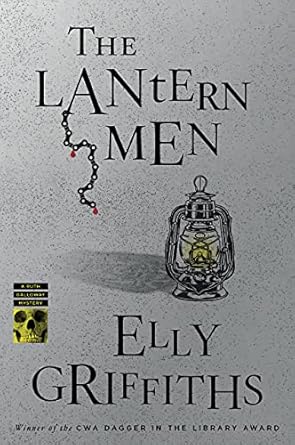
The Lantern Men by Elly Griffiths


The Lantern Men by Elly Griffiths
Publisher: Quercus
Genre: Contemporary, Historical, Mystery/Suspense/Thriller
Rating: 3 stars
Reviewed by Fern

Forensic archaeologist Ruth Galloway changed her life—until a convicted killer tells her that four of his victims were never found, drawing her back to the place she left behind.

Everything has changed for Ruth Galloway. She has a new job, home, and partner, and she is no longer north Norfolk police’s resident forensic archaeologist. That is, until convicted murderer Ivor March offers to make DCI Nelson a deal. Nelson was always sure that March killed more women than he was charged with. Now March confirms this and offers to show Nelson where the other bodies are buried—but only if Ruth will do the digging.

Curious, but wary, Ruth agrees. March tells Ruth that he killed four more women and that their bodies are buried near a village bordering the fens, said to be haunted by the Lantern Men, mysterious figures holding lights that lure travelers to their deaths.

Is Ivor March himself a lantern man, luring Ruth back to Norfolk? What is his plan, and why is she so crucial to it? And are the killings really over?

Convicted murderer Ivor March offers DCI Nelson a deal he can’t refuse. March will tell Nelson where the bodies are buried of two young women the DCI is convinced March has murdered – but only on the condition Dr Ruth Galloway is brought back from Cambridge to oversee the excavation. Nelson quickly discusses this with Ruth, and she agrees – wanting to help bring closure to the two grieving families. Only when Ruth begins the excavations it’s three female bodies she finds buried where March said they were – not two. Can Ruth and Nelson piece together what really happened?

I’ve been greatly enjoying this series and was pleased with this book. While there is plenty of history between Ruth and Nelson, I do feel readers should be able to fairly easily pick up this book by itself. Readers looking for something heavy on the Archaeology might find this story a little light in that respect. Usually, I’ve found books in this series are fairly evenly weighted between the history/archaeology plotline and the murder/mystery plotline. This time, however, there is very little archaeology and almost no real history – more a few folklore and regional tales – and a far more intense and well woven police procedural murder mystery. I really enjoyed this plotline, and the greater time spent on it – but must admit readers keener on the history aspects usually present in this series might find this story lacks a bit of oomph in that area.

I really enjoyed the characters of a few new team members. One of the new guys in particular I’m hoping will become a regular and get a bit more time in the coming few books. I was also pleased that many of the regular returning characters were given a fair bit of screen time and found their progress was really well written. I also was very relieved that there was a fair bit of time and progress between Ruth and Nelson. Theirs has been a very off/on fluctuating relationship and a few books ago I was really getting sick of the apparent lack of momentum. While it is absolutely still slow going, I have to admit some progress is definitely being made and I am hoping this keeps up until it resolves once and for all.

Readers looking for a slightly different murder mystery – one that usually involves quite a bit of history and archaeology but also a few different viewpoints – should find this an excellent series and I was quite happy with this book as a whole. Recommended.

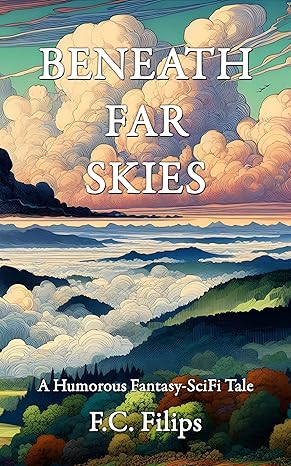
Beneath Far Skies by F.C. Filips


Beneath Far Skies by F.C. Filips
Publisher: Self-Published
Genre: Young Adult (14 – 18 y.o.), Sci-Fi/Fantasy, Historical
Rating: 3 Stars
Reviewed by Astilbe

A bit to the south of nowhere, the village of Shtrossenhossen faces an unexpected calamity. The government’s response is swift—mainly because it consists of a single person—and a ragtag band of neighbors is quickly assembled to defend their idyllic home. Unfortunately, they are completely out of their depth.

Join them on a journey packed with hilarity, action, and adventure as they uncover just how laughably outmatched they are by their enemy. From ancient ruins soaring high above the earth to reality-bending machinery buried below it, their quest will peel back the layers of a world they only thought they knew. Along the way, meet characters so unforgettable, it’s hard to tell whether they’re delightfully eccentric or dangerously unhinged.

Will our woefully unprepared heroes survive the impossible odds stacked against them? Can they challenge a god and live to tell the tale? Or will they have to move to another village? But then again, will there even be another village left? Crack open this book and find out!

Every adventure begins the same way: with a single step forward.

This was a world I felt like I really had just visited! It was described with such vivid detail that I could imagine the forests, villages, ruins, and other settings clearly in my mind. Figuring out how this society functioned was also easy to do as the characters spent plenty of time describing their roles, what was expected of them, and what they thought of, say, goblins or other creatures that followed other rules.

The slow pacing made it difficult for my interest levels to remain high at times. While I enjoyed the detailed descriptions of the places they visited, I would have liked to see more action or conflict during their adventures as there wasn’t always enough of these things to encourage me to read just one more page before bedtime.

There’s something to be said for dialogue that is well written and feels natural. Reading it made me feel like I was listening in on someone else’s conversation. The characters had smooth, casual speaking styles and didn’t always use full sentences to communicate their thoughts. This was a good choice for a book that was willing to play around with the English language a little in order to show how people – or sometimes folks who technically aren’t human but are as intelligent as humans – talk to each other when they have a lot to say and not much time to say it.

I also would have liked to see more attention paid to character development. Characters faded into and out of scenes regularly due to how many of them were included in this quest. Unfortunately, I didn’t get to know any of them well because of the large cast and the limited amount of time that was spent developing their personalities and backstories. This meant that I didn’t feel strong emotional connections to anyone and sometimes struggled to remember who was who.

One of the positive things I noticed about the characters was the way the women were written. That is to say, the author did an excellent job of allowing everyone equal opportunities to play whichever roles in the storyline they wanted to take on no matter their sex. This wasn’t always something that was common in the fantasy genre, especially in historical settings, so I was glad to see characters feel free to pursue their hobbies and interests without any restrictions. It’s nice to have these quiet moments of freedom and acceptance for everyone.

Beneath Far Skies made me smile.