If I Could, Would I? by Michale Mohr


If I Could, Would I? by Michale Mohr
Publisher: Self-published
Genre: Sci-fi/Fantasy, Time Travel, Contemporary, Paranormal
Rating: 3 stars
Reviewed by Lavender

The return of a long-lost dolphin necklace by a mysterious ethereal stranger and a magical accident hurl 60-year-old Emma Corbell back to the age of 17 with the memories of her entire life intact. Elated, she plots out how she will change the sad, unfulfilled life she’d been living into her senior years. She is immediately met by translucent beings who explain that her presence there is a mistake. She must return to her own time. Standing her ground, Emma refuses. The entities, unable to interfere with her free will, cannot force her to do so.

Emma’s extraordinary journey, guided by mystical beings and fueled by newfound personal power, become a battleground for the struggle of her lifetime. Each choice she makes in her second-chance existence carries a profound weight, rippling through time and shaping the lives of all those she encounters. The question remains: even if she returns to her old life, will that choice be enough to undo her missteps?

Will Emma navigate the pitfalls of her new mistaken time travel? Will she return to her own time? Or will she cease to exist in either one?

Michale Mohr’s If I Could, Would I? is a meditative and metaphysical twist on the classic “second chance at youth” tale. At its heart is Emma Corbell, a 60-year-old woman unexpectedly thrust back into her 17-year-old body—but with all the memories and regrets of her life intact. Her journey, catalyzed by the return of a long-lost dolphin necklace and a mysterious ethereal stranger, becomes a thought-provoking exploration of choice, regret, and free will.

The novel’s speculative premise is promising: what if you could re-live your life, fully aware of the mistakes you made the first time? Mohr leans into the philosophical and emotional implications of this question, often at the expense of pace. This is not a fast-moving narrative; rather, it’s contemplative, frequently revisiting the same internal dilemmas. There are moments of surprise and intrigue, but the novel often relies more on telling than showing, which may distance some readers from fully immersing in Emma’s experience.

Emma herself is a complex protagonist—sometimes endearing, sometimes self-involved. This ambiguity makes her feel more real, but it can also make it difficult to root for her. Her interactions with translucent, mystical beings add a layer of the surreal, grounding the novel in magical realism and prompting larger questions about fate, time, and identity.

While the narrative can be repetitive at times and might have benefited from tighter editing, Mohr does succeed in crafting a reflective character study with a strong emotional core. For readers who enjoy introspective time travel stories with metaphysical overtones—think The Midnight Library meets The Time Traveler’s Wife—this book may resonate deeply.

Verdict: A quiet, contemplative journey through time, regret, and personal power. Though uneven in pacing and occasionally over-expository, If I Could, Would I? offers a poignant look at the price—and potential—of a second chance.

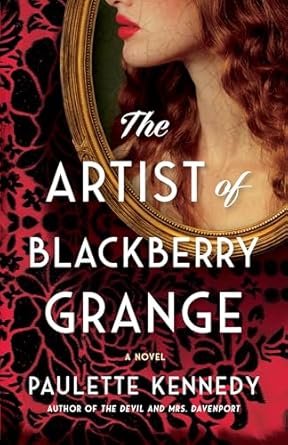
The Artist of Blackberry Grange by Paulette Kennedy


The Artist of Blackberry Grange by Paulette Kennedy
Publisher: Lake Union Publishing
Genre: Fiction, Historical, Mystery/Suspense/Thriller, Sci-Fi/Fantasy
Rating: 4 stars
Reviewed by Lavender

In the summer of 1925, the winds of change are particularly chilling for a young woman whose life has suddenly become unbalanced.

Devastated by her mother’s death and a cruel, broken engagement, Sadie Halloran learns that her great-aunt Marguerite, a renowned artist now in the throes of dementia, needs a live-in companion. Grasping at newfound purpose, Sadie leaves her desolate Kansas City boardinghouse for Blackberry Grange, Marguerite’s once-grand mansion sitting precariously atop an Arkansas bluff. Though Marguerite is a fading shell of the vibrant woman Sadie remembers, Marguerite is feverishly compelled to paint eerie, hallucinatory portraits of old lovers—some cherished, some regretted, and some beastly. All of them haunting.

With each passing night, time itself seems to shift with the shadows at Blackberry Grange. As truth and delusion begin to blur, Sadie must uncover the secrets that hold Marguerite captive to her past before reality—and Marguerite’s life—slips away entirely.

The novel introduces us to Sadie Halloran, a young woman adrift after profound personal losses—her mother’s death and a sad broken engagement. Seeking a new purpose, she accepts the role of live-in companion for her great-aunt Marguerite, a celebrated artist now grappling with the disorienting grip of dementia, at the secluded, once-grand Blackberry Grange.

Kennedy excels at crafting layered characters. Sadie’s journey from desolation to determination is compelling, but it is Marguerite who truly captivates. Her fragmented memories and feverish compulsion to paint haunting portraits of her past lovers—some cherished, some monstrous—provide a fascinating and unsettling window into her fractured mind. This blurring of truth and delusion is exquisitely handled, making you question what is real alongside Sadie.

The decaying grandeur of Blackberry Grange itself acts as a character, with time seemingly shifting alongside the shadows. This creates a palpable sense of suspense that builds steadily as Sadie delves deeper into the estate’s — and Marguerite’s — dark secrets. The plot is cleverly constructed, unfolding with a careful pace that keeps the reader thoroughly engaged, hungry to uncover the mysteries that hold Marguerite captive to her past. It’s clear that Kennedy has written this novel with care, evident in the rich historical detail and the sensitive portrayal of dementia alongside the ghostly elements.

While the narrative is largely gripping, there were occasional moments where the exploration of Marguerite’s disjointed memories felt a touch repetitive. However, this minor point does little to detract from the overall immersive experience.

Ultimately, The Artist of Blackberry Grange is a well-crafted tale of family secrets, sacrifice, and the enduring power of love and loss. It’s a novel that will appeal to readers who enjoy atmospheric historical fiction with a ghostly twist, well-developed characters, and a mystery that keeps you guessing until the end. Paulette Kennedy delivers another compelling story that resonates long after the final page.

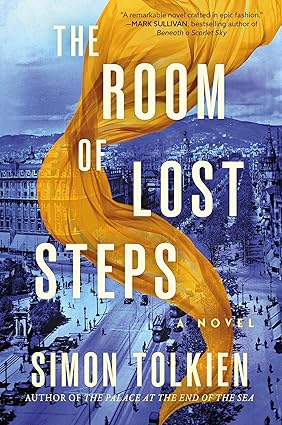
The Room of Lost Steps by Simon Tolkien


The Room of Lost Steps by Simon Tolkien
Publisher: Lake Union Publishing
Genre: Historical, Fiction
Rating: 4 stars
Reviewed by Lavender

Barcelona 1936. Theo helps the Anarchist workers defeat the army that is trying to overthrow the democratically elected government, and he is reunited with his true love, Maria. But all too soon, his joy turns to terror as the Anarchists turn on him, led by a rival for Maria’s affection.

Lucky to escape with his life, Theo returns to England to study at Oxford. But his heart is in Spain, now torn apart by a bloody civil war, and he is quick to abandon his new life when his old schoolmate Esmond offers him the chance to fight the Fascists. He is unprepared for the nightmare of war that crushes his spirit and his hope until, back in Barcelona, Theo is confronted with a final terrible choice that will define his life forever.

As Theo’s tumultuous coming-of-age journey reaches its end, can his dream to change the world—so far from home—still hold true?

The Room of Lost Steps” by Simon Tolkien, the second installment in the Theo Sterling series, is an engaging historical coming-of-age epic that plunges readers into the turbulent Spanish Civil War. Following an exciting start where Theo Sterling, an American boy with big dreams, finds himself in Barcelona in 1936, the novel immerses you in the chaos and uncertainty of the era.

The narrative picks up from its antecedent, “The Palace at the End of the Sea,” and continues Theo’s notable journey. We witness him aiding the Anarchist workers in their fight against the invading military forces. The reunion with his true love, Maria, adds a layer of personal stake and emotional depth to the unfolding political drama. However, Tolkien doesn’t shy away from the brutal realities of conflict, and Theo’s joy is quickly replaced by dread as internal strife within the Anarchist movement, fueled by a rival for Maria’s affection, forces him into a desperate escape.

This sets Theo on a path back to England, where he attempts to find relief and a new life at Oxford. Yet, his heart remains connected to Spain. The appeal of fighting against fascism, presented by his old schoolmate Esmond, proves too strong to resist. This decision leads to an upsetting descent into the grim realities of war, which, as the synopsis hints, crushes Theo’s spirit and hopes. The story highlights the profound impact of these experiences on the young protagonist.

The novel excels in its portrayal of a protagonist navigating an “epic expanse” of setting and “struggles of different types.” Theo’s resilience and his internal battles are central to the storytelling, making it intriguing to see how Theo handles things. Tolkien masterfully injects tension to keep things rolling, ensuring that the reader remains invested in Theo’s fate.

As Theo confronts a terrible choice back in Barcelona, the novel questions whether his youthful dream of changing the world, far from home and battered by war, can truly last. “The Room of Lost Steps” is a story that will resonate with readers who appreciate historical fiction and coming-of-age narratives.

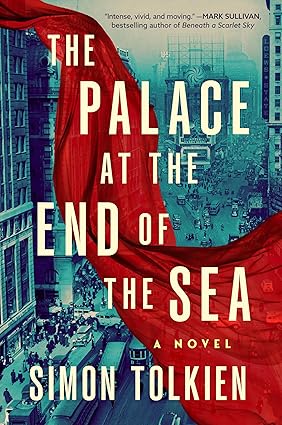
The Palace at the End of the Sea by Simon Tolkien


The Palace at the End of the Sea by Simon Tolkien
Publisher: Lake Union Publishing
Genre: Historical, Fiction
Rating: 4 stars
Reviewed by Lavender

A young man comes of age and crosses continents in search of an identity—and a cause—at the dawn of the Spanish Civil War in a thrilling, timely, and emotional historical saga.

New York City, 1929. Young Theo Sterling’s world begins to unravel as the Great Depression exerts its icy grip. He finds it hard to relate to his parents: His father, a Jewish self-made businessman, refuses to give up on the American dream, and his mother, a refugee from religious persecution in Mexico, holds fast to her Catholic faith. When disaster strikes the family, Theo must learn who he is. A charismatic school friend and a firebrand girl inspire him to believe he can fight Fascism and change the world, but each rebellion comes at a higher price, forcing Theo to question these ideologies too.

From New York’s Lower East Side to an English boarding school to an Andalusian village in the foothills of the Sierra Nevada, Theo’s harrowing journey from boy to man is set against a backdrop of societies torn apart from within, teetering on the edge of a terrible war to which Theo is compulsively drawn like a moth to a flame.

Simon Tolkien’s “The Palace at the End of the Sea” promises a sweeping historical saga centered on a young man’s coming-of-age during the tumultuous lead-up to the Spanish Civil War. The synopsis paints a compelling picture of Theo Sterling, a young New Yorker grappling with identity and purpose as the Great Depression reshapes the world around him. Caught between his father’s unwavering belief in the American dream and his mother’s devout Catholic faith rooted in Mexican refugee experience, Theo’s foundation crumbles when personal tragedy strikes. The promise of a journey spanning continents, fueled by youthful idealism and a desire to combat Fascism, certainly piques interest.

Tolkien’s strength lies in his prose. The writing is well-done, suggesting a level of sophistication and craftsmanship that should appeal to readers who appreciate beautifully written historical fiction. The historical setting seems well-researched and convincingly rendered. The grounding in real-world events of the late 1920s and 1930s in New York and Spain provides a solid backdrop for Theo’s personal narrative. The novel captures the clash of cultures in the late 1930s and the pervasive uncertainty surrounding the looming war in Spain.

However, the novel’s potential weaknesses also warrant consideration. The characters could perhaps have a little more depth, particularly the protagonist, and their motivations could at times be more precise.

Also, sometimes the story’s pace could be quickened. A sprawling historical narrative needs a strong narrative drive to keep the reader invested.

Overall, the book is worth the read, a well-written historical tale.

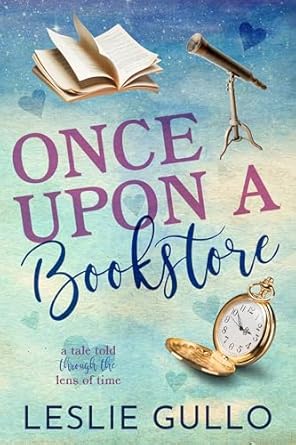
Once Upon a Bookstore: A Tale Told Through the Lens of Time by Leslie Gullo


Once Upon a Bookstore: A Tale Told Through the Lens of Time by Leslie Gullo
Publisher: Allie Cat Press
Genre: Contemporary, Romance, Mystery/Suspense/Thriller
Rating: 4 stars
Reviewed by Lavender

Melinda Jenkins seemed to have it all — a successful career as a lawyer, a fiercely independent spirit, and a carefully crafted life of solitude. But when a routine assignment leads her to a small bookstore on Main Street, Melinda’s world is turned upside down.

As she delves deeper into the mysteries of the bookstore, she meets Jake Samuels — a charming and irresistible bachelor who challenges her beliefs about love and independence. Melinda must make a heart-wrenching choice: cling to her solitary life or take a leap of faith and embrace the love she never thought possible.

Leslie Gullo’s Once Upon a Bookstore: A Tale Told Through the Lens of Time offers an intriguing premise: a successful lawyer, Melinda Jenkins, finds her carefully constructed life upended by a mysterious bookstore and a charming bachelor named Jake Samuels. The book boasts a high rating, and for good reason – the initial setup is engaging, and the characters are undoubtedly captivating.

Gullo paints a picture of a fiercely independent Melinda whose solitude is both a shield and a source of contentment. The allure of the bookstore, whispered secrets within its walls, and the immediate spark between Melinda and Jake create a compelling hook. The author successfully introduces a layer of mystery from the get-go, drawing the reader in with the promise of uncovering secrets and exploring Melinda’s transformation.

The romance with Jake also adds to the charm. He challenges Melinda’s preconceived notions about love and independence, forcing her to confront her vulnerabilities and consider a life beyond her solitary existence. The “irresistible bachelor” trope is handled relatively well, with Jake possessing enough genuine qualities to make him a believable love interest.

However, the story unfortunately hits a snag in the middle. The narrative slows at one point and becomes repetitive. Despite the mid-book slump, the inclusion of a little bit of science adds an interesting layer to the overall narrative. This scientific element plays a role in the mystery surrounding the bookstore.

Once Upon a Bookstore offers a promising blend of romance, mystery, and a touch of science-fiction. The engaging characters and intriguing premise are strong draws, but readers should be aware of the potential for a slower, repetitive section in the middle. If you enjoy stories about self-discovery, charming bookstore settings, and a little bit of mystery mixed with romance, this book is worth picking up. The engaging beginning and intriguing elements might just be enough to keep you turning the pages until the end.

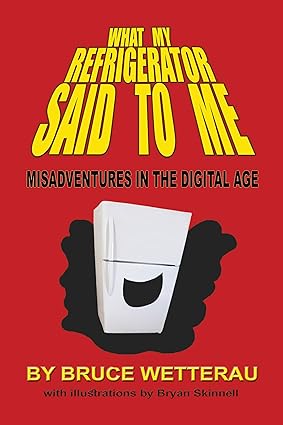
What My Refrigerator Said to Me by Bruce Wetterau


What My Refrigerator Said to Me by Bruce Wetterau
Publisher: Self-published
Genre: Fiction, Humor, Contemporary
Rating: 4 stars
Reviewed by Lavender

To Coldly Go Where No Refrigerator Has Gone Before…

What can a talking refrigerator possibly have to say? Well, if you listen to all the AI hype, you’ll believe computers will be doing all the talking and thinking for us.

What My Refrigerator Said to Me’s twenty-one tales take you on a journey into the comic possibilities of life in the digital age, now and in the years to come. After all, why should the likes of Bill, Jeff, and Elon have all the fun imagining this futuristic stuff!

You’re sure to be amused by this book’s absurdly funny answers to such burning questions as: If computers can think, will they choose a life of crime? If your pet can talk, what will it tell you? Can science turn your brain into a desktop computer? Will there still be fortune cookies in 2052?

As is so often true of comedy, along with the laughs you’ll also find thoughtful insights into the people and devices populating our futuristic, digital world.

You get the idea. These richly imaginative tales will have you boldly going where no one has gone before–again and again! This collection of witty, laughable tales makes for a great read or great gift.

This book presents twenty-one humorous short stories that delve into the comical and occasionally bizarre aspects of our technology-saturated lives. Rather than focusing on dystopian fears, the author uses playful imagination to highlight quirky or disquieting possibilities that come from the technological progress. Readers will sometimes laugh at the absurdities of this digital age.

The premise prepares us for the lighthearted and speculative tone. The author tackles questions of the digital age with comedy. Though humor is central, the stories offer moments of thoughtful insight into humans. Scenes are outlandish but relatable.

Sometimes the tongue-in-cheek humor explores potentially sensitive topics concerning race and gender that may not resonate with all readers. There are cliches. Overall, the book is humorous and creative.

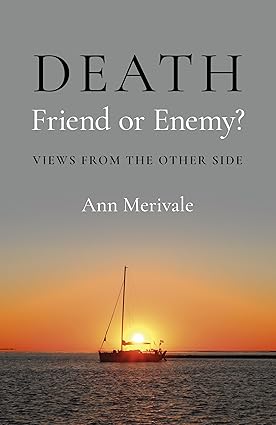
DEATH: Friend or Enemy?: Views from the Other Side by Ann Merivale


DEATH: Friend or Enemy?: Views from the Other Side by Ann Merivale
Publisher: 6th Books
Genre: Fiction, Paranormal, Contemporary, Historical
Rating: 4 stars
Reviewed by Lavender

Death, as the saying goes, is the great leveler, and though many fear it, while others view it as a blessed release, its inescapability affects us all in some way. The author of this unusual book makes use both of her spiritual reading and of the knowledge she gained from 20-plus years’ experience of taking her Deep Memory Process clients back to deaths in their previous lives, thus giving a broad spectrum of possible post-death scenarios. These she illustrates with a combination of famous and fictional characters, drawn both from accounts that came from the ‘other side’ through her figurative pen and from factual research. Part of the book’s aim is to dispel all fears of death itself and to demonstrate that the notion of eternal damnation is mistaken. At the same time, it shows the reader that whether a lifetime lasts 10 years (as did Annie Darwin’s) or 97 (like Bertrand Russell’s), it has a clear purpose and value. The stories’ precise truth is, however, immaterial, as you will find them enjoyable, educational, and reassuring.

Ann Merivale’s DEATH: Friend or Enemy?: Views from the Other Side offers a fascinating and ultimately comforting exploration of death and the afterlife, viewed through a unique lens. This book offers a captivating blend of anecdotal evidence, historical context, and spiritual insight, all aimed at demystifying our ultimate fate.

Merivale’s 20+ years of experience with Deep Memory Process, guiding clients through purported past life regressions, provides a compelling foundation for the narratives within. The author cleverly weaves together accounts purportedly channeled from the “other side” through her “figurative pen” with factual research and historical figures like Annie Darwin and Bertrand Russell. This combination lends a sense of groundedness to the more ethereal aspects of the book, making it accessible to a wider audience.

The book’s strength lies in its storytelling. The promise of personal and up-close narratives from individuals who have passed is inherently intriguing. While the review acknowledges the “precise truth” of these stories may be immaterial, the reviewer emphasizes their enjoyable, educational, and reassuring nature. This suggests that Merivale has crafted compelling narratives that resonate on an emotional and intellectual level, offering a fresh perspective on the often-feared subject of death.

The inclusion of historical context adds another layer of intrigue, suggesting a blend of personal narratives and broader philosophical exploration.

Overall, DEATH: Friend or Enemy? is a unique read. It caters to those interested in exploring the mysteries of the afterlife, past life regression, and spiritual perspectives on death. While the book’s reliance on channeled accounts might not appeal to everyone, the combination of historical figures, personal stories, and the author’s extensive experience in Deep Memory Process makes it a compelling and potentially comforting exploration of life’s ultimate question. The promise of entertainment, education, and reassurance makes this book one to pick up this year.

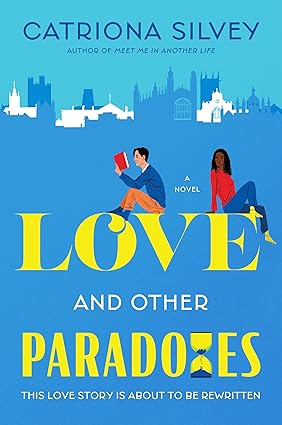
Love and Other Paradoxes by Catriona Silvey


Love and Other Paradoxes by Catriona Silvey
Publisher: William Morrow Paperbacks
Genre: Contemporary, Mystery/Suspense/Thriller, Sci-Fi/Fantasy
Rating: 4 stars
Reviewed by Lavender

Cambridge University, 2005: Student Joe Greene scribbles verses in the margins of his notebook, dreaming of a future where his words will echo through the ages, all while doubting it could ever happen.

Then, the future quite literally finds him—in the form of Esi. She’s part of a time-traveling tour, a trip for people in the future to witness history’s greatest moments firsthand. The star of this tour? Joe Greene. In Esi’s era, Joe is as renowned as Shakespeare. And he’s about to meet Diana, a fellow student and aspiring actress, who will become his muse and the subject of his famous love poems.

But Esi is harboring a secret. She’s not here because she idolizes Joe—actually, she thinks his poetry is overrated. Something will happen at Cambridge this year that will wreck Esi’s life, and she’s hell-bent on changing it. When Esi goes rogue from her tour, she bumps into Joe and sends his destiny into a tailspin. To save both their futures, Esi becomes Joe’s dating coach, helping him win over Diana. But when Joe’s romantic endeavors go off-script—and worse, he starts falling for Esi instead—they both face a crucial question: Is the future set in stone, or can we pen our own fates?

Catriona Silvey’s Love and Other Paradoxes is a captivating exploration of love, ambition, and the intricacies of human relationships set against the backdrop of early 2000s Cambridge. The novel follows Joe Greene, a poet who becomes entangled in a surreal twist of fate when he encounters Esi, a mysterious young woman who helps him navigate the complexities of love and success.

From the outset, Silvey crafts an engaging narrative that pulls the reader in with its unique premise. The introduction of Joe’s future success book of poems serves as a clever plot device, creating a palpable tension as he grapples with the notion of love dictated by the demands of his future. Esi emerges as a compelling character, providing not only support but also a moral compass as Joe struggles with his feelings for Diana, the woman he believes will fulfill his poetic destiny. Their friendship is beautifully developed, and the chemistry between them adds depth to the story.

The pacing of the novel is brisk, ensuring that readers remain engaged throughout the twists and turns of Joe’s journey. Silvey deftly weaves themes of friendship, success, family, and the often-paradoxical nature of love, inviting readers to reflect on their own experiences and the sometimes-contradictory motivations behind their choices. While the character of Diana is intentionally less likable than others, this adds to the complexity of Joe’s predicament, highlighting the often-unglamorous truths of romantic pursuits.

One of the strengths of Silvey’s writing is her ability to create well-rounded characters who are relatable and flawed, making their journeys feel authentic. The surprises that unfold keep the narrative lively, and the satisfying conclusion ties together the various threads of the story while leaving some questions open to interpretation.

Overall, Love and Other Paradoxes is an entertaining read that will resonate with anyone who has ever grappled with the intersection of love and ambition. Silvey’s exploration of the multifaceted nature of love makes for a thoughtful and engaging story that is both heartwarming and thought-provoking. This novel is a testament to the idea that while love can be fraught with complications, it is also an essential part of the human experience. Highly recommended for readers looking for a blend of romance and philosophical inquiry, it earns a solid 4 stars.

You Will Be Peter by Jerry Lathan with Steven Manchester


You Will Be Peter by Jerry Lathan with Steven Manchester
Publisher: Forefront Books
Genre: Historical, Inspirational, Fiction
Rating: 5 stars
Reviewed by Lavender

He’s one of the most well-known figures in cultures around the world, etched into stained glass, painted in frescoes, even caricatured as standing at the gates of heaven with a long white beard and keys in hand. But long before he was portrayed as a venerated and untouchable figure, Peter was simply known as Simon, a twenty-something fisherman in a far-flung Jewish province controlled by the Roman Empire.

Loyal and faithful, impetuous and passionate, Simon’s quiet life is upended by the arrival of a man called Jesus of Nazareth, rumored to be the long-awaited Messiah who would rescue the Jewish people from oppression. When Simon meets Jesus, the mysterious man tells him, “You will be Peter,” a prophetic statement that would slowly transform Simon’s life. Eager to be free of the Romans, Simon joins Jesus in hopes that he can guard this leader who will, undoubtedly, build an army to challenge Rome. But as Simon waits for the army to form, he watches Jesus show a compassion for others Simon has never seen before. The miracles Jesus performs—healing the sick, feeding crowds of thousands—show not a display of military might, but of service and love.

Real, relatable and impeccably researched, You Will Be Peter draws on the four Gospel accounts to weave Simon Peter’s story into one seamless tapestry. Readers get a front-row seat to Simon’s three-year walk with Jesus, as Simon watches the Son of Man feed the hungry, raise the dead, upend the status quo and challenge the elite during one of world history’s most pivotal seasons.

In perhaps one of the greatest miracles, we can see ourselves in Simon, this ordinary man Jesus chose to accompany Him. Simon wasn’t well-educated, but he was faithful and headstrong. Though he could rush to judgment and use a foul word from time to time, he was the kind of friend who loved fiercely and was doggedly loyal—until he wasn’t. Although he failed, Simon wasn’t cast away from Jesus’ mission. In fact, his failures and subsequent redemption made him a more empathetic and capable rock upon whom the Church was built.

With storytelling artistry that transports readers to the first-century world, with the sights, sounds, and smells of that time, You Will Be Peter shares an age-old story told from a new set of eyes: it’s possible for one ordinary person, however unlikely, to change the world forever.

In You Will Be Peter, authors Jerry Lathan and Steven Manchester craft a remarkable narrative that revisits the life of one of history’s most iconic figures, Simon Peter. Often depicted in religious art as the esteemed apostle with keys in hand, Peter’s origins as an ordinary fisherman are seldom explored in depth.

This story delves into the transformative journey of Simon Peter as he encounters Jesus of Nazareth, illustrating how an uneducated man’s faith and loyalty can lead to a monumental impact on the world. At the story’s outset, we meet Simon, a young fisherman living under the overbearing rule of the Roman Empire. His life is one of simplicity and routine, until the arrival of Jesus, a man whose reputation as the Messiah incites hope among the Jewish people. The moment Simon meets Jesus, his life is irrevocably altered when he hears the words, “You will be Peter.” In this prophetic declaration lies the promise of transformation—not only of his name but also of his identity and purpose. Here, Lathan and Manchester effectively set the stage for a profound exploration of faith, loyalty, and the potential for change in every individual.

As Simon embarks on his journey with Jesus, he initially envisions a rebellion against their Roman oppressors. The expectation of military might is soon overshadowed by the reality of Jesus’ teachings and actions, which emphasize compassion, service, and love over violence and dominance. Through miraculous acts, such as healing the sick and feeding the hungry, Jesus reveals a different kind of strength—one rooted in humility and selflessness. This evolution of Simon’s understanding is pivotal; it illustrates how personal growth often occurs through witnessing the exemplary qualities of others. The authors adeptly capture Simon’s internal conflict as he grapples with his hopes for a warrior Messiah and the reality of Jesus’ mission. One of the most compelling aspects of You Will Be Peter is its portrayal of Simon as a flawed yet relatable character. He is not depicted as a paragon of virtue but rather as a passionate individual who occasionally falters. His impetuous nature leads him to make hasty judgments, and he experiences moments of failure—most notably when he denies knowing Jesus during the latter’s trial. These human shortcomings resonate with readers, reminding us that imperfection is part of the human experience. However, what truly sets Simon apart is his capacity for redemption.

The story reveals that failure does not equate to disqualification from purpose; rather, it can become a catalyst for growth and deeper empathy. This theme of redemption is integral to the narrative and underscores the belief that everyone, regardless of their past, can contribute meaningfully to the greater good. The authors also excel in their vivid storytelling, transporting readers to the first-century world filled with sensory details—the sights, sounds, and smells of the time. This immersive approach allows readers to experience the historical context that shaped Simon Peter’s journey. It emphasizes the urgency and significance of Jesus’ mission during a pivotal moment in history. By placing Simon at the forefront of this narrative, Lathan and Manchester invite readers to see themselves in this ordinary man—their struggles, their hopes, and their potential for change.

Ultimately, You Will Be Peter serves as a powerful reminder that even the most unlikely individuals can alter the course of history. Simon Peter’s transformation from a humble fisherman to the foundational rock of the Church illustrates that greatness is often born out of everyday experiences, faith, and the willingness to embrace one’s calling, even amidst uncertainty. This narrative not only reexamines the life of a biblical figure but also challenges readers to reflect on their journeys, encouraging them to embrace their imperfections and recognize the potential for greatness within themselves. Through Simon’s story, we learn that the path to making a difference in the world begins with a single step of faith.

What the Wife Knew by Darby Kane


What the Wife Knew by Darby Kane
Publisher: William Morrow
Genre: Mystery/Suspense/Thriller, Contemporary
Rating: 4 stars
Reviewed by Lavender

Dr. Richmond Dougherty is a renowned pediatric surgeon, an infamous tragedy survivor, and a national hero. He’s also very dead—thanks to a fall down the stairs. His neighbors angrily point a finger at the newest Ms. Dougherty, Addison. The sudden marriage to the mysterious young woman only lasted ninety-seven days, and he’d had two suspicious “accidents” during that time. Now Addison is a very rich widow.

As law enforcement starts to circle in on Addison and people in town become increasingly hostile, sides are chosen with Kathryn, Richmond’s high school sweetheart, wife number one, and the mother of his children, leading the fray. Despite rising tensions, Addison is even more driven to forge ahead on the path she charted years ago…

Determined at all costs to unravel Richmond’s legacy, she soon becomes a target—with a shocking note left on her bedroom wall: You will pay. But it will take a lot more than faceless threats to stop Addison. Her plan to marry Richmond then ruin him may have been derailed by his unexpected death, but she’s not done with him yet.

In What the Wife Knew by Darby Kane, the intricacies of human relationships and the moral ambiguities that often accompany them are brought to life through the tumultuous narrative surrounding Addison and Richmond. At first glance, Addison may come across as a morally questionable character, driven by a desire for revenge and fueled by disdain for her husband. However, as the story unfolds, layers of her complexity are revealed, allowing readers to empathize with her plight. In stark contrast, Richmond, a celebrated surgeon, emerges as a character who lacks redeeming qualities, making it difficult to root for him despite his accomplishments. The only semblance of morality within the narrative can be found in Richmond’s children, who serve as a reminder of innocence amidst the chaos that defines the relationships surrounding them.

Addison’s motivations are deeply intertwined with the secrets she harbors about Richmond’s past, which she uses as leverage to manipulate him into leaving his first wife. This act of blackmail reveals not only her desperation but also her desire for agency in a world where she feels powerless. It is this struggle for control that makes Addison relatable, as many readers can understand the desire to reclaim one’s narrative in the face of betrayal. As the story progresses, readers are invited to consider the consequences of Addison’s actions and the lengths she will go to for vindication.

The strength of What the Wife Knew lies in its character development and the building of suspense through layered storytelling. Kane masterfully crafts an atmosphere that keeps readers engaged, not through relentless action, but through an intricate web of secrets, lies, and the impending sense of doom surrounding Richmond’s fate. The narrative thrives on curiosity, compelling readers to question not only the characters’ motivations but also the ethical implications of their choices. In a world rife with moral ambiguity, What the Wife Knew encourages readers to grapple with their own perceptions of right and wrong. The story serves as a reminder that every character has their own set of circumstances that shape their behavior, even if those behaviors are less than admirable. As the plot unfolds, the tension mounts and the death of Richmond serves as a catalyst for further exploration of the characters’ psyches, ultimately leading to a deeper understanding of human nature.

In conclusion, Darby Kane’s What the Wife Knew is a captivating exploration of complex characters and the intricacies of personal relationships. Through Addison’s evolution and Richmond’s moral failures, the novel invites readers to question their own judgments and consider the shades of gray that exist within every story. The emotional depth and suspenseful narrative make it a compelling read that lingers long after the final page is turned, leaving readers with a greater appreciation for the multifaceted nature of humanity and the secrets that bind us all.