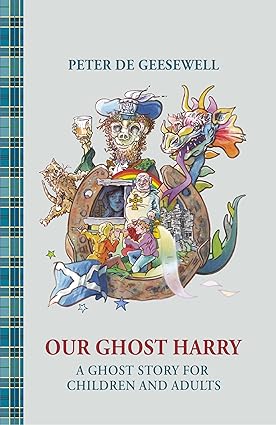
Our Ghost Harry by Peter De Geesewell


Our Ghost Harry by Peter De Geesewell
Publisher: Rowanvale Books
Genre: Middle Grade (8 – 12 y.o.), Sci-Fi/Fantasy, Paranormal, Horror, Mystery/Suspense/Thriller, Contemporary, Historical
Rating: 4 Stars
Reviewed by Astilbe

How would you react if one day you found a genuine ghost sitting in your living room – declaring that from now on he’s your new housemate?

Meet Sir Henry, the bitter, mischievous ghost of Urquhart Castle in Scotland. Cursed by his own son to haunt his castle until he saves a girl’s life, he finally decides to leave his dilapidated, abandoned home and ‘emigrate’ to Switzerland, where he transforms himself into the genial and funny guardian spirit of his newly adopted family.

Our Ghost Harry is a charming ghost story that is equal parts spooky, hilarious and moving, perfect for readers aged 10 to 100. Ideal for reading aloud or enjoying on your own, it will terrify and delight audiences of all ages.
Regret is good, but fixing things is even better.

Sir Henry was a funny, cranky ghost whose past contained a few dark secrets he’d been wrestling with for over seven hundred years. Sometimes I loved him for his sense of humor and dramatic habits, but in other scenes I was exasperated by how unsympathetic and stubborn he could be. There’s something to be said for a character whose flaws are deeply woven into their personality and who was as well-rounded and interesting as he was.

The other characters in this book, especially the older members of Henry’s chosen family, were not given this same chance to shine. While I wouldn’t expect the exact same amount of time to be spent on describing what their personalities were like, the fact that I would struggle to describe how they behaved or what their biggest weaknesses were was why I ended up choosing a four-star rating. As much as I enjoyed the main character and the plot, I simply had too many questions about what the people around Henry were like to pick a rating higher than that.

This included a wonderful mixture of genres that I don’t get to see used together as often as I’d like to, especially when it came to combining comedy with horror. Some of my favorite scenes were the ones that explored the cultural differences between life today and what Henry experienced in the 1300s. His expectations of how things should proceed, especially when it came to who should decide how what was now a historical site should be used, were obviously wildly out of touch with what someone born several decades ago has grown up knowing as the proper way to do things. I know this is a little vague, but there are later plot points related to how the law and social norms have changed over the centuries that fans of history or adult readers might especially like.

Our Ghost Harry made me wish for a sequel. This was such an exciting romp through both modern-day and medieval life.
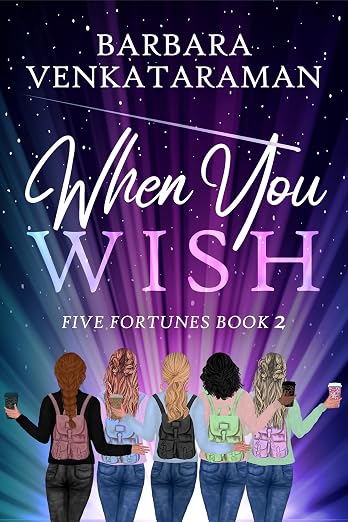
When You Wish by Barbara Venkataraman


When You Wish by Barbara Venkataraman
Five Fortunes Book 2
Publisher: Next Chapter
Genre: Young Adult (14 – 18 y.o.), LGBTQ, Romance, Contemporary
Rating: 3 Stars
Reviewed by Astilbe

When Megan, Rihanna, Abby, Alison and Lori wish on a shooting star, they learn that what you want isn’t always what you need. The close-knit group of friends must each navigate their own journey of self-discovery, joy and sadness, mishaps and misunderstandings. With the help of good friends and a pinch of moxie, will they find their way?

Rihanna has a new set of problems to solve when her aunt moves in, while Lori must convince her parents to fulfill her heart’s desire. Megan fights for independence from a life that is stifling her and Abby struggles through a grueling year that promises a rewarding summer. Meanwhile, Alison is keeping a secret from the people she loves.

Rescue puppies, secret romance, teenage fashion influencers and helicopter parents make Barbara Venkataraman’s WHEN YOU WISH a fun story you won’t soon forget.

Life is full of surprises.

The romantic subplot blended in perfectly to everything else that was going on. If Ms. Venkataraman writes more about these characters someday, I would be thrilled to see where this romance goes. That is something I’m saying as a reader who only occasionally visits that genre but who absolutely adored the sweet and charming young ladies involved in this particular relationship. Bravo!

As I mentioned in my review of the first book in this series, I once again found myself wishing that there were either fewer protagonists or that this could be expanded into a full-length novel so that I could have more time to get to know all five main characters. There simply wasn’t enough space here for the character development I was hoping to see, and this is something I’m saying as someone who loved what I did get to see of Megan, Rihanna, Abby, Alison, and Lori’s lives. With that being said, I was a little more satisfied this time around, so fingers crossed that will continue in the future.

Some of the most memorable scenes were the ones that captured the emotional highs and lows of being a teenage girl ranging from how quickly friendships can change when someone is this age to the serious family matters some teens quietly deal with and don’t necessarily share with their friends. Reading this honestly made me feel like I was back in high school again!

This is something I’d recommend reading in chronological order for plot and development reasons.

When You Wish was a heartwarming and engaging read.

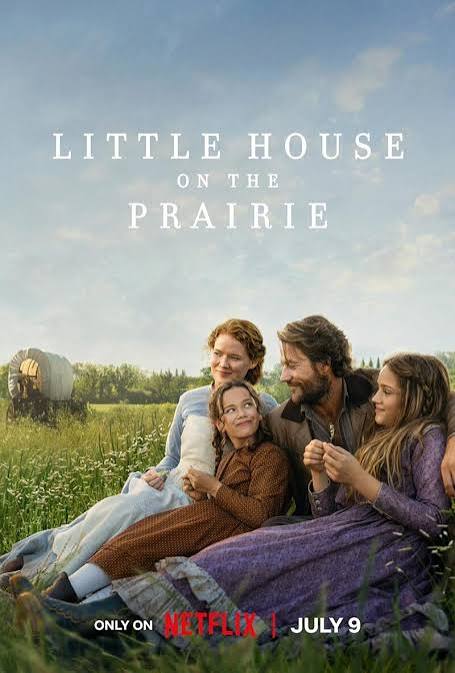
TV Review: Little House on the Prairie


Little House on the Prairie (2026), screenplay by Rebecca Sonnenshine and based on the books by Laura Ingalls Wilder
Showrunner: Rebecca Sonnenshine
Starring: Luke Bracey, Crosby Fitzgerald, Alice Halsey, and Skywalker Hughes
Publisher: Netflix
Genre: Middle Grade (8 – 12 y.o.), Young Adult (14 – 18 y.o.), Romance, Holiday, Historical
Rating: 4 Stars (8 on IMDB)
Reviewed by Astilbe

The Ingalls family lives and works on a farm in Midwestern America during the late 19th century.

Anything is possible on the open prairie.

So many iconic moments from the book were explored here. I’d say my favorite one involved what happened when the Ingalls family was snowed in over Christmas and had to become creative when planning how to celebrate that special day. Another notable moment involved a natural disaster that the characters had no advance warning of but had to react to quickly in order to prevent something catastrophic from happening. These were moments I imagined over and over again while I read the Little House books growing up, and it was fun to see a modern reimagining of them.

I was surprised by how many changes this adaptation made to the original material which had already softened many of the more difficult moments of Laura Ingalls Wilder’s life. Some of the changes made sense for a 2026 interpretation of this classic as western society has changed quite a bit in the last hundred and fifty years or so, but I would have loved to see Laura and Mary played by actors who were closer to the original ages of these girls when the book was written. Some of their scenes simply fit better for younger children and felt a little unusual for a preteen and a young teenager to still be interested in. For example, most older kids have a very different experience of Santa than what was portrayed here.

With that being said, this first season did a great job of setting up what happens to these characters as they grow older. There was some wholesome foreshadowing for the Ingalls children in particular that Little House fans might find amusing, and I liked the way so many of the important people in their lives were either introduced early on or included in conversations that will hopefully be revisited in the future.

Little House on the Prairie was a heartwarming introduction to what will hopefully be a long-running series.

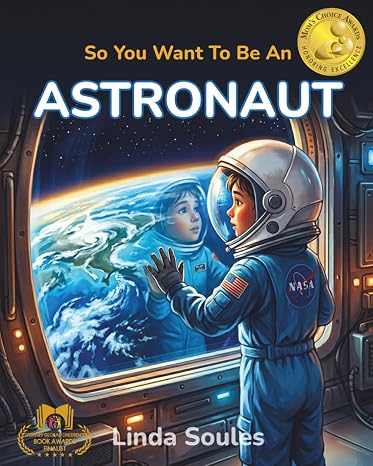
So You Want To Be An Astronaut by Linda Soules


So You Want To Be An Astronaut by Linda Soules
Publisher: So You Want To Be…Books
Genre: Middle Grade (8 – 12 y.o.), Non-Fiction, Contemporary
Rating: 5 Stars
Reviewed by Astilbe

What does it really take to become an astronaut — not in a movie, but in the actual universe where rockets shake your bones and silence stretches forever outside the hull?

So You Want To Be An Astronaut is the honest, illustrated guide that curious kids have been waiting for. It takes young readers ages 10 to 14 deep inside the science, the training, and the daily reality of one of the most extraordinary careers a person can pursue. No sugarcoating. No skipping the hard parts. Just the real story of what happens between the dream and the launch.

You will follow the full path: years of preparation before a single mission, from underwater spacewalk simulations to wilderness survival training. You will learn the science of space exploration — orbital mechanics, life-support systems, and what happens to a human body living in microgravity far from Earth. You will discover how a small crew depends on each other across distances no rescue team can cross, and what happens when the mission does not go exactly as planned.

The book is rich with space facts that go far beyond the basics. It explores our solar system and the science careers that make every mission possible — engineers, flight surgeons, mission controllers, and the astronauts themselves. It covers the history of space exploration and the pioneering figures who proved that human beings could survive and work in outer space. And it asks the question young readers care about most: what can I start doing right now?

Every page is designed to pull you in. Colorful images and short, focused sections make even complex science accessible and fun to explore. Glossaries break down key terms without slowing the pace. This is nonfiction built like a reference and an adventure at once — the kind of illustrated companion a child first loves for its photographs at eight, then returns to at twelve or fourteen discovering new depth every time.

Younger readers thrive with a parent or teacher alongside them, turning pages into rich conversations about science, ambition, and what is possible. Independent readers in the middle grades will dive in headfirst, absorbing details and beginning to picture themselves in the role. Older readers and adults will find surprising layers — fascinating history, memorable insights, and a voice that never talks down to anyone.

For every young person who looks up at the night sky and feels something stir, this book is the real answer they deserve.

Everyone needs a goal in life.

The descriptions of what it feels like to orbit Earth were marvelous. I almost felt as if I were right there watching the continents and oceans pass by peacefully below me. It was a calm and joyful moment that helped me to understand why someone would be willing to train for so many years for the chance to experience it.

Speaking of training, I loved the section that gave a practical list of things to start doing now for kids who want to become astronauts. This was such a good way to draw readers in and encourage them to follow their dreams no matter how many years away they are from adulthood.

What catapulted this into a five-star read for me was how honest the narrator was about both the negative and positive aspects of being an astronaut. Anyone who wants to be part of this profession should have the whole truth instead of a sugarcoated version of what it’s actually like. I especially liked the descriptions of the many years of training it takes in many different subjects before someone qualifies to live on the ISS (International Space Station), including the requirement to learn Russian.

I was pleasantly surprised by a page on in this picture book that talked about what astronauts do after they have completed their missions. While I don’t want to give away any spoilers for it, it wrapped up everything beautifully and taught me a few things about them that I didn’t know before.

So You Want To Be An Astronaut was inspiring and made me want to learn more about the brave men and women who have done this work.

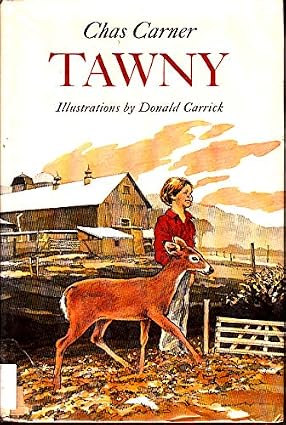
Tawny by Chas Carner


Tawny by Chas Carner
Publisher: Scholastic and Macmillan
Genre: Middle Grade (8 – 12 y.o.), Historical
Rating: 5 Stars
Reviewed by Astilbe

Trey and Troy Landry are 12-year-old twin brothers growing up on a New Hampshire farm. Even though Troy is the impulsive trouble maker, and Trey the more dutiful and introverted one, they share an incredibly close bond.

One day Troy is accidentally killed by hunters poaching deer on the farm. Trey is devastated and channels his grief into caring for an injured deer, which he names “Tawny.”

As their friendship deepens, however, Trey finds it harder and harder to release Tawny back into the wild.

What he learns in the process of letting go—about loss, love, and the healing power of nature has even more relevance for youth today than when this critically acclaimed novel was first published.

Grief has many faces.

Mr. Carter had a smooth and descriptive writing style that was a joy to read. I especially liked the passages in this novella that talked about the rhythms of life on a farm and how one season of the year would gradually give way to the next. As someone who had spent his entire life on that same property, Trey was so accustomed to what every month felt like that he didn’t quite seem to realize how special they were, but his descriptions of his childhood were still beautiful and showed me so much about his personality and the empathic and patient man he would become in a few short years as a result of his rural childhood.

It was the passages dealing with Trey’s grief over the death of his twin brother that ultimately convinced me to choose a five-star rating. Many stories that deal with death and loss focus on how it feels immediately or, at most, several months later, but healing can require a much longer period of time than that and sometimes involves old pain returning in quiet moments when the outside world might assume someone is doing much better now than they actually are. I loved the scenes later on that explored how Trey dealt with these feelings while also going about his usual routine of school, chores, and looking after Tawny as she healed from her injury.

The many cultural difference between the 1950s and modern times also piqued my interest. For example, Trey and Troy were taught how to drive at age eight and, a few years later, were doing potentially dangerous chores on the farm like helping cows to deliver their calves or shooting guns. Many children in the Western Hemisphere today would not allowed to participate in these activities, so it was fascinating to see how much more freedom and autonomy people that age had a few generations ago.

Tawny was heartfelt and bittersweet. It made me want to read more from this author!

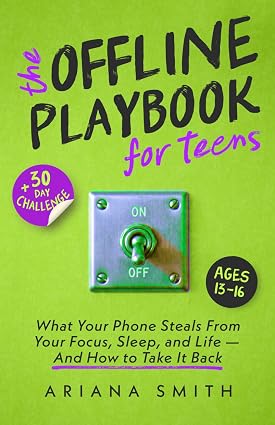
The Offline Playbook for Teens by Ariana Smith


The Offline Playbook for Teens by Ariana Smith
Publisher: Sky Publishing
Genre: Young Adult (14 – 18 y.o.), Non-Fiction, Contemporary
Rating: 4 Stars
Reviewed by Astilbe

Your teenager knows their phone is a problem. So do you. So why can’t either of you do anything about it?

Because knowing isn’t enough — and nobody has told them why.

The average teenager spends 7+ hours a day on screens — not from lack of willpower, but because the technology was engineered by behavioral scientists to be nearly impossible to put down. A 30-second phone check costs up to 23 minutes of real focus. Every scroll is a dopamine loop that was deliberately designed.

NYU professor Jonathan Haidt, author of The Anxious Generation, calls this the greatest uncontrolled experiment ever run on children.

The Anxious Generation gave parents the diagnosis.
The Offline Playbook gives teenagers the understanding to act on it.

Written directly to readers aged 13–16 in a peer-level voice that respects their intelligence and leaves every decision with them.

Inside:

Why the feed is engineered to grip you — and how understanding it breaks the grip
What sleep does that nothing else can, and what your phone takes every night
Why boredom rewires your brain — and what grows when you let it
What real focus feels like — and why the first 5 minutes are the hardest
Plus: A complete 30-day challenge workbook — one challenge per day, building progressively. Not a plan to follow. A playbook to make your own.

No lectures. No shame. No demand to quit anything.

The book that finally gives your teenager the manual they’ve never had.

Few things are more rewarding than the first step in the right direction.

The friendly and curious tone of this book was perfect for the subject matter. Teenagers are old and intelligent enough to make their own decisions about technology, so I appreciate the fact that there was no lecturing to be found here. Instead, Ms. Smith presented current scientific understanding about how the mind works and gave her readers a wide variety of exercises to try in order to reduce screen time and endless scrolling.

Some of my favorite sections were the ones that described how to build new habits and how to get through that brief period of time when purposefully not checking one’s cellphone feels awkward or uncomfortable. Small steps generally work best when attempting to make changes to one’s life, so she broke things down into tasks that require as little as a few minutes to complete. This was a smart decision that made the much bigger goals she mentioned later on feel easier to work on in the future.

One topic I wish had been explicitly included in one of the chapters given how closely it was related to what the author was already discussing is mindfulness. While the author danced around this idea with some of her exercises, I think this would have been an even stronger work if she’d specifically included this term in her writing and given some examples of how it can be a healthy alternative to endless scrolling.

Boredom is good for people of all ages. I loved the author’s conversational tone in general, but it especially excelled when describing how the brain reacts to boredom and why it’s important to give oneself the opportunity to feel this emotion sometimes. These passages felt more like a conversation with a friend than a science lesson. As much as I personally love learning about science, this was the right decision for this topic and age group in my opinion due to how easy it was to read and how much time was spent explaining the many benefits of giving one’s brain a break from the often over-stimulating nature of the Internet.

The Offline Playbook for Teens was filled with practical advice and suggestions for gradually reducing screen time and living in the moment.

Movie Review: Dragon Striker


Dragon Striker
Writer: Paul McKeown
Directed by: Charles Lefebvre
Starring: Akshay Kumar, Rebecca LaChance, Waylon Jacobs, Evanna Lynch
Distributed by: Disney
Genre: Action/Adventure, Sci-Fi/Fantasy, Children’s (0 – 6 y.o.), Middle Grade (8 – 12 y.o.)
Rating: 3 Stars (6 stars on IMDB)
Reviewed by Dicentra

Follows Key, a twelve-year-old farm boy who discovers he may be the legendary “Dragon Striker” and joins a team of underdogs to take on the school champions, while fighting to prevent an ancient evil from resurfacing.

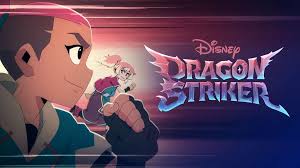
Disney’s Dragon Striker was such a fun release, coinciding with the start of the World Cup in North America this year and combining fantasy and sports into one cartoon. The show did a great job highlighting the sport of Gorotama and the powers of the different players, but suffered from plot holes and the length of the show not allowing enough time to go in depth.

Gorotama is such a cool sport, very reminiscent of a more fantastical version of Shaolin Soccer. I loved the different powers that the players had, and I think the writers did an excellent job providing unique ways for some of them to ‘level up’ over the course of the show. It was also cool to see how some of the powers, or Tamas, were able to make use of the arenas to their advantage (i.e. twins with magnetic tamas being able to run on the ceiling). It was unclear how Key’s powers were so unique when it seemed like Ragno had very similar ones, but that leads more into some of the plot holes issues the show faced.

Dragon Striker was composed of multiple episodes that were about 20 minutes in length, but there was defniitely potential for them to go much longer. For example, Kal Asterock is supposed to be an academy of sorts but we never really see any of the students in classes (it is unclear if all they do is learn to control their Tamas for the sake of playing Gorotama). It is also a little weird that for a school that big, there seems to be only four professors (or Goyen) that ever make an appearance. I was kind of hoping that with the start of the team of Underdogs (the Knights), there would be some kooky professor coming out of nowhere to be their coach but it never happened. There’s also a scene towards the end of the show where one of the players on another team gets attacked, but they never really go deeper into what attacked him (it’s limited to three out of four of the Goyen complaining that Key coming to the school is bad news, as though he’s somehow related to the issue). I recognize though that I’m likely older than the target audience for this show, and expecting more complex shows as a result might be related to most of my complaints.

Overall, this was an entertaining cartoon and I’m glad I took the time to watch it. The show has a lot of potential, especially if they go into more of the history of the school and what happened with Key’s mom (we really only get told that she was a former Dragon Striker, and bits and pieces of what happened when she died). I really hope Disney gives this show another season, as there’s so much more to explore (and many more games of Gorotama to be played).

Bot Camp by Paul Clarke


Bot Camp by Paul Clarke
The Bot Books #1
Publisher: Green Hill Publishing
Genre: Middle Grade (8 – 12 y.o.), Action/Adventure, Contemporary
Rating: 3 Stars
Reviewed by Astilbe

Twelve-year-old Daniel is obsessed with combat robotics — because duh, who isn’t? So when his plucky lifter-bot snags him a spot at Bernard Barker’s legendary Bot Camp, Daniel short-circuits with excitement. Meeting his tech-innovator hero will be a dream come true!

His mom says he should try to make friends, but Daniel won’t have time for that. Bot Camp is a high-voltage competition and only one kid will win the ultimate prize: becoming Bernard’s apprentice.

Unfortunately, from the moment Daniel steps into the fully automated, AI-powered training complex, nothing goes to plan. The other participants are brilliant, but Daniel’s teammates are totally useless. He’ll never impress Bernard at this rate.

So while the others relax for the night, Daniel convinces his team to sneak into the workshop to fix their bot. But when the labyrinth-like facility mysteriously goes into lockdown, Daniel finds himself in real danger and only his teammates can help.

Summer camp is a rite of passage for many kids and, in this case, maybe a few robots as well.

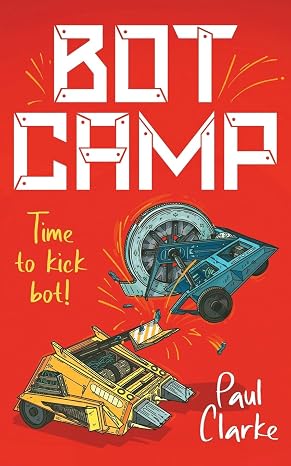
The plot was fast-paced and exciting. There was never a time when it felt easy to set this down and stop reading for a while because every chapter was filled with adventure and twelve-year-olds aren’t always known for thinking about the consequences of their actions ahead of time. This is something I’d especially recommend to reluctant readers or kids who need a lot of action in their stories.

I would have liked to see more character development. Despite spending over two hundred pages with the characters, particularly Daniel, I’d struggle to describe his or their personalities or interests other than their love of combat robotics. Yes, this was a plot-centered book, so I wasn’t expecting pages of development for every single character or anything, but that was something that felt missing from the storyline.

Combat robotics was a topic I knew little about when I began reading chapter one, so I appreciated the detailed descriptions of how these battles work and what sorts of techniques players use to create robots that are good at both defending themselves and causing damage to their competitors. While I’ll leave it up to other readers who know more about this type of competition to share their thoughts on how well it represented what actually occurs in those battles, I certainly thought this made it sound exciting and educational.

Bot Camp kept me on my toes from the first paragraph to the last on.

The Almighty Accused by Steven Donahue


The Almighty Accused by Steven Donahue
Publisher: Self-Published
Genre: Young Adult (14 – 18 y.o.), Contemporary
Rating: 5 Stars
Reviewed by Astilbe

God is put on trial by a group of middle school students after a fatal shooting at their school.

Traumatized by the loss of his twin sister during the school shooting, 13-year-old student Nolan Mitchell convinces his history teacher to allow their class to reenact the fabled WWII trial of God by Jewish prisoners of war.

The mock trial explores the issues of God’s responsibility to Man, and Man’s responsibility regarding free will. The trial draws the ire of parents, students, residents, and school administrators, while also attracting the attention of news reporters from across the country.

What will the jury decide?

Will they find Him guilty?

Will their lives ever be the same again?

Grief is inescapable in life, but maybe it can teach a few lessons along the way.

Nolan was a heartbroken and angry teenager who had endured more suffering in his short life so far than some people decades older than him have known. I appreciated how much time was spent developing his backstory and personality, especially when it came to what he thought about topics such as bullying and what responsibilities bystanders have when they witness something like that occurring. The nuances that were added to my mental image of him as I read those scenes only made him feel more three-dimensional and lifelike to me.

This was also a good example of how to round out secondary characters and give them a chance to shine. While Nolan’s devastating loss was rightfully given most of the attention, other people in his life had suffered their own tragedies that helped to explain how they became the people they were and why they reacted in certain ways when the narrator dug a little deeper into their backstories. It honestly made me wish for a sequel written from one of those other perspectives as I took note of several characters who could have done well as a protagonist in the future given what the audience had already learned about them and what questions I still had about their lives.

Based on the title and blurb, I started reading the first chapter under the assumption that this was probably an inspirational title, but the approach the characters took to the question of whether or not God should be held responsible for the evil in the world ended up being much more philosophical in nature. I enjoyed the complexity of the arguments on both sides of the trial and thought Mr. Donahue did an excellent job of framing every claim and rebuttal. The existence of suffering is one of the most difficult topics to discuss, especially for teens who have less life experience to rely on than older generations do. While I can’t share much about the conclusion in my review without giving away major spoilers, I did find it satisfactory and thought provoking.

The Almighty Accused explored a sensitive subject with logic and empathy. I can’t recommend it highly enough.

Along the Trail by Kaci Curtis


Along the Trail by Kaci Curtis
Publisher: The Wild Rose Press
Genre: Historical, Young Adult
Rated: 5 stars
Review by Rose

In 1847, Winnie and her family are traveling west to start a new life in the Oregon territory. While many in their wagon train fret over river crossings, disease, and encounters with Native tribes, she relishes the unexpected freedom of life on the trail.

Threatened by storms, wild animals, and outlaws, Winnie must rely on the bonds she’s made and all she’s learned in order for them to make it to Oregon alive. She also must decide if she is ready to risk forming an attachment to Hal, the cowhand who has a knack for showing up just when help is needed, or whether she will emulate Mae, the free-spirited daughter of their trail guide.

I thoroughly enjoyed this look into the past as Winnie and her family make the long and perilous journey from their home in Missouri to the promise of free land in Oregon. It’s obvious the author has done her research about the struggles and tribulations the new settlers experienced, but you never feel beat over the head with the research. Instead, it’s skillfully woven into the story as enhancements, helping the reader really become immersed in the experience. I loved the little telling experiences she shares with us (like making butter as they traveled by hanging up fresh milk under the wagon).

It’s been a long long time since I’ve studied about the Oregon Trail, so it was a good reminder of what the people who came before us endured as they set out for a better life.

The story was so good, I finished it in one sitting. I appreciated seeing Winnie grow from a girl of seventeen into a woman over the five months they traveled. And to see the strength the entire family gained on the trip. There were times when things would happen that would make me hold my breath wondering how things would work out. There were times my eyes misted over some of the experiences the group they traveled with faced.

I highly recommend this book to everyone who is interested in the history of our country and how the west came to be settled.