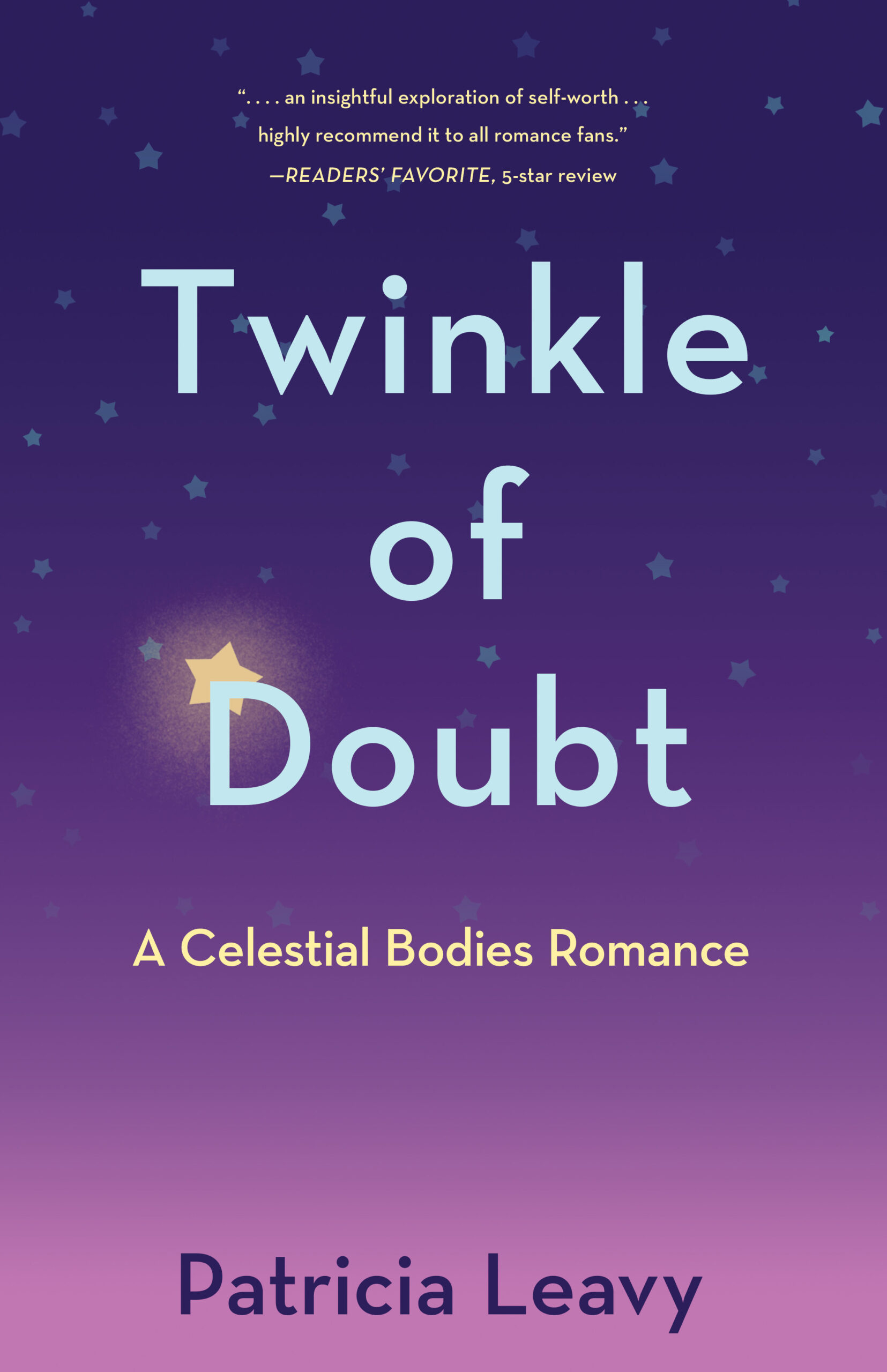
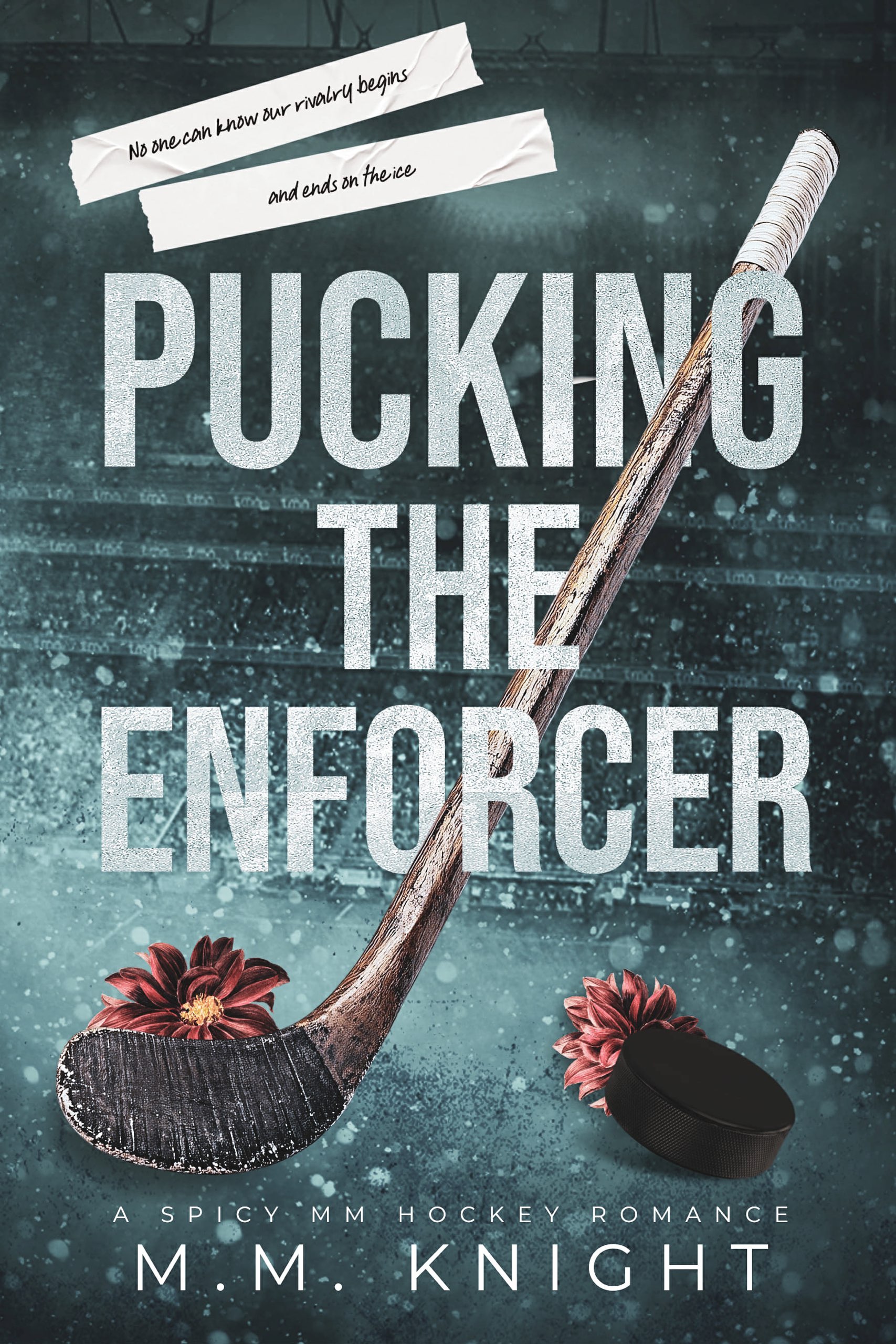
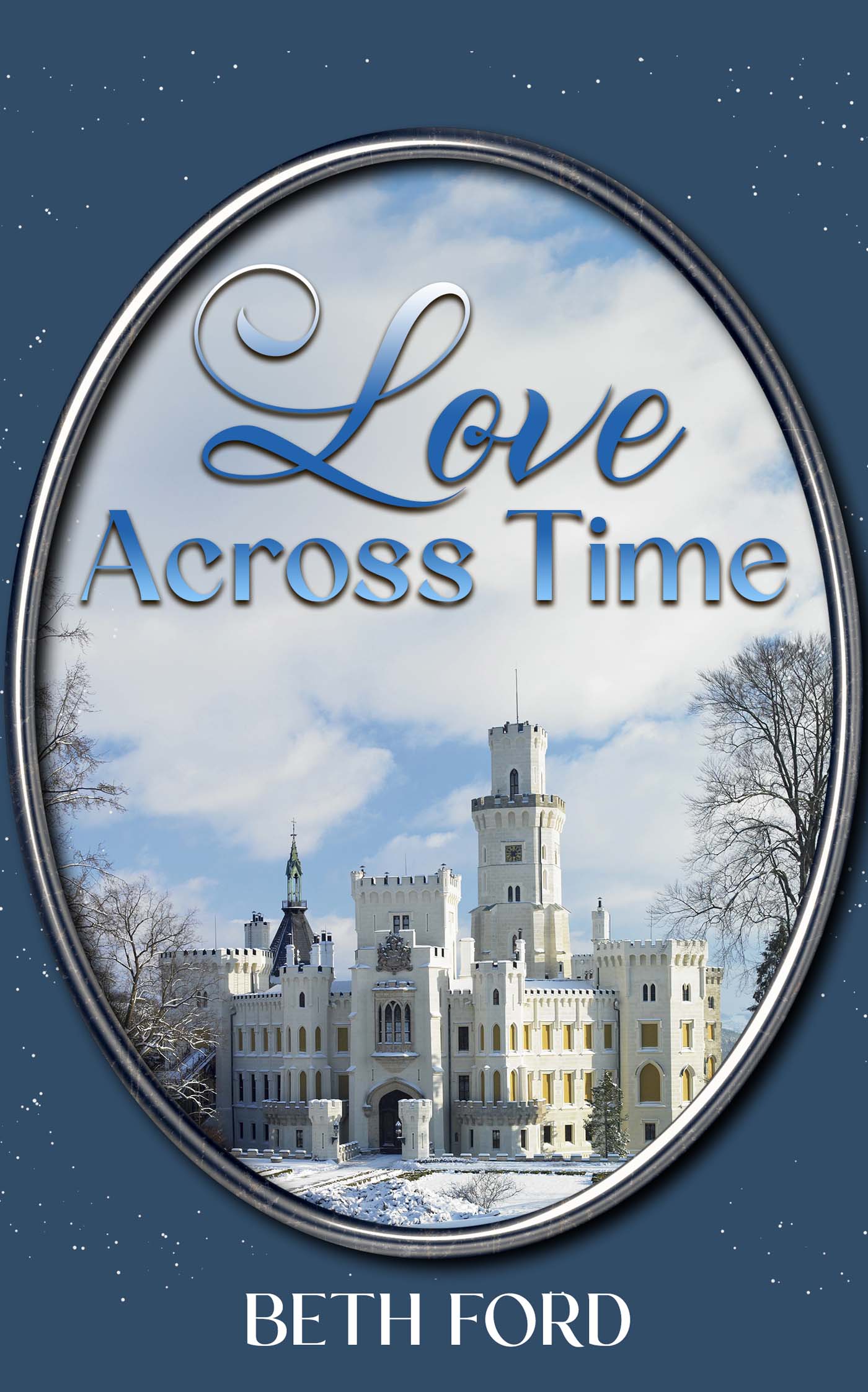
An Empty House Doesn’t Sneeze by David Scott Richardson


An Empty House Doesn’t Sneeze by David Scott Richardson
Publisher: Self-Published
Genre: Middle Grade (8 – 12 y.o.), Historical
Rating: 4 Stars
Review by: Astilbe

An Empty House Doesn’t Sneeze, recipient of the Literary Titan Gold Book Award and runner-up winner of the PenCraft Book Award, renders life on the home front through the watchful eyes of 15-year-old Scotty Johannsen as WWII rages across the globe. Against the backdrop of blackouts, bomb shelters, rationing, and victory gardens, Scotty and his friends follow the rhythms of yesteryear, weaving their wartime worries through the “wilds” of Seattle’s Ravenna Park, where their imaginations run free.

Into this fragile balance a neighborhood threat emerges: Someone is lighting fires during the mandatory blackouts. Scotty, whose father is an air raid warden, is soon caught up in the firebug mystery and tries to smoke the arsonist out. When the local bully throws suspicion on Scotty’s draft-age brother, and when even his best friend’s actions don’t seem to add up, Scotty must navigate a moral and ethical thicket while treading a path toward maturity. Even as scarcity slips into every nook and cranny, An Empty House Doesn’t Sneeze celebrates a youthful spirit and hearkens to simple pleasures, where free time and family abound.

Even hard times can have some good in them.

I was impressed by the character development. Mr. Richardson had well over 300 pages to explore the personalities and growth of both major and minor characters, and he used them to dig deeply into their lives and showcase both their flaws and their strengths. Sometimes I had to remind myself that this wasn’t actually a memoir because of how well-rounded and realistic nearly everyone was. Even the characters I would not necessarily want to live with due to certain habits they’d developed over time that I find irritating were still interesting to read about because their best moments were also given a chance to shine.

The pacing was a little slow at times, especially in the beginning as the characters were being introduced and the mystery was being set up. This is something that paid off beautifully later on as character development deepened and more clues about who was starting the fire began to emerge, but it does ask the reader for some patience upfront as certain aspects of the plot are being assembled behind the scenes. I tend to prefer a faster pacing in most cases, but that is a subjective topic and I was glad I hung out to see where this tale was going.

The world building couldn’t have been better. I appreciated how much effort the author put into describing what daily life was like during World War II for children and teens in the Pacific Northwest. Everything important was included, from the homemade meals they enjoyed – or in some cases complained about – to homework to the games they improvised when the radio didn’t have anything interesting playing on it. It truly felt as though I’d slipped back 80 years into the past as I read this which is exactly what I was hoping to find.

An Empty House Doesn’t Sneeze was well worth the effort I put into reading it.
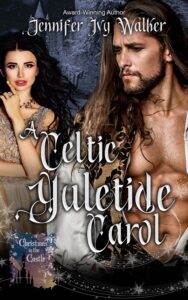
A Celtic Yuletide Carol by Jennifer Ivy Walker


A Celtic Yuletide Carol by Jennifer Ivy Walker
Publisher: The Wild Rose Press
Genre: Historical Romance
Rated: 5 stars
Review by Snapdragon

Voted BoM by LASR Readers 2013 copy

Once a royal Breton knight, Sir Cardin is now infamously known as Basati, the Basque Wolf. Savage and sullen, he drowns his guilt in raucous taverns, accruing enormous debt and acquiring vengeful enemies.

Ulla, widowed daughter of a Viking chieftain, is a skilled archer who lives as a recluse in a secluded woodland cottage. Rendered mute by trauma, she avoids humans, preferring the company of her wild wolf and falcon as she hunts in the Forest of Brocéliande.

When his mother’s dying wish calls Basati home, he finally meets the son he abandoned at birth and Ulla, the enigmatic priestess who is teaching the boy to hunt. As the holidays approach, Basati finds himself smitten with the beguiling beauty as he bonds with his once forsaken child.

But past enemies plot against him, and Basati is ensnared in darkness.

Can music lure the savage wolf into the light of love?

Incredibly, unexpectedly, it is the clever machinations of one woman who sets alight the plot of A Celtic Yuletide Carol.

The strength of family and sincere attachments brings readers close to the characters in this new historical romantic adventure. Cardin, one of Brittony’s royal knights, proves to be a deep and complex character. His nickname might mean ‘wolf,’ but he seems more like the brute the word also means.  However, we heart-wrenchingly come to see why he makes the choices he does.  And Ulla is not the just a lovely damsel. She, with her falcon, wolf, and horse create an image that is almost magical.

Yet, if not for a brilliant bit of trickery by a very secondary character, the two might never have met. It seems a step outside the usual, for this type of medieval romance.

A healer, Ulla is not merely beautiful, but is an active, important and thinking character. Her working companionship with her animals is thrilling to read. I really appreciated the strength and resourcefulness of the fairer sex in this tale. However, there is a lot more to it. At times, the descriptions become near poetic.

Truly, the author can describe a tavern so perfectly, you will believe you can smell it. ‘Odin’s blanket’ (snow), mistletoe, and druidic celebration all work to give this a Yuletide setting. The wonderful characters together with the believable setting have we can foresee further developments between the characters.

However, the motivation of every character is not always good, and alliances between various kingdoms across France, might, indeed, be fragile. The larger world intrudes quite abruptly, and all is not smooth sailing for Ulla, Cardin, and the extended family. Their story will keep you on the edge of your seat!

I always have to find something to complain about, and in this case it’s the cover. It is a great looking, dramatic cover that says, ‘historic Celtic Adventure,’ but it just isn’t different enough from others of its ilk. Yes, Cardin is every bit as masculine as one could imagine, but in my mind, Ulla ought to dominate this cover.

That said, it was my great pleasure to read this book. Many congratulations to the author… and to readers, I highly recommend you put this one on the top of your TBR list.

a Rafflecopter giveaway

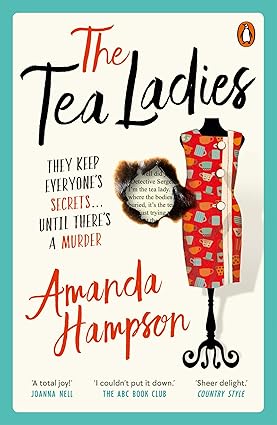
The Tea Ladies by Amanda Hampson


The Tea Ladies by Amanda Hampson
Publisher: Penguin Random House Australia
Genre: Historical, Mystery/Suspense/Thriller
Rating: 5 Stars
Reviewed by Fern

A wickedly witty cosy crime novel set in Sydney in the swinging sixties, ideal for fans of Richard Osman and Bonnie Garmus. They keep everyone’s secrets, until there’s a murder… Sydney, 1965: After a chance encounter with a stranger, tea ladies Hazel, Betty and Irene become accidental sleuths, stumbling into a world of ruthless crooks and racketeers in search of a young woman believed to be in danger. In the meantime, Hazel’ s job at Empire Fashionwear is in jeopardy. The firm has turned out the same frocks and blouses for the past twenty years and when the mini-skirt bursts onto the scene, it rocks the rag trade to its foundations. War breaks out between departments and it falls to Hazel, the quiet diplomat, to broker peace and save the firm. When there is a murder in the building, the tea ladies draw on their wider network and put themselves in danger as they piece together clues that connect the murder to a nearby arson and a kidnapping. But if there’ s one thing tea ladies can handle, it’ s hot water.

It’s the 1960s and Mrs Hazel Bates has been the Tea Lady at Empire Fashionware practically forever. She is welcome everywhere, from the busy factory floor right up into the CEOs board room. When her tea trolly rattles down the hallway everyone is pleased to see her no matter what else is going on in their lives. Hazel herself enjoys a quick cuppa and maybe a cheeky slice of cake with her staunch friends when they have their own break in the alley out the back. Her fellow Tea Ladies in the neighboring factories talk about everything and between them they have a wealth of knowledge. But when they each piece together evidence of a kidnapping, arson and even a dead body turns up unexpectedly, Hazel and her fellow Tea Ladies need to put their brains together to help the police sort out what’s going on.

As an avid tea drinker myself I simply had to purchase this book for the title and cover alone. I really enjoy a good mystery story, but rarely do I dip my toe into the historical context books, so this was a big leap of faith for me, and I was thrilled when this story turned out to be an exceptional tale. Part cosy mystery, part women’s fiction with a hefty slice of humour and good cheer this was a cracking read and before I was half way through I had both searched out the author (who has a number of other books out and a sequel of Hazel and her fellow Tea Ladies recently released) and made a note to purchase it in my next book order.

Set in Sydney, Australia in the 1960s I would strongly encourage other readers to not let this scare them away. I felt Hazel and her close friends are extremely relatable – women of a “certain age” and strong characters and I really loved and enjoyed them. Considering the time they’re in – and the war and difficult historical times they’ve lived through – I found them wonderfully strong, independent and yet still believable and relatable and to my mind that shows extreme skill on the author’s behalf and a real testimony to the strength of the plot and world she has built. I was also very pleased that all of the plot was neatly tied up – with no loose threads or unanswered questions.

Even better, I found myself engrossed in the plot – both with the occurrences in Hazel’s private life, the story of what the factory itself was going through with the fashion and women’s issue changes roaring through the 1960s and the murder mystery itself was strongly written and deeply interesting. Rarely have I been so pleased with a randomly picked up book and not only do I plan to re-read it very promptly, but I’ve actually purchased a second copy to post to a friend of mine who lives internationally and can’t find herself an easily accessible copy. I strongly feel it is well, well worth a try and tracking down.

With interesting, relatable characters, a lovely cozy mystery feel and a number of plots that were well balanced and circling around each other this book was a true joy to read, and I can’t wait for the next book to come out. Highly Recommended.

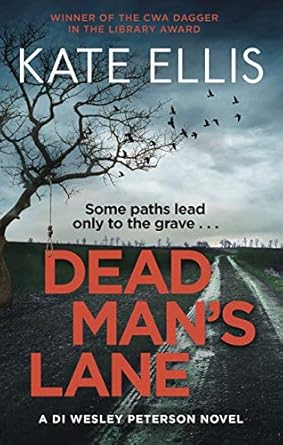
Dead Man’s Lane by Kate Ellis


Dead Man’s Lane by Kate Ellis
Publisher: Piatkus Publishing
Genre: Contemporary, Historical, Mystery/Suspense/Thriller
Rating: 3 stars
Reviewed by Fern

Some paths lead only to the grave . . .

Strangefields Farm is notorious for its sinister history ever since artist Jackson Temples lured young women there to model for disturbing works of art. Some of those girls never left the house alive.

Now, decades later, Strangefields is to be transformed into a holiday village, but the developer’s hopes of its dark history being forgotten are dashed when a skull is found on the site. And when a local florist is found murdered in an echo of Temples’ crimes, DI Wesley Peterson fears that a copy-cat killer is at large. Especially when another brutal murder in a nearby village appears to be linked.

As Wesley’s friend, archaeologist Dr Neil Watson, uncovers the secrets of Strangefields’ grisly past, it seems that an ancient tale of the dead returning to torment the living might not be as fantastical as it seems. And Wesley must work fast to discover who’s behind the recent murders . . . before someone close to him is put in danger.

Decades after Strangefield’s Farm became infamous as the place where Jackson Temples lured many women to be his disturbing works of art – and a number of the young women were never seen or heard from again – it’s dark history is once more coming into focus. A skull is found in the cellar floor as building works begin, only for two more skeletons to quickly be unearthed. DI Wesley Peterson is curious but not overly concerned until a local florist is found murdered in an eerily similar style to that of Temples’ victims. Is a copy cat killer among them, or is something far more sinister at play here?

This is a long running series I have been enjoying and while I don’t feel this is the strongest book in the series it is still a very well written and I found it to be a highly enjoyable British Police Procedural. A few of the main themes have been thoroughly explored in previous books so at times I felt a little like this book was a rehash of previous novels.

I think possibly if it had just been one theme I might have overlooked it, but Della, Wesley’s mother in law, was being a bit of a pain, and then Rachel and Wesley spent a night in a motel for work and came close – again – to crossing the professional line, and then add in a woman from Wesley’s long distant past caught up with him for lunch and his wife, Pam, misread the signals she saw all happening within the space of the one book really made me feel as if the author was somewhat padding out the story. I would have honestly much preferred to have had another link in the historical/archaeology excavations and Neil’s plotline rather than all three rehashed Wesley’s personal life storylines, had the word count been a little low and the author needed to add in a few extra chapters.

That said, I did honestly find the main murder mystery and the current day police investigation was quite well written and I thoroughly enjoyed the twists revolving around Grace – the very long distant friend/girlfriend of Wesley’s – and her re-meeting the dead ex-lover. I thought that aspect to the plot, along with the incarcerated Jackson Temples was very well paced, well written and deeply interesting. I also enjoyed how, as usual, the book itself can be fairly easily picked up with little or no previous knowledge of this cast of characters and this world and still highly enjoyed.

While not the strongest book in the series this is still an enjoyable British police procedural style of murder mystery, and I enjoyed it.

The American Weekly Covers Of Edmund Dulac 1924-1951 by Albert Seligman


The American Weekly Covers Of Edmund Dulac 1924-1951 by Albert Seligman
Publisher: Dulace Books
Genre: Non-Fiction, Sci-Fi/Fantasy, Inspirational, Historical
Rating: 5 Stars
Reviewed by Astilbe

Much has been written about Edmund Dulac’s mastery of art deco and design since his death in May of 1953. He was born in Toulouse, France in 1882 and was educated as a lawyer, although he rebelled and later studied art at the Ecole des Beaux Arts. He is best known as one of the giants of the ‘Golden Age of Illustration’ along with Arthur Rackham and Kay Nielsen. His beautiful watercolor book illustrations are still in print today, and the original first editions are scarce and highly valued.

Dulac emigrated to England from France in 1904 and he was in London at exactly the right time for the invention of color separation photographic reproduction. Prior to the color separation process printers relied on wood blocks or expensive and complicated chromo-lithography to include color illustrations in their books. Most illustrators (Arthur Rackham and W. Heath Robinson, for example) used line drawings to hold the difference in the color changes. Dulac was a watercolorist and this new technique allowed him to paint the colors just as he would normally, without bold lines defining his subjects. He received numerous commissions for the new ‘gift books’ with full color tipped-in plates mounted on heavy art paper. He began an arrangement with both Leicester Galleries and Hodder & Stoughton, the book publishers, to paint watercolors for their illustrated gift book editions which would be sold in the gallery exhibit once a year. He produced fifty oriental style drawings for The Arabian Nights in 1907, forty drawings for an edition of The Tempest in 1908, twenty watercolors, again in his now signature orientalism style, for The Rubaiyat of Omar Khayyam in 1909. Subsequent editions were The Sleeping Beauty and Other Fairy Tales in 1910, Stories from Hans Christian Andersen in 1911, and twenty-eight watercolors with dozens of line illustrations for The Bells and Other Poems byEdgar Allan Poe in 1912.

In 1923, “Edmund Dulac, the Distinguished English Artist,”as he was billed on the front covers, was contracted by the Hearst organization to paint watercolors for The American Weekly magazine, the Sunday supplement for the newspapers. The contract lasted nearly 30 years. Dulac painted 106 watercolors from 1924-1951 for thirteen different series for The American Weekly. Although these watercolors were highly praised at the time, their reproduction was only sporadic, with some appearing in The Illustrated London News over the years, and once in a 1936 picture book titled Gods and Mortals in Love.

The American Weekly illustrations in this book were photographed from the San Francisco Academy of Comic Art, which was owned and operated by Bill Blackbeard. After Bill’s passing in 2011, the entire collection was moved to The Billy Ireland Cartoon Library & Museum at Ohio State University.

This 100th anniversary edition contains all the series with some of his other illustrations. They have been restored as well as possible, as many of the front covers had deteriorated over the years. I have also published these illustrations in more detail in a series of six books, with the original captions. They are available as eBooks and will also be released as print editions.

These pieces of art are worth much more than a thousand words.

It’s not very common for Long and Short Reviews to receive requests to review such image-heavy works, so I leapt at the chance to get to know an artist I hadn’t heard of before and see examples of his watercolours. Many of them told a story, whether it was from the Bible, Greek mythology, The Arabian Nights, or some other famous source that most readers will probably be at least somewhat familiar with. There is nothing like seeing these tales come to light thanks to the magic of art, and I would have happily kept reading and gazing for many pages to come.

I enjoyed seeing how Edmund’s personal style evolved over the years as certain painting and sketching techniques became more or less popular depending on the era. I have basic knowledge of the various art movements of the twentieth century and was able to pick out a few of the biggest ones while taking note of his work. Readers who have deeper understandings of this slice of history will no doubt notice some things I missed! The beauty of collections like this one is how nicely they can adapt to people who approach them from a wide variety of perspectives.

Mr. Seligman’s summary of Edmund’s life and work in the beginning was thorough and educational. I appreciated how much effort he put into sharing the most important details of this artist’s life while keeping this section succinct, too. That’s not always easy to do when writing about topics one is passionate about, so kudos to the author for knowing where to draw the line.

The American Weekly Covers Of Edmund Dulac 1924-1951 was a beautiful peek into the past.

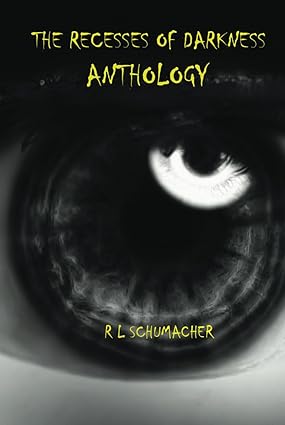
The Recesses of Darkness Anthology by R L Schumacher


The Recesses of Darkness Anthology by R L Schumacher
Publisher: Self-Published
Genre: Sci-Fi/Fantasy, Mystery/Suspense/Thriller, Paranormal, Contemporary, Historical
Rating: 3 Stars
Reviewed by Astilbe

Horror is an intense emotional response characterized by an overwhelming and painful feeling. It arises when one encounters something that is frightfully shocking, terrifying, or revolting. This profound emotion can lead to a visceral reaction, often causing a person to shudder with fear. It grips the mind and body, paralyzing them with a deep sense of dread and repulsion.

Horror comes in all shapes and sizes.

Two old, broke prospectors named Regan and Barlow decided to pan for gold in a new spot at the recommendation of a friend in “Teamwork.” There were some fun plot twists in this tale involving their search for treasure that made me wonder what might happen next but that I don’t want to spoil for others by going into detail about. I also appreciated the way the author played around with the audience’s expectations and made me wonder if he really was going to go in the direction I thought he might.

Some of the tales in this collection had abrupt endings that I wish had been given more time to develop. “Cellar Door” was one example of it. Ron’s troubled relationship with Cheryl was hinted at briefly before the story switched to describing why he decided to sign up as a medical test subject to make some extra money. It was never quite clear to me why he was so eager to do this or what was going on with him and Cheryl. This was a pattern that repeated itself in other instalments and was an impediment to a higher rating in my opinion.

Artie woke up from a mysterious surgery in “The Prototypical Soldier” and needed to piece together his past. As he recovered and began regaining both physical and mental strength, more clues about his mysterious past and the reasons why he had surgery began to emerge. I was pleasantly surprised by several of the plot twists and thought he was a well-written protagonist. This would have made a great full-length novel, although I was content with how things ended in the final scene.

The Recesses of Darkness Anthology put a shiver down my spine.

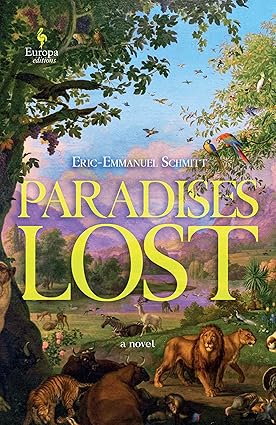
Paradises Lost by Eric-Emmanuel Schmitt


Paradises Lost by Eric-Emmanuel Schmitt
Publisher: Europa Editions
Genre: Historical, Fiction
Rating: 5 stars
Reviewed by Lavender

The first volume of what promises to be a singular literary adventure: to recount the whole of human history in the form of a single, long novel.

Noam is a young man when the Flood wreaks havoc on the world, destroying the peaceful lakeside village he called home, and turning his life upside down. Destined to live forever as an immortal, Noam travels through the centuries in search of the meaning of life, and the events which shaped who we have become today.

Paradises Lost is the first installment of Eric-Emmanuel Schmitt’s monumental project of recounting the history of humanity, the fruits of more than thirty years of research. The first in a series, and in the form of a stylish novel that blends the narrative nonfiction of Yuval Noah Harari with the adventure novels of Alexandre Dumas. Schmitt combines his scientific, religious and philosophical research to propel readers from one world to another, and from pre-history to today.

This story is the first in a grand series, covering human history. It starts at life before the big flood. Noam is the protagonist, an immortal who describes the world from his point-of-view. Noam lives in a village by a lake, the son of the chief, and the characters around him each have their own unique story.

Noam’s relationship with his family and friends is complex and layered. He and his father have an especially complicated connection. Noam does not know whether to admire or despise his father. There are women in Noam’s life, and he must tread carefully concerning his decisions around them.

When Noam leaves his village to live in the wild, he makes some interesting discoveries and meets people he could never forget. The adventure continues, and it is unpredictable.

There are themes of nature and the earth—caring for it—and family, love, friendship, the future, and many others interwoven throughout this epic tale. Readers also get a glimpse into Noam’s distant future.

Throughout the book, there are footnotes, describing Noam’s thoughts on life and universal topics. These insights are thought-provoking. He refers to different points of history.

Overall, this is a satisfying read, and the next installments are sure to just as engaging.

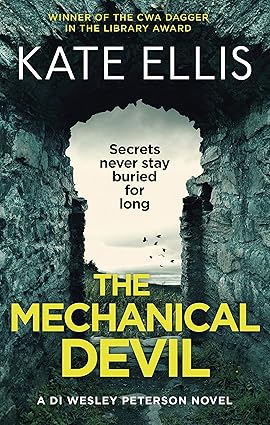
The Mechanical Devil by Kate Ellis


The Mechanical Devil by Kate Ellis
Publisher: Piatkus Publishing
Genre: Contemporary, Historical, Mystery/Suspense/Thriller
Rating: 3 stars
Reviewed by Fern

Secrets never stay buried for long . . .

When archaeologist Neil Watson unearths a long-buried mechanical figure in a Dartmoor field, he is determined to discover the truth behind the bizarre find.

Soon, however, the sleepy village becomes the focus of press attention for another reason when two people with no apparent connection to each other are found shot dead in nearby Manor Field, seemingly victims of an execution-style double murder.

DI Wesley Peterson is called in to investigate, but the two murders aren’t his only problem. The daughter of a local MP has gone missing and the pressure is on to find her, especially when it’s revealed that she has a connection to one of the murder victims. And Wesley’s own life is thrown into turmoil when a woman he helped on a previous investigation finds herself subjected to a campaign of terror . . .

Is there a link between the double murder and the accidental death of a young history student in Manor Field twenty years ago? And just what is the true identity of the Mechanical Devil?

Archaeologist Neil Watson unearths a strange, long buried mechanical figure. But soon the area is overrun with press attention for a very different reason – two locals with no apparent connection are both found murdered in what appears to be an execution. DI Wesley Peterson and his team are trying to uncover what has really gone on – but Wesley also is juggling the increasing demands of a previous victim he’s helped when she’s the new victim of a terror campaign. Can Wesley and Neil each solve their respective puzzles?

I found this to be a very interesting and well plotted murder mystery novel. While I thoroughly enjoyed the interweaving of the historical mystery along with the modern day murder investigation I found it really added a sense of tension and atmosphere to the whole book. I enjoyed trying to work out which pieces of the plot were red herrings and which pieces were connected.

I must admit, I was a little disappointed that Wesley took so long to catch on to what was really going on with the previous victim and her many phone calls. I connected those dots what felt like very early on – pretty much after the character’s first few mentions – so it really surprised me that a detective as seasoned and intelligent as Wesley didn’t even seem to wonder or question what popped into my head very early on. It made him appear fairly silly to me to have missed something this obvious and I feel that was a bit of a disservice to the character really.

That said I found the main two plot mysteries – that of the missing teenage girl and the two murdered locals in the field really was a far more interesting and well written plotline. I thought this was handled very well and I enjoyed these two plots as well as Neil and his historical puzzle. I definitely thought this whole book stood very well on it’s own – I don’t think readers really would have needed to read anything previously written by this author to thoroughly enjoy this novel and aside from the blind spot of Wesley with his previous victim I felt this was a very well encapsulated story that can definitely be enjoyed on it’s own merits.

Readers who enjoy a British Police procedural mystery with quite a bit of history interwoven into the plotline should find this an enjoyable read.

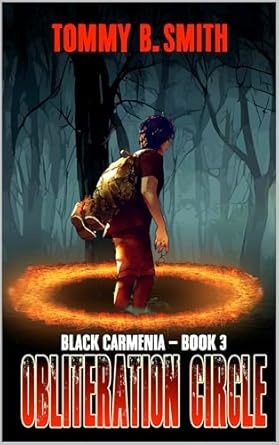
Obliteration Circle by Tommy B. Smith


Obliteration Circle by Tommy B. Smith
Black Carmenia #3
Publisher: Raven Tale Publishing
Genre: Sci-Fi/Fantasy, Paranormal, Historical
Rating: 4 Stars
Reviewed by Astilbe

When the black-bound journal of Claude de la Cour fell into Chloe’s possession, the secret passages and hidden signposts of the world became revealed to her. With these discoveries, entities from beyond have marked her for destruction.

While investigating a series of ghastly deaths on the south Louisiana bayou, she is targeted by a terror she cannot fight. The burning circles in the dark intend to obliterate her and everyone around her. Fleeing for her life, Chloe’s days have become a desperate battle for survival.

Against such forces, is any escape or means of defense even possible?

Beware the bayou.

One of the things I’ve enjoyed the most about this world so far has to do with the characters’ realistic reactions to supernatural experiences that they don’t understand. They generally had a mixture of disbelief, curiosity, and deep fear that made it difficult for them to decide what to do in the heat of the moment. Some ran away as fast as they could while others made the courageous – if also sometimes foolish – decision to investigate further. In my experience, this is exactly how people tend to react in real life to unexpected and frightening events, so it was refreshing to see it play out in fiction the same way. Each character was still an individual, but human nature tended to guide all of them along similar paths as they attempted to figure out what was really going on.

I struggled a little with keeping track of the large cast of characters in this book. Some of them were people mentioned in the first two instalments of this series, but many more were new to the universe and therefore needed to be introduced during a fast-paced plot. It would have been helpful to have some more guidance about who all of the new folks were and what their personalities were like as that’s something that plays a big role in how someone reacts to things that they cannot yet explain.

The horror elements of the plot had a nice mixture of psychological, supernatural, and physical causes. Yes, there were a few gory scenes, but many more were about building tension for characters who were fumbling around with a few clues and didn’t always know if they were on the right track. That’s exactly what I like to see in this genre.

This is the third book in a series that I’d recommend reading in order for plot and character development reasons.

Obliteration Circle was wonderfully scary.

Backyard Herbal Remedies: A Beginners Guide to Identifying, Foraging, and Wildcrafting Herbal Remedies Straight From Nature by Krista Edwards


Backyard Herbal Remedies: A Beginners Guide to Identifying, Foraging, and Wildcrafting Herbal Remedies Straight From Nature by Krista Edwards
Publisher: Self-Published
Genre: Non-Fiction, Contemporary, Historical
Rating: 5 Stars
Reviewed by Astilbe

Have you ever wondered if there was a better more natural way to care for the health of you and your loved ones? It may be waiting for you right outside your door!
Does the idea of foraging sound fun and intriguing, but at the same time scary and intimidating?
This book is written for the person starting from scratch. It is written for the person who knows there is a better way to supporting health naturally, but whose only prior use for dandelions was to make a wish. This book breaks things down to a very basic easy to understand level. In Backyard Herbal Remedies you will learn:
How to identify basic botany characteristics to help you identify plants safely and correctly.
How and when to harvest each herb
Which parts of the herb to harvest and how to process it.
How to wildcraft sustainably
How to make different herbal preparations, such as teas, tinctures, decoctions, poultices and more.
Herbal energetics and herbal actions- how to match an herb to the situation.
How to use 18 common backyard “weeds” to use for remedies, what they do, and how to use them.
Recipes for each herb to help you incorporate them into your daily life.
Resources to use on your journey to becoming an herbalist.
If you are ready to take the first step towards sustainable self-reliance for your health and that of your loved ones, I invite you to read this book and join me on your plant journey!

Knowledge is power.

This was an excellent introduction to herbal remedies and how to use them. Because it assumed the reader knew nothing about the subject, the author explained everything about it in clear detail and was quick to warn readers about plants that should not be used by certain groups like pregnant women or people who have certain health conditions or that are too dangerous for beginners to try to identify because, for example, there may be very similar species that are poisonous or they are not easy to properly and safely prepare for human consumption. Those are some of my concerns when I think about trying new herbal remedies, and I was relieved to see them addressed so clearly when necessary.

It was pleasantly surprising to find so many recipes for various types of food here. I assumed that this would mostly be about medicinal teas and lotions, so it was cool to be proven wrong and to see so many other options for consumption included as well such as cookies, soups, a unique type of ketchup, and even a few mixed drinks that include various herbs and other plants. If only mainstream medicine included such delicious options for treating common health problems and feeling better.

Ms. Edwards struck a sensible balance between encouraging her readers to follow medical advice, especially for any serious or persistent conditions, and feeling confident in the use of herbal remedies and traditional Chinese medicine for ailments that can be partially or fully treated safely at home. As someone who has an illness that is treated both pharmaceutically and with certain types of alternative medicine, it was refreshing to read a book that did not pit either method of treatment against the other. Both types of treatment can be necessary and beneficial to one’s health!

I appreciated the gentle humor. Even if it is healthy, not every herbal infusion or syrup is necessarily going to conform to what most modern people generally eat or drink, so the author was quick to point out which recipes might take a little while to get used to and what someone can do to help them taste better in the meantime. This pattern repeated itself with amusing stories about things like the dangers of collecting nettles without wearing gloves even for people who have been doing this for years and believe it might not sting so much this time around. The occasional funny moments only made this an even better read than it already was.

Backyard Herbal Remedies: A Beginners Guide to Identifying, Foraging, and Wildcrafting Herbal Remedies Straight From Nature was filled with valuable advice that I will be referencing regularly in the future.