INTERVIEW: STEVEN P. MARINI

Long and Short Reviews welcomes Steven P. Marini whose debut novel Connections was released last year by Gypsy Shadow Publishing Company.  His second book in the Jack Contino Crime Stories series, Aberration, will be released later this year. Steven is currently working on the third book in the series.

Steven has always enjoyed writing, but never really worked at it. However, just before he retired from Federal service, he got an idea after reading about Joe McCain, a Boston police officer, and went with it–not knowing where it would take him.  About a year ago, he saw a commercial on TV for Ancestry.com where people were saying they learned fascinating things about their ancestors.

“I have three little granddaughters and thought to myself, wouldn’t it be cool if their grandchildren did some digging years from now and discovered that their great-great-grandfather became a published novelist in his sixties,” he told me.  ”That helps motivate me.”

Steven is the youngest of four from a blue collar family.

“There were three boys and a girl, so I had all the sibling issues and rewards growing up,” he said. “We were close and I knew I wanted to be a family man some day. I am happy to say that I succeeded in that effort. I have a great wife who is my partner in our journey. We have two daughters and a son, all grown and married. Our oldest, Lisa, has three girls of her own, so we’re enjoying being grandparents now. They all live in Maryland and we visit them several times each year. Your kids become your best friends when they grow up and that’s what we enjoy now. There’s nothing that makes us happier than getting together.”

No matter whether it’s fiction or nonfiction, Steven tol dme he believes that people want to read about the human condition.

“Ultimately, readers can all relate to someone dealing with the challenges of life when you show that they are just people, subject to the same challenges as any of us can face,” he explained.

“How do you come up with the titles to your books?” I wondered.

“I’ve learned that the title has to relate to the story. That may seem obvious, but it’s true. In my first book, I developed a story with three main characters. I had to link them together and so, Connections became my name choice. My second is called Aberration. It involves what you might call socially deviant behavior to the extreme. I was going to call it ‘Deception’, but my editor didn’t think it worked. I want to stick with one word titles, preferably ending in ‘-tion,’ so that makes it challenging, sort of like playing Scrabble with myself.”

When Steven’s not writing, he enjoys playing in the Cape Cod Senior Softball league.

“I’m in a division with guys over sixty- four.  This is no church league,” he assured me.  ”It’s slow pitch, but very competitive.  I was not much of a ballplayer as a kid and had been away from the game for over forty years, so I’m proud to be able to play with these guys, many of whom are better athletes than guys half their age (I’m not one of them).”

He also likes to host parties with old and new friends.

“It takes me back to my younger days, when going to the Cape to relax on the beach during the day and party at night was great fun.  I love the Cape, especially when our kids and their families come to visit.”

Something else he’s learned to do since he retired is cook–he had to in order to survive!  His wife worked for the National Security Agency and, after 9/11, she worked all kinds of hours. To his surprise, he loves cooking now.

“I hook up to my iPod, pour a beverage and cook up dinner,” he said.  ”It’s my very own party time.  Cheers.”

“What comes first, the plot or characters?” I asked.

“I’ve heard people argue that character drives plot. I’d say that characters influence plot. You have to come up with a story idea that intrigues you, then put your character in it. In a series, for example, you can develop a character who fits into the plot.  You don’t think up a bunch of main and subordinate characters and then figure out how they’ll all interact. I develop a story and the characters are born within it.”

So far he hasn’t had to do a lot of research for his books because he writes fiction and the settings are places he’s familiar with.

“I thank the stars for the internet,” he told me. “I can research as I go. When I need a little specific data on a subject, I can find it in minutes. I also have a few friends who were in law enforcement who critique my work for police procedure and they give me advice. For example, I learned that police cannot, despite what you see on TV, execute a search warrant by just going into a place and snooping around. They have to have a specific item or items that they are searching for and once they find it, they must stop searching.”

“Ebook or print,” I wondered, “and why?”

“Both and that’s not a cop out. My publisher is a small, independent publisher that focuses on eBooks. That’s fine with me. But I can have my books available as print on demand and I want that because I know there are many, many people who say they prefer to hold a book in their hands. They are mostly my age. But I prefer the eBook. I love being able to enlarge the font, carry a thousand books with me when traveling and buying a book where ever I am.”

“Tell us about the absolute best fan letter you have received,” I said.

“That’s easy. It will be my first one. It hasn’t come yet, but it will be terrific. I know you’re out there, so hop to it, fan of mine.”

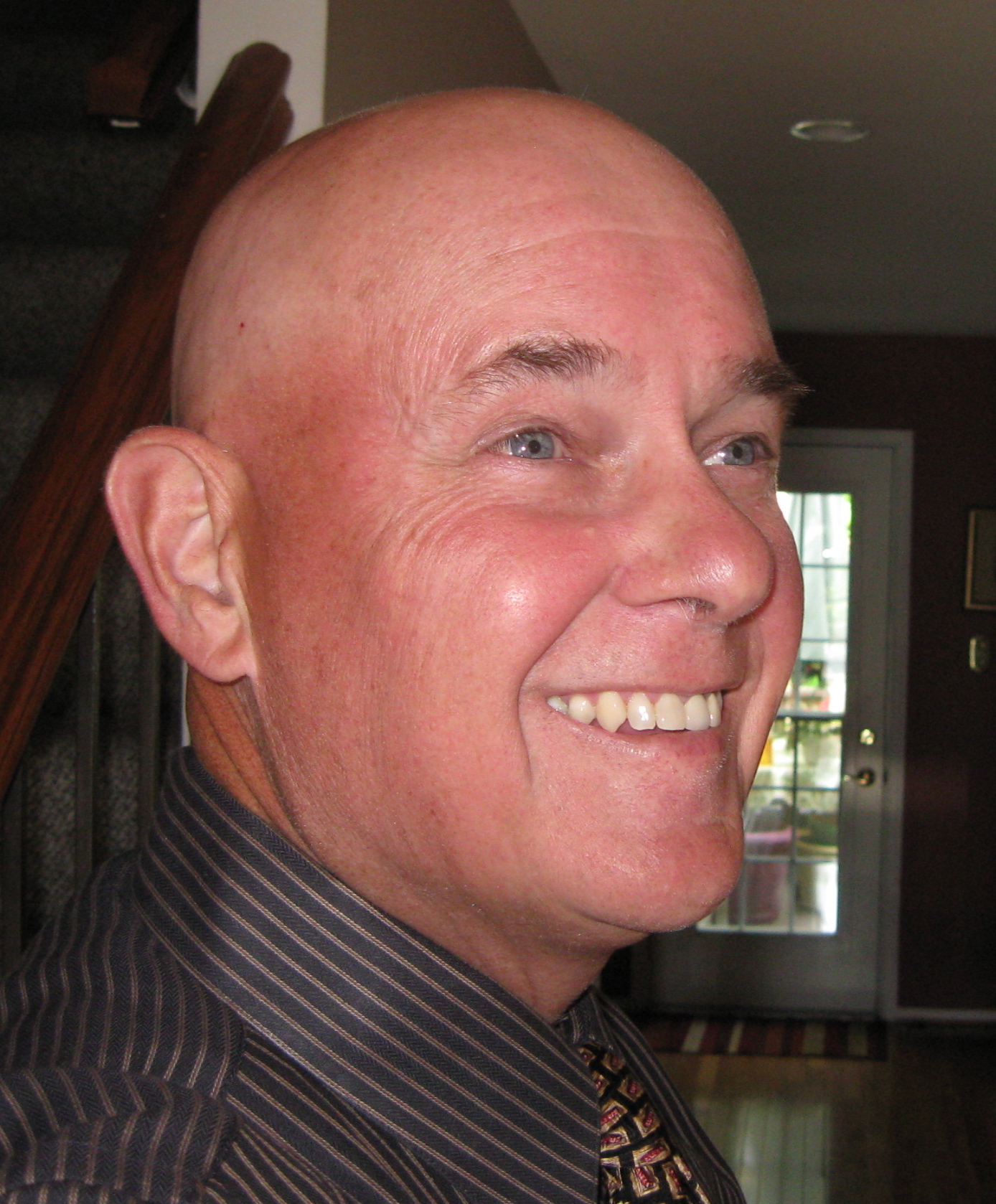
About the Author: 5_17 Steve1Steve Marini holds a Master’s degree in Educational Technology from Boston University and a B.A. in Business Administration from New England College and has spent over thirty years in the Education/Training field, including posts in higher education and the federal government.

Although he describes himself as a “card carrying New Englander,” he lived for twenty-six years in Maryland while pursuing a career spanning four federal agencies. His background has enabled him to serve as a project manager at the National Security Agency, the Environmental Protection Agency, the National Fire Academy and the Centers for Medicare and Medicaid Services, where he worked with teams of experts in various fields to develop state-of-the-art training for both classrooms and distance learning technologies.

A “Baby Boomer,” Steve has taken up fiction writing as he moved into his career final frontier. Married for thirty-six years, a father of three and a grandfather, Steve and his wife Louise own a home on Cape Cod that will serve as his private writer’s colony for the years ahead.


https://www.facebook.com/home.php#!/StevenPMarini

http://babyboomerspm.blogspot.com/

https://twitter.com/StevenPMarini

http://www.goodreads.com/review/list/11060603?shelf=read

http://www.amazon.com/Steven-P-Marini/e/B008VTXR20/ref=sr_ntt_srch_lnk_1?qid=1365958148&sr=1-1


INTERVIEW: K. J. JANSSEN


Long and Short Reviews welcomes K. J. Janssen whose latest work Fatal Dose was recently released.  It’s the second in a series and centers around the epidemic of counterfeit prescription drugs.

“I continue to read in the newspapers and on  the web about people dying from phony drugs, many of them being smuggled in from China and Eastern Europe,” he told me.

Since a lot of what he writes is “snatched from the headlines,” he has a constant source of new material and keeps several works going at once.

Currently he’s developing a new series and character, Alex Syminton. He’s the partner of a large security company that the President covertly uses to  uncover a serial killer–with a working title of Serial.  He also is working on a departure from his usual mystery/suspense genre–an inspirational called Secret Armageddon.

Generally, his plots come first, but since Fatal Dose is the second of a series, it was important for him to continue the development of his main character, Special Agent Mark Matthews, and the villain Marco Vennuti.

He has had to do quite a bit of research for his books:  Blood Money, the first book in the Mark Matthews series, required he learn about blood banks and blood types; for Fatal Dose, he needed to learn about prescription drug manufacturing and distribution; and for Hamptom Manor, a multi-genre work about three generations of the Hampton family, research was needed on fighting fires as well as clothing manufacturing.

Ken’s been a writer all his life, but once he retired he finally got the chance to devote as much time as he wanted to his writing. He’s been writing, in earnest, about five years. It took three years to get his first novel pubished, but along the way he published several short stories.

“Say your publisher has offered to fly you anywhere in the world to do research on an upcoming book,” I told him. “Where would you most likely want to go?”

“Hawaii,” he answered promptly. “Would you make the suggestion for me?”

Finally I asked, “What advice would you give a new writer just starting out?”

“Don’t be discouraged by rejections. If a publisher is kind enough to offer advice take it seriously. Keep at it.  Even the best were turned down in the beginning.”


About the Author:  5_10 alt. Bio PictureKen’s debut novel centered on the exploits of Mark Matthews, a private investigator turned FBI agent. In Blood Money Mark helps topple an association funneling money to terrorist organizations. Blood Money was published as an e-book in November, 2011. It has five-star reviews on Amazon, including one from Jack (Spywriter) King.

Hampton Manor is a multi-genre work about three generations of the Hampton family and their interactions with five townspeople in the peaceful community of Old Brooking, Connecticut. When one of the five hires an assassin to kill Adam Hampton and his father and to burn Hampton Manor to the ground, the resulting sequence of events leaves the town of Old Brooking reeling. Hampton Manor is an emotionally suspenseful and compelling read. It was published as an e-book 4/12/2012. Hampton Manor also has five-star reviews on Amazon, including Jack King.

Secret Armageddon, Ken’s latest novel, exposes the secret battle for the consciousness of men. The battle is between Super Consciousness and the Collective Unconscious; the survival of the world being the ultimate prize. The protagonist is portrayed by Reverend Aaron Masters, minister of the New Thought Metaphysical Center. Secret Armageddon is about new ways of thinking, from birth to death.

Fatal Dose, the second Mark Matthews Mystery exposes a drug mafia distributing counterfeit prescription drugs. It was published as an ebook by Untreed Reads in March, 2013.

Ken has epublished several short stories at Nights and Weekends, Writing Raw and Long Story Short. He is a member of ITW, ASCAP.

He lives in Ohio, with his wife Jeannette and can be contacted at kjans3@yahoo.com

Blog: http://kjans3.wordpress.com/


Interview: Melanie Surani

Long and Short Reviews welcomes Melanie Surani whose debut novel The Silent Treatment was released last year.  It’s the first in a series.  The second is Exchange in Eichstätt, and Melanie is putting the finishing touching on it right now. In the second book, Kat–the protagonist from The Silent Treatment–travels to Germany on a college-sponsored trip.

“Without giving too much away about the ending of The Silent Treatment, I’ll just say that she runs into someone very important to her, but barely has time to process how she feels about this meeting before the person is kidnapped,” she told me.

Melanie lived in Germany for a month so was familiar with the area in which she placed Exchange in Eichstätt, but she said, “It would have been so much better if I’d been able to return for inspiration.”

She’s always loved stories.  From the time she was very young, her parents read to her–books like The HobbitDracula, and Sherlock Holmes. 

“My first attempts at writing were straight-up plagiarism,” she admitted. “When people who loved me told me that wasn’t right and I should write my own stories, I graduated to fan fiction. Star Trek: The Next Generation, anyone?”

“What did you want to be when you grew up?” I asked.

“I wanted to be so many things, which is why I think having a ‘real job’ is so difficult for me. Very early on, I wanted to be a writer, but that soon turned into being a grade school teacher, an actor, a singer (that didn’t stop until my late teens). Now I still want to be a ‘famous writer’, but my biggest career dream is to be a stylist/sculptor at Madame Tussauds in London.”

She hadn’t given much thought to hair as an artform until recently when she needed to stop being an office assistant.

“Cutting hair is a lot like sculpture. The angle at which you cut the hair makes a huge difference about what it’s going to look like when it drops down to its natural position,” she said.

She’s currently trying to learn as much as she can about hair cutting and styling.

“I would love to be able to do a big Marie Antoinette updo,” she told me. “I’m betting it needs a lot of non-hair filling in the middle…The hairdressing profession takes a lot of concentration — but a good kind. It occupies the mind the same way drawing or writing does for me: it takes me deep down into almost a meditative state where all I can think about is what I’m doing, how I’m going to get to the end result from what I’ve got to start with. When I’m done and the client is smiling, I feel really good about what I do and can’t wait till I can do it again.”

Outside her home, Melanie’s favorite place to write is the concourse under Rockefeller Center.

“There’s a Starbucks there (along with many other eateries), wi-fi, bathrooms, and I don’t have to buy something to sit there,” she said. “If I need a little break from writing, I can people-watch or go shopping, then come right back to business.”

Melanie always starts with the germ of an idea.

“A look someone gives. An object that seems like it should have a story behind it. Someone in danger. These tiny ideas grow in my head (and then on paper) to become my plot and characters. For me, the characters drive the plot. If I’m thinking that someone is in danger, I ask myself how they got there, who’s keeping them there, who’s going to get them out. Answering those questions leads to hundreds others. I take that tiny idea and expand it until I’ve got my outline. The longest outline I ever had was 50,000 words by itself–which was excessive,” she admitted. “Then when I’m writing the first draft, I’m just filling in the gaps with dialogue and detail. When I used to be a pantser, I would never get to the ending and abandon the project.”

Finally I asked, “What is a talent you wish you had, but don’t?”

“I would love to be able to sing opera. I don’t necessarily want to perform, I just think it’s a beautiful artform. In fact, this could also be a paranormal ability. If I’m trying to lead some people to safety, and we come across a glass wall blocking our path, I’d just whip out the ol’ Queen of the Night aria and break it down with my glass-breaking high notes. But then again, the people I’m trying to save would be covered in shattered glass, and the enemy would be able to follow us through the now-broken wall anyway (and by our trails of blood). So scratch that.”


About the Author:  5_8 InterviewWhen Melanie Surani isn’t cutting hair, she’s thinking about ways of killing people (for mystery novels). Her fiction can be found anywhere ebooks are sold, and you can book a hair appointment if you live in Manhattan (and have a lot of money).

facebook.com/melsurani         twitter.com/melsurani   

                                                 www.goodreads.com/melaniesurani                              


5_8 interview cover big Kat Shergill doesn’t expect to find a piece of forgotten movie history during a bout of retail therapy. After watching the coil of film found tucked inside her purchase, she’s shocked to witness the brutal murder of a famous 1920′s star by a fellow actor. 80-year-old mystery aside, someone will stop at nothing to get the film away from her and silence what she’s discovered.


INTERVIEW and giveaway: Johnny Ray


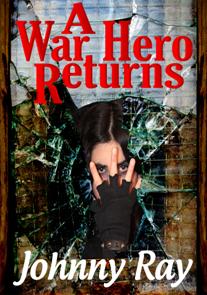
Long and Short Reviews welcomes Johnny Ray whose latest book A War Hero Returns was released earlier this year. Leave a comment on today’s interview for a chance to win one of six downloads of the book.

Johnny told me that when he does research, sometimes he finds things that have changed he wasn’t aware of.

While doing the research for A War Hero Returns, he discovered that one of his favorite restaurants in New York City–The Top of the Sixes– has been replaced by a cigar bar, one of the most exclusive in the world.

“My hero has one vice–smoking cigars with the band of alpha males that work for him,” he said. “In this case, it was a small change to the plot, but gives a deeper look into the hero and makes him more human.”

He’s currently writing about a current-day ultimate female warrior who will one day be queen of her small hidden country in central Europe. She has her own twitter account where she is ladymatalina, and she has already attracted 8500 followers.

He’s written 18 novels, with The Salsa Connection being his favorite for one reason–it was the first novel he won an award with–the Royal Palm Literary Award for best thriller.

“Moments like this are what keeps a writer going,” he told me.

Johnny has always loved to write; he likes the thrill of knowing he has total control of his characters and setting.

“More importantly, I love the ability to plot and keep my readers guessing,” he told me.  ”I want to give enough clues along the way that it is totally possible to figure out everything, but I want you the reader to say, oh me, I should have seen that coming–but I didn’t.”

For Johnny, every story starts with a moment of inspiration.

“Then, it has to grow, and develop as the plot thickens, so to speak, or should I say as it is written,” he said. “While the characters should be fully fleshed out before you start, that is not very often the case. They change as the book and plot comes together.  Often times, they can make a writer re-plot the book.”

He’s never had writer’s block, but there have been times he gets tired of writing and needs to get away from work to refresh his soul.

“I think all writers should do that,” he said. “Take a vacation and some time to enjoy life outside writing occasionally.”

Johnny has an office in his home, but does most of his writing on the beach.

“I have 35 miles of beach with over 400 coffee shops along the way, and I go to a different one every morning,” he said.

One of the hardest parts about writing for him is keeping the plot simple.

“I can get too carried away and make the book too long,” he admitted. “I try to stay around 100,000 words.”

The plot is the most critical part of the story, and it has to keep the story alive.

“I do this by showing a point of view that I think is different,” he said. “I hope to add the twist and turns that others have not considered. I also like to take chances that many will avoid. For example, I will write about a rape in the plot, but hopefully do it right so it is not too much or too little, just enough to move the story forward.”

“What is one thing your readers would be most surprised to learn about you? ” I asked.

“I love to dance. Well, maybe not too much of a surprise since I have dancing in many of my novels. I love salsa and tango. Yes, many years ago I was a national champion dancer. But that was a long time ago.”

Finally, I asked, “What advice would you give a new writer just starting out?”

“Write! And be prepared to do it over and over, and have it shredded by many people. In fact, ask that it be shown no mercy. And be sure to make many friends along the way. You will need their support often.”

About the Author:   5_1 Author photoJohnny Ray has a passion for life and adventure that he loves to share with his readers. As an avid traveler and professional businessman conducting business worldwide for years he has made many interesting contacts and received numerous awards for top production. He has owned and operated several real estate companies, several insurance companies, and a stock brokerage company. He loves radio and TV talk shows, as well as speaking in front of various audiences. Feel free to contact him if you need a guest speaker.

When it comes time to play, he is very active in many sports including dancing, swimming, tennis, biking, and skiing. While he loves adventures that are new, interesting and challenging, making friends that share his passions is a special gift.

Johnny lives in Clearwater, Florida where he works full time as a writer, and he can be often found in one of the hundreds of coffee shops along the beach working on his next novel. He belongs to the Florida Writer Association where he recently won the Royal Palm Literary Award for best thriller, the Romantic Writers of America, and the Mystery Writers Association. He attends various national writer conventions throughout the year, as well as several local writing groups in the Tampa Bay area of Florida.

Facebook                  Goodreads             Blog                     Kindle author page                             Website                                 Twitter  

 5_1 Book CoverWhile Suzan Mercer’s father promised in his dying words the land he left her would bring her love, she never anticipated the events involved in the process. Now, could she balance her new love life with her hidden CIA commitment? Could she? After serving eight years in the army, Suzan Mercer returns from Afghanistan to Florida as a female war hero–her works as a CIA operative, of course, would always be hidden. She couldn’t believe her mother had used a power of attorney while she was gone to sell the land her father had left her. After learning her mother also has early onset Alzheimer’s and claims to have been taken advantage of by Matt Harris, the billionaire developer involved, Suzan uses her military and CIA training to plot her revenge and to reacquire her land. Entering a world where high heels replace combat boots and deep red lipstick becomes more deadly than a colt 45, Suzan never anticipated the cost to reacquire her land would be losing her heart. Matt also learns his money and power cannot acquire the one asset he has always lacked in his life as he ventures into untested skies without a golden parachute to save him. Also, would the ghost of his playboy image come back to haunt him?

INTERVIEW: KARA L. BARNEY

Long and Short Reviews welcomes Kara L. Barney, author of The Hudson Diaries: The Life and Times of a Baker Street Resident, her debut mystery publication–although she has dabbled in many other genres.

If she could go back and have a redo leading up to her first publication, she told me she would do more research from the beginning.

“The trouble that I had while writing The Hudson Diaries was that while my characterization and timing were strong, the historical fact and background were lacking,” she explained. “Detail is something not to be skimmed over, and even though in the author’s head the story may make perfect sense, we must remember the audience and reader who do not initially see and envision as much as we do. Thanks to Jay Hartman for helping me to see what I needed!”

Kara’s been writing since she was six years old and always knew she was a writer, but it wasn’t until she was in the eighth grade that Mrs. McDonald, her English teacher, inspired her to pursue it. It’s partly also why she chose English, with an emphasis in Creative Writing, as a major when she was in college.

  • I have always loved to write, but I kept it to myself until I couldn’t hold it in any longer and wanted to make the world a better place with good literature,” she said.

She’s very much a plotter–her bedroom floor is covered in notebooks, novels, and paper.

“It’s only when a work is finished for me that the notebooks disappear and even then they don’t disappear for very long,” she told me. ”

  • I always write hand-written drafts first, so there are tons of bits and pieces of work hanging around. I never type a draft until I know it’s finished, so most of the time I always have a piece of paper and pen in my hand, and then when it’s edited and typed, I print out a copy to get organized. I never use a desk, just the bedroom floor!”

Once Kara has plotted out her work, and she knows she’s on the verge of a great idea, she knows she will have a long and productive night. She pulls out her notebook and just writes without stopping or editing.

  • The hours pass with no attention paid to them at all, and I shut my door and will not allow interruption,” she said. “Until the last punctuation is down, nothing can halt the feverish constant scratch of pen against the paper, for fear that if I halted, the idea would be gone in that instant, and would be lost forever.”


Kara’s day job is working as a call center representative, and she has to get up at 4 AM to go to the day job.   She does her writing mostly at night.

“E

  • ven if I’m trying to take a nap during the day, I cannot sleep until I have written down what is my head.  It’s a nagging sensation in your brain repeating the words in your mind again and again, and if you try to ignore it, it doesn’t work. I write until I can’t write anymore,” she said.
  • Also, at least for me, I work on mainly one project at a time. Sometimes there are little parts of works that come along, but for the most part I concentrate on one project, and as soon as that’s done, I work on something else.

“Who is your favorite author?” I asked.

  • Jules Verne.  I’ve read 20,000 Leagues Under the Sea five times, and it’s my sick book—the book I turn to when I can’t sleep, or I’m running a fever or I feel lonesome. I’ve also read most of his other work, and it brings a smile every time. I’m not sure why exactly, but I guess it’s some sort of dormant, constant wish for adventure, a change in life or a step forward into something different and exciting. Don’t get me wrong, I love other authors too, but Mr. Verne and I go a long way back,” she said with a smile.

Her list of books that have most influenced her life go back a bit, too:

  • The Complete Sherlock Holmes series, 100 Hair-Raising Horror Stories, 100 Malicious Little Mysteries, And Then There Were None, Hamlet, Great Expectations, The Strange Case of Dr. Jekyll and Mr. Hyde…

One thing Kara wishes she could do is play the violin.

“T

  • he strings inspire me, make shivers run down my spine and bring joy and beauty into a sometimes mundane and ordinary life. But time is not against me yet; you are not old until you have given up, and so I wait patiently. Someday that will happen, even if only for a short while,” she said.

“Where are you from and what do you love about your hometown?” I wondered.

“I’m from Salt Lake City, Utah and I absolutely love downtown. It’s not as crowded as New York but its crowded enough to beat the wheat fields in Kansas! I love the noise, lights, busy-ness of it all, but when you are done for the night, the city does sleep. There is night-life, theatre, gardens, and everything that a huge city has, but then there is that quiet, that midnight hour when most are asleep, when only a few lamps burn and the world is resting.”

About the Author: 4_23 Disney Concert IIHailing from Salt Lake City, Utah, Kara L. Barney has been writing since she was six years old. She graduated from Brigham Young University in 2009 with a B.A. in English with an emphasis in Creative Writing, and also enjoys editing. Over the years she has dabbled in many genres, though The Hudson Diaries is her first published work in the mystery genre. She is an avid reader and also likes singing, swing dancing and learning in her spare time. She currently lives in Salt Lake City.

https://twitter.com/ @karalbarney

http://www.karalbarney.blogspot.com/


4_23 hudson diariesVictorian England, 1880—Sherlock Holmes is at it again! But this time, instead of his faithful chronicler Watson at the helm, his tales come from another source…Mrs. Hudson, the housekeeper. A new set of tales for a new generation, Sherlock Holmes is given to us in a whole new light: “The Great Detective” before he became great. From their first meeting to her place as a permanent resident of Baker Street, Mrs. Hudson helps us rediscover the ever-logical detective who has become a literary icon.


INTERVIEW: F.E. FEELEY, JR

Long and Short Reviews welcomes F.E. Feely, Jr., , whose debut novel The Haunting of Timber Manor was recently released from Dreamspinner Publishing. He’s currently working on a book inspired by Meatloaf’s song “Objects in the Rear View Mirror.”

” Meatloaf’s Bat out of Hell 2: Back into hell was one of the first cd’s I ever listened to and fell in love with,” he told me. “Jim Steinman was an incredible writer and the theatrics and passion of the music touched my heart. The one that really did it, the song that still sends chills down my spine, is Objects..and I hope I can write something that is as awesome as that song. ”

F.E. has wanted to be a writer since he was a kid. He used to devour books—they provided window for him to climb out of and into another world to escape from being bullied at school and other issues he had.

“I loved to disappear in those pages, soak myself in the mind of an author and disappear. As an adult, there are still times when I want to go back and do the same thing. Growing up, sucks sometimes and so instead of reading someone else’s work, I want to disappear into my own imagination and translate that to the page so If there is a person out there like me, the journey that I go on wont have go alone,” he explained. “It’s a pretty awesome feeling really.”

He’s been writing, off and on, since he was in high school. Every year, for Halloween, one of the English teachers would host a scary story contest. The two years he entered, he won. He thought it would just be a hobby for him—he would start, stop, and discard whatever he was working on. However, when he was writing The Haunting of Timber Manor, the manuscript became so long he considered submitting it.

“I googled a publisher, finished the manuscript, submitted it, and then *poof* the rest is history,” he said.
F.E.’s favorite author is Stephen King. He began reading the Dark Tower series when he was in the sixth grade and he was hooked.

“His series was probably my ‘Tolkein’ and a series I have read over and over again with the same enthusiasm,” he told me. “The Stand, The Shining, The Dark House, The Regulators, Desperation, and on and on all these books I just loved. I love the intricate world he creates, the characters that you see as three dimensional, the chills, the thrills, and heartbreak and humanness of people. M-O-O-N that spells humanness. ”

“What is the hardest part about writing for you?” I asked.

” Writing isn’t easy. One of the worst things an author hears is ‘oh, I can write a book’ from people who haven’t sat down to actually try. It’s like climbing a mountain and understanding that bringing the plot together is like a mountain climber being careful with each and every single step he or she may take knowing that if one misstep could lead to disaster. It’s a sleepless, fevered, sometimes excited, sometimes mundane, sometimes mind numbingly challenging task. Yet when you finish, you look back on your mountain and nod to yourself saying, ‘Yep. I did that.’”

He tries to write 3,000 words a day—sometimes he makes the goal, and more, and some days it’s like pulling teeth. Usually, it takes him all day.

“The house is empty, the house is quiet, I do my work out, shower, and start writing,” he told me. “If I can’t seem to get started on the first try Ill take a break and return or if I am on a hot streak I just keep going until I’ve exhausted myself and then I stop. Everyone has their own way of doing things and that is simply mine.”

“When did you first consider yourself a writer?”

“I think the moment I got my first contract and nearly fell over dead from shock. It was so surreal and …..breathtaking and mindblowing. I mean, I had always been writing here and there, bits of ideas, and then walking away from it. So I have always been a writer, but then I realized, ‘Holy Crap I can get paid for this.’ I felt like I had arrived in the land of the writers. Then you have that freak out moment where your like, ‘What if nobody likes it?’ Then you have to take a step back and remember that you write for you, not for them — I don’t mean that in a bad way but in that as artists you’ll always turn back to that medium in which to communicate and express your heart.”

When he’s not writing, he loves listening to music, being political, educating himself, talking with his partner, grocery shopping, and cooking.

“God, I love to cook!” he exclaimed. “It calms me down. It’s something that lets me think. I have this insatiable need to feed peoples so when I cook, I cook a lot and love it when I have people over to eat my food. It’s very satisfying. ”
F.E. is a political person and refuses to toe party lines.

“I feel like, if one party gets too much power for too long they become fat and bloated and out of control so I am usually bitching about something or another. My partner and I actually met one day and the first thing we did was debate politics. It was love at first sight and we have been together almost three years now. I think one of the things we were able to come together on, given our sexuality and relationship together, was marriage equality. I love the law and reading legal crap and sometimes get caught up in the passion of Constitutional questions and such so, recently, with the Supreme Court taking up PROP 8 and DOMA we have been really paying attention to not only the cases themselves but the reaction of people out there. You know, I don’t think in history anyone who ever lived a single day on this planet would figure that sometime in their life they would find themselves or their peers in the middle of a civil rights debate or find that their future rested in the hands of politicians or the nine wise people on The Supreme Court. It’s a very interesting , personal, and bothersome thing to listen to people speak so passionately about this subject. It’s one thing to be commenting on a bit of law and giving an opionion on it, but when you actually have a dog in the hunt, so to speak, it takes on a whole new level of involvement. It isn’t an easy thing to listen to when people want to equate you or your relationship to some pretty awful things. But, I think in the long run, gay people will eventually win over the hearts and minds of the country and come out on top…so to speak.”

About the Author: F.E.Feeley Jr was born and raised in Detroit, Michigan and lived there for twenty years before joining the military. He is a veteran of the U.S. Armed Services, having done a tour in support of Operation Iraq Freedom in 2002-2003, turned college student pursuing a degree in political science. He now lives in Southeast Texas, where he is engaged to the love of his life, John, and where they raise their 1 ½ year old German shepherd, Kaiser. As a young man, reading took center stage in his life especially those novels about ghosts, witches, goblins, and all the other things that went bump in the night. His favorite authors include such writers as Stephen King, Dean Koontz, and Anne Rice and whose work allowed him to travel to far off places and meet fascinating and scary characters. As a gay man, he wishes to be able to write good fictional literature for those who love the genre and to write characters that the readers can relate to. All in all, he is a cigarette smokin’, whiskey drinkin’, rock and roll lovin’, tattoo wearin’, dreamer of a man with a wonderful partner who puts up with his crap and lets him write his stories. Enjoy!

4_12 Interview Color coverWhile recovering from the recent loss of his parents, Daniel Donnelly receives a phone call from his estranged aunt, who turns over control of the family fortune and estate, Timber Manor. Though his father seemed guarded about the past, Daniel’s need for family and curiosity compel him to visit.

Located in a secluded area of the Northwest, Timber Manor has grown silent over the years. Her halls sit empty and a thin layer of dust adorns the sheet-covered furniture. When Daniel arrives to begin repairs, strange things happen. Nightmares haunt his dreams. Memories not his own disturb his waking hours. Alive with the tragedies of the past, Timber Manor threatens to tear Daniel apart.

Sherriff Hale Davis grew up working on the manor grounds. Seeing Daniel struggle, he vows protect the young man who captured his heart, and help him solve the mystery behind the haunting and confront the past—not only to save Daniel’s life, but to save his family, whose very souls hang in the balance.

Buy the book at Dreamspinner Press

GUEST BLOG: KEN DALTON


Long and Short Reviews welcomes Ken Dalton whose latest book The Tartan Shroud is available. The Tartan Shroud is the fourth book in the Pinky and Bear series.

Ken is currently working on a non-fiction book concerning the great polio epidemics that raged through America from 1915-1955.

“As a polio survivor who was struck down at the age of five in 1943, I have the personal knowledge to chronicle the life changing effects of the disease during that era,” he told me.

When Ken’s not writing, he plays golf and performs in local theater.

“It is hard to turn my mind off from the next plot twist and golf helps me to get my thinking on to something completely different, such as how much my golf ball is going to move from left to right during my next putt,” Ken said. “Performing in a play forces me to become a different character, and in the long run, that helps me to develop interesting characters for my novels.”

“What is the one thing readers would be most surprised to learn about you?” I asked.

“That I am completely different than my two main characters, Pinky and Bear. Most readers do not understand that I allow Pinky, or Bear, to invade me when I am writing in their voice, but their characteristics leave me the moment I have completed their segment. Another example? In my current little theater production I play the part of an unctuous undertaker. Once the two hour play is over, I remove my costume, makeup, and return to my real persona, a seventy-four-year-old writer.”

Ken admitted he was surprised to discover that he’s not always in complete control of what will wind up on the page once he starts writing.

“For example, in my first book, The Bloody Birthright, Flo Sonderlund was just a minor character who was suppose to remain in Los Angeles when Bear drove back to Carson City. Somehow, Flo ended up in Bear’s car as the two headed north toward Bakersfield,” he explained. “The next thing I knew Flo had become a major character in the rest of that novel and she continued in that role in books two, three , and four. A second example happened in Death is a Cabernet when ten-year-old Ettamae popped up. She was suppose disappear after the climactic conclusion at the winery. But somehow Ettamae ended up living with Bear and Flo while her grandfather recovered from a major leg injury. Ettamae went on to play a major part in The Tartan Shroud, but you’ll have to buy the book to find out the rest of her story.”

The working title of The  Tartan Shroud was “Scottish girl murder.”  I asked Ken to tell us how he came up with his titles.

“First I pick a working title so I can save, and pull up my writing on my computer. Then, as the book takes shape, I set my mind a simple task—come up with a title that looks, sounds, and fits the plot of the novel.  Sooner or later, the answer will pop up. in an hour, a week, or a month—as I’m eating breakfast—driving to the grocery store, or writing. Once I have selected the perfect title, I check Bookfinder.com to see if that title has been used recently. If my title passes that final test, I tie the title to an ISBN number and the rest is history.”

I asked Ken to tell us about his family.

“In case you haven’t noticed, we live in a crazy crap game we call life. The day I met my wife, I rolled a winning seven and found my true love. Today, fifty-four years later, we still love each other, have fun together, sit by the fire together, travel together, and once a week, play golf together. I mention the golf because during the week we each play golf with other people, but every Friday, we play together. Not only is Arlene my wife, she was also the greatest mother for our three children, our four grandchildren, and our six great-grandchildren. She never misses sending a birthday card, to all of our extended family, and kind words to all our friends.”

About the Author:

1_22 ken_daltonKen Dalton was born in 1938 at Hollywood Hospital. He grew up with his parents, his older sister, Pat, and younger brother, Richard in Los Angeles. The year 1938 informs the quick reader that Ken’s older than a lot of people, but younger than some.

In a turn of bad luck, the dreaded Polio virus found Ken.

At the end of World War ll, Ken’s family moved to Cheyenne, Wyoming for a year where he learned how to live through snow blizzards, avoid walking through the large pile of coal in the basement, and how to survive life as an Army Officer’s brat on a base called Fort Warren.

By the age of sixteen, after eleven years of operations, therapy, and braces, Ken’s luck changed dramatically when he met the girl of his dreams at a party. A few years later they married, produced three wonderful children, and settled into a happy life in Southern California.

In 1966, Ken, who worked as a technician for Pacific Bell, and his family left Southern California for the green hills of Sonoma County where they bought a home in Sebastopol surrounded with apple trees. A few years later, Ken and Arlene built a new home on three and a half acres. They raised cows, pigs, and learned how to build outstanding fences. While their children grew, they hosted two exchange students, Eva Reimers from Sweden, and Tanja Wuttke from Germany, both of whom are still loved members of the Dalton clan. Also during those years, Ken was promoted to management at Pacific Bell. He eventually ended up responsible for all the central offices, sixty-three, in an area that covered five counties.

In 1977, Ken, Arlene, Bob Wiltermood, and his wife Norma, designed, built, and operated a 2000 case winery named Pommeraie Vineyards. They produced award winning Cabernet Sauvignon and Chardonnay. However, after Bob died, the winery was sold. Ken and Arlene moved to a hilltop in Healdsburg.

With the winery gone, and time on their hands, Ken and Arlene started to perform with the Camp Rose Players. Twenty years and forty productions later, both are still acting and singing.

Life was good. All Ken had to do was learn some lines and bow when the audience applauded.

Then, ten years ago, Ken started to write. His first article was published in Golf Illustrated in August 1996. More golf articles followed in national and regional magazines including Golf Magazine and Fairways and Greens.

After a two-year stint on the County Grand Jury, Ken felt the need to begin his first novel.

Now, after a decade of struggle to learn the craft of writing, Ken has become the publishing world’s latest overnight sensation.

www.KenDalton.com

To enter a drawing to win one of ten copies of The Tartan Shroud, autographed by Ken, please fill out this Rafflecopter form.

INTERVIEW: NANCY SPRINGER

Long and Short Reviews is pleased to welcome back Nancy Springer, whose first venture into mass-market psychological suspense Dark Lie was recently released. You can see our earlier interview with her here.

Dorrie White, the main character of Dark Lie has lupus, an auto-immune system disorder which can affect a person a little or a lot. Dorrie has a bad case of it. Her face is roughened and reddened by a malar rash, and steroids have given her chipmunk cheeks and thunder thighs. Because unrealistic societal standards make Dorrie unable to think of herself as attractive in any way, she is a bit vulnerable emotionally. Even as she steps up to the plate in a life-or-death situation, she thinks of herself as “just a housewife,” nothing special.

Because her lupus causes joint pain, fatigue, and fever, she is also vulnerable physically. Far from chasing down bad guys, she cannot even run from them. She is the archetypical underdog. She must truly struggle, and use her wits, to win.

“I do not have lupus, but still, I feel that Dorrie has a lot in common with me and many American women like me,” Nancy revealed, “women of a certain age, overweight but underfit and definitely underwhelming in terms of making any impression socially. Many people, not just the very scary villain, underestimate Dorrie’s integrity and sheer grit of character as she faces challenge after challenge to save her daughter. If her lupus is symbolic of anything, it may represent the wolfish predation, mostly dark and secret, that every woman has dealt with.”

Nancy is very much a character-driven writer and she told me, when it comes to plotting, “I fly by the bottom of my bloomers all the time…once the main character takes on a kind of life of her/his own in my head and I can hear her or his voice, I am ready to start writing.”

She knows what the conflict will be, which is often dictated by what sort of trouble the character would be likely to get into.

“I don’t need to know how things are going to come out,” Nancy explained. “All I need to do is let the character take charge of what s/he does in response to difficulties. I think that, while writing, I am in as much suspense to see how everything works out out as later a reader might be. But my suspense sustains far longer!”

She can’t stand to not be writing, so she often starts writing something within two or three days of completing a project—and will probably choose something very different than what she was writing.

She doesn’t do research before writing; instead, as questions come up during the course of the book, she will make note of them—waiting, if possible, until the second draft to get her facts straight.

Nancy tried writing an outline once for a book she was working on but after finishing the outline, she never went back and wrote the book.

“I felt as if I were already done with it and had lost all enthusiasm for it,” she admitted. “My ‘pantser’ approach really challenged me when it came to writing the Enola Holmes books, each of which had three intertwined plots: Enola searching for her mother, Enola eluding her brothers, and Enola finding a missing person. (Add Enola finding herself, and that’s four plots.) But, honestly, I did not outline. I undertook each chapter as I came to it, I researched along the way, and I seldom knew what was going to happen next in any given book, or how it was going to come out. I frankly do not know how I pulled it off, except to say that Enola is an extraordinarily strong and astute character and she led me exceedingly well.”

“What is the hardest part about writing for you?” I asked.

“Not having co-workers. In other words, loneliness. If it were not that I have an adorable husband who comes home for supper, I would go days at a time without seeing another human being. I don’t know how frontier folks did it. I’d go crazy. Working alone was okay when I had family, kids at home, and then I went through a spell when I worked in restaurants, where I could exchange chit-chat with the staff and other regulars, but my present situation doesn’t allow that. The Internet provides a kind of virtual belonging and the telephone allows an occasional long-distance conversation, but often, as a full-time writer, I do feel very alone, and it can’t be helped.”

She told me that she can’t blame this entirely on writing, though, because she grew up in a home where the tacit expectation was that members should distance themselves. Her father came from Ireland and only went back twice in his life. Her mother had a sister and three brothers who lived in distant states and was visited on summer vacation.

“I had a grandmother on my father’s side, but I hardly realized she existed until I was fifteen and she died. Now my two kids live far away and lead busy lives that don’t much include me. I have no grandchildren. Occasionally I talk with one or the other of my two brothers on the phone, but it’s been years since I’ve seen either of them,” she said. “Within the context of my upbringing this is all completely normal, but I can’t help noticing that I am surrounded by people who go to family reunions. Also, they often form surrogate families at their places of employment. Naturally they envy me for not having to punch a time clock or put in a 40-hour work week, and I agree with them; I’m spoiled. But my life is a trade-off. Either I can write, or I can have human contact, but usually not both at once. Usually that doesn’t work so great.

“It doesn’t work so great with cats either, unfortunately. Cats are ruinous to office equipment. I once had a cat total a new printer simply by barfing down the paper slot. Nobody could fix it, or maybe nobody was willing to.

“What’s hard about writing itself? Everything and nothing. Once I get into my work, I never feel lonely, because I’m with people — my characters — and conversing with other people — my readers. But I can only write a few hours a day. The well needs time to refill. And it’s the down time that’s difficult.

“When I am between books I am impossible. I utterly don’t know what to do with me.

“Friends? Yeah, they help. A lot. Especially now that I’ve given up the ideal of the lifelong friend and adapted to reality: there’s a fluctuating quality to friendship. Which old Greek was it who said that you never step in the same river twice? I am grateful to my friends. I just wish they’d stay around longer and not go moving away or dying on me.

“Heraclitus. That’s who the old Greek was.”

About the Author:

Nancy Springer has passed the fifty-book milestone, having written that many novels for adults, young adults and children, in genres including mythic fantasy, contemporary fiction, magical realism, horror, and mystery — although she did not realize she wrote mystery until she won the Edgar Allan Poe Award from the Mystery Writers of America two years in succession. DARK LIE is her first venture into mass-market psychological suspense.

Born in Livingston, New Jersey, Nancy Springer moved with her family to Gettysburg, of Civil War fame, when she was thirteen. She spent the next forty-six years in Pennsylvania, raising two children (Jonathan, now 35, and Nora, 31), writing, horseback riding, fishing, and birdwatching. In 2007 she surprised her friends and herself by moving with her second husband to an isolated area of the Florida panhandle, where the birdwatching is spectacular and where, when fishing, she occasionally catches an alligator.
Find Nancy online at
http://us.penguingroup.com/nf/Author/AuthorPage/0,,1000015705,00.html
http://us.penguingroup.com/nf/Book/BookDisplay/0,,9780451238061,00.html Dark_Lie_Nancy_Springer
http://www.facebook.com/pages#!/NancySpringerNovelist
http://store.untreedreads.com/index.php?main_page=index&cPath=6_314

In this gripping psychological thriller — smart, chilling, and unrelenting — Nancy Springer establishes herself as an exciting new suspense writer with a distinctive voice and some surprises up her sleeve…
To their neighbors, Dorrie and Sam Clark seem a contented couple in America’s heartland, with steady jobs, a suburban home, and community activities to keep them busy. But they’re not quite what they appear to be. For plain, hard-working Sam hides a depth of devotion for his wife that no one would suspect. And Dorrie is living a dark lie — beset by physical ailments, alone within herself, and unknown to those around her, following the comings and goings of the sixteen-year-old daughter, Juliet, she gave up for adoption when she was hardly more than a child herself.
Then one day at the mall, Dorrie, horror-stricken, sees Juliet being abducted, forced into a van that drives away. Instinctively, Dorrie sends her own car speeding after them — an act of reckless courage that pits her against a clever, depraved killer, and draws Sam into a dogged, desperate search to save his wife. In a confrontation that unites mother and daughter in a terrifying struggle to survive, Dorrie must face and conquer her own secret, tormented past.

AUTHOR INTERVIEW: LISSA BRYAN

Photobucket
Long and Short Reviews welcomes Lissa Bryan, whose debut novel Ghostwriter was released by The Writer’s Coffee Shop in August. Her next release, The End of All Things, is scheduled for release in January.

I asked her to tell us a bit about Ghostwriter.

After being laid off from the newspaper where she worked as a journalist, and losing her boyfriend in rapid succession, Sara Howell is looking to downsize before her dwindling savings run out. Things are finally starting to look up when she lands a job ghostwriting the biography of a popular politician and rents an isolated island house which turns out to have once been the home of her favorite author, Seth Fortner, who mysteriously disappeared in 1925.

But when strange things start happening, as objects break, or go missing, and terrifying visions appear, Sara begins to wonder if Seth ever left, or if she is losing her mind.

What happened to Seth is a secret closely guarded by the family to this day, a family that seems to exist under a terrible curse. Through an old trunk of letters she discovers in the attic, Sara unravels the mystery and becomes caught up in a tale of greed, lost love and the horrors of WWI.

When Sara realizes she is not going crazy and that Seth Fortner’s spirit still haunts her new home on the isolated island, she begins to draw him out of his shell bit by bit. She will discover what happened to the idealistic young writer who went to the battlefields of France to save lives, and to his beautiful bride to destroy the love between them, and what led Seth to make a terrible choice which would have consequences that would echo for generations.

They gradually fall in love in their world of dreams, dreams which swiftly become more attractive than reality, as Sara learns from a ghost how to truly live. Will she be the one to break the “Fortner Curse” by helping Seth conquer his demons, and heal both of their hearts in the process?

” Seth suffers from PTSD from his experiences during WWI,” Lissa continued. “He was at the Battle of Verdun, arguably one of the most horrific battles in human history. Unfortunately, PTSD wasn’t understood during the time, though from records and stories like Hemmingway’s Soldier’s Home we know there were a lot of veterans affected. They came home to a society that didn’t understand what they’d been through or how it had changed them. Gertrude Stein called it the Lost Generation. Sadly, it’s something that still afflicts veterans today, who may not seek treatment because of the stigma. A reader told me that reading about Seth’s reaction to it helped her understand her own husband, who’d recently returned from a tour overseas. That meant a lot to me.”

She’s currently working on a historical romance, set in the time of Henry VIII. Lissa began it during NaNoWriMo this year—and got her 50,000 words written—but admitted there’s still a lot of novel left to write. Her goal is to have it finished by the end of the year.

In fact, if she could meet anyone in history, it would be Anne Boleyn.

” Henry VIII’s decision to break with Rome to marry her had a profound effect on the Protestant Reformation,” she explained. “I would want to show her England, show her the country her daughter helped to build into a world power, and all of the biographies written about her. I wonder what her reaction would be to know she is one of the most studied and debated female historical figures. I would ask her if she wanted it, if she actually wanted to be queen or was pushed into the role by her family’s lust for power and wealth. ”

She has a large library of reference books, some of which delve into extremely esoteric topics. She also uses the internet extensively, since so many primary source documents are now online through sites like Google Books.

“I spent an evening a few months ago researching the burial of Jane Grey and discovered a delightfully ghoulish report from the Victorian era on the exhumations of graves of historical persons,” she told me.

She would also love to go to Britain again—she’s only been there once, and with writing about Tudor England it would be invaluable research. She’s relying heavily on photographs and paintings for her descriptions of the palaces, but would love to be able to visit them again and add more touches of realism, like pacing off distances and checking out the view from certain windows.

Lissa doesn’t remember a time when she wasn’t writing stories in her mind—sometimes over a period of years—rewriting them, replotting, using different characters, until she felt it was finished. Then she’d tuck it onto a mental shelf and move on to another story. She would also rewrite books and movies, ending up in the fanfic world.

“I never really considered publishing any of my work. I thought the only way that could happen is if I sent out reams of manuscripts and endured repeated rejections. I’m not bold enough, nor thick-skinned enough, for such endeavors,” she admitted. “To say I was shocked when the publisher approached me would be an understatement of epic proportions.”

“Do you write in multiple genres or just one?” I asked.

“I write romance, but it’s in many different sub-genres: paranormal, historical, post-apocalyptic, sci-fi … While I don’t think I’d like to write outside of the romance category—I couldn’t see myself writing a murder mystery, for example—I like to play with possibilities within it. Different settings, different time periods, even different universes … wherever my imagination takes me.”

Finally, I asked, “What advice would you give a new writer just starting out?”

“Keep writing. It’s the only way a writer can ever get better. If you can’t think of anything to write about, write about being unable to think of a topic. Anything—just keep the words flowing. Every time you write, you get practice in piecing sentences together, being more concise, more fluid, more expressive, picking just the right word to convey the proper mood.

“I used to correspond with a published author and she gave me the best writing advice I’ve ever gotten: Every word in a story must drive the plot forward. If it doesn’t reveal something important about the characters or plot, it’s just dead weight.

“Stephen King calls it ‘killing your darlings.’ No matter how beautifully written a sentence or paragraph may be, it should be cut if it doesn’t move the plot along. It’s sometimes very difficult, and you may be tempted to make excuses for it, but keeping the story moving is a writer’s primary job, even though we may sometimes want to linger.”

About the Author:

I began writing fanfiction a year ago, after I made the startling discovery there were other people out there who re-wrote books and movies. I’d done this my entire life, “re-writing” them in my mind with a plot I liked better. I decided to write and post some of them, just for my own amusement.

To my surprise, one of my stories became popular and that brought me to the attention of a publisher, The Writer’s Coffee Shop, the original publishers of Fifty Shade of Grey. They asked me if I’d ever considered writing a novel. I had plenty of them tucked away up in my head, but I’d never imagined I’d actually publish one.

http://lissabryan.blogspot.com

INTERVIEW and Giveaway: HAROL MARSHALL

Photobucket
Leave a comment to be entered into a drawing for a copy of The Shadow CabinetLong and Short Reviews welcomes Harol Marshall, who was named after her father’s brother, Harold. Her father dropped the ‘d’ to make it a feminine name.

In addition to The Shadow Cabinet, Harol’s first political thriller, she’s written four mystery novels, a short story anthology, Growing Up With Pigs, and a stage play, Our New Thing.

I asked her which was her favorite.

“Choosing a favorite is like asking a mother to name her favorite child, because I like them all, though in different ways. My two Mexico novels (A Corpse for Cuamantla and A Corpse for the Matadora) are brimming with stories of life in Mexico and bring back memories of my time living there. I like my two P.I. novels (Holy Death and Holy Mole Murder) because of the quirky characters. My play is about two retired Mafiosos who decide to go into business as investment bankers because ‘investment banks were made for guys like us,’ which I find hysterically funny. However, I’ll admit to favoring my Pigs book because the stories are based on my childhood.”

Her Mexico novels are village mysteries that focus on the social milieu in which the crime appears. The play, Our New Thing, is a satirical comedy and her short story anthology, Growing Up With Pigs, is a humorous memoir. Heral wrote Holy Death, the first of her P.I. Polly Berger series, as a tongue-in-cheek parody of P.I. novels.

“The joke was on me,” she explained. “I fell in love with the characters and decided on a series. Holy Mole Murder, the second Holy book, is a straight up P.I. novel, with a generous dose of humor.”

The Shadow Cabinet is set in and around Washington, D.C., but action also takes place in Prague, Czech Republic, and in Hawaii. Honolulu is home to a gutsy female CIA officer, the beautiful ex-wife of the CIA’s Eastern European station chief. She’s been assigned the mission of luring a handsome traitor to his death. Almost falling victim to his charms, she nevertheless steels herself to do her job and deliver him to justice, when the tables turn on her.

She’s currently working on a sequel to The Shadow Cabinet, currently titled The China Contact. It’s set in Singapore, Canada, and the U.S. and is about an assassin intent on killing the President in an unusual manner. She’s also working on a third book in each of her two mystery series tentatively titled A Corpse for Cortez and Holy Kow.

One reason she keeps two or three books going at the same time is to help with times she suffers what she calls “plot block.” If she’s struggling with the plot on one and doesn’t know what to write next, she can abandon it for a while and move on to a different book or write a short story.

“Concentrating on a different project seems to free (unblock) my mind,” Harol said. “On occasion, I’ll discuss my plot issue with my husband or one of my writing friends. Merely talking out the problem often leads to a solution.”

Harol is from Schenectady, New York.

“I love the name, which is a Mohawk word meaning ‘beyond the pines.’ The pines, refers to a rare pitch pine-scrub oak barren that lies between Albany and Schenectady. Comedians insist the name means ‘end of the trail,’ but for me it was the beginning. Once known as the ‘city that lights the world,’ Schenectady was the Silicon Valley of its day thanks to Thomas Edison’s Edison Machine Works, which in 1892, became General Electric. Most people stumble over the spelling, but children learn early how to spell the city’s name using a rather rude rubric that Schenectadians learn around the age of eight or nine,” she told me with a smile.

Harol and her husband share an office and said, “My husband no doubt would describe my writing space as a mess. Our office has a large bay window overlooking our garden, so it’s a bright cheery space. In terms of our personalities, he’s left-brained and orderly, and I’m his polar opposite. In my half of the room, my computer sits in the middle of a desk stacked with books, papers, and sticky notes. For me, out of sight is out of mind, so I only file an item when I no longer need it. Fortunately, I share with W.C. Fields the unique talent of being able to locate precisely the correct piece of buried paper when I need it.”

When she’s not writing, her favorite hobby is dancing—she and her husband go dancing at least once a week.

“I love swing dancing, Lindy Hop in particular, but also ballroom dancing, with cha-cha and rumba topping my list of favorites,” she told me. “My husband is an avid gardener and we have fresh vegetables and herbs growing nearly year round, which is nice for me because I love to cook. Like most writers, I’m an avid reader. However, I’m also a political junkie and like to keep up with what’s happening in the scientific world, so, despite writing fiction, I generally read more non-fiction than fiction.”

I asked her to tell me about her family.

“I’m married to my second husband, a retired particle physicist, who spends most of his time these days gardening and singing (in a barbershop quartet and chorus, the church choir, and the local choral society). I have two children—a daughter, who teaches English in a private school in Utah, and is the mother of my two beautiful granddaughters. My son is a standup comic, who has retired from life on the road in order to farm and write in Michigan’s Upper Peninsula. His first book, about rural life in the U.P., is titled, Yoo Pee Funny. ”

“Could you ever co-author a book with someone?” I wondered. “If so, who would you choose, and what would you write?”

“In fact, I’ve been talking about this idea with one of my cousins, who’s an attorney and an excellent writer. (The anthropologist in me requires a clarification here— he’s actually, my first cousin once removed.) With four children and a fulltime job, he can’t dedicate the time needed to write a book on his own. So, we’ve begun talking about writing a mystery together, possibly a legal thriller where he’ll write the courtroom scenes and I’ll write most of the rest of the novel. It could be fun!”

“What is one thing your readers would be most surprised to learn about you?”

“In the 1960’s, my first husband and I helped pay our college bills by competing on game shows. We appeared together on the nighttime Price is Right with Bill Cullen, where we won an Amphicar, one million Triple-S blue stamps, and a variety of other prizes, all of which we sold for cold cash. Two years later, I was on Password with Lee Remick and Jack Cassidy. With Jack Cassidy as my partner, I won $350 and a portable TV that came with a rechargeable battery pack. Sometime in the next few months, my husband carried the TV outside to watch a football game while he washed the car. When the game ended, he unfortunately forgot about the TV, and promptly ran over it with his shiny clean car.”

Finally, I asked, “What are the best and worst pieces of writing advice you ever received?”

“The worst has to be the commonly offered advice, write what you know. Better, I think, to write what you love—you can always research what you don’t know. The best writing advice I ever received came from one of my professors in graduate school when I was in the midst of struggling to outline my PhD dissertation. ‘Don’t wait until you have it all outlined,’ he said, ‘just start writing. Even if you end up beginning in the middle, you can always organize later.’ I took his advice, and once I started writing, the words just flowed.”

About the Author: Harol Marshall grew up in upstate New York, and began her career as a novelist after spending twenty years in academia. She earned a PhD in anthropology from the University of Pittsburgh. The Shadow Cabinet, her first political thriller, is due out from Storyteller Publishing in December, 2012. Harol has published four mystery novels, and a short story anthology, Growing Up With Pigs, about life on a family farm in the 1950’s. When not writing, Harol enjoys gardening and dancing in Greensboro, North Carolina, where she lives with her husband and four cats. For more information, visit: http://www.harolmarshall.com.

.

In a top-secret bunker… buried deep beneath FEMA headquarters on Mount Weather, a mysterious doppelgänger organization know as THE SHADOW CABINET prepares for the unthinkable. Secretly appointed by Congress, members of the Continuity of Government initiative prepare to carry on government functions in the event of a catastrophic national emergency. But Shadow President Fred McGuire has other ideas. His unhappiness with the current Administration translates into a cold-blooded plot to overthrow the executive branch and seize control of the White House. McGuire s co-conspirators include high-ranking government officials, a wealthy corporation, and a notorious private military contractor. Tensions mount when CIA analyst Malcolm Hall stumbles across evidence of the conspiracy, a discovery that costs him his life. Acting on clues Malcolm left behind, Dan Chavez at the National Counterterrorism Center, and Henry Larson, Director of the CIA s National Clandestine Services, begin a secret investigation that extends from Washington to Hawaii and beyond. Determined at all costs to disrupt the planned coup d’ état by tracking down the homegrown terrorists and preventing high-level assassinations, Dan and Henry place their lives and those of their colleagues in mortal danger.