Long and Short Reviews welcomes Davide Hirshberg who is celebrating the recent release of Jacobo’s Rainbow. Leave a meaningful comment or ask the author a question for a chance to win a copy of the book and his debut novel, My Mother’s Son (US only please).
So how did a former biotech CEO and American history buff end up writing historical literary fiction? At first blush, there doesn’t seem to be a connection, but the truth is I used a lot of my experience in developing drugs for rare diseases when I began to write. I can hear the responses, which start with, “What?”
One of the main takeaways for me from the drug development process was the need to focus on the areas of highest priorities, but to still be flexible enough to entertain the idea of mid-course corrections, especially if the scientific data is leading in another direction. It’s actually pretty similar to the process I go through when writing a novel. I try not to get side-tracked by interesting yet unnecessary tangents that take away from the narrative beat. And, at the same time, when something isn’t working, I don’t force it, preferring instead to explore departures that may in fact turn out to be important and even critical elements of a reworked paragraph, chapter or even the novel itself.
Had I written a literary fiction account of some of the recent election campaigns or the war in Afghanistan or the COVID-19 pandemic, I would’ve touched some political or cultural nerves that would’ve likely had reviewers and other readers focused on the politics of the day, which then might’ve relegated my book to a position on the shelf as left, right, or center, as opposed to a story in which I wanted readers to get a better understanding of how the world actually works. Placing a novel in an earlier time allows me to talk about the major issues that affect Americans today, while it provides some distance from the current ‘talking heads’ climate that instantly categorizes and analyzes events from a narrow, partisan perspective.
Jacobo’s Rainbow—which was released on May 4th—focuses on the dramatic events of the decade known as the ‘Sixties.’ I dug deeply into the Free Speech Movement on a college campus to expose the intolerance of many on campuses today who refuse to listen to or even allow people with different views to have a forum. In addition to tackling the Free Speech movement and its legacy, I wanted to bring campus anti-Semitism—which was then just emerging out of the shadows of the 1950s—to the front and center as a mirror for what’s going on nowadays in a much more virulent form. Writing about this tumultuous decade also allowed me to bring in the Vietnam War, which so traumatized the country at that time—and its reverberations haven’t ceased to this day.
Historical fiction allows the writer to blend elements of what happened (mostly in concept as opposed to a reporting of actual events) with fictitious people and activities, which provides the reader with a perspective on what happened in earlier time and how it may be relevant to what’s going on today.
I hope that the “What” is now replaced by an “Okay, I got it!”
—David Hirshberg, author of Jacobo’s Rainbow (Fig Tree Books, 2021) and My Mother’s Son (Fig Tree Books, 2018)
JACOBO’S RAINBOW is set primarily in the nineteen sixties during the convulsive period of the student protest movements and the Vietnam War. It focuses on the issue of being an outsider, an altogether common circumstance that resonates with readers in today’s America. Written from a Jewish perspective, it speaks to universal truths that affect us all.
On the occasion of the 15th anniversary of a transformative event in Jacobo’s life – the day he is sent to jail – he writes about what happened behind the scenes of the Free Speech Movement, which provides the backdrop for a riveting story centered on his emergence into a world he never could have imagined. His recording of those earlier events is the proximate cause of his being arrested. Jacobo is allowed to leave jail under the condition of being drafted, engages in gruesome fighting in Vietnam, and returns to continue his work of chronicling America in the throes of significant societal changes. Nothing is what it seems to be at first glance, as we watch Jacobo navigate through the agonies of divisive transformations that are altering the character of the country. Coming to grips with his own imperfections as well as revelations about the people around him, he begins to understand more about himself and how he can have an impact on the world around him … and how it, in turn, will have an effect on him. The novel can be read on three levels: 1) as a coming of age story; 2) as a metaphor for what is happening on college campuses today, in terms of the shutting down of speech and the rise of anti-Semitism; 3) as a novel about Jewish identity and what life is like for the outsider.
About the Author: 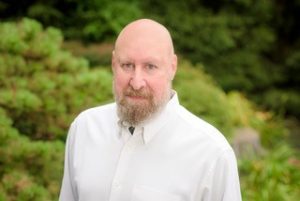 David Hirshberg is the pseudonym for an entrepreneur who prefers to keep his business activities separate from his writing endeavors. As an author, he adopted the first name of his father-in-law and the last name of his maternal grandfather, as a tribute to their impact on his life. His first novel, My Mother’s Son was published in 2018 and won nine awards. Reviewers have compared Hirshberg’s writing to Michael Chabon’s and Saul Bellow’s, among others. Learn more at David Hirshberg’s website.
Buy the book at Amazon, Barnes and Noble, Fig Tree Books, or IndieBound.
 Folks know 14-year-old Clare isn’t normal, even for a tomboy. She runs too much, talks too little, carries a gun too often, and holds a grudge forever. Only her papa’s job at the bank keeps gossip quiet. It’s unwise to risk the cold anger of the man who knows everyone’s secrets.
 Chad Musick grew up in Utah, California, Washington, Texas, and (most of all) Alaska. He fell in love in California and then moved with his family to Japan, where he’s found happiness. He earned a PhD in Mathematical Science but loves art and science equally.
 From New York Times bestselling author, Cheryl Holt, comes a sparkling, fast-paced novel about the complexity of family—and all the ways they can drive us crazy.
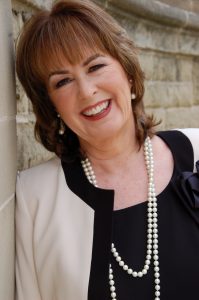 CHERYL HOLT is a New York Times, USA Today, and Amazon “Top 100” bestselling author who has published over fifty novels.
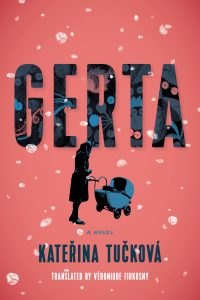
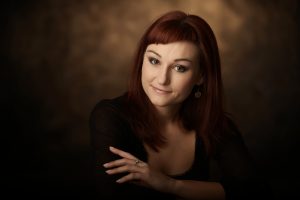 Kateřina Tučková is a Czech playwright, publicist, biographer, art historian, exhibition curator, and bestselling author of Gerta and The Žítková Goddesses. She has won several literary awards, including the Magnesia Litera Award (for both Gerta and The Žítková Goddesses), the Brno City Award for literature, the Josef Škvorecký Award, and the Czech Bestseller Award. Kateřina is also the recipient of the Freedom, Democracy, and Human Rights Award by the Institute for the Study of Totalitarian Regimes, and of the Premio Libro d’Europa at the Book Fair in Salerno, Italy. Between 2015 and 2018, she was a founder and first president of the Meeting Brno festival, focusing on international and intercultural dialogue. Kateřina Tučková currently lives in Prague and Brno, Czech Republic. Her books have been translated into seventeen languages. Gerta is her first to be translated into English. In December 2020, her novel Bílá Voda will be published in Czech.
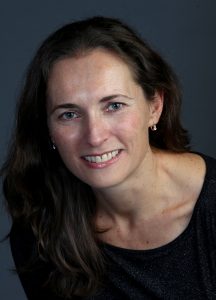


 When Carly Spurway is mistaken for old school friend Caroline Westminster, she has the chance to re-invent her life.
 Bethany Askew is the author of six novels: The Time Before, The World Within, Out of Step, Counting the Days, Poppy’s Seed and I know you, don’t I?
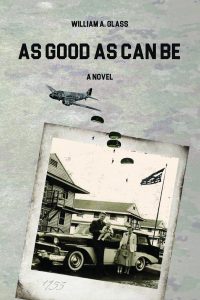 Dave Knight is a wayward child growing up in a military family during the 1950s. His older sister wants to kill him but settles for regularly beating him up. Other siblings join in the mayhem while their alcoholic father contributes to the chaos with his unique approach to parenting.
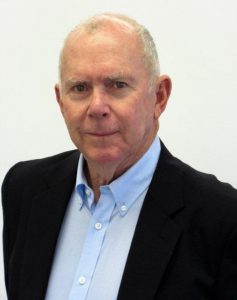 Bill is a retired business executive now living in South Carolina with his wife, Bettina. She teaches high school German while Bill coaches soccer at a small college. Their three sons, Alex, Robert, and Gordon, have all graduated from college and moved away to pursue careers.

 “There are only two types of aircraft: fighters and targets.”

 Blintz Soufflé
 It is 1998. The old Soviet Union is dead, and the new Russia is awash in corruption and despair. Manya and Yuri Zalinikov, secular Jews — he, a gifted mathematician recently dismissed from the Academy; she, a talented concert pianist — sell black market electronics in a market stall, until threatened with a gun by a mafioso in search of protection money. Yuri sinks into a Chekhovian melancholy, emerging to announce that he wants to “live as a Jew” in Israel. Manya and their daughter, Galina, are desolate, asking, “How does one do that, and why?”
 Rochelle Distelheim’s writing has been awarded the Gival Press Short Story Competition Prize, the Katharine Anne Porter Prize, the SALAMANDER Second Prize, numerous Illinois Arts Council Literary Awards, and a Ragdale Foundation Fellowship. Her work has been nominated several times for inclusion in the Best American Short Stories anthology, and she was a finalist in the GLIMMER TRAIN Emerging Writers Competition and the Pushcart Prize. JERUSALEM AS A SECOND LANGUAGE has received both the William Faulkner Gold Medal for Novel-in-Progress and the William Faulkner Gold Medal for Novel. Rochelle’s debut novel, SADIE IN LOVE, was published in 2018.