LASR Anniversary Scavenger Hunt: Shades of Persephone by Reed Stirling

Thanks for joining us on our 14th anniversary scavenger hunt! There are two ways to enter to win and it’s easy to play– first read the blurb below, then answer the question on the first Rafflecopter. You might win a $100 Amazon or Barnes and Noble GC (along with other prizes). Follow and visit authors’ social media pages on the second Rafflecopter and you’re entered to win another $100 Amazon/BN GC (along with other prizes)!

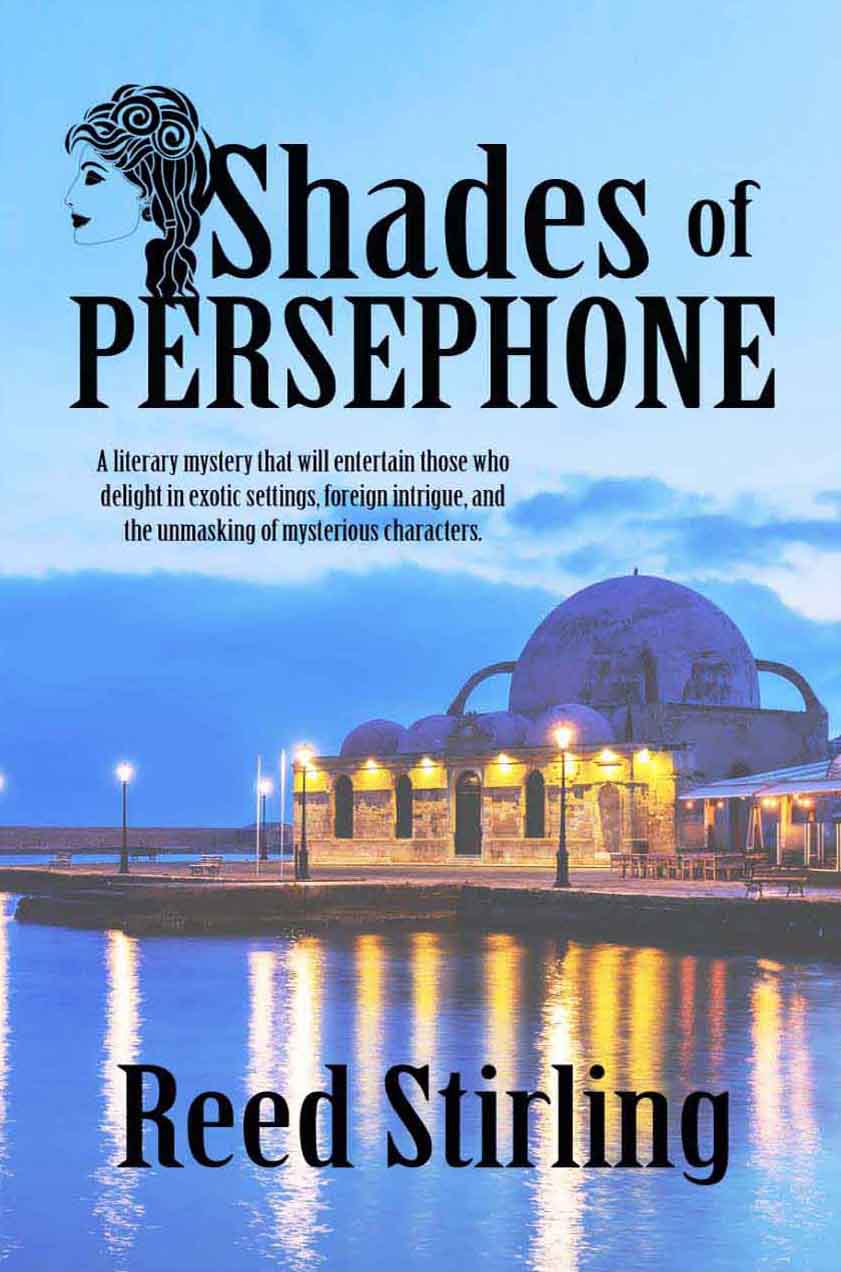
Shades of Persephone is a literary mystery that will entertain those who delight in exotic settings, foreign intrigue, and the unmasking of mysterious characters.

Crete in 1980-81, more specifically the old Venetian harbour of Chania, provides the background against which expat Canadian Steven Spire labours in pursuit of David Montgomery, his enigmatic and elusive mentor, who stands accused in absentia of treachery and betrayal. The plot has many seams through which characters slide, another of them being the poet Emma Leigh, widow of Montgomery’s imposing Cold War adversary, Heinrich Trüger. In that the setting is Crete, the source of light is manifold, but significant inspiration for Steven Spire comes from Magalee De Bellefeuille, his vision of Aphrodite and his muse. “Find Persephone,” she directs him, “and you’ll find David Montgomery.” Her prompts motivate much of the narrative, including that of the Cretan underground during the Nazi occupation, 1941- 45.

Shades of Persephone presents a story of love and sensuality, deception and war, spiritual quest and creative endeavour. The resolution takes an unanticipated turn but comes as no surprise to the discerning reader. Like Hamlet who must deal with his own character in following the injunctions of his ghostly father, Steven Spire discovers much about the city to which he has returned, but much more about himself and his capacity for love.
Buy the book at Books2Read.

Scavenger Hunt:

a Rafflecopter giveaway

Social Media:

a Rafflecopter giveaway

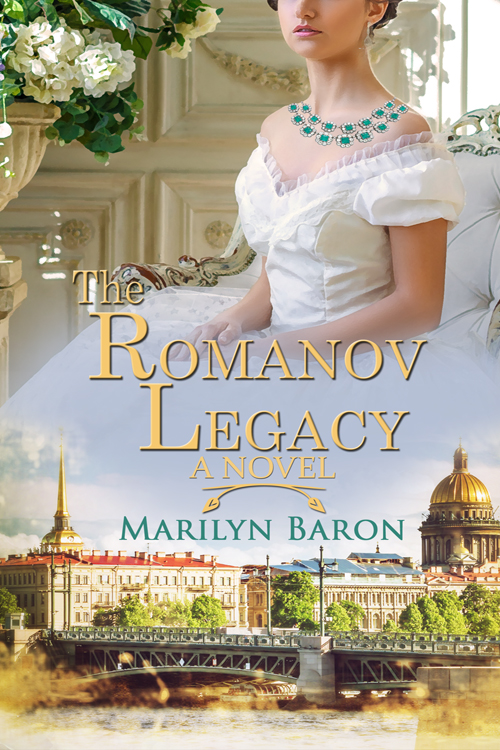
LASR Anniversary Scavenger Hunt: The Romanov Legacy: A Novel by Marilyn Baron

Thanks for joining us on our 14th anniversary scavenger hunt! There are two ways to enter to win and it’s easy to play– first read the blurb below, then answer the question on the first Rafflecopter. You might win a $100 Amazon or Barnes and Noble GC (along with other prizes). Follow and visit authors’ social media pages on the second Rafflecopter and you’re entered to win another $100 Amazon/BN GC (along with other prizes)!

Two women, centuries apart, and the secrets that bind them.

Melody, a young single mother, discovers she’s descended from the last Tsar, Nicholas II. She becomes the best hope of a secret global society, Guardians of the Romanov Legacy, dedicated to restoring a Romanov to the throne of a New Russia. A diary and an heirloom necklace inherited from her murdered grandmother hold the key to her identity and to the location of the Tsar’s lost shipment of gold.

She must accept the sacrifices her birth demands and trust the machinations of the estranged father of her child. To refuse means turning her back on her heritage, her daughter’s legacy, and the long line of her family’s women who were keepers of the secret. Will her longing for true love have world-changing consequences?

Facebook | Twitter | Bookbub

Buy the book at Amazon.

Scavenger Hunt:

a Rafflecopter giveaway

Social Media:

a Rafflecopter giveaway

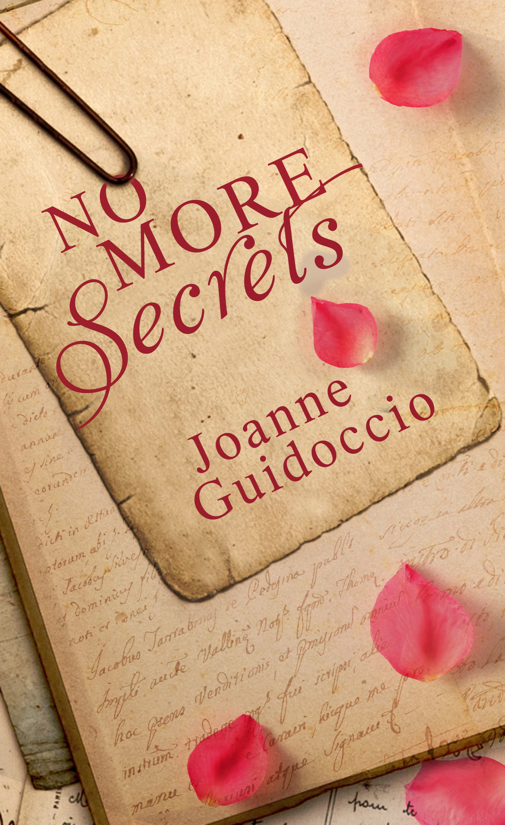
LASR Anniversary Scavenger Hunt: No More Secrets by Joanne Guidoccio

Thanks for joining us on our 14th anniversary scavenger hunt! There are two ways to enter to win and it’s easy to play– first read the blurb below, then answer the question on the first Rafflecopter. You might win a $100 Amazon or Barnes and Noble GC (along with other prizes). Follow and visit authors’ social media pages on the second Rafflecopter and you’re entered to win another $100 Amazon/BN GC (along with other prizes)!

Angelica Delfino takes a special interest in the lives of her three nieces, whom she affectionately calls the daughters of her heart. Sensing that each woman is harboring a troubling, possibly even toxic secret, Angelica decides to share her secrets—secrets she had planned to take to the grave. Spellbound, the nieces listen as Angelica travels back six decades to reveal an incredulous tale of forbidden love, tragic loss, and reinvention. It is the classic immigrant story upended: an Italian widow’s transformative journey amid the most unlikely of circumstances.

Inspired by Angelica’s example, the younger women share their “First World” problems and, in the process, set themselves free.

But one heartbreaking secret remains untold…


Buy the book at Amazon.

Scavenger Hunt:

a Rafflecopter giveaway

Social Media:

a Rafflecopter giveaway

Balancing Life and Writing by Nicole Black – Guest Blog and Giveaway

This post is part of a virtual book tour organized by Goddess Fish Promotions. One randomly chosen winner via rafflecopter will win a $50 Amazon/BN.com gift card. Click on the tour banner to see the other stops on the tour.

Balancing Life and Writing

Balance? What does that elusive word actually mean? And more importantly, how on earth do I find it. Life is always going; it won’t stop because you need a few minutes. What you can do is control how you react to the things that are happening around you. In order to balance my time to write, I had to make some trade offs. I love to stay up late and watch movies; it is one of my favorite things to do. And I am a morning writer, which for me means that I prefer to write in the morning, and I find that my mind is clearer which means less time spent editing my work.

Another thing is that I prefer to write with no one else in my house around me. Otherwise, what happens is that I will be writing away and thinking that it is the best plot twist I have ever come up with and boom someone talks to me or the phone rings and the moment is lost for me. There went that plot twist.

Now, if I was living a balanced life, it might have gone down a little differently. I would still be in the zone, writing the most amazing plot twist ever. Only this time, I would be awake at 5:00 a.m. when my zone of creativity is at its peak. Chances are there is no one else awake in my house, so when the plot twist leaves my mind without me getting every little nuance down on paper, I have no one to blame but myself.

Here are my top tips on how to balance life and writing.

1. Write at the time of day where you are in your zone of genius.
2. Set a timer for an hour and stop writing when the hour is up.
3. Set a big, important goal about your writing. Maybe you want to be published in a magazine, or you have a great idea for a self-help book. Whatever it is, write down your goal.
4. Make a list every single day of five things that you are going to get done to move you closer to your goal.
5. Remember to breathe. Balance is always there for us, the only person who can truly throw you off balance is you. So find the time and space to write and then write.

I Can Still Hear You is a powerful and deeply moving story which grapples with the universal pain of grief and the loss of a loved one. When Scarlett O’Connor loses her father at the age of 30, she’s forced to face the shambles that her life has become. With no money and no savings, the only thing that waits for her is a cryptic map and a mysterious letter. With nothing left to lose, she embarks on a trip to Maui for her father’s final adventure, to begin a treasure hunt which will force her to look deep inside herself and come to terms with her pain and grief.

Accompanied by her less-than-supportive fiancé, a close childhood friend, and an enigmatic man who was her father’s old acquaintance, Scarlett must decode the mystery and find the hidden treasure. But she knows she must face her fears alone, and calling upon the spirit of her father for guidance, she struggles to reconcile her emotions and uncover the treasure before her time in Maui comes to an end.

Perfect for fans of contemporary and women’s fiction, I Can Still Hear You is a gripping tale which will resonate with anybody who has struggled with the death of someone close. This book is a testament to the fact that even though we may have lost them, our loved ones stay with us no matter what challenges we face.

Enjoy an Excerpt

The hospital room may have been silent, but it was far from peaceful.

The mechanical sounds of the machines melded with the all-too-human sounds of my father’s ailing body slowly giving up its fight. The resulting cacophony was anything but comforting. Though his heartbeat was steady, his breathing was a tortured, sawing rasp, a constant reminder that each intake of air could be his last.

The sound of the clock ticking on the wall reminded me of my grandfather’s old stopwatch. I made a mental note to ask my Dad about the whereabouts of the watch.

He had very little time left.

I knew that from the way the medical staff had left me alone with him. They’d been a constant presence these past few weeks, buzzing about the room, telling me in hushed whispers that this time was near, but I hadn’t really believed it. Those doctors had said, after his lung transplant six years ago, that we could expect him to live two to five years more.

But things were different now. He sounded different. He looked different, smaller, frailer. He even smelled a little different, as if something inside his body was going very wrong. And this was the first time all the doctors and nurses had stopped hovering nearby with a new drip or medication to administer. A nurse usually came in to open the curtains in the morning, but no one had been in for hours.

About the Author:Nicole Black is an author, motivational speaker and entrepreneur with a passion for sharing unique stories and helping people grow. For over 20 years, she’s worked in the business world as a corporate trainer in employee productivity and effective growth, where she’s helped some of the biggest brands in hospitality and entertainment grow sustainably through inspiring their employees. She’s been featured on platforms including TEDxWilmington, Jack Canfield Show, Santa Barbara News Press, The George DiGianni show and the Tom Barnard Show.
Through her writing, Nicole hopes to empower her readers and impart valuable lessons about grief, loss, and emotional growth. In her free time, Nicole enjoys traveling, yoga, and spending time with her wonderful daughter in their home of Santa Barbara, California.

Facebook |

Buy the book for $0.99 at Amazon.

a Rafflecopter giveaway

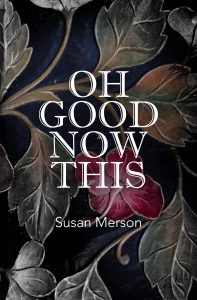
Pondering the Muse by Susan Merson – Guest Blog and Giveway

This post is part of a virtual book tour organized by Goddess Fish Promotions. Susan Merson will be awarding a $25 Amazon/BN GC to a randomly drawn winner via rafflecopter during the tour. Click on the tour banner to see the other stops on the tour.

PONDERING THE MUSE

Oh boy. I’ve been at this art thing a long time. I got the tickle very early on when, as a little one, I used to hug the barking elm in front of our house and lean into the stories that the sap chattered. “Come closer! Listen!” As the gush and babble flowed up and around its magical network.

Then, there were the lily of the valleys that hid under the spreading evergreen on our front lawn. If I crawled under the branches, I could see an entire village of perfectly shaped wonders, little clanging bells, announcing my arrival to the other occupants of the secret village.

Theatre came naturally. And classes at the Detroit Institute of Arts, where I wandered before and after, through the galleries, getting lost in the depth of Mark Rothko’s layers of color or Diego Rivera’s murals of the working men and women who I knew. They lived all around me and their stories were mine, too.

Years of letting the stories and the characters run through me. That’s been the journey so far. And, getting clearer and clearer at how and when to bring them from my internal creation chamber to the world.

Sometimes they show up as characters I inhabit, or maybe as plays or poems, even sometimes in the quilts and clothing that come together from scraps of this and that seeking seams to make them whole.

The muse runs through me. And all of us. If I had to say what I wished most for the planet right now, at this time of extraordinary change, it would be my grand and embracing hope that everyone can begin to feel the tickle of larger understanding, the nuance of color and character, the cratering of self-serving systems that cannot be sustained.

I am blessed with a direct connection with dimensions up and down, and I am practiced now in the bringing of that word to the world. So, too, is that gift there for everyone. And the more we all embrace more than ourselves, the more we understand that our concept of ourselves alone in a dead landscape just won’t stand.

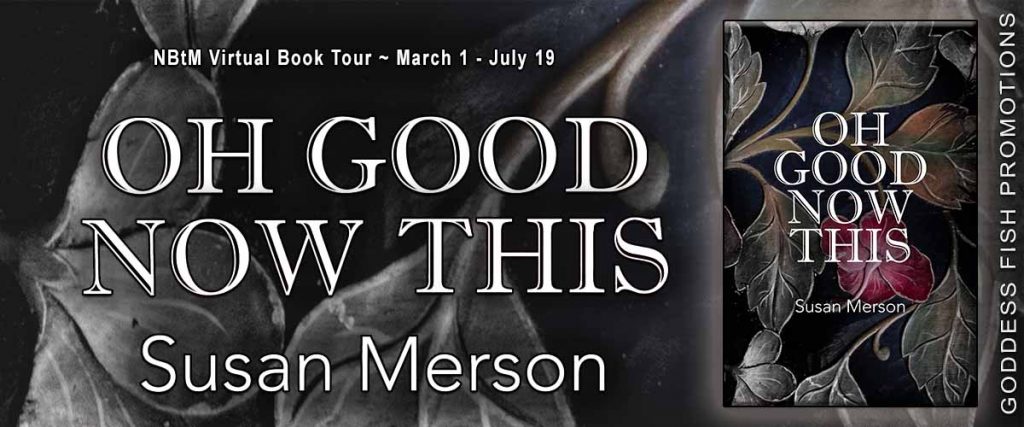
Starting over is hard enough but when ghosts decide to hitch a ride into the future—things can get complicated.
Widowed Vivi leaves California for a new start back east landing in a college town near her old friend Vikram, now the local ‘spiritual’ leader and disappointing lover. But the two have old business which leads them to uncovering the ghosts they conjured long before and the ones that are haunting them now. Vivi reclaims her life, — with the help of a couple different dimensions– saying hi to the ghosts who choose to hang around, and growing a new garden and a new life.

Enjoy an Excerpt

They have settled into their chairs and Tara is tossing some cards, shuffling them and getting a feel. She flips over three cards.

“Oh, my dear. Some bleak times, past, yes?”

Vivi is startled by this pronouncement. “Well, it’s been a time of change, I’d say.”

“Change?” says Tara. “You betcha. This Tower card is about the whole thing coming crashing down. But it’s in the past position. See here? This is the present,” she shows Vivi the 7 of cups. It’s a picture of a man taking a look at a whole gallery of possibilities. “Look at him”, Tara says. “He’s got lots of things to choose from.”

“Well, that sounds good,” says Vivi tentatively.

“Not bad. Don’t get over infatuated with the possibilities. And the last one… here. The Hermit. Yep.”

“What’s that mean?”

“Oh it’s fine. Just a time to go inside and let things percolate. Inner wisdom and all that. Not a bad sentence!” Tara laughs again. “Now. Anything specific on your mind?” Tara continues to flip cards. “So,” she says. “Who is this guy? This King keeps showing up. King of Cups? He fell out of the deck twice while I was shuffling. “Who is this guy who won’t leave you alone?”

Vivi is mystified. “How did you…?’

“Oh, it’s not magic. The cards just know, that’s all. They pick up what you bring. Who is this guy?”

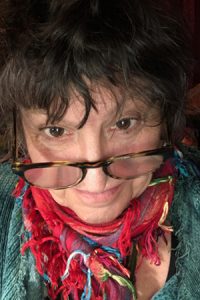
About the Author: Susan Merson began her career as an actress on and off Broadway, in television and film. Co-founding the LA Writers Bloc in 1985 with award winning writer Jane Anderson, she has mentored writers through the Bloc and through her private and university classes in Playwriting, Life Stories, Writing as a Spiritual Practice, Tarot for Writers and the popular VOICING Series. Her short fiction has been featured in The Jew in America, Nice Jewish Girls (Penguin), The Worcester Review, the Chicken Soup series and several other online platforms. As a playwright, her award-winning plays have been performed internationally, including her 8 solo plays featured and used as example in YOUT NAME HERE: An Actor Writers Guide to Solo Performance. (Amazon). Long form fiction available on Amazon is her award-winning blog, WHEN THEY GO AND YOU DO NOT and her first novel DREAMING IN DAYLIGHT. OH GOOD NOW THIS, her newest novel launches 12/1/21. She is a tarot reader and counselor, a maker of quilts, clothing and whimsy. Susan is a humble mother and a proud resident of New York City.
Website | Facebook

Buy the book at Barnes and Noble, iBooks, or Amazon.

The author has also done a series of five videos regarding the use of Tarot for writers (for more information, visit her website):

1: Author/ teacher Susan Merson (OH GOOD NOW THIS/ Amazon) explores Tarot to jump start your writing. TAROT FOR WRITERS #1: INTRODUCTION

An introduction to using your own intuitive powers to tap into the resonance of Tarot images, packed with archetypes and symbols, to jumpstart inspiration for your artistic projects.

**CORRECTION: The Raziel Tarot Deck is designed by artist Robert Place with commentary by Rachel Pollack.

2: Author/teacher Susan Merson (OH GOOD NOW THIS/Amazon), explores TAROT cards to jumpstart your writing, TAROT FOR WRITERS #2: LANDSCAPE

Explore the landscape of story. Entering the world of the card offers visceral clues to the landscape of your writing.

3: Author/ teacher Susan Merson (OH GOOD NOW THIS/ Amazon) explores TAROT cards to jump start your writing. TAROT FOR WRITERS #3: CHARACTER.

A brief exploration of character and how to find their first basic journey. Look deeply at the character clues in the cards and throw three cards to begin their adventure.

4: Author/teacher Susan Merson (OH GOOD NOW THIS/AMAZON) explores TAROT cards to jump start your writing. TAROT FOR WRITERS #4: WHAT STORY SHOULD I WRITE TODAY

On pulling cards to intuitively discover the story, the genre, the themes and the major turning points of a new story.

5: Author/teacher Susan Merson (OH GOOD NOW THIS/AMAZON) explores TAROT to jumpstart your writing. TAROT FOR WRITERS/ #5 TIMELINES AND DEEPER DIVE INTO RELATIONSHIPS

Timelines and going deeper into relationships with pro and antagonists. The more cards you draw the more information you can gather.

a Rafflecopter giveaway

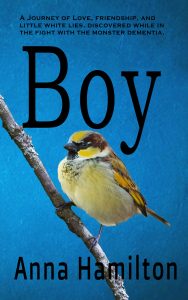
Why I Wrote the Book by Anna Hamilton – Guest Blog and Giveaway

This post is part of a virtual book tour organized by Goddess Fish Promotions. Anna Hamilton will be awarding a $25 Amazon/BN GC to a randomly drawn winner via rafflecopter during the tour, in addition to the gift card, the author will offer a prize to a second winner: a store coupon from Between the Lines Publishing/Liminal Press (half price print book or free ebook). Click on the tour banner to see the other stops on the tour.

***

I wrote this story because I was so touched by my father’s dementia. Sadness lived beside me every minute of every day. The caretaking and its effects on the caretaker are huge. I was repulsed by the nursing home that had no visitors for its residents. The experience forever changed me. The importance of staying present with those on their way out of life slapped me in the face during this time which then became my goal, my mission, my message—hence, Boy.

I had first written a memoir following my father’s death, set during the time he lived in the nursing home. I wrote about the characters that saved me from losing my mind long after they had lost theirs. These people were gifts to me. When I returned to this writing for editing, I found it too raw, too personal, so I created a fictional story with characters from my lifetime. It became a very enjoyable task because as I wrote I returned to these people and even myself, in all the stages of my life. I returned to the farms that as a child I loved, the smells and the tastes of simple rural life.

When I had completed Boy, I felt as though the Band-Aid had been ripped off and I could begin again with my own life.

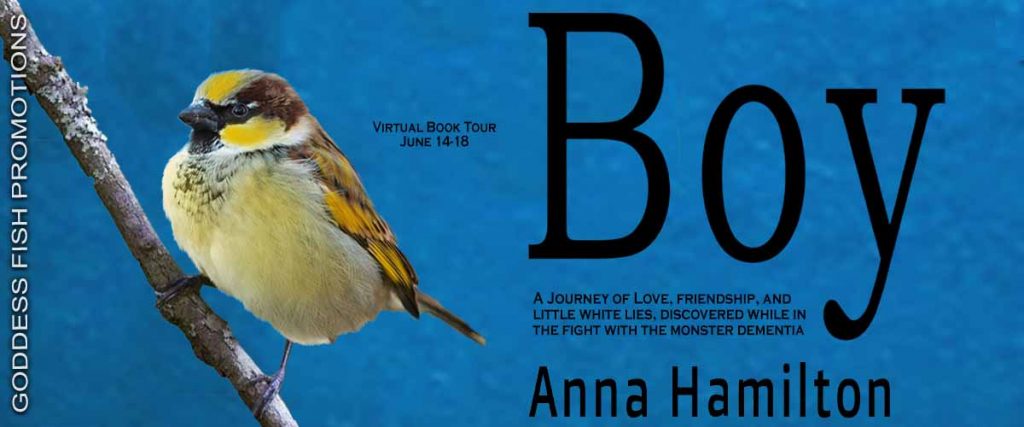
Boy is a story about a few weeks in the lives of Hugh and Betty Roberts, an elderly couple living alone on a family farm in Iowa. They are buried deep in grief over the loss of their only child and struggling to hang on to the only life they have ever known when dementia sneaks in. An unusual visitor brings a welcome distraction and reprieve just before the Thanksgiving holiday.
Join this couple and other unforgettable characters as they prepare to share in a memorable and much needed Thanksgiving gathering at the old couple’s farm. What transpires is credited to friendship, love and the relentless power of hope. Directly or indirectly we are reminded of what really matters on this brief walk we call Life.

Enjoy an Excerpt

He had just finished the last bit of paint on the sign when the phone began to ring, startling him. He hurried into the kitchen to grab a paper towel to wipe the paint off his hands, but before he could get to the phone, the ringing had stopped. He heard Betty say “hello?”

With all of the strange happenings lately he shouldn’t have been surprised that she’d answered the phone. Anything was possible, he thought as he walked back into the room and burst into laughter when he saw that she hadn’t picked up the phone at all, but a statue of Roy Rogers that sat next to her on the end table. She was holding it up against her ear, as if waiting for someone to answer her greeting.

He couldn’t help himself. “Who is it?” he asked.

Sitting Roy back down on the table she said, “They hung up.”

“They’ll call back,” he said laughing. And they did call back, but by then Betty was no longer interested. She had faded away again.

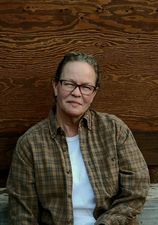
About the Author: Anna Hamilton (1958- present) was born in Des Moines Iowa. She lives in Northern Minnesota along the Canadian border where she owns and operates a small restaurant in the village of Grand Marais. During the slower winter months she writes, preferring fiction over non-fiction. “Fiction” she says, “is much easier to create because you can be on the outside of a story looking in, rather than on the inside, fighting your way out.” Hence her first novel ‘Boy’.
When she is not working or writing, her time is spent mentoring children in need and advocates on behalf of both children and the elderly. She and her sister Sarah are currently working towards building ‘affordable’ housing for their community. Part of the proceeds from her first novel ‘Boy’ will be dedicated to help finance that project.

Amazon Author Page | Facebook | Twitter | Goodreads

Buy the book at Amazon.

a Rafflecopter giveaway

Writing About Hope and Love in a Pandemic by Alan Whelan – Guest Blog and Giveaway

This post is part of a virtual book tour organized by Goddess Fish Promotions. Alan Whelan will be awarding a $15 Amazon/BN GC to a randomly drawn winner via rafflecopter during the tour. Click on the tour banner to see the other stops on the tour.

Writing About Hope and Love in a Pandemic

The Lockdown Tales is a book written during the Covid-19 lockdown. It’s unusual, possibly unique, in being written while the pandemic is still uncontrolled, and we still don’t know what the outcome will be.

The most important literary model for The Lockdown Tales is Giovanni Boccaccio’s Decameron, which was written against the background of the bubonic plague outbreak of 1347 and 1348. It follows ten people who leave Florence for the countryside to escape the plague, where they tell each stories to keep each others’ spirits up.

But Boccaccio wrote after the plague had passed, beginning his book in 1351 and finishing in 1353. Boccaccio, like Daniel Defoe when he wrote his A Journal of a Plague Year in 1720-odd, about a plague that blazed in 1665, had the luxury of being able to look back on something that was over, and its history known. I didn’t have that, but I wanted to write something for people who were in much the same situation as me.

I began The Lockdown Tales on 12 March 2020, when it was obvious that everybody’s life was about to change dramatically and that politicians weren’t up to facing, let alone dealing with, the challenges that it brought. I finished on 21 October 2020, when there was still no way of knowing how this pandemic would end. Or even develop.

I thought a lot, when I started The Lockdown Tales, about a cheerful old man I saw waving toilet rolls outside my local supermarket. He became my lodestar. Panicked idiots and greedy people who expected to make profits had stripped the supermarket shelves of toilet paper and a lot of food staples. This man waited in the carpark, giving away toilet rolls to people, especially older people, who’d lost out in the supermarket rush.

He reminded me that a crisis like a pandemic brings out selfish idiocy, but it also brings out some of the best in human nature, as thoughtful people take practical steps to look after and support each other, including strangers. When I wrote I kept him in mind.

The Lockdown Tales has Covid-19 as its background, and that means that it includes, death, damage and mourning, but it’s not in any sense a misery memoir, or the fictional equivalent. It follows ten people, a more diverse group than Boccaccio’s, who leave the city when the pandemic first arrives and join together in the countryside where, like Boccaccio’s ten characters, they flirt, forming or losing relationships, support each other, make music and above all tell each other stories.

As in the Decameron, the stories are generally about life before, and perhaps after, the pandemic. There are bawdy stories, adventure stories, stories about people trying to do the right thing by each other in hard times. They are sometimes satirical and sometimes sad, but most often they are laugh-out-loud funny. One thing about the humour: Shakespeare makes jokes about lazy servants or stupid commoners, while Boccaccio punches up: the butts of his jokes are people with power, in one form or another. I’m on Boccaccio’s team.

I’ve read The Lockdown Tales at least 500 times, as any writer must, hunting for typos, bad writing or boring writing, and even after that it still made me laugh. If a book can withstand that sort of reading, then it’s alive.

The Lockdown Tales isn’t a didactic book. I didn’t write it to push a message. I wrote it to reflect life in all its ordinariness and weirdness, and tell the very best stories that I could write. Its settings range from the super-continent Pangea 350 million years ago to medieval Italy, to China in 1920 and New Guinea in 1944, to Sydney just after the Beatles played, and Australia, New Zealand and elsewhere today. I can guarantee that any reader will find something they like.

But there’s a principle behind the story-telling that I kept in mind throughout, like that cheerful man giving out the toilet rolls: courage, cleverness, kindness and hope are better than their alternatives.

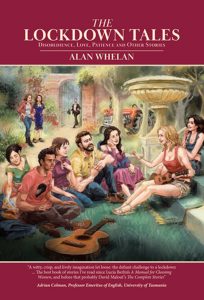
Seven women and three men leave the city to avoid a pandemic. They isolate together in a local farm, where they pass the time working, flirting, eating, drinking, making music and above all telling stories. It happened in Florence in 1351, during the Plague, and gave us Boccaccio’s Decameron.
Seven hundred years later, in Australia, it happens again. The stories are very different, but they’re still bawdy, satirical, funny and sometimes sad, and they celebrate human cleverness, love, courage and imagination.

“Alan Whelan brings us a clever, sensual and sometimes poignant collection of stories that would make Boccaccio proud”
– Tangea Tansley, author of A Question of Belonging

“An old frame for a sharp new snapshot of contemporary Australia”
– Leigh Swinbourne, author of Shadow in the Forest

Enjoy an Excerpt

It was late and getting cold by the time Margo’s story was done. I reflected that she’d come a long way, in the three weeks she’d been here. She’d got close to Sue and Stuart, and they’d helped her believe that she could come back from Harry’s death.

Stuart and Danny pushed my barbecue back to the house, with Sue and Margo helping to keep it steady. This time it didn’t tip over.

Bran and Astrid stayed close to the fire, which had died down from a bonfire to a campfire. Jayleen and Bob stayed close. Bob had slept through most of the stories and was now awake, and enthralled by the night, the lake and the fire. I heard Astrid say, “The beast with three backs!” She punched Bran, amused.

He put his arm round her and drew her close. Bob climbed onto Astrid, so Jayleen took her place beside Bran, and he put his other arm round her. The night was cold. I had no idea if he really did want a threesome, but if he did I thought his chances were still close to zero.

Grace had relented after a stoned night of mostly ignoring Amelia. They walked back to the house together. I didn’t fancy Amelia’s chances much, either. But I knew that I’d make no declarations to Amelia unless her infatuation with Grace had been resolved and gone.

I collected empty bottles and put them in my pack. I probably missed some, but I’d check the ground in the morning. I shrugged the pack on and trudged back to the house.

When I reached the verandah I turned and took one last look at the fire and the lake. Astrid was kissing Bran, with intent, and Jayleen had snuggled in tight against his back. I wondered if I’d underestimated his chances. Though I still didn’t know if he had any threesome intentions. I decided it didn’t matter and I didn’t care, though no doubt it would mean a lot to them.

I shut the door behind me and went up to my bed.

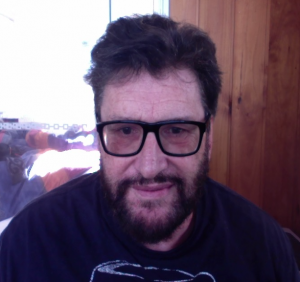
About the Author:Alan Whelan lives in the Blue Mountains of NSW, Australia. He’s been a political activist, mainly on homelessness, landlord-tenant issues and unemployment, and a public servant writing social policy for governments. He’s now a free-lance writer, editor and researcher.
His story, There Is, was short-listed for the Newcastle Short Story Award in June 2020, and appeared in their 2020 anthology. His story, Wilful Damage, won a Merit Prize in the TulipTree Publications (Colorado) September 2020 Short Story Competition, and appears in their anthology, Stories that Need to be Told. It was nominated by the publisher for the 2021 Pushcart Prize.

His book The Lockdown Tales, using Boccaccio’s Decameron framework to show people living with the Covid-19 lockdown, is now on sale in paperback and ebook.

His novels, Harris in Underland and Blood and Bone are soon to be sent to publishers. He is currently working on the sequel to The Lockdown Tales and will then complete the sequel to Harris in Underland.

Alan Whelan co-wrote the book, New Zealand Republic, and has had journalism and comment pieces published in The New Zealand Listener and every major New Zealand newspaper, plus The Australian and the Sydney Morning Herald.

He wrote two books for the NZ Government: Renting and You and How to Buy Your Own Home. His stories also appear in Stories of Hope, a 2020 anthology to raise funds for Australian bushfire victims, and other anthologies.

His website is alanwhelan.org. He tweets as @alannwhelan.

His phone number is +61 433 159 663. Enthusiastic acceptances and emphatic rejections, also thoughtful questions, are generally sent by email to alan@alanwhelan.org.

Website | Twitter | Goodreads

Buy the book at Amazon, Amazon CA, Amazon AU, Bookshop, , Barnes and Noble, Book Depository, Kobo, Smashwords, or iBooks.

a Rafflecopter giveaway

All Sorrow Can Be Borne by Loren Stephens – Spotlight and Giveaway

Long and Short Reviews welcomes Loren Stephens who is celebrating the recent release of All Sorrows Can Be Borne. Leave a meaningful comment or ask the author a question for a chance to win a copy of the book.

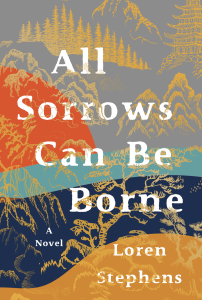
Inspired by true events, ALL SORROWS CAN BE BORNE is the story of Noriko Ito, a Japanese woman faced with unimaginable circumstances that force her to give up her son to save her husband. Set in Hiroshima, Osaka, and the badlands of eastern Montana and spanning the start of World War II to 1982, this breathtaking novel is told primarily in the voice of Noriko, a feisty aspiring actress who fails her audition to enter the Takarazuka Theater Academy. Instead, she takes the “part” of a waitress at a European-style tearoom in Osaka where she meets the mysterious and handsome manager, Ichiro Uchida. They fall in love over music and marry. Soon after Noriko becomes pregnant during their seaside honeymoon, Ichiro is diagnosed with tuberculosis destroying their dreams.
Noriko gives birth to a healthy baby boy, but to give the child a better life, Ichiro convinces her to give the toddler to his older sister and her Japanese-American husband, who live in Montana. Noriko holds on to the belief that this inconceivable sacrifice will lead to her husband’s recovery. What happens next is unexpected and shocking and will affect Noriko for the rest of her life.

Enjoy an Excerpt

Knocking on the door, the tearoom manager asked, “Who’s in there?”

I unlocked the bathroom door. “It’s me. Noriko. I didn’t want you to see me like this, Ichiro.” My face was covered in tears and blotchy from crying. I handed Ichiro today’s newspaper. On the front page was a photograph of Mizuki Abe with the headline, “Newest Junior Star of Takarazuka is Sensational in Cinderella.” I blew my nose and then explained. “Mizuki was my schoolmate. We tried out for the Takarazuka Theater Academy together. She got in and obviously I didn’t. And now look where she is, and look where I am. Still playing the part of a tearoom waitress while Mizuki’s name is up in lights. I should go back to Hiroshima. There’s a small theater company there and, if I apply myself, I can make my way up the ranks. I’ll be a big fish in a little pond instead of a Miss Nobody.”

“Your father is a sushi maker, am I correct?”

“And your point is…?”

“He would appreciate your choice of words, Noriko.”

“Are you making fun of me?”

“Just a little.”

His eyes were so expressive. Fascinating dark eyes that looked sad and strong at the same time. No wonder he never looked directly at me. I might uncover secrets he didn’t want to reveal. Taking my hand for the first time, he said, “Please don’t leave. I look forward to coming to work every day just to see your lovely face.” And then he led me over to the upright piano in the corner of the tearoom. Sitting down at the bench, he asked, “Would you like me to play something for you, Noriko? You have such a sweet speaking voice and such an engaging laugh; I’d love to hear you sing.”

“Do you know ‘You Are My Everything?’”

Ichiro lit a cigarette and rested it on the lip of the ashtray on top of the piano. “It’s the theme song from the American movie The Eddy Duchin Story, isn’t it? The one about the bandleader married to a socialite who dies in childbirth. Tuberculosis, I believe. He’s so heartbroken he abandons his son, but they finally reunite. It’s very sad.”

I agreed, the story was sad.

“Well, let’s give it a try. We’ll use our imaginations.” Taking in the empty tables of the tearoom with his eyes he said, “Imagine this is a Manhattan nightclub. I’m dressed in a tuxedo, and you’re wearing a red silk gown and a diamond necklace I’ve just given you for our first anniversary. Are you ready? Our patrons are holding their breath, waiting for you to begin.” Pointing out the window at a beggar who was pushing a cart loaded with brooms and pails, he said, “See that man. He’s the famous film director George Sidney. This could be your lucky break.”

About the Author:Loren Stephens is a widely published essayist and fiction and nonfiction storyteller. Her work has appeared in the Los Angeles Times, the Chicago Tribune, MacGuffin, the Jewish Women’s Literary Annual, The Forge Literary Magazine, Crack the Spine, Lunch Ticket’s Amuse Bouche series, The Write Launch, The Summerset Review, The Montreal Review, and Tablet travel magazine, to name a few. She is a two-time nominee of the Pushcart Prize and the book Paris Nights: My Year at the Moulin Review, by Cliff Simon with Loren Stephens was named one of the best titles from an independent press by Kirkus Book Reviews. She is president and founder of the ghostwriting companies, Write Wisdom and Bright Star Memoirs. Prior to establishing her company, Loren was a documentary filmmaker. Among her credits are Legacy of the Hollywood Blacklist with on camera narration by Burt Lancaster, produced for PBS and nominated for an Emmy Award; Sojourner Truth: Ain’t I A Woman? produced for Coronet Films and recipient of a Golden Apple from the National Education Association; and Los Pastores: The Shepherd’s Play produced for the Latino Consortium of PBS and recipient of a Cine Gold Eagle and nominated for an Imagen Award. She is a member of the Regional Board of the Anti-Defamation League; a member of its Deborah Awards Committee for Outstanding Women; and a member of Greenlight Women, an organization of women in the entertainment industry who serve as mentors. For more information visit her website.
Website

Buy the book at Amazon.

How I Ended Up Writing Historical Fiction by David Hirshberg – Guest Blog and Giveaway

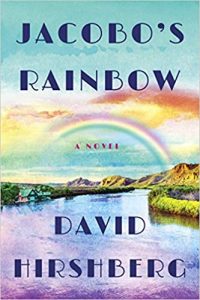
Long and Short Reviews welcomes Davide Hirshberg who is celebrating the recent release of Jacobo’s Rainbow. Leave a meaningful comment or ask the author a question for a chance to win a copy of the book and his debut novel, My Mother’s Son (US only please).

How I Ended Up Writing Historical Fiction

So how did a former biotech CEO and American history buff end up writing historical literary fiction? At first blush, there doesn’t seem to be a connection, but the truth is I used a lot of my experience in developing drugs for rare diseases when I began to write. I can hear the responses, which start with, “What?”

One of the main takeaways for me from the drug development process was the need to focus on the areas of highest priorities, but to still be flexible enough to entertain the idea of mid-course corrections, especially if the scientific data is leading in another direction. It’s actually pretty similar to the process I go through when writing a novel. I try not to get side-tracked by interesting yet unnecessary tangents that take away from the narrative beat. And, at the same time, when something isn’t working, I don’t force it, preferring instead to explore departures that may in fact turn out to be important and even critical elements of a reworked paragraph, chapter or even the novel itself.

Had I written a literary fiction account of some of the recent election campaigns or the war in Afghanistan or the COVID-19 pandemic, I would’ve touched some political or cultural nerves that would’ve likely had reviewers and other readers focused on the politics of the day, which then might’ve relegated my book to a position on the shelf as left, right, or center, as opposed to a story in which I wanted readers to get a better understanding of how the world actually works. Placing a novel in an earlier time allows me to talk about the major issues that affect Americans today, while it provides some distance from the current ‘talking heads’ climate that instantly categorizes and analyzes events from a narrow, partisan perspective.

Jacobo’s Rainbow—which was released on May 4th—focuses on the dramatic events of the decade known as the ‘Sixties.’ I dug deeply into the Free Speech Movement on a college campus to expose the intolerance of many on campuses today who refuse to listen to or even allow people with different views to have a forum. In addition to tackling the Free Speech movement and its legacy, I wanted to bring campus anti-Semitism—which was then just emerging out of the shadows of the 1950s—to the front and center as a mirror for what’s going on nowadays in a much more virulent form. Writing about this tumultuous decade also allowed me to bring in the Vietnam War, which so traumatized the country at that time—and its reverberations haven’t ceased to this day.

Historical fiction allows the writer to blend elements of what happened (mostly in concept as opposed to a reporting of actual events) with fictitious people and activities, which provides the reader with a perspective on what happened in earlier time and how it may be relevant to what’s going on today.

I hope that the “What” is now replaced by an “Okay, I got it!”

—David Hirshberg, author of Jacobo’s Rainbow (Fig Tree Books, 2021) and My Mother’s Son (Fig Tree Books, 2018)

JACOBO’S RAINBOW is set primarily in the nineteen sixties during the convulsive period of the student protest movements and the Vietnam War. It focuses on the issue of being an outsider, an altogether common circumstance that resonates with readers in today’s America. Written from a Jewish perspective, it speaks to universal truths that affect us all.

On the occasion of the 15th anniversary of a transformative event in Jacobo’s life – the day he is sent to jail – he writes about what happened behind the scenes of the Free Speech Movement, which provides the backdrop for a riveting story centered on his emergence into a world he never could have imagined. His recording of those earlier events is the proximate cause of his being arrested. Jacobo is allowed to leave jail under the condition of being drafted, engages in gruesome fighting in Vietnam, and returns to continue his work of chronicling America in the throes of significant societal changes. Nothing is what it seems to be at first glance, as we watch Jacobo navigate through the agonies of divisive transformations that are altering the character of the country. Coming to grips with his own imperfections as well as revelations about the people around him, he begins to understand more about himself and how he can have an impact on the world around him … and how it, in turn, will have an effect on him. The novel can be read on three levels: 1) as a coming of age story; 2) as a metaphor for what is happening on college campuses today, in terms of the shutting down of speech and the rise of anti-Semitism; 3) as a novel about Jewish identity and what life is like for the outsider.

About the Author: David Hirshberg is the pseudonym for an entrepreneur who prefers to keep his business activities separate from his writing endeavors. As an author, he adopted the first name of his father-in-law and the last name of his maternal grandfather, as a tribute to their impact on his life. His first novel, My Mother’s Son was published in 2018 and won nine awards. Reviewers have compared Hirshberg’s writing to Michael Chabon’s and Saul Bellow’s, among others. Learn more at David Hirshberg’s website.
Website

Buy the book at Amazon, Barnes and Noble, Fig Tree Books, or IndieBound.

Background of the Book by Chad Musick – Guest Post and Giveaway

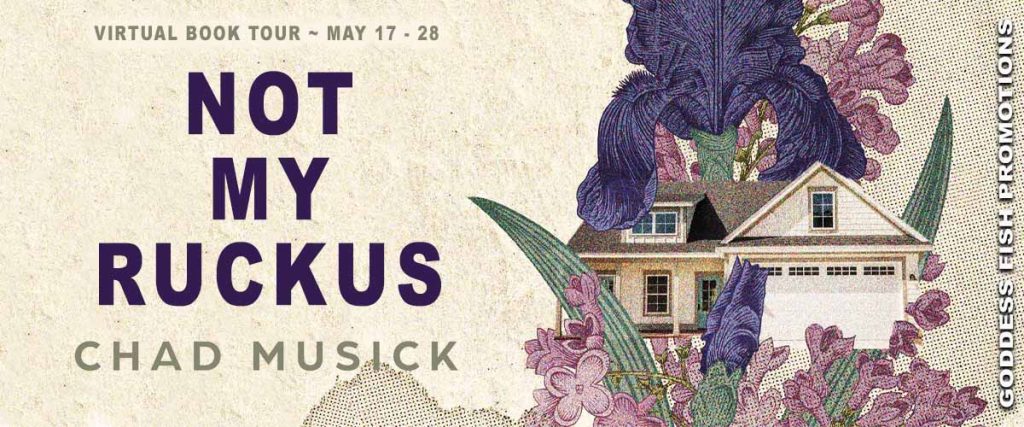
This post is part of a virtual book tour organized by Goddess Fish Promotions. Chad Musick will be awarding a $25 Amazon/BN GC to a randomly drawn winner via rafflecopter during the tour. Click on the tour banner to see the other stops on the tour.

Background of the Book

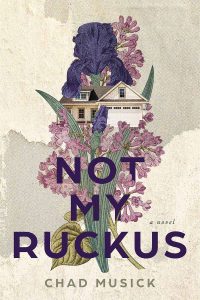
Not My Ruckus is a book in which the characters go through a lot of trauma. Reviews have called it “sharp”, “brutal”, “brutal”, and “brutal” (it’s come up a few times), but most readers have agreed that it’s not a book about trauma. Bringing in trauma without making it the central theme was something I spent a lot of time working out with my critique partners. Clare, the main character, draws on a lot of my own life, though skewed in some ways. This is not an autobiography.

There are three big parts of the background to the book. One is the physical place and time. The whole story takes place in a year in Texas in a fictional town in 1980 and 1981. I spent part of my childhood in East Texas, and the town is patterned after a lot of small towns that I have been to. These towns have a sharp sense of place, but also seemed to me like they could be anywhere. Some experiences that I thought were universal when I was young are, I’ve been told, not actually universal. The wildlife was always there: scrub jays, crawdads, crickets, ants, and other crawly things. And the sense of being completely isolated from neighbors that lived next door but close to those who might live farther away. Now, I associate that with age: I only cared about neighbors who were my own age.

A second part of the background is disability. And this is “spoiler” territory, but … not really? Clare is autistic and epileptic, like me. Because we’re seeing the world through her eyes, we get a very limited perspective. She doesn’t pick up on social cues – she’ll notice the actions, but not know how to interpret them. She has memory loss, so some things that she should remember, she just doesn’t. All of this is interior to her as a character, so there’s only a little of her saying “Wait a minute, my body isn’t doing what I want it to,” and that’s related to a temporary condition. When you have congenital disability, it just seems normal. I’ve tried to show it without dwelling in it. I don’t dwell in it in my everyday life, even though I talk about it on social media.

The last part of the background is child abuse. Read the content notes before you read the book, definitely. They’re on the publisher’s website and also in the book itself. (They’re not obvious in the audiobook sales pages, which is regrettable.) I’m not going to write about it in detail, but it’s astonishing to me to see things that I just assumed were normal as a kid (in the 1970s) making the national news when parents do them now. Times have changed, and in many ways for the better.

The brief version of the background: In 1980, there was a Texas girl who got kissed by the girl next door and then things went badly.

Folks know 14-year-old Clare isn’t normal, even for a tomboy. She runs too much, talks too little, carries a gun too often, and holds a grudge forever. Only her papa’s job at the bank keeps gossip quiet. It’s unwise to risk the cold anger of the man who knows everyone’s secrets.

Clare feels prepared for everything from fire, to flood, to what her momma calls demon attacks. When her neighbor Esther kisses her, though, Clare has no ready script. Maybe she could write one, given time she doesn’t have. At the moment of that first kiss, Esther’s mom is bleeding out from a gunshot wound.

Clare can read the signs everyone else is determined to ignore. A murder was only the beginning. Esther needs protection, whether she wants it or not, and Clare won’t abandon her friend just because things are hard.

Maybe one day she’ll be forgiven for doing what’s needed.

Enjoy an Excerpt

I was watching the sunlight coming through the clerestory— with the attic gone, its windows got a fancier name—creeping ever closer to the edge of the oriental when the doorbell rang.

I peeped through the hole and opened the door for Esther. Papa had said I couldn’t leave, but he hadn’t forbidden me company. She came in without even a howdy, which is what best friends can do, I guess.

She started crying hard and pulling heavy on my neck and blubbering up her words. Finally I figured out she was saying “She’s dead,” over and over.

Esther just wanted to cry a bit and not talk, so we went back to my bedroom. I pulled back the covers and let her crawl in, and then I covered her up and sat on the bed. The canopy was making the light hazy, and I could see the sunbeam traced in dust. Momma didn’t approve of dust, so I should probably clean it up before she got back, but I hoped she’d understand that your friends are more important.

Cleanliness might be next to Godliness, but people must matter at least a bit.

Esther calmed down after a while, except for the occasional sniffle.

“My mom died yesterday.”

I was the world’s worst friend. I had been so relieved momma was okay that I hadn’t even checked on Esther. Me being upset made her cry again, and we went back and forth like that for a long time.

About the Author: Chad Musick grew up in Utah, California, Washington, Texas, and (most of all) Alaska. He fell in love in California and then moved with his family to Japan, where he’s found happiness. He earned a PhD in Mathematical Science but loves art and science equally.

Despite a tendency for electronic devices to burst into flame after Chad handles them, he persists in working in various technical and technology-related roles.

Chad makes no secret of being epileptic, autistic, and arthritic, facts that inform how he approaches both science and the arts.

Twitter | Website | Goodreads

Buy the book at Amazon

a Rafflecopter giveaway