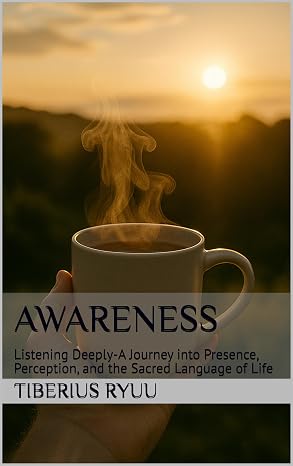
Awareness: Listening Deeply-A Journey into Presence, Perception, and the Sacred Language of Life by Tiberius Ryuu


Awareness: Listening Deeply-A Journey into Presence, Perception, and the Sacred Language of Life by Tiberius Ryuu
Path of Becoming #2
Publisher: Self-Published
Genre: Non-Fiction, Contemporary
Rating: 4 Stars
Reviewed by Astilbe

What if awareness is not something to be achieved — but remembered?
In a world that rewards distraction and constant motion, Awareness: Listening Deeply invites us to return to stillness, to reawaken the art of attention, and to rediscover the quiet wisdom already living within us.

This book is the second in The Path of Becoming series — a sacred journey designed to help readers restore connection to themselves, to others, and to the living world. While it builds upon the principles of Acceptance, it also stands fully on its own as a guide to presence, perception, and intuitive understanding.

Through gentle teachings, reflective essays, and simple daily practices, Awareness explores:

The Practice of Stillness — how quiet allows truth to surface.

Listening to the Body — learning to trust somatic wisdom as guidance.

Emotional Literacy — transforming feelings into understanding through awareness.

The Language of Symbols and Synchronicity — recognizing life’s sacred communication.

Awareness in Relationship — seeing others as mirrors for our own growth.

Grounding and Centering — staying rooted amid life’s constant change.

Living with Attentiveness — making awareness a daily devotion.

Each chapter concludes with a reflection — a single phrase or meditation that captures the heart of its teaching — and practical exercises to help integrate awareness into ordinary life.

At its core, this book is about learning to listen. To listen not only with the ears but with the body, the heart, and the soul. To notice the subtle threads connecting all things. To discover that awareness is not a skill to master, but a relationship to nurture — one that deepens each time we pause, breathe, and choose presence.

Whether you are beginning your healing journey or walking an established spiritual path, Awareness: Listening Deeply offers a quiet companion for the inward traveler. It will guide you toward a grounded, embodied understanding of yourself and the world — where attention becomes devotion, and every moment becomes sacred.
The truth will always be revealed eventually.

I deeply appreciated the focus that was placed on listening to one’s body and caring for it physically, emotionally, and spiritually. This is something that can be especially difficult for some people who have endured any type of trauma or abuse that lead them to pull away from what was happening to their physical form in the past, so what seemed like a simple technique at first glance could be more complicated to put into practice in one’s daily life.

Once again, I did find myself wishing that the author had gone into deeper detail about how to use the techniques in his book to not only develop greater awareness but to continue this pattern over a long period of time. Techniques ranging from body scan meditations to paying close attention to the sensory experience of eating a simple meal were mentioned, but few of them were explained more thoroughly. My hope is that later instalments in the series will share practical tips for how to make this change as I’m quite interested in Mr. Ryuu’s perspective of the world in general and think he has some fascinating ideas about how to gradually but permanently change one’s life for the better.

Some of the most meaningful passages in my opinion were the ones that gave examples of how to remain aware and continue to live in the moment while going through one’s ordinary daily routine. Figuring how to do this while also working, volunteering, caring for relatives, looking after their own health and well being, and doing the million and other tasks the average adult often needs to do on a typical day is where lofty ideals are put to the test. The self-help genre works best when it approaches problems from the perspective of the average person if you ask me!

This is the second instalment in a series that I’d recommend reading in order. Healing takes time and effort, and the first book shares some important coping techniques that I believe one should be familiar with before moving onto step two.

Awareness – Listening Deeply-A Journey into Presence, Perception, and the Sacred Language of Life deserves to be savored slowly. It was filled with wisdom and hope for readers who are struggling with many different types of trauma.

the darkest of times, the darkest of thoughts by Megan Diedericks


the darkest of times, the darkest of thoughts by Megan Diedericks
Publisher: Self-Published
Genre: Non-Fiction, Poetry, Contemporary
Rating: 3 Stars
Reviewed by Astilbe

gray, empty
but i let the words grow
and my heart, i let show
but with separation came
the anxiety, the pain, the journey
within confinement.
i wasn’t ever my own
and my many faces had me so alone,
i thought i might drown.
it started before i even knew what puberty meant:
at twelve, i wrote my first lines.
now, at twenty, i want you to read my warning signs.

Sectioned off by chapters with original photography, the darkest of times, the darkest of thoughts is Megan Diedericks’ debut poetry collection which delves deep into mental health and self-reflection; encapsulating her journey with heartache, loss, grief, and self-perception. This collection begs the reader to wonder whether or not any of us will ever truly be free, and fully alive.

Healing isn’t always a straightforward process.

Mental health is one of those topics that piques my interest immediately. Not only are there many different diagnoses to choose from, but each person’s individual experiences with their own mental health can vary based on a variety of factors including age, culture, and personality. This means that a reader can pick up six books on the same disorder and potentially have a wildly different experience with each of them. Learning more about Ms. Diedericks experiences was rewarding, and I thought she did a nice job of explaining why some days can feel overwhelming when one is in the thick of things.

The repetition in this collection made it tricky for me to maintain a high interest level in it from beginning to end. Obviously, one would expect the same themes to be repeated over and over again, but the wording used in many of the poems was a little too similar for my tastes. With more development, I think this could have been a stronger body of work that dug even more deeply into all of the nuances of experiencing heartbreak.

My favorite poem, “Amusement Park,” also happened to be one of the final ones. It was the best example of the author’s creativity in my opinion, especially once the amusement park metaphor in it was explained in more detail. I enjoyed the dark sense of humor woven into it and thought this could have easily been expanded into an entire poetry collection in and of itself.

the darkest of times, the darkest of thoughts was thought provoking.

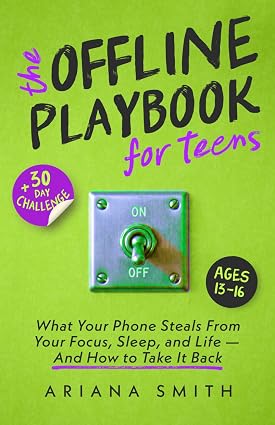
The Offline Playbook for Teens by Ariana Smith


The Offline Playbook for Teens by Ariana Smith
Publisher: Sky Publishing
Genre: Young Adult (14 – 18 y.o.), Non-Fiction, Contemporary
Rating: 4 Stars
Reviewed by Astilbe

Your teenager knows their phone is a problem. So do you. So why can’t either of you do anything about it?

Because knowing isn’t enough — and nobody has told them why.

The average teenager spends 7+ hours a day on screens — not from lack of willpower, but because the technology was engineered by behavioral scientists to be nearly impossible to put down. A 30-second phone check costs up to 23 minutes of real focus. Every scroll is a dopamine loop that was deliberately designed.

NYU professor Jonathan Haidt, author of The Anxious Generation, calls this the greatest uncontrolled experiment ever run on children.

The Anxious Generation gave parents the diagnosis.
The Offline Playbook gives teenagers the understanding to act on it.

Written directly to readers aged 13–16 in a peer-level voice that respects their intelligence and leaves every decision with them.

Inside:

Why the feed is engineered to grip you — and how understanding it breaks the grip
What sleep does that nothing else can, and what your phone takes every night
Why boredom rewires your brain — and what grows when you let it
What real focus feels like — and why the first 5 minutes are the hardest
Plus: A complete 30-day challenge workbook — one challenge per day, building progressively. Not a plan to follow. A playbook to make your own.

No lectures. No shame. No demand to quit anything.

The book that finally gives your teenager the manual they’ve never had.

Few things are more rewarding than the first step in the right direction.

The friendly and curious tone of this book was perfect for the subject matter. Teenagers are old and intelligent enough to make their own decisions about technology, so I appreciate the fact that there was no lecturing to be found here. Instead, Ms. Smith presented current scientific understanding about how the mind works and gave her readers a wide variety of exercises to try in order to reduce screen time and endless scrolling.

Some of my favorite sections were the ones that described how to build new habits and how to get through that brief period of time when purposefully not checking one’s cellphone feels awkward or uncomfortable. Small steps generally work best when attempting to make changes to one’s life, so she broke things down into tasks that require as little as a few minutes to complete. This was a smart decision that made the much bigger goals she mentioned later on feel easier to work on in the future.

One topic I wish had been explicitly included in one of the chapters given how closely it was related to what the author was already discussing is mindfulness. While the author danced around this idea with some of her exercises, I think this would have been an even stronger work if she’d specifically included this term in her writing and given some examples of how it can be a healthy alternative to endless scrolling.

Boredom is good for people of all ages. I loved the author’s conversational tone in general, but it especially excelled when describing how the brain reacts to boredom and why it’s important to give oneself the opportunity to feel this emotion sometimes. These passages felt more like a conversation with a friend than a science lesson. As much as I personally love learning about science, this was the right decision for this topic and age group in my opinion due to how easy it was to read and how much time was spent explaining the many benefits of giving one’s brain a break from the often over-stimulating nature of the Internet.

The Offline Playbook for Teens was filled with practical advice and suggestions for gradually reducing screen time and living in the moment.

The Asia Code – A Million-Dollar Handshake – How to Build Relationships that Win in Asia by Gadi Sznajder


The Asia Code-A Million-Dollar Handshake-How to Build Relationships that Win in Asia by Gadi Sznajder
Publisher: Vanguard Executive Publishing
Genre: Non-Fiction, Contemporary
Rating: 4 Stars
Reviewed by Astilbe

Forget AI. The Most Powerful Business Tool in Asia is Still a Handshake.

As technology accelerates and markets become more automated, the ability to build authentic human connections has become the most valuable and rarest skill in business. Nowhere is this truer than in Asia, where deals are made between people, not companies. A deep personal connection, grounded in cultural understanding, is what separates a transactional relationship from a transformative, multi-million-dollar partnership.

The Asia Code is the essential playbook for any professional looking to scale up their game in the world’s most dynamic markets. This is not a theoretical guide; it is a practical, hands-on toolkit for mastering the human element of business in Asia. It provides the cultural intelligence you need to decipher the unwritten rules that govern success across the three critical markets that will define the future of the global economy:

Japan
South Korea
China

Inside, you will learn to:

Decode the Asian Mindset: Go beyond surface-level etiquette to understand the cultural logic that drives decisions in each country.
Master the Art of Connection: Build the trust and rapport that are the foundation of all successful ventures in Asia.
Navigate the Deep Waters: Turn cultural complexity from a barrier into your greatest strategic asset.
Close with Confidence: Learn the unwritten rules of negotiation, communication, and marketing that truly win deals.

In a world that thinks AI will replace us, The Asia Code is a powerful reminder that in Asia, the human factor is, and always will be, the key to outstanding success. This is the one book every professional serious about succeeding in Asia must have in their toolbox.

Sometimes unwritten rules are the most powerful ones of them all.

The most meaningful sections of this book, in my opinion, were the ones that described some of the weaknesses of western business culture and how building professional cross-cultural relationships through body language and understanding the subtext of written or spoken communication can help to correct these deficiencies. This is not at all something limited to the west either, and I appreciated the passages that were dedicated to exploring what westerners can teach people from these parts of Asia as well. Diversity builds strength and resilience in everyone.

There was a little too much repetition in this book for me to give it a full five-star rating. This was something I especially noticed in the case studies that discussed businessmen who understood the etiquette around topics like sharing business cards but did not internalize the importance of building genuine relationships with those one hopes to broker a deal with. While the points that were made were quite important, I did find myself wishing that other examples had been chosen to illustrate the author’s advice instead.

Building meaningful and genuine relationships isn’t a fast process, but it is an important one. I was not aware of this cultural difference between the west and certain parts of Asia, and I enjoyed learning more about how South Korea, China, and Japan approach business deals through the slow and methodical testing of a potential business partners character, ethics, and background instead of viewing those interactions as a transactional relationship.

The Asia Code – A Million-Dollar Handshake – How to Build Relationships that Win in Asia was filled with detailed and thoughtful advice.

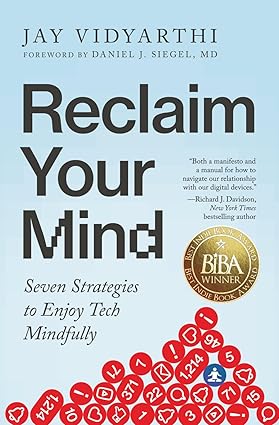
Reclaim Your Mind – Seven Strategies to Enjoy Tech Mindfully by Jay Vidyarthi


Reclaim Your Mind – Seven Strategies to Enjoy Tech Mindfully by Jay Vidyarthi
Publisher: Self-Published
Genre: Non-Fiction, Contemporary
Rating: 3 Stars
Reviewed by Astilbe

You know the feeling. You put your phone down after who-knows-how-long and you feel worse than when you picked it up. You need boundaries, but that doesn’t mean you should feel guilty every time you scroll.

Reclaim Your Mind offers a middle way to “anyone who’s feeling guilty and helpless about their screen time” (Catherine Price, author of How to Break Up with Your Phone). It isn’t just another book telling you that your phone is ruining your brain. It’s a mindful, balanced approach that helps you enjoy tech on your terms.

Most people who write a book like this want you to use less of it. Jay Vidyarthi is one of the world’s leading designers of mindful technology. A lifelong meditator and tech lover, he weaves together “a tapestry of wisdom” (Dr. Richard J. Davidson, NYT bestselling author of The Emotional Life of Your Brain) based not only on mindfulness, but also a deep understanding of how tech is designed. You shouldn’t have to choose between inner peace and screen time, and neither should those you care about.

With relatable stories, short exercises in every chapter, and strategies backed by scientific research, Reclaim Your Mind is “a playful, wise, and practical guide” (Dr. Daniel J. Siegel, MD, NYT bestselling author of The Whole-Brain Child) to rekindling a positive relationship with TV, social media, games, news, email, and AI. You’ll learn to stand up for your freedom of attention and actually enjoy the convenience, connection, and joy that technology can offer — all without getting stuck on apps designed to exploit you.

Technology can be a double-edged sword.

Mindfulness is an incredibly useful habit to develop in many areas of life, and I liked the way it was described and explored here. I’d recommend having basic understanding of meditation and mindfulness before starting the first chapter for readers who know nothing about them. This did seem to be something that was written for an audience who was already aware of a few fundamental things about them such as drawing one’s attention back to the present moment after being distracted or how breathing patterns can affect these things. Other aspects of these topics were better described in later chapters and included some helpful tips and tricks along the way.

There were times when I thought this book wandered a little too far away from it’s original themes. For example, the author talked about technology as another form of nature which I found confusing. The section at the end on AI also felt out of character for the points that had been made earlier given the recent research that has come out on the negative mental health affects of using those sorts of chatbots for companionship or advice. Stronger development of these ideas would have made it easier for me to understand where Mr. Vidyarthi was coming from.

I appreciated the balanced approach the author otherwise took to the topic of how smartphones and apps should be used. There is nuance in these conversations, and not everyone will come to same conclusions about which apps to use and how to use them. His advice on taking note on how they make one feel and the inclusion of multiple exercises to explore one’s reactions to technology was helpful.

Reclaim Your Mind – Seven Strategies to Enjoy Tech Mindfully was thought provoking.

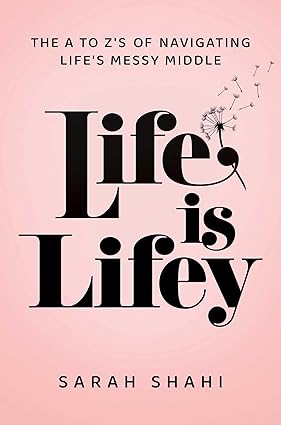
Life is Lifey by Sarah Shahi


Life is Lifey by Sarah Shahi
Publisher: Regalo Press
Genre: Non-Fiction, Memoir, Contemporary, Self-Help
Rating: 4 stars
Reviewed by Lavender

Equal parts pep talk, reality check, and cocktail party confessional, Life is Lifey is a humorous and inspirational guide to unapologetically and authentically figuring out life’s messy middle.

Join Sarah Shahi as she cannonballs into the magical chaos of life—marriage, divorce, kids, career pivots, and everything in between. Like your brutally honest big sister (with a glass of wine in hand, wearing yesterday’s eye liner), Life is Lifey is an encyclopedia on “how to adult,” filled with personal stories that will have you lol-ing and advice that’s like a warm hug followed by a swift kick in the pants.

This isn’t about living your “best life” (so 2015). This is about shutting out the noise—self-doubt, partners, or that one mom from the PTA—and tapping into the voice within that’s 100 percent, unapologetically you.

Whether you’re limping out of a messy breakup or just trying to survive Mondays, Life is Lifey is the permission slip you didn’t know you needed to start making choices that scream your truth.

Many know Sarah as the lead in the global sensation Sex/Life, where she became the poster child for unhappy women everywhere. As her personal life started imitating art, her inbox lit up with questions from women around the world: How did you have the strength to get a divorce? What do you do when you’re questioning everything? How do you pick up the pieces of a broken heart and start over with kids clinging to your legs and peanut butter in your hair?

This book is her answer. Part memoir, part guide, it’s the story of endings and beginnings, of finding yourself when the script you’ve been following no longer fits. Life is Lifey invites you to tap into your authentic self and start living a life that’s bigger, bolder, and unapologetically yours. A cocktail of hard truths, big laughs, and unfiltered honesty, Life is Lifey will help you live a life that’s unapologetically you.

Equal parts pep talk, reality check, and cocktail party confessional, Life is Lifey is a humorous and inspirational guide to unapologetically and authentically figuring out life’s messy middle.

Join Sarah Shahi as she shoots into the chaos of life—marriage, divorce, kids, career pivots, and everything in between. Like your brutally honest big sister (with a glass of wine in hand, wearing yesterday’s eye liner), Life is Lifey is an encyclopedia on “how to adult,” filled with personal stories that will have you laughing (or cringing) and advice that’s like a warm hug followed by a swift kick in the pants.

This isn’t about living your “best life” (so 2015). This is about shutting out the noise—self-doubt, partners, or that one mom from the PTA—and tapping into the voice within that’s 100 percent, unapologetically you.

Whether you’re coming out of a messy breakup or just trying to survive Mondays, Life is Lifey is the permission you didn’t know you needed to start making choices that scream your truth.

Many know Sarah as the lead in the global sensation Sex/Life, where she became the poster child for unhappy women everywhere. As her personal life started imitating art, her inbox lit up with questions from women around the world: How did you have the strength to get a divorce? What do you do when you’re questioning everything? How do you pick up the pieces of a broken heart and start over with kids clinging to your legs and peanut butter in your hair?

This book is her answer. Part memoir, part guide, it’s the story of endings and beginnings, of finding yourself when the script you’ve been following no longer fits. Life is Lifey invites you to tap into your authentic self and start living a life that’s bigger, bolder, and unapologetically yours. A cocktail of hard truths, big laughs, and unfiltered honesty, Life is Lifey will help you live a life that’s unapologetically you. It is filled with truth and profanity. There is a lot to consider here.

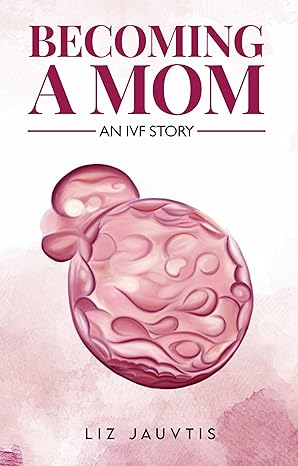
Becoming A Mom – An IVF Story by Liz Jauvtis


Becoming A Mom – An IVF Story by Liz Jauvtis
Publisher: The Book Publishing Pros
Genre: Non-Fiction, Contemporary
Rating: 3 Stars
Reviewed by Astilbe

This raw and intimate memoir follows Liz Jauvtis through her seven-year fertility journey, multiple IVF cycles, three pregnancies, and the unwanted realities of motherhood at 35 during the global pandemic. Liz brings an intimate and personal perspective to universal experiences. Her story dismantles the idealized version of motherhood perpetuated by social media, instead offering authentic insights into the physical, emotional, and birth trauma, sleep deprivation, social pressure, and the identity shift from career woman to stay-at-home mother. A compelling narrative for anyone touched by fertility struggles or modern parenting challenges.

Fertility isn’t guaranteed for anyone.

It was nice to see so many acronyms and other terms related to fertility and reproduction described in the footnotes, especially in the first several chapters. Not every reader is necessarily going to be aware of what all of these things mean, but understanding them was critical in order to visualize everything this couple needed to go through in order to have kids together. The explanation of how PCOS (polycystic ovarian syndrome) can affect not only the ovaries but many other parts of the human body as well was especially interesting.

I found myself wishing for more detailed descriptions of every step of Ms. Jauvtis’ journey to having biological children. This could have been separated into a trilogy, one for her infertility treatments like IVF and the toll they took on her mental and physical health, a second title about experiencing anxious pregnancies after treatments have been successful, and a final instalment about parenting during the Covid-19 pandemic. While I understood why all three topics were combined into the same book given how rapidly everything happened in the author’s life, it also meant that this was something I’d be a little hesitant to recommend to a friend who was currently experiencing infertility or pregnancy loss because of how many pages were dedicated to pregnancy and parenting. Not everyone who pursues treatment is successful, after all, and that’s something that could make it trickier to determine who the right audience is for this piece.

Some of the most memorable sections for me were the ones that acknowledged the many controversial topics surrounding fertility treatments, pregnancy and birth care, and parenting choices in the first few years of a child’s life. Ms. Jauvtis’ open-minded approach to these subjects was refreshing, and she came across to me as someone who was willing to listen to other points of view regardless of the decisions she and her husband made for their own family. I was especially interested in how she responded to the people in her life who had moral qualms about IVF and the possibility of using donor gametes given that she and her spouse needed medical help in order to have a baby. It takes maturity to remain so level-headed about a subject matter that is this important to someone, and I admired how she handled those difficult conversations.

Becoming A Mom – An IVF Story was thought provoking.

All The Beauty in the World by Patrick Bringley


All The Beauty in the World by Patrick Bringley
Publisher: Simon & Schuster
Genre: Non-Fiction, Memoir
Rating: 5 stars
Reviewed by Snowdrop

Millions of people climb the grand marble staircase to visit the Metropolitan Museum of Art every year. But only a select few have unrestricted access to every nook and cranny. They’re the guards who roam unobtrusively in dark blue suits, keeping a watchful eye on the two million square foot treasure house. Caught up in his glamourous fledgling career at The New Yorker, Patrick Bringley never thought that he’d be one of them. Then his older brother was diagnosed with fatal cancer and he found himself needing to escape the mundane clamor of daily life. So he quit The New Yorker and sought solace in the most beautiful place he knew.

To his surprise and your delight, this temporary refuge becomes Bringley’s home away from home for a decade. We follow him as he guards delicate treasures from Egypt to Rome, strolls the labyrinths beneath the galleries, wears out nine pairs of company shoes, and marvels at the beautiful works in his care. Bringley enters the museum as a ghost, silent and almost invisible, but soon finds his voice and his tribe: the artworks and their creators and the lively subculture of museum guards—a gorgeous mosaic of artists, musicians, blue-collar stalwarts, immigrants, cutups, and dreamers. As his bonds with his colleagues and the art grow, he comes to understand how fortunate he is to be walled off in this little world, and how much it resembles the best aspects of the larger world to which he gradually, gratefully returns.

I thought I might have chosen a book to read that was a somewhat yawning read about the NY Metropolitan Museum of Art. It turned out to be anything but that. Hiding from grief caused Patrick Bringley to leave a growing position in The New Yorker for a place he thinks he can hide, as a guard in the Metropolitan Museum of Art.

This is so readable. It’s a visible trip through the Met. It is literally an international history trip. But it’s also the story of a man who initially wanted the exact opposite of what most of us do. Patrick Bringley wanted a place to be left alone. He wanted a work atmosphere where you had a post to yourself, and whether one was assigned to the African Congo or the Italian Renaissance, the only interaction with people was to answer a question or keep them from touching a work of art. It allowed him his solitude, and he lived it with art. As his time at the Met grew, we know more about his passions for art pieces at the Met, but we also begin to see him blossom.

This combination of tremendous art history description in a down-to-earth way combined with the life of a man growing himself or at least developing himself, makes for an excellent easy, entertaining, and hugely educational read. An unbelievable success as a first debut.

Go See America – 118 of the USA’s Greatest Hits (According to a Guy Who Visited Them All) by Matt Tory


Go See America – 118 of the USA’s Greatest Hits (According to a Guy Who Visited Them All) by Matt Tory
Publisher: good.clean.fun.
Genre: Non-Fiction, Contemporary, Historical
Rating: 4 Stars
Reviewed by Astilbe

Want to explore America’s most wonderful, wild, and delightfully weird places — without nodding off halfway through a guidebook?
This is not your average travel book.

In Go See America, Matt Tory takes you on a humorous, heartfelt tour of 118 unforgettable places across the USA — according to a guy who went to them all. It’s part guidebook, part road trip diary, and entirely a celebration of what makes America… well, America.

Whether you love adventure, history, scenic views, or just a good laugh, Go See America isn’t just another bucket list: it’s an invitation to rediscover and fall in love with the country you thought you already knew – one memorable stop at a time.

Inside, you’ll find:
National parks, quirky attractions, scenic drives, and small-town surprises
A mix of must-see wonders and overlooked gems across the country
A not-too-serious guide that feels more like exploring alongside a good friend
Photos of every location
Insider tips and personal stories that both celebrate and lovingly roast America’s greatest hits
It’s the perfect blend of inspiration and levity – whether you’re planning your next trip or just dreaming from the couch. Go See America isn’t about checking off boxes; it’s about embracing the wonder, charm, and occasional absurdity of this big, bizarre, beautiful country.

Get inspired. Get going. Go See America.

Everyone deserves a memorable vacation.

Mr. Tory had a tongue-in-cheek sense of humor that I thought paired well with his experiences visiting so many different portions of the United States. It was especially interesting to hear his thoughts on the destinations he included that tend to be more well-known among tourists and, in a few cases, might even be described as tourist traps. As someone whose travel tastes seem to overlap his quite a bit, it was amusing to read between the lines there about both the benefits and drawbacks of visiting those places.

I must admit to wishing that this had included more museums and notable historical places. There were some examples of this, especially later on as the author moved closer to the east coast, but I thought there was room here to talk about even more fantastic places that fit these descriptions as I know there many of them in the United States. Maybe we’ll be lucky enough to get a sequel to this guide someday that dives even deeper into the history of and various cultures that make up this country.

Other than that, I appreciated the fact that these 118 recommendations spanned such a wide range of options. Everything from restaurants to glaciers to hiking trails were included which meant that this book can be used by people from all age groups and levels of fitness. Obviously, more research would be needed in some cases to figure out accessibility for readers who, for example, use a wheelchair, have a guide dog, or have other special needs, but this seemed like it was a great starting space to compiling a list of exciting spots to visit that would fit all sorts of different types of folks.

Go See America – 118 of the USA’s Greatest Hits (According to a Guy Who Visited Them All) was delightful and made me want to plan a road trip.

Acceptance – A Self-Guided Approach to Trauma Recovery by Tiberius Ryuu


Acceptance – A Self-Guided Approach to Trauma Recovery by Tiberius Ryuu
Publisher: Self-Published
Genre: Non-Fiction, Contemporary
Rating: 3 Stars
Reviewed by Astilbe

What if healing didn’t mean forgetting what happened, but learning how to live freely with it?

In Acceptance, former addictions counselor and trauma recovery guide Tiberius Ryuu invites readers on a deeply personal and practical journey toward reclaiming their lives after trauma. This book isn’t about quick fixes or spiritual bypassing—it’s about learning to meet yourself honestly, with courage, compassion, and integrity.

Through grounded self-reflection and gentle structure, Acceptance helps readers navigate the inner terrain of trauma with clarity and self-trust. Each chapter blends education, storytelling, and guided exercises designed to nurture awareness, rebuild safety, and cultivate the capacity to live with greater peace and authenticity.

This self-guided approach offers:

Foundational understanding of trauma’s psychological and physiological impact.
Tools for self-evaluation that foster awareness without judgment or blame.
Reflective exercises and prompts to help process emotions and patterns.
Encouragement for personal responsibility and rebuilding self-reliance.
Pathways toward forgiveness, meaning, and growth.
Written in a warm, conversational tone, Acceptance speaks to survivors who are ready to stop identifying solely with their pain and begin living from a place of strength and choice. It also serves as a compassionate companion for counselors, healers, and loved ones supporting others on their path to wholeness.

At its core, Acceptance is not a manual for “fixing” yourself—it’s an invitation to come home to yourself. To face the truth of what’s been, to grieve what was lost, and to recognize that healing is not the end of the story, but the beginning of belonging to your life again.

Whether you’re taking your first steps toward recovery or continuing a lifelong journey of self-discovery, this book offers a steady hand and a sacred reminder: you are not broken—you are becoming.

Healing is a journey.

Many self-help books seem to assume that their readers already have some basic knowledge of the topic they’re about to explore, so I was intrigued to find out how Mr. Ryuu was going to explain trauma recovery without doing this. I thought he did a nice job of starting at the beginning and making sure that everyone had the same basic understanding of what the plan was. It was a unique spin on this genre that made me curious to read more from him in the future.

I would have liked to see more time spent explaining the various techniques that people can use to heal from trauma, however. Yes, this was intended to be a brief overview of a wide variety of options as I mentioned earlier, but readers who aren’t already familiar with some of them might not be aware of what terms to search for or what to expect while doing a deeper dive into those topics. Just because I was familiar with all of them already doesn’t mean that everyone who picks up this book will have that same advantage, and I think it would have been stronger if it had given readers some of those context clues for further study.

One of the things I did like about all of the coping mechanisms mentioned was how varied they were. Everything from dietary changes to exercise to thought experiments were included. This meant that there were multiple opportunities for readers to notice something that appealed to them immediately which can be really helpful when one is experiencing this sort of mental health challenge and might not have the time or energy to leap into a treatment they’re unsure about at the moment. Making that first step as easy as possible is so important in order to encourage people who have experienced trauma to eventually consider branching out to other options as they continue to improve.

Acceptance – A Self-Guided Approach to Trauma Recovery was a thought-provoking introduction to some tools that can help one heal.