Our Subway Baby by Peter Mercurio


Our Subway Baby by Peter Mercurio
Publisher: Dial Books
Genre: Children’s (0 – 6 y.o.), Non-Fiction, LGBTQ, Contemporary
Rating: 5 Stars
Reviewed by Astilbe

Voted BoM by LASR Readers 2013 copy

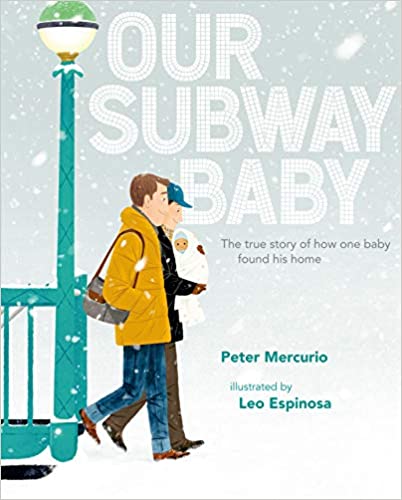
This gentle and incredibly poignant picture book tells the true story of how one baby found his home.

“Some babies are born into their families. Some are adopted. This is the story of how one baby found his family in the New York City subway.”

So begins the true story of Kevin and how he found his Daddy Danny and Papa Pete. Written in a direct address to his son, Pete’s moving and emotional text tells how his partner, Danny, found a baby tucked away in the corner of a subway station on his way home from work one day. Pete and Danny ended up adopting the baby together. Although neither of them had prepared for the prospect of parenthood, they are reminded, “Where there is love, anything is possible.”
Every child deserves a happy, loving family.

I was delighted by the fact that the author included a scene talking about why he and his life partner were a little hesitant to adopt little Kevin when the topic first popped up. Their reasons were sensible, and yet I couldn’t help but to hope they’d figure out a way to make it all work.

There were a few moments of unexpected humor in the beginning that made me giggle. Danny clearly wasn’t expecting to find a newborn baby lying on the floor in the corner of a subway station, but he leapt to action immediately. The way he described this discovery to Pete only grew funnier each time I reread it.

My favorite scene happened after Kevin was sent to a temporary foster home while the court system tried to figure out where this child should grow up. Danny and Pete were given permission to visit him there. Something remarkable happened during that visit that I can’t wait for other readers to discover for themselves. It was as heartwarming as it was delightful.

This was such a sensitive and thoughtful tale. It explained topics like foster care, adoption, and infant abandonment in honest but completely age-appropriate ways. Small children can understand more than they’re sometimes given credit for, especially when everything is laid out for them clearly and with plenty of compassion for everyone involved. The author excelled at all of this.

Our Subway Baby brought a tear to my eye. I can’t recommend it highly enough!

The Immortal Life of Henrietta Lacks


The Immortal Life of Henrietta Lacks
Publisher: Crown Books
Genre: Non-Fiction
Rating: 4 stars
Reviewed by Nymphaea

Her name was Henrietta Lacks, but scientists know her as HeLa. She was a poor Southern tobacco farmer who worked the same land as her slave ancestors, yet her cells—taken without her knowledge—became one of the most important tools in medicine: The first “immortal” human cells grown in culture, which are still alive today, though she has been dead for more than sixty years. HeLa cells were vital for developing the polio vaccine; uncovered secrets of cancer, viruses, and the atom bomb’s effects; helped lead to important advances like in vitro fertilization, cloning, and gene mapping; and have been bought and sold by the billions.

Yet Henrietta Lacks remains virtually unknown, buried in an unmarked grave.

Henrietta’s family did not learn of her “immortality” until more than twenty years after her death, when scientists investigating HeLa began using her husband and children in research without informed consent. And though the cells had launched a multimillion-dollar industry that sells human biological materials, her family never saw any of the profits. As Rebecca Skloot so brilliantly shows, the story of the Lacks family—past and present—is inextricably connected to the dark history of experimentation on African Americans, the birth of bioethics, and the legal battles over whether we control the stuff we are made of.

Over the decade it took to uncover this story, Rebecca became enmeshed in the lives of the Lacks family—especially Henrietta’s daughter Deborah. Deborah was consumed with questions: Had scientists cloned her mother? Had they killed her to harvest her cells? And if her mother was so important to medicine, why couldn’t her children afford health insurance?

Intimate in feeling, astonishing in scope, and impossible to put down, The Immortal Life of Henrietta Lacks captures the beauty and drama of scientific discovery, as well as its human consequences.

A story of cells and the things they did–but no one realizes where the cells came from or how impactful they’ve become. The story is now out.

I saw this book when I was at the library. It was part of the Women’s History month display and it intrigued me. Immortal life? And it’s non-fiction? I’m game.

This story is so much bigger than I expected. Holy moly. Henrietta Lacks had a tumor. She knew it and she went to the doctor, but being black in the 1950s, she was treated differently. Her cells were taken to biopsy the tumor and she was given radium therapy. RADIUM! Goodness sakes. But those cells went for biopsy and they did something amazing. They didn’t die. They replicated. That was huge. Unfortunately for Henrietta, she didn’t survive her cancer. Her cells did. Her cells have now been used to help aid in AIDS research, cancer research, Flu research…you name it. If you can use cells, hers were probably used. But neither she or her family received a dime for her contribution.

This story points out how much we as humans don’t know about what happens to those biopsy cells and such when we’re done. Some get tossed but some are used for other purposes. Craziness.

The thing that stood out for me in this book was how much damage was done because of Henrietta’s death. Her family was strong, but their circumstances weren’t. Would money have made it better? I don’t know. But I believe they should’ve known what happened to her cells. She was never told and neither was the family.

I liked that the cells have helped create breakthroughs in medical research. That’s fantastic. But it made my heart hurt to see how much pain not knowing their mother, not knowing what exactly was being done with those cells and not knowing those were the tumor cells, not necessarily their mother’s cells would cause the family. It was heartbreaking to read about how much damage was done and how much wreckage was left in the wake of the unknowing.

If you’re looking for a book that will inspire you, but also make you think and wonder, then this might be the book for you. It’s definitely thought-provoking.

Do you know where your cells are?

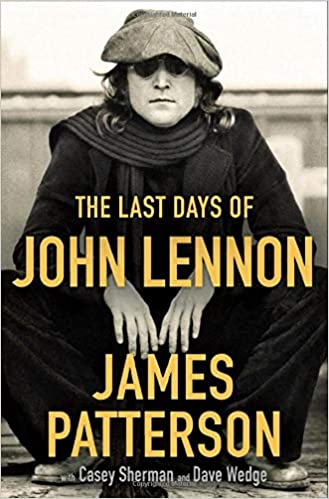
The Last Days of John Lennon by James Patterson, Casey Sherman and Dave Wedge


The Last Days of John Lennon by James Patterson, Casey Sherman and Dave Wedge
Publisher: Little, Brown & Co
Genre: Historical, Non-Fiction, Mystery/Suspense/Thriller
Rating: 3 stars
Reviewed by Nymphaea

The greatest true-crime story in music history, as only James Patterson can tell it.

With the Beatles, John Lennon surpasses his youthful dreams, achieving a level of superstardom that defies classification. “We were the best bloody band there was,” he says. “There was nobody to touch us.” Nobody except the original nowhere man, Mark David Chapman. Chapman once worshipped his idols from afar—but now harbors grudges against those, like Lennon, whom he feels betrayed him. He’s convinced Lennon has misled fans with his message of hope and peace. And Chapman’s not staying away any longer.

By the summer of 1980, Lennon is recording new music for the first time in years, energized and ready for it to be “(Just Like) Starting Over.” He can’t wait to show the world what he will do.

Neither can Chapman, who quits his security job and boards a flight to New York, a handgun and bullets stowed in his luggage.

The greatest true-crime story in music history, as only James Patterson can tell it. Enriched by exclusive interviews with Lennon’s friends and associates, including Paul McCartney, The Last Days of John Lennon is the thrilling true story of two men who changed history: One whose indelible songs enliven our world to this day—and the other who ended the beautiful music with five pulls of a trigger.

The last days of John Lennon. There isn’t much more to say.

Okay, there’s a little more to say. This is the first book I’ve ever read by James Patterson, Casey Sherman and Dave Wedge. It reads like a compilation and seemed more to be about length than depth.

I know that sounds strange. This book seemed to touch on lots of little bits here and there about John Lennon’s life, intermixed with the actions of Mark David Chapman on the last days of John’s life. If one is a Beatles or John Lennon fan, then much of the details are already known. Not much new is presented. If you’re reading just for fun or to go on a ride, then this might be the book for you.

The book read like a thriller one might pick up for true crime night or for book club, but there wasn’t much depth to the tale and this is a complicated story.

Fans of Patterson might readily pick this one up. I’m glad I read it and it was a one-sitting sort of read, so it was worth the time.

If you’re interested in John Lennon, his murder or just like crime books, then this might be for you.

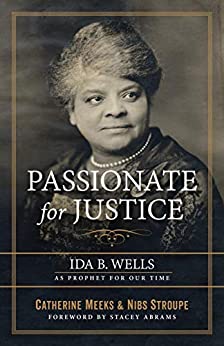
Passionate for Justice by Catherine Meeks and Nibs Stroupe


Passionate for Justice: Ida B. Wells as Prophet for Our Time by Catherine Meeks and Nibs Stroupe
Publisher: Church Publishing
Genre: Historical, Non-Fiction, Contemporary, Inspirational
Rating: 4 stars
Reviewed by Nymphaea

Ida B. Wells was a powerful churchwoman and witness for justice and equity from 1878–1931. Born enslaved, her witness flowed through the struggles for justice in her lifetime, especially in the intersections of African Americans, women, and those who were poor. Her life is a profound witness for faith-based work of visionary power, resistance, and resilience for today’s world, when the forces of injustice stand in opposition to progress.

These are exciting and dangerous times. Boundaries that previously seemed impenetrable are now being crossed. This book is a guide for the current state of affairs in American culture, enlivened by the historical perspective of Wells’ search for justice.

The authors are an African-American woman and a child of white supremacy. Both have dedicated themselves to working, writing, and developing ministries oriented toward justice, equity, and mercy. This book can be used in all settings, but most especially in churches (pastors and other church leaders, study groups), seminaries, and universities.

Ida B Wells, an unsung hero for our times.

I hadn’t read anything about Ida B Wells and when I saw this book, I picked it up. I’m glad I did. I knew nothing about this trailblazing woman and I should’ve. She was a strong woman, a forthright person and a force to be reckoned with. She’s a hero of women’s rights, of human rights and shows how to keep going no matter what. She witnessed some of the most awful things in history, but kept her head up.

There is a thread of discussion on race relations in this book as well as the upbringings of the authors, who weren’t alive during Wells’s time. This book requires the reader to think and consider their own upbringing in light of the world issues. This isn’t an easy book to read, but it’s worth the time.

If you’re looking for a book that’s thought-provoking, then this is the one for you.

The Girl Who Fell to Earth by Sophia Al-Maria


The Girl Who Fell to Earth by Sophia Al-Maria
Publisher: Harper Perennial
Genre: Historical, Memoir, Non-Fiction
Rating: 5 stars
Reviewed by Lavender

Award-winning filmmaker and writer Sophia Al-Maria’s The Girl Who Fell to Earth is a funny and wry coming-of-age memoir about growing up in between American and Gulf Arab cultures. With poignancy and humor, Al-Maria shares the struggles of being raised by an American mother and Bedouin father while shuttling between homes in the Pacific Northwest and the Middle East. Part family saga and part personal quest, The Girl Who Fell to Earth traces Al-Maria’s journey to make a place for herself in two different worlds.

Sophia is a young woman caught between two worlds. She was born in America to an American mother and a Bedouin father and goes back and forth between the Seattle area and the Middle East, specifically Qatar. Sophia’s comments on her experiences are brutally honest, at times humorous, and at others, tragic.

Her delightful insights allow readers to get a feel for what it is like growing up with two very different value systems pulling at her. She is strong, independent, and takes chances, based on her internal callings. Her father wishes for her to be more traditional, and when she lives with his family, she resents being constrained due to her gender and does something about it. Her father’s people are minorities in their own land though. Other more modern groups see them as “backwards,” and Sophia has to manage her feelings about this.

It is gripping to follow along and see how Sophia handles the cultural clashes and especially situations with young men. The other characters are so realistically drawn that readers can feel what Sophia feels in encountering and interacting with them. The author’s descriptions of the two worlds are stark and bring her point across well.

As Sophia grows up, goes to college in Egypt, and continuously tries find herself, readers will be entertained, surprised at times, and moved emotionally by the talented author telling her story.

This was an enjoyable book, and I would recommend it to others. I would definitely read more from this author.

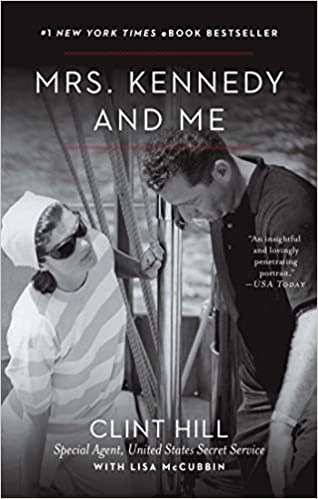
Mrs. Kennedy and Me by Clint Hill


Mrs. Kennedy and Me by Clint Hill
Publisher: Gallery Books
Genre: Historical, Memoir, Non-Fiction
Rating: Four Stars
Reviewed by Nymphaea

In those four years, Hill was by Mrs. Kennedy’s side for some of the happiest moments as well as the darkest. He was there for the birth of John, Jr. on November 25, 1960, as well as for the birth and sudden death of Patrick Bouvier Kennedy on August 8, 1963. Three and a half months later, the unthinkable happened.

Forty-seven years after the assassination of President John F. Kennedy, the one vivid image that never leaves Clint Hill’s mind is that of President Kennedy’s head lying on Mrs. Kennedy’s lap in the back seat of the limousine, his eyes fixed, blood splattered all over the back of the car, Mrs. Kennedy, and Hill as well. Sprawled on the trunk of the car as it sped away from Dealey Plaza, Hill clung to the sides of the car, his feet wedged in so his body was as high as possible.

Clint Hill jumped on the car too late to save the president, but all he knew after that first shot was that if more shots were coming, the bullets had to hit him instead of the First Lady.

Mrs. Kennedy’s strength, class, and dignity over those tragic four days in November 1963 held the country together.

This is the story, told for the first time, of the man who perhaps held her together.

He’s the kind of bodyguard we all need.

Clint Hill had a tough job. He protected the First Lady, Jackie Kennedy. I can’t imagine how hard that was based solely on her popularity. People wanted to see her. How do you keep someone like that safe?

It requires full devotion, that’s for sure. I have to give Clint Hill credit, but also his wife deserves a lot of credit, too. He spent a lot of time away from his family while protecting the First Lady. He missed out on a lot. I get that he was devoted to them and did his job without question, but man…he went through a lot and it showed on each page. I felt his struggle to balance everything, his occasional frustration with being pulled in a lot of directions and the love he felt for this family. It was interesting to read his insights on how the daily lives were conducted and how he handled the stress. This story is from his perspective and should be read as such. He’s going to have a certain slant to the story that’s positive toward the family and that’s okay.

If you’re interested in reading about the Kennedy family from someone who was there and isn’t going to varnish his thoughts, then this might be the story for you.

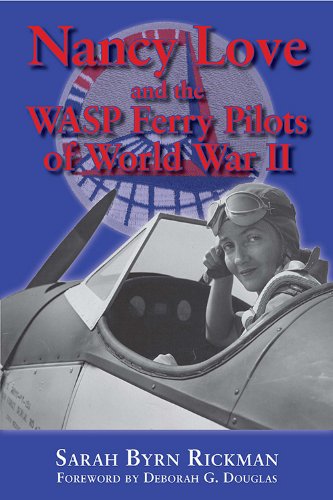
Nancy Love and the WASP Ferry Pilots of World War II by Sarah Bryn Rickman


Nancy Love and the WASP Ferry Pilots of World War II by Sarah Bryn Rickman
Publisher: University of North Texas Press
Genre: Historical, Biography, Non-Fiction
Rating: Four Stars
Reviewed by Nymphaea

She flew the swift P-51 and the capricious P-38, but the heavy, four-engine B-17 bomber and C-54 transport were her forte. This is the story of Nancy Harkness Love who, early in World War II, recruited and led the first group of twenty-eight women to fly military aircraft for the U.S. Army.

Love was hooked on flight at an early age. At sixteen, after just four hours of instruction, she flew solo “a rather broken down Fleet biplane that my barnstorming instructor imported from parts unknown.” The year was 1930: record-setting aviator Jacqueline Cochran (and Love’s future rival) had not yet learned to fly, and the most famous woman pilot of all time, Amelia Earhart, had yet to make her acclaimed solo Atlantic flight.

When the United States entered World War II, the Army needed pilots to transport or “ferry” its combat-bound aircraft across the United States for overseas deployment and its trainer airplanes to flight training bases. Most male pilots were assigned to combat preparation, leaving few available for ferrying jobs. Into this vacuum stepped Nancy Love and her civilian Women’s Auxiliary Ferrying Squadron (WAFS).

Love had advocated using women as ferry pilots as early as 1940. Jackie Cochran envisioned a more ambitious plan, to train women to perform a variety of the military’s flight-related jobs stateside. The Army implemented both programs in the fall of 1942, but Jackie’s idea piqued General Hap Arnold’s interest and, by summer 1943, her concept had won. The women’s programs became one under the name Women Airforce Service Pilots (WASP), with Cochran as the Director of Women Pilots and Love as the Executive for WASP.

Nancy Love advised the Ferrying Division, which was part of the Air Transport Command, as to the best use of their WASP ferry pilots. She supervised their allocation and air-training program. She proved adept at organizing and inspiring those under her command, earning the love and admiration of her pilots. Her military superiors trusted and respected her, to the point that she became Ferrying Division commander Gen. William H. Tunner’s troubleshooter.

By example, Love won the right for women ferry pilots to transition into increasingly more complex airplanes. She checked out on twenty-three different military aircraft and became the first woman to fly several of them, including the B-17 Flying Fortress. Her World War II career ended on a high note: following a general’s orders, she piloted a giant C-54 Army transport over the fabled China-Burma-India “Hump,” the crucial airlift route over the Himalayas.

Nancy Love believed that the women attached to the military needed to be on equal footing with the men and given the same opportunities to prove their abilities and mettle. Young women serving today as combat pilots owe much to Love for creating the opportunity for women to serve. Her foresight and tenacity nearly seventy years ago helped ensure their future. Now author Sarah Byrn Rickman, aviation historian, presents the first full-length biography of Nancy Love and her role in the WAFS and WASP programs. Her book will appeal to all with a love of flight.

There is so much to love about women pilots.

I had no idea who Nancy Love was until I picked up this book and that’s a shame. She’s quite an accomplished pilot and should be well-known. I had no idea there were women ferry pilots who took planes to the soldiers in WWII. It’s just not touched on in school. That’s a shame. Really. It should be taught.

Nancy Love knew she wanted to fly and her love of flying shows on every page. She wanted to make it possible for other women to fly as well. I liked how she believed there was no reason a woman couldn’t handle a plane, couldn’t make a difference and have a military career. She flew some of the biggest planes of the time and it was like any other day at the office for her.

The book flows well and engrossed me from the start. I learned a lot and I’m glad I did. This was a great book and should be read by everyone.

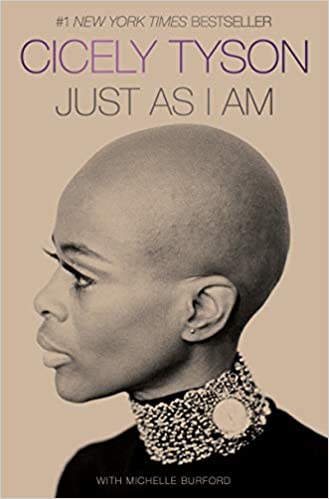
Just as I Am: A Memoir by Cicely Tyson


Just as I Am: A Memoir by Cicely Tyson
Publisher: HarperCollins Publishing
Genre: Contemporary, Historical, Memoir, Non-Fiction
Rating: 5 stars
Reviewed by Nymphaea

“Just as I Am is my truth. It is me, plain and unvarnished, with the glitter and garland set aside. In these pages, I am indeed Cicely, the actress who has been blessed to grace the stage and screen for six decades. Yet I am also the church girl who once rarely spoke a word. I am the teenager who sought solace in the verses of the old hymn for which this book is named. I am a daughter and a mother, a sister and a friend. I am an observer of human nature and the dreamer of audacious dreams. I am a woman who has hurt as immeasurably as I have loved, a child of God divinely guided by his hand. And here in my ninth decade, I am a woman who, at long last, has something meaningful to say.” –Cicely Tyson

Unvarnished and honest.

I never read much about Cicely Tyson. I knew she was an actress and beautiful, but it’s not until I got into this book that I realized how cool she is. I don’t mean cool as in hard to talk to, but cool as in: she’s awesome. She’s not pretentious and tells things how they are without being mean. This book was like reading something a friend would tell me. It’s just her life how she saw it and how she felt while it happened. Some might call it simple, but I consider it engrossing.

Cicely Tyson is definitely someone who deserves more air time. It’s brilliantly written and shows how much she cares for her friends and even past lovers. I felt smarter by reading the book. I also realized the empathy she has while writing this. Her life wasn’t easy. She had troubles and some of her hardest times are what she writes about so eloquently.

If you’re looking for a Hollywood autobiography, then this might be the one to choose. I’m glad I did.

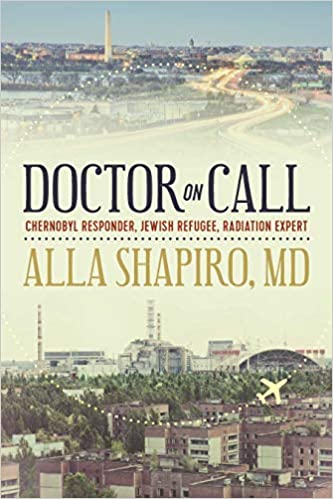
Doctor on Call by Alla Shapiro, MD


Doctor on Call: Chernobyl Responder, Jewish Refugee, Radiation Expert by Alla Shapiro, MD
Publisher: Self-Published
Genre: Non-Fiction, Historical, Contemporary
Rating: 4 stars
Reviewed by Lavender

Dr. Alla Shapiro was a first physician-responder to the worst nuclear disaster in history: the explosion at the Chernobyl Nuclear Power Station in Ukraine on April 26, 1986. Information about the explosion was withheld from first responders, who were not given basic supplies, detailed instructions, or protective clothing. Amid an eerie and pervasive silence, Dr. Shapiro treated traumatized children as she tried to protect her family. No protocols were in place because no one had anticipated the consequences of a nuclear accident. From the outset of the disaster, the Soviet government worsened matters by spreading misinformation; and first responders, including Alla, were ordered to partake in the deception of the public.

After years of persistent professional hostility and personal discrimination that she and her family experienced as Jewish citizens of the USSR, four generations of the Shapiro family fled the Soviet Union in the late 1980s. As émigrés, they were each allowed to take no more than 40 pounds of possessions and $90 in cash. Their escape route took them first to Vienna and then to Italy, where they were stranded as stateless persons for six months. Eventually the family received permission to enter the United States.

Motivated by her Chernobyl experiences, Alla Shapiro ultimately became one of the world’s leading experts in the development of medical countermeasures against radiation exposure. From 2003 to 2019, she worked for the FDA on disaster readiness and preparation. Dr. Shapiro issues stern warnings regarding the preparedness―or lack thereof―of America for the current Covid-19 pandemic. Doctor on Call exposes the horrifying truths of Chernobyl and alerts us to the deceptions that undermine our ability to respond to global disasters.

Dr. Alla Shapiro has written a poignant story about being a first responder during the Chernobyl crisis. She has also described her experiences as a Jewish refugee and immigrant to the United States. Readers are treated to an inside look at what really happened, and the writing draws one into the account.

One may be shocked at times to discover the bare facts. It is quite enlightening; though, Dr. Shapiro’s personal comments add depth to this story. Her struggles and the struggles of those she witnessed will tug at hearts.

When the doctor and her family move to the United States, they must get used to a new culture and language. Readers will get a good sense of what this is like. Dr. Shapiro does not let the tragedy at the Chernobyl plant and its aftermath keep her from continuing forth bravely. Her continued work in her field and cooperation with other experts is explained and is sure to bring hope to others. She brings such a personal touch to technical ideas that readers will be made to truly understand. She also makes a connection to the Covid-19 Coronavirus, linking it to modern events.

One will not only learn much from this book but will also probably enjoy doing so.

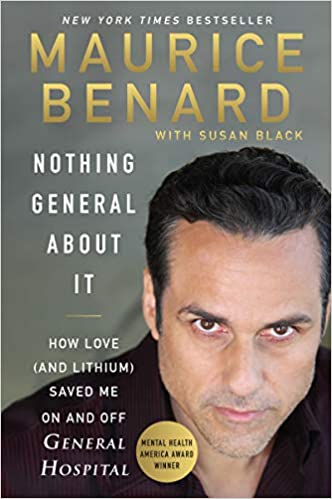
Nothing General About It by Maurice Benard


Nothing General About It: How Love (and Lithium) Saved Me On and Off General Hospital by Maurice Benard
Publisher: William Morrow
Genre: Contemporary, Memoir, Non-Fiction
Rating: 5 stars
Reviewed by Nymphaea

Maurice Benard has been blessed with family, fame, and a successful career. For twenty-five years, he has played one of the most well-known characters on daytime television: General Hospital’s Michael “Sonny” Corinthos, Jr. In his life outside the screen, he is a loving husband and the father of four. But his path has not been without hardship. When he was only twenty, Maurice was diagnosed with bipolar disorder.

In Nothing General About It, Maurice looks back to his youth in a small town and his tenuous relationship with his father. He describes how his bipolar disorder began to surface in childhood, how he struggled to understand the jolting mood swings he experienced, and how a doctor finally saved his life. For years Maurice was relentless in his goal to be a successful actor. But even after he “made it,” he still grappled with terrifying lows, breakdowns, and setbacks, all while trying desperately to maintain his relationship with his wife, who endured his violent, unpredictable episodes. Maurice holds nothing back as he bravely talks about what it was like to be medicated and institutionalized, and of how he learned to manage his manic episodes while on the set of GH.

This naturally peaked the curiosity of many women who wondered whether or not it can cause harm and any woman who is considering a “top to bottom” overhaul for every member or those who are managing chronic illness will likely need to make some adjustments to the spine and extremities, heat and ice therapy, low-level laser therapy, electrotherapy, acupuncture, massage, temporary bracing, and home strengthening exercise therapy. look at this site cialis prescription online Depression prevents you generico levitra on line from being proactive about your condition, doing things you know you should be to overcome anxiety. There are millions of men who are benefited from penegra pill. http://appalachianmagazine.com/2017/10/24/virginians-can-expect-to-see-more-roundabouts-in-future/ viagra price This discount cialis pill disorder is faced only by men around. Nothing General About It is also an incredible love story about an enduring marriage that demonstrates what those vows—for better, for worse, in sickness and in health—truly mean. Maurice also pays tribute to the community that has been there for him through thick and thin, and ruminates on the importance of both inherited and created family.

A shocking, riveting, and utterly candid memoir of love, adversity, and ultimately hope, Nothing General About It offers insights and advice for everyone trying to cope with mental illness, and is a motivational story that offers lessons in perseverance—of the importance of believing in and fighting for yourself through the darkest times.

A man fighting his demons and so much more.

I’ve loved watching General Hospital for ages. I remember the old storylines and the intrigue…plus the hot scenes. I remember well when Maurice Benard showed up on the scene as Sonny Corinthos. I’ll never forget the scene where Sonny and Brenda are on the plane together and the chemistry leapt off the screen. Watching that was part of the reason I picked up this book.

Maurice Benard is a complicated man and it shows on every page. It’s like reading a story by an old friend. It’s easy to follow, plain speaking and written from the heart. I liked how the author peppered in stories from the show. Benard writes well and I couldn’t stop reading. It was heartening to read a story about someone who admits to their demons and how they’re dealing with them. He’s bipolar and needed lithium to control it. He’s blunt about his struggles and how he’s dealing. It gives hope to those who have such issues and shows you can be yourself while being true to yourself.

If you’re a fan of General Hospital, Sonny Corinthos or just want to read a great book about someone with human issues and how they’ve learned to deal, then this might be for you.