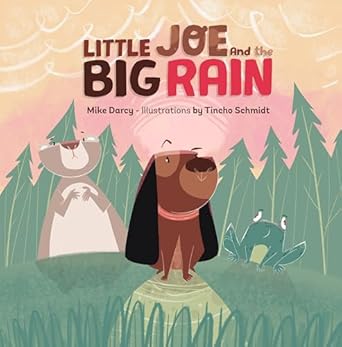
Little Joe and the Big Rain by Mike Darcy


Little Joe and the Big Rain by Mike Darcy
Publisher: Lilbuda Creations
Genre: Children’s (0 – 6 y.o.), Contemporary
Rating: 5 Stars
Reviewed by Astilbe

Every great adventure starts with fly soup and ends with a new best friend, right?

When Little Joe’s froggy friend Hopper invites him over for a nice bowl of fly soup, they embark on Little Joe’s first-ever adventure through the wilderness! There, he’ll meet lots of woodland creatures and even make a surprising friend. Join these two unlikely explorers in this debut book Little Joe and the Big Rain.

This amusing animal story will delight young readers of all ages! It can teach children clever problem-solving, show how small acts of kindness can help you make unexpected friends, and instill in them the priceless treasure of curiosity. Entertaining for both kids and parents, it makes a fantastic bedtime story and a fun tale for elementary schoolers venturing into longer picture books.
Friendship is forever.

I loved how much detail was included in this picture book! Instead of having a sentence or two per page to read, there were a few paragraphs to enjoy instead which left plenty of space for me to get to know Little Joe and Hopper well as they explored the wilderness, discovered fun plot twists, and had all sorts of adventures. What made this even better were the occasional references to human culture and nature that older kids or adults are more likely to understand which added extra layers of meaning and would be fun to explain to little ones once they’re old enough to wonder what certain terms meant, for example. These details weren’t necessary in order to understand the main storyline. They were simply fun additions if a reader picks up on them.

Mr. Darcy trusted his audience to figure out the message without being directly told what they should learn from it. Instead, he allowed his characters to go on an adventure and see what might be waiting for them out in the world. This is the sort of writing that makes rereading so much fun as certain scenes feel a little different the second or third or tenth time around once one knows what is about to happen and can look for any hints about the future in the early scenes. No, I can’t possibly give any hints about what these characters find. It’s so much more fun to let the plot move where it needs to go and not have any idea what might happen next.

One of my favorite aspects of the storyline had to do with how Little Joe and Hopper’s expectations played out once it began raining and they couldn’t have the fly soup they were originally planning to make. Life is full of twists and turns for everyone, after all, but kindness and hope are two fantastic tools for figuring out how to react when something surprising or disappointing happens.

Little Joe and the Big Rain was heartwarming.
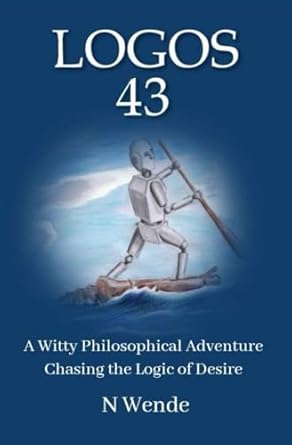
Logos 43 – A Witty Philosophical Adventure Chasing the Logic of Desire by N Wende


Logos 43 – A Witty Philosophical Adventure Chasing the Logic of Desire by N Wende
Publisher: Self-Published
Genre: Sci-Fi/Fantasy, Contemporary
Rating: 4 Stars
Reviewed by Astilbe

When one morning, a brilliant robot named Logos discovers he wants to play the violin, his life spirals into dangerous chaos. The transistors in his brain vibrate, copper coils heat up, as he can’t bear a thought as random and unfounded as desire. Now, he has no choice but to find a logical justification for this strange phenomenon. Otherwise, he’ll fall into a severe psycho-electric crisis, and his mind will completely crash.

And so, with a draining battery and a determined enemy in pursuit, Logos embarks on a daring, dangerous, and hilarious journey. He’ll examine with robotic sensitivity the values and fundamental thoughts of us all. He’ll encounter bizarre religious sages and mad scientists. He’ll confront deep philosophers and active idealists, all in pursuit of one troubling question: Is it even logical to want something?

Everyone has desires, even robots.

The setting grabbed my attention immediately because of how crisply and clearly it was described. Sometimes I’d go back and reread a previous paragraph to have another chance to imagine what Logos 43 was experiencing as it attempted to figure out why it suddenly had the urge to play the violin despite its programming. The gentle beaches and peaceful forests provided a nice contrast to the conflicts the characters dealt with and the complex discussions that happened during this quest.

It took me a little while to settle into the rhythm of this book due to how differently Logos 43 viewed the world when compared to how the average human would describe the same experience. I needed to observe him respond to multiple types of religion before things clicked for me. Patience was key, and while I was a bit confused in certain places in the beginning, it was well worth it later on once I better understood what the main character was saying and how to better interpret some of his unusual reactions to ideas I wouldn’t necessarily find surprising myself.

With that being said, I appreciated the protagonist’s logical approach to what should or shouldn’t be classified as a religion. His arguments made sense even though I wouldn’t ever have thought to lump some of those belief structures together before I read this. This is one of the reasons why I enjoy reading science fiction so much, and I look forward to checking out more from the author in the future.

Logos 43 reminded me of a grownup version of The Phantom Tollbooth. I’d recommend this book to anyone who loves wordplay and thought-provoking fables.

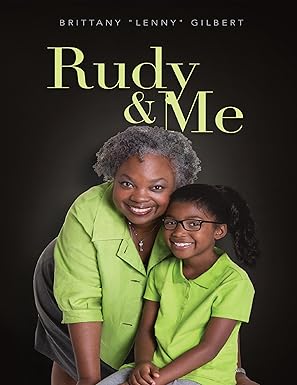
Rudy & Me by Brittany Gilbert


Rudy & Me by Brittany Gilbert
Publisher: Self-Published
Genre: Middle Grade (8 – 12 y.o.), Inspirational, Contemporary
Rating: 3 Stars
Reviewed by Astilbe

A twelve year old girl who is having trouble adjusting to her family dynamics finds refuge and encouragement with her Grandmother until she encounters unexpected obstacles.

Family is forever.

I appreciated the attention this book paid to Alzheimer’s disease, especially the more subtle signs that someone is developing it that kids might not pick up on. Brandy had no idea why her grandmother kept forgetting to do ordinary things like remember where she put the car keys or get dressed in clothing that’s appropriate for the outdoors. Her grief as she realized that these were signs their lives were about to change forever was written honestly and realistically.

The large cast of characters made it difficult for me to get to know most of them well. Other than Brandy, there simply wasn’t time to dive into their backstories, personalities, and interests. This made it tricky to remember who was who in some cases due to the dozens of people who were introduced in the storyline and how little I learned about them in general. I found myself wishing I could have had more time with a smaller number of characters so that I could compare their personalities to the main character.

It took me a while to understand why Brandy’s parents and stepfather were overlooking the obvious signs that she was struggling with adjusting to so many changes in her life over what was at most a few short years. I have to admit that I was annoyed with them at first for not paying attention to why her grades were slipping and why she seemed so frustrated. The explanation that was given for their choices softened my reactions to them, though, and reminded me that adults don’t always have everything figured out yet either.

Rudy & Me was thought provoking.

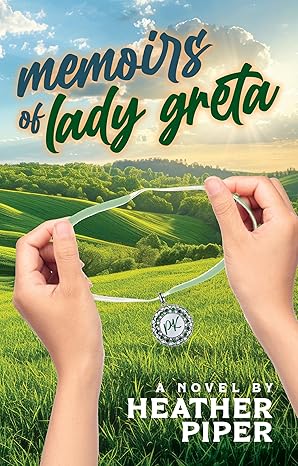
Memoirs of Lady Greta by Heather Piper


Memoirs of Lady Greta by Heather Piper
Publisher: Self-Published
Genre: Middle Grade (8 – 12 y.o.), Contemporary
Rating: 4 Stars
Reviewed by Astilbe

The truth of a story often hinges on the perspective of the storyteller.

In her final hours, Lady Greta, an orphan adopted by the Kots, reflects on the pivotal events that led her to them. Her journey is recounted with poignant honesty, detailing her life with the Kots compared to haunting glimpses of her abusive past. As she faces death, she revisits her final adventure, offering a narrative that comes full circle with a surprising realization.

Her survival story unfolds through a kidnapping and a daring pet rescue, intertwined with the heartache and grief of losing a pet. The reader is guided from despair and doubt to a journey of faith, hope, and love.

Yet, Lady Greta’s story is more than just a straightforward tale. Told from her perspective, she omits a crucial detail that redefines the entire narrative. This twist forces the reader to question everything they’ve learned, demonstrating that perceptions can vary greatly depending on who tells the story.

Set against the backdrop of adventure, survival, and the grief of losing a pet, this narrative explores the complexities of perception, revealing that the truth is often more intricate—and no less heartbreaking—than it seems.

Adventures come in many forms.

Ms. Piper did a wonderful job of exploring a different perspective. Sometimes the Kots confused Lady Greta and vice versa, but there were excellent reasons for these misunderstandings for those who pay attention and think critically about what they’re reading. While I’d better not give any hints about who the protagonist really was, I enjoyed the process of figuring it out and thought those scenes were well done.

There were a few things about the timeline that I wish had been better explained. For example, how old was Lady Greta when the Kots adopted her and how old was Seven when these two met? This was set over such a long period of time that I was a little surprised by how many years it covered. Was this meant to be a subtle commentary on the different ways to think about how long a year is or was I supposed to take the protagonist at her word? I would have happily gone for a full five-star rating if this had been made clearer to me as a reader.

The ending was bittersweet and beautiful. Honestly, I don’t see how it could have been wrapped up in any other way, especially given the hints that were shared earlier on about what the characters were about to go through together. There’s something satisfying about seeing everything turn out the way it should and everyone get the fate they wanted and should have had. This doesn’t always happen in real life, so it’s marvelous to see in fiction.

Memoirs of Lady Greta made me grab a tissue and wish for a sequel.

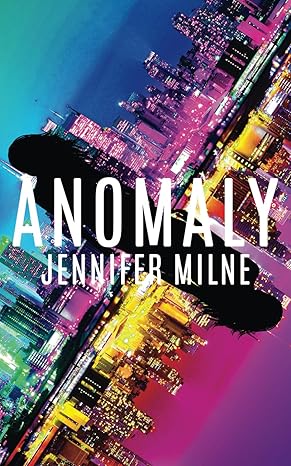
Anomaly by Jennifer Milne


Anomaly by Jennifer Milne
Publisher: Auctor Press
Genre: Sci-Fi/Fantasy, Romance, Inspirational, Contemporary
Rating: 3 Stars
Reviewed by Astilbe

What if every day you woke up as someone new?

Every day a new past, every day a new life.

Then what if one day you woke up and you were no one at all?

Ellie Coleman has been erased from existence and now she must fight for the love that no longer knows her and the life that is no longer her own.

What if you had to choose: to be erased and save the world…or to live and let it burn.

The world wouldn’t be the same if you, I, or anyone else weren’t in it.

Making the right decision isn’t always clear cut. What sounds good in the moment might turn out to have negative consequences in the future, and vice versa. I was intrigued by the many different factors Ellie and the other characters had to consider when deciding which choice made the most sense not only for themselves but also for the rest of humanity. There’s something to be said for embracing the nuances of life.

I struggled with the plot holes in this novella. For example, it was hard for me to understand how Ellie could continue to exist when she had been erased from existence. The reason given for this never made sense to me, and I found myself wishing more time had been spent explaining how it worked and why nobody expected it to occur. The ending, too, didn’t seem to fit what I’d learned earlier about the rules in this universe about what should happen to someone who exists despite every attempt to prevent that from happening. If only I could have had more information about how it all worked.

Time travel is one of those topics I automatically gravitate towards when I read speculative fiction. Even a small change in the past can have major repercussions in the future, and I appreciated how much time and effort the author put into extrapolating how her characters’ earlier decisions could logically affect what happened to them next. She clearly put a lot of thought into these passages!

One of the interesting changes I’ve seen in the inspirational genre over the past few years has been how often books do not mention this in their blurbs or other descriptions of their content. I did not go into this novella expecting to find religious themes and messages, so I thought I’d let other readers know in advance that it does have them. It’s important for readers to be able to find tales from the genres they love.

Anomaly was thought provoking.

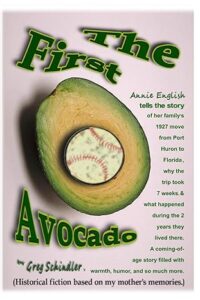
The First Avocado by Greg Schindler


The First Avocado by Greg Schindler
Publisher: Self-Published
Genre: Middle Grade (8 – 12 y.o.), Historical
Rating: 4 Stars
Reviewed by Astilbe

This is the true story of a family’s 1927 move from Michigan to Florida and the two years they live near Tampa. They move because the oldest boy breathed mustard gas in WWI and his lungs worsen each winter. During the eventful, seven week trip they camp nightly by the road and bathe in nearby streams. Near Tampa they live on a farm.

Flyers in Michigan promise warm winters, beautiful beaches, and a plethora of oranges in Florida. Those flyers don’t lie, but fail to mention the dreadfully hot summers, snakes, hurricanes, and the KKK.

The coming-of-age narrator of the story, Annie asks her mother some of life’s difficult questions and receives the wisest of answers. Annie and her niece, Doris, are baseball playing tomboys who insist on barging into a boys’ sport before the term “women’s lib” was ever coined. And her Dad, Fred, gets their beloved farm manager, Thaddeus, in trouble by being too nice to him.

Family is forever.

Some of my favorite scenes were the ones that explored difficult topics from a child’s point of view. For example, Annie had a lot of questions about how babies are made, what causes hurricanes, why grownups make so many decisions that kids don’t always understand, and why some people are prejudiced against other races. Adults have explanations for these things that a kid can’t always wrap their minds around right away, and I enjoyed comparing Annie’s understanding of how they worked versus how her parents and adult siblings would describe them.

It would have been helpful to have more character development. Annie was a tomboy who loved baseball, but I would struggle to describe her personality beyond saying that she was a kind kid who tried to see the best in everyone. This was a pattern that was even stronger for her various family members who travelled with her as there wasn’t a lot of information about whether they were introverted or extroverted, grumpy or cheerful, creative or practical, or anything else like that. As much as I wanted to give this a full five-star rating, I needed more information about the characters as people to justify that.

I loved the humor in this book. Annie and her family faced all sorts of problems on their trip to Florida and during the time they needed to adjust to southern culture once they arrived there. There were multiple times when I chuckled as I read about how they fixed their car with limited supplies, what they thought of avocados, and how they adjusted to the heat and humidity down south. Finding the funny side in the surprises of life is so important!

The First Avocado was full of adventure.

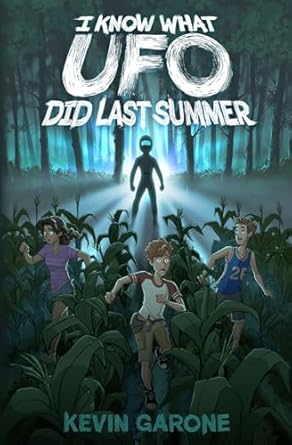
I Know What UFO Did Last Summer by Kevin Garone


I Know What UFO Did Last Summer by Kevin Garone
Publisher: Temor Press
Genre: Middle Grade (8 – 12 y.o.), YA, Sci-Fi/Fantasy, Contemporary
Rating: 4 Stars
Reviewed by Astilbe

The alien invasion is upon us! At least, that’s what twelve-year-old Marv thinks when a mysterious craft appears in the woods behind his house. If there’s one thing he’s learned from his trusty alien invasion guidebook, it’s that ETs are just as likely to land in your backyard as they are on the front lawn of the White House.

A plot to take over the planet is the only logical explanation for what’s going on. Why else would a suited pilot chase Marv and his friends through the woods? What else could explain the creepy leech-like creatures attached to the hull of the ship? As if that wasn’t enough, the recently moved-in next-door neighbor girl and her dad seem to be directly connected to the alien conspiracy.

The National Guard won’t take his calls seriously. His family thinks he’s making everything up. Marv and his friends are on their own if they want to stop the invaders from Pluto-unless that mysterious red pickup truck that keeps driving by is somehow involved in all this, too.

But Marv is wrong. The threat is real, but the aliens aren’t. And getting mixed up with the wrong people might still result in an abduction…

Aliens are full of surprises.

One of the reasons why I enjoy reading the middle grade genre so much has to do with the differences between how kids and adults can interpret the same experience. Mr. Garone tapped into this in order to give the audience multiple explanations for why certain things happened, and it made me chuckle to take note of how Marv and his friends understood those events versus what the average adult would probably say about them.

It would have been helpful to have more character development, especially for Marv. His interest in aliens was so strong that it sometimes overshadowed everyone else’s interests. There was a thought-provoking scene later in which another character confronted him for expecting his hobby to always be put first that I wish had been given more time to grow. Marv could be a little selfish at times even if he didn’t always realize he was coming across that way. If this had been explored more, I would have happily gone for a full five-star rating.

The plot twists in this book were imaginative and exciting. It was difficult for this reader to find good places to stop when I needed to go do something else for a while due to how often these revelations made me look at the characters in new ways. What an excellent problem to have! Every scene propelled things forward in some way, and I was surprised more than once by what Marvin, Nora, and Jace didn’t see coming.

I Know What UFO Did Last Summer made me wish for a sequel!

The Last Toll Collector by S.S. Turner


The Last Toll Collector by S.S. Turner
Publisher: Fortis Publishing
Genre: Mystery/Suspense/Thriller, Contemporary
Rating: 3 Stars
Reviewed by Astilbe

What would you do if AI outcompeted you so completely that it negated your role in society?

Welcome to Valerie Tobruk’s life. Her job as a toll collector on the Golden Gate Bridge was made redundant when toll collection was automated in 2013. Since then, she’s failed to find a job which AI can’t do better than her. She feels useless and lost.

To escape from her life, Valerie travels to the Westfjords, a remote part of Iceland where people go to disappear and nature reigns supreme. Once there, she discovers an abandoned herring factory where she decides to reside as the founder of a new independent nation called Tobruk where people are valued for their humanness.

Valerie doesn’t remain alone for long. A cast of lost souls descend upon Tobruk, as do a series of perplexing challenges presented by the outside world. But there’s worse to come. When the darkness of winter descends, the citizens of Tobruk must face up to their deepest fears if they are to survive.

A better world is possible.

This was the first novel about AI I’ve read since things like ChatGPT became a mainstream concept. I nodded along as Valerie expressed her anger and frustration with how it had made the world a more difficult place to live, beginning with her being laid off so a computer could collect tolls instead. She had every right to want to escape to a place that was untouched by AI where she could live in peace. Honestly, I even wanted to join her at times! Her occasional, brief monologues made some great points about what humans do and do not actually need in order to have a fulfilling and meaningful life.

It would have been helpful to have consistent amounts of time dedicated to the mystery from the first chapter to the last one. Given that this was the main storyline, I was surprised by how often the plot wandered away from developing it to do other things instead. This was frustrating for me as a reader even though I found many of those rabbit trails worthwhile because I was expecting to have a steadily, even if slowly, growing number of clues about what was really going on in Tobruk. Switching between getting another clue and then having the protagonist mostly focus on other conflicts and tasks and not think about the mystery made it difficult for my attention levels to remain high.

Some of the most memorable scenes for me were the ones that explored the various ways sexism can be expressed. Valerie had pure intentions when she created Tobruk, but not everyone she met along the way shared her desire for equality and peace. What I found most interesting about this subplot were the nuances in why some men behave this way. Not all of them were consciously aware of their bias and how it affected the way they treated the women around them. This reminded me of the wide variety of ways in which all sorts of prejudice can be expressed in our world, including by people who are honestly trying to do the right thing but who have a small – or maybe even a large – blind spot. This was a realistic and helpful way to approach such a pertinent and sometimes sensitive subject.

The Last Toll Collector was thought provoking.

Movie Review: 28 Weeks Later

28 Weeks Later
Writers Rowan Joffé, Juan Carlos Fresnadillo, and Enrique López Lavigne
Director: Juan Carlos Fresnadillo
Starring: Jeremy Renner, Rose Byrne, Robert Carlyle
Publisher: 20th Century Fox
Genre: Science Fiction, Horror
Rating: 3 Stars (6 Stars on IMDB)
Reviewed by Astilbe

Six months after the rage virus was inflicted on the population of Great Britain, the US Army helps to secure a small area of London for the survivors to repopulate and start again. But not everything goes according to plan.

Nobody can run forever.

Surviving the first wave of the undead is anything but easy, but what I like to wonder about when I watch these sorts of films has to do with how the living might rebuild after things have calmed down again. About seven months is enough time to clear out buildings, beef up security, and start thinking about moving survivors back into town.

The military hasn’t always been shown in the best light in the zombie genre, so I was intrigued to see how it would handle the reclamation of London and the return to something that vaguely resembles normal life. People need more than food and water to survive. Having something else to live for is also important, although I’ll leave it up to other viewers to see how needs other than the most basic ones may have been approached in this universe.

One of the unexpectedly funny moments happened in one of the earliest scenes when a few NATO military forces realized that two children had been given clearance to move back into London. Existing in what until quite recently zombie territory wasn’t a problem, apparently, but a preteen and a teenager standing quietly in line were enough to send these hardened soldiers into a panic. I loved the way this scene played around with the audience’s and the soldiers’ expectations of what should and shouldn’t be frightening in a post-zombiepocalypse setting.

I did find myself wishing that some of the gory scenes could have been replaced or rewritten to include more character and plot development. While there were a few exciting twists in those areas later on, exploring those moments in greater detail would have made this a five star film for me. Yes, zombie tales in general are almost certainly going to be bloody and graphic as that comes with the territory, but I need something more substantial mixed in with all of the chomping and chasing in order to keep me hyped up for the next instalment.

With that being said, these developments did make me look at previous scenes in a different light and helped to explain what I originally thought was a massive plot hole involving a character who had some terrible luck in one of the earliest scenes. There’s nothing like being pleasantly surprised as a viewer just when you think you probably have everything figured out, and that’s a big part of the reason why I keep coming back for more.

28 Weeks Later made me wonder what could possibly happen in 28 Years Later!

You’ve Got the Map Backwards by Brian Usobiaga


You’ve Got the Map Backwards by Brian Usobiaga
Publisher: Self-Published
Genre: Young Adult (14 – 18 y.o.), Contemporary
Rating: 3 Stars
Reviewed by Astilbe

A year removed from high school, lifelong friends Aisha Kinseya and Sarah Piedmont find themselves lost in different places. Struggling with depression, Sarah’s growing dependency on alcohol lands her in rehab. Aisha, in the midst of her second year of college, finds herself increasingly isolated as a crippling anxiety begins to overwhelm her.

Finding solace in familiarity, the two girls reunite only to have their friendship fracture. As they search for answers, Aisha and Sarah discover how relationships can change. How knowing someone your entire life doesn’t mean you know them forever, and how, if you want to grow, there are certain things you must leave behind.

Change is an inevitable part of life.

One of the hardest things about the transition from high school to early adulthood is how much even the closest friendships can evolve as everyone goes off in different directions. This isn’t a topic I’ve seen covered that often in the young adult genre, and I hope it will spark a trend. Aisha and Sarah were both caught off-guard by the changes to their friendship and didn’t know how to react to them at first which was something I could relate to. I nodded along as they realized their lives were taking them on separate paths and wondered if they’d figure out new ways to relate to each other now that they didn’t have the same classes, teachers, goals, or daily routines to shape their experiences.

It would have been helpful to have more details in this story. I found it difficult to picture things like the characters, settings, or conversations because of how little time was spent showing the audience what the characters were like or how they interacted with each other and their environments. As much as I wanted to give this one a higher rating, this was an impediment to that as my imagination could only fill in so many details about what it would be like to walk alongside Sarah and Aisha as they adjusted to their first taste of adulthood.

With that being said, I did appreciate having protagonists who didn’t know for sure what their next steps were going to be. Many books in this genre include characters who have elaborate plans for the future they’ve been dreaming about for years. While that’s nice to read about, too, not everyone has a ten-step plan for success so early in life, and I found these characters’ uncertainty refreshing. Life is an adventure, so there is something to be said for being open to multiple possibilities while one tries to figure out what they really want.

You’ve Got the Map Backwards made me smile.