Long and Short Reviews welcomes Nancy M. Bell, who is celebrating today’s release of Discarded.
Research. I’m working on research for my latest book. There, doesn’t that make me sound academic? Learnèd? Important? The very thought makes me laugh. Research is time consuming, annoying at the best of times, but oh so necessary.
Actually, I kind of love research. One thought, one link, takes me to another and another until I’m hard pressed to remember what it was I was looking for in the first place. And that, is the fascination and the annoyance in a nutshell.
I recently sent off the final manuscript, ready for publication of a historical mystery set in Winnipeg Manitoba in the year 1869. This was during the time of the Riel Rebellion, or the Red River Resistance, as it is sometimes called. You would think there should be whole reams of documents chock full of information. I suppose there are, but the more I delved into things the more confused things became. For instance, I needed to know what newspapers were in existence during that time. The Nor’Wester, The Pioneer if I recall correctly. But then, who were the owners or editors? I came up with a number of different names, Charles Schultz is mentioned, but so is Andrew Bannatyne, Charles Mairs and a few others who had interests in the papers. Who to use? Who was actually in charge during the timeframe I needed? Sometimes you have to make a good guess based on the historical information you have and take a leap of faith.
My next issue was what did I call the head of the Hudson’s Bay Company who was in charge of keeping the peace in Rupert’s Land? You’d think that somewhere there would be hierarchy listed, but no. I found references to Chief Factor of the Hudson Bay Company, so I went with that. The number of clergy in the area was also a bit confusing, Saint Boniface Roman Catholic Cathedral, Kildonan Presbyterian Church and St. John’s Anglican Cathedral. Then to sort through the names of the priest and other clergy and decide who, if any, should have an impact on the plot. Since Riel himself was Catholic and had studied in Montreal to be a priest at one point, it made sense to include the Catholic clergy in the story. But which ones? Back to the research rabbit hole- George-Antoine Belcourt was a good friend of Riel as was Father Richott.
But the waters muddy when my main character isn’t Louis Riel, but a fictional Metis man who is looking to solve the murder of his sisters. More research, how much interaction should my Guillaume have with Riel? He couldn’t be front and centre in the provisional government proposed by Riel as there was no historical evidence to place him there. So okay, he needed to be involved in the events that went down during late November and early December of 1869 but not at Riel’s right hand. A tricky slope to slide down when inserting a fictional character into actual events and interaction with historical figures.
Then there’s the question of dress. How did the Metis and Indigenous peoples dress and how did the British and Scottish immigrants dress. What was the relationship between the two factions like, how much resentment was there and who should I lay the blame on for the purpose of my plot? More rabbit holes to fall down.
On the plus side, I now appreciate and understand the history of Manitoba now and the significance of the Hudson Bay Company’s sale of Rupert’s Land to Canada under John A. Macdonald. How that transaction served to open the western prairies to the influx of immigrants who came soon after. Sadly, that transaction also adversely affected the population already living and thriving on those lands. I have attempted to keep a neutral voice in my story without taking either side, but laying enough information in the narrative for the reader to draw their own conclusions.
Research is a blessing and a curse and can actually be fun. When I wrote No Absolution (an unconventional Jack the Ripper story) I managed to purchase an ordinance survey map of London’s East End circa 1888/89, complete with a list of who lived where and what their occup0ation was. A treasure trove of information. I plotted the murders associated with Jack and planned his escape routes. What fun. Research, love it, hate it. But to be accurate in your story you have to do your research.
When the British arrived in Winnipeg in the 1800s it was convenient for the men to take Metis wives. They were called a la vacon du pays – according to the custom of the country. These women bore the brunt of ensuring survival in the harsh environment. Without them the British army and fur traders would not have survived the brutal winters. However, as society evolved it became accepted that wives must be white, schooled in British ways, fashionable in the European sense and married by the Anglican church. The Metis wives and their ‘country born’ offspring were thrown out and forced to fend for themselves. The unrepentant husbands continued to live comfortably with their ‘new’ wives. It was inevitable that some discarded wives did not accept their fate quietly and hard feelings on both sides were unavoidable. When the bodies of two discarded Metis wives, Marguerite and Marie-Anne, are found floating in the Red River, Guilliame Mousseau, sets out to get to the bottom of his sisters’ murder.
About the Author: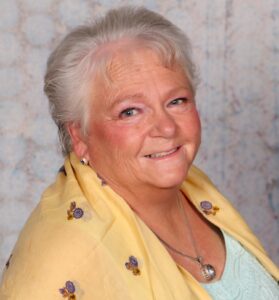 Nancy lives near Balzac, Alberta. She is a member of the Writers Guild of Alberta, The League of Canadian Poets, and the Canadian Authors Association. She has publishing credits in poetry, fiction, and non-fiction with over 20 published novels. Her work has been included in Tamaracks Canadian Poetry for the 21st Century and Vistas of the West Anthology of Poetry. Her poetry is also being included by the University of Holguin Cuba in their Canada Cuba Literary Alliance (CCLA) program.
Buy the book at Amazon.
 Long and Short Reviews welcomes
 Doc has been a member of the Desert Rebels for a long time. He had his own clinic until a sweet, beautiful nurse came on board and ruined everything. Harlow is married and a complication Doc didn’t need. He tried; he really did. But after a while he couldn’t stand working beside a woman he wanted more than he needed air to breathe.
 GIVEAWAY!

 Rachel lives in a small town near Bath, England. She is the author of 29 novels including the Ladies of Carson Street trilogy, the Shop Girl series (Aria Fiction) and several single titles with The Wild Rose Press. She is super excited to be the debut historical fiction author writing for Harpeth Road Press and her first novel with them will be released in Spring 2024.
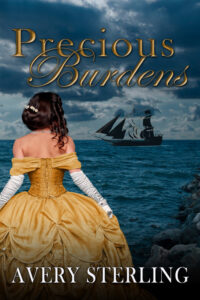 Sarafina di Ramonicci sets sail for America as the promised bride in an arranged political marriage.
 Avery Sterling’s love for the romance genre began in her teen years when she picked up her first novel. She was captivated by the sweeping scale of emotions brought about by the words. The experience catapulted her towards learning the art of wielding a breathtaking adventure, with a love that felt authentic. Wanting to inspire people with her own thoughts and words, she finished her first novel at sixteen. It was a step towards understanding the essence of what she wished to create. Most of her youth was spent traveling, searching out the romance and beauty in her everchanging world. From the waves that crashed against the rocky shores of Downeast, Maine, to the warm breezes of the Caribbean, she discovered that love was universal, apparent in its grandest and simplest of forms. Her goal is to write novels an audience can relate to, one that conveys the truth and nature of love… with all that steamy romance.





 Star Rider on the Razor’s Edge
 Heidi Skarie is the author of the Sci-Fi, Space Opera series The Star Rider Universe. The sixth book in the series, Golden Cord of Light is a new release and the seventh is coming out in 2024. She was inspired to write Star Rider on the Razor’s Edge after having a series of six dreams that was like watching a movie.