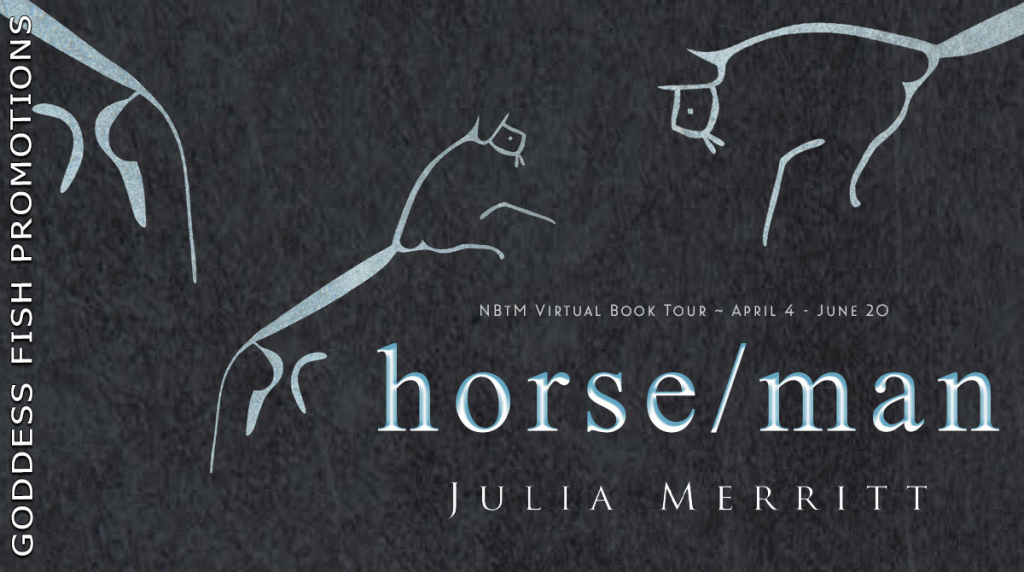
This post is part of a virtual book tour organized by Goddess Fish Promotions. Julia Merritt will be awarding a $15 Amazon/BN GC to a randomly drawn winner via rafflecopter during the tour. Click on the tour banner to see the other stops on the tour.
The hardest part about writing is trusting in yourself. It has taken me a decade to write my first novel, in large part because I didn’t trust myself, and it took most of that decade to find my stride.
When I was a child, I knew I wanted to be a writer. I asked my mum to teach me to read before I went to school, and she did. She read me stories every night, and bought me workbooks so that I could learn my letters and practice how to write. By age 5 I was reading chapter books, and by the time I was in Grade 4, I was writing all kinds of stories. The unused backs of school notebooks and empty binders with lined paper were my prized possessions.
And then, through the smallest of actions, my confidence was washed away. A couple of my stories were read without permission, and I received unsolicited feedback that sounded like negative judgment. An email story-chain writing club was squashed by one of the member’s parents who thought we were being too fantastical. By Grade 9, I had given up writing, and nobody noticed or encouraged me to do otherwise.
High school, university, master’s degree, job. The normal progression of schooling took place, followed by my entrance into the working world and self-sufficiency. Only a year after I had begun to work full-time, the idea for horse/man arrived. It is perhaps fitting that I was sitting in a conference session about self-publishing and printing books at library-owned presses at the time, as self-publishing is the eventual route that I took for this novel.
After the idea, came the halting process of writing. Every few months I would try to write a short scene. Occasionally I would read a history book that added more context and allow the development of a new plot point. Writing was difficult to prioritize amid the process of building the career that was paying the bills. And I was terrified to show the work to anyone, or to ask for help.
From what I can tell, so many creative people have abandoned creativity in favour of stability and safety. We lose confidence in ourselves, and feel stuck and dissatisfied, although we may not be able to articulate why.
But I believe it is true that art does not just “arrive” in the world following a period of consistent inspiration. Mastery requires practice, and practice requires commitment. So get ready. Refuse to schedule commitments on your Saturday. Feed the dogs, use the bathroom, get some water. Open the computer, turn on some music, set the timer for ten minutes. Procrastinate through the first ten minutes, take your five minute break anyway, and set the timer for ten minutes. Write a few sentences. Take a five minute break. Start the ten minutes again. The sentences will start to come easier. Maybe the characters will speak to you and their actions will become clear. And even if they don’t, you are practicing. This builds trust, and confidence. Eventually, the practice becomes easier. You can see where the writing is good. And if the writing needs work, it doesn’t hurt so much, because you can trust that you will show up for it tomorrow.
So trust yourself enough to get started. Keep starting every single day that’s available. When you show up, so does the trust, and so does the story.
What happens when your entire identity revolves around a way of life that is becoming obsolete?
In the 1920s, as Canada progresses through the Industrial Revolution, horses are still the rural engines of survival. As a child Adam lives this reality on his family’s farm in the Ottawa Valley, planning to take over one day and have a family of his own. When his parents die during the Great Depression, nineteen-year-old Adam is disinherited in favour of his brother and is forced to move to the city to find work. Without a formal education his choices are few, yet he finds a place to use his horsemanship skills in the dwindling forces of the Canadian cavalry based near Montreal. There he finds pride in being a mounted soldier, and friendship with his fellow dragoons. But the cavalry units are mechanized by the beginning of World War Two, and when Adam is sent to Europe, he must abandon his equine partners for trucks and tanks. In the catastrophic experience of war, he will lose everything once again.
Broken in body and spirit, he returns to Canada where he must confront the question of survival in a world that doesn’t seem to have a place for an injured soldier. Full of poetic reflections on what it means to work with horses, horse/man is a powerful story about a man searching for dignity and connection in the face of a rapidly shifting world.
Enjoy an Excerpt
“Trot on, Jack! Git up, Pete! Git UP! Good.”
The driver called out orders and sounded gruff, even in praise. The reins slapped the broad chestnut backs lightly, then loosened. It was the end of May, and planting had finished. Today, they were going to town. Freed from their heavy collars and the deep wet soil, the horses danced down the dirt road, shaking their heads as they pushed through the harnesses. Their efforts were rewarded with an easy silence.
Seven-year-old Adam sat in the back of the wagon, his skinny legs anchoring the sacks and baskets his mother had given him for dry goods. He was small for his age but wiry and strong. His face was still childish, heart-shaped and snub-nosed, with sandy brown hair and eyes. His father, Ciaran, was alone on the front seat, driving the horses with his back to Adam. Adam was grateful for the rest.
The horses picked up speed, and Adam bounced from side to side on the planks. The percussion of the horses’ hooves and the squeak of the wagon on its struts was all he could hear. The wind from the wagon’s movement had a chill. He turned his head to face it, letting the tears from his watering eyes stream along his cheeks. He inhaled the sharpness of spring, undercut by the heaviness of soil and vegetation that was not quite yet alive. Travelling along, further details unfurled — the patches of mud in the potholes, the freshly tilled soil in the fields, the shades of green emerging from the ditches and the trees.
About the Author: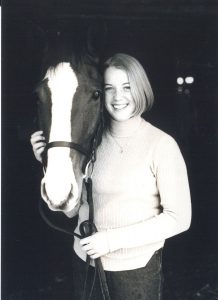 Julia Merritt has been captivated by horses ever since she could see out of the car window. Then she grew up and became a public library CEO and certified animal bodyworker. She lives in Ontario, Canada, with her thoroughbred horses and smooth collie dogs. This is her first novel.
We’re giving away 100 e-copies of horse/man, the new historical fiction novel by Julia Merritt. Don’t miss your chance to win! Click here to enter: Goodreads Giveaway.
Buy the book at Amazon, Amazon CA, Indigo Chapters, Barnes and Noble, Book Depository, or Smashwords.

 Murder at Serengeti Plains is the third mystery novel in the series, featuring amateur sleuths Hazel Davies and Anna Kohl. The earlier novels are Murder at Eagles Nest and Could They Be Twins?
 Originally from Manchester, England, Pat Duggan moved to the U.S. in 1985. After a career in finance, which included running her own book-keeping and tax business, in the Cincinnati area, Pat and her partner retired and moved to Oregon. Years later, they embarked on a five-year journey, traveling across the country in a motorhome.

 Why be a princess when you can rule the shadows?
 Brittany has been a cosmetologist for over a decade, an occupation that continuously explores fresh avenues of creativity and beauty. She is a new mother, learning to balance the reality of what it means to be a mom, wife, stylist, and author. Reading has always been one of her passions and writing an endeavor she refuses to leave behind.
 Erin is a wife and mother who loves spending time with family. She’s an enthusiastic fan of all things sports, experimental baker/chef, and amateur gamer in her free time. Writing has been a passion since her childhood, and while finding peace and quiet in which to write never comes easily, she knows it worth every ounce of chaos when the stories take shape.

 Her mysterious past holds the key to protecting his clan.
 Mimi B. Rose writes fantastic tales filled with steamy enchantment and tender-hearted fulfilment to thrill strong women. As a teen she read V.C. Andews’s Flowers in the Attic and Anne Rice’s The Vampire Lestat and she was hooked on fantasy romance and paranormal romance. Some of her favourite tv shows are Sleepy Hollow, Grimm, and Once–and the reboot of Beauty and the Beast starring Kirstin Kreuk (does anyone remember that series?).

 She’s destined to save the world . . . if she doesn’t destroy it first.
 Talena Winters is addicted to stories, tea, chocolate, yarn, and silver linings. She writes page-turning fiction for teens and adults in multiple genres, coaches other writers, has written several award-winning songs, and designs knitting patterns under her label My Secret Wish. Master of the ironic GIF response. She currently resides on an acreage in the Peace Country of northern Alberta, Canada, with her husband, three surviving boys, two dogs, and an assortment of farm cats. She would love to be a mermaid when she grows up.

 Sometimes you have to face the past to heal old wounds.

 This is a thought-provoking and enlightening exploration of spirituality and perception. The text functions as a guide to self-improvement, with a mixture of autobiographical elements and snippets of universal wisdom. The speaker provides accessible solutions to life’s difficulties, and an outlook of optimism applicable to any circumstance. The illustrations and graphics are thoughtfully chosen, and the interactive textual elements give this work an originality that sets it apart. The speaker’s own experiences and conclusions are at the heart of this fiction, and the first person narrative voice creates a sense of proximity between author and reader. The text describes itself as ‘a journey to the heart’, and this truthful discovery of the self is reflected in the speaker’s revelation of his whole self through the text. The narrative often presents a dichotomy between positive and negative outlooks or voices.

 Complication doesn’t always have to be a bad thing.
 Megan Slayer, aka Wendi Zwaduk, is a multi-published, award-winning author of more than one-hundred short stories and novels. She’s been writing since 2008 and published since 2009. Her stories range from the contemporary and paranormal to LGBTQ and BDSM themes. No matter what the length, her works are always hot, but with a lot of heart. She enjoys giving her characters a second chance at love, no matter what the form. She’s been the runner up in the Kink Category at Love Romances Café as well as nominated at the LRC for best author, best contemporary, best ménage and best anthology. Her books have made it to the bestseller lists on Amazon.com.


 Maggie Armstrong grew up enchanted by her father’s tales of blood feuds and border raids. In fact, she could have easily fallen for the man portrayed in one particular image in his portrait collection. Yet when her father reveals he was himself an infamous Border reiver, she finds it a bit far-fetched—to say the least—especially when he announces his plans to return to his sixteenth century Scottish home with her in tow.