This post is part of a virtual book tour organized by Goddess Fish Promotions. Bill Mesce, Jr. will be awarding a $25 Amazon or Barnes and Noble GC to a randomly drawn winner via rafflecopter during the tour. Click on the tour banner to see the other stops on the tour.
A number of elements came together to make Median Gray happen, but the basic foundation came from my own experiences as a twenty-something suburban Jersey kid working in New York City for the first time in an era when the city was more than a little crazy, quite a bit scary, and for all that, exciting…but maybe exciting like a walk through a spookhouse is exciting.
I started working in New York in 1980 and the city had yet to begin its turnaround. This was still the New York I remembered from movies like Midnight Cowboy, The Taking of Pelham 123, The French Connection. In my early years in the city, the 42nd Street and Times Square area seemed like the porn capital of the world. There’s an incident in Median Gray involving a cab on fire in Times Square that’s exactly as how I saw it. In fact, many of the incidents that don’t involve the main plot I took from things I or friends of mine witnessed.
In that period, I was hit by a taxi, saw a series of manhole covers a block from where I worked explode because of a gas leak, caught someone in the act of trying to pick my pocket, missed a bank robbery on the same block as the Empire State Building by ten minutes or so… The list goes on, but it gives you some idea of what the city was like back then.
When I first started dabbling with the novel in the late 1980s, it was sort of a response to what I was seeing. Over the years as I worked through rewrites, it became something else; kind of a nostalgia piece, a way of capturing and reliving those head-spinningly bizarre days. It’s a cliché to say this, but I wanted that New York to be an active character in the story, not just background.
I’ve always been a fan of police stories: dramas, procedurals, mysteries, the whole gamut. Maybe that’s why I’ve also been long fascinated by the police and police work, particularly on the mindset and the psychological wear and tear of being a cop. I’ve read a lot of books about being a cop, I’ve known – and even been related to – a number of police officers. I wanted to try to get that worldview right, even though this is a much more dynamic story than most real-life cops ever experience.
In doing that, I also wanted to puncture that myth of the rogue cop, the Dirty Harry-like rule breaker who cuts through the b.s. to take down bad guys everybody knows are bad guys but who manage to hide behind legal technicalities. That always grated on me a bit as it occurred to me: what if Dirty Harry or the Lethal Weapon cops or any of the popular mavericks weren’t the dead shots they’re always portrayed to be (most cops are not exceptional marksman; Chicago cop Dennis Farina, who went from being a consultant on crime movies like Thief to acting in movies and on TV used to joke he was such a bad shot his colleagues called him “The Great Wounder”). Pop culture maverick cops are unerring in their suspicions, and never miss their targets when they pull the trigger; there’s never any collateral damage to innocent bystanders.
In a busy metropolitan area like New York, well, to be blunt, it just ain’t gonna happen that way, and I wanted to capture just how dangerously messy that kind of citizen wish fulfillment could be.
The last major component was, believe it or not, the 1970s sitcom Barney Miller which was set in a fictional lower Manhattan police precinct. I had remembered a trivia question back during those days that there had been a survey of police officers about which cop show then on TV they felt most accurately reflected the day-to-day sense of what it was like to be a police officer. Their Number One choice was Barney Miller (picked over, if I remember correctly, Police Story and either Baretta or Kojak). Miller, officers felt, captured the camaraderie, the humor (sometimes dark), and the craziness that was routine. That cued me to what the tone of the novel needed to be.
I’ve never written a book that was sparked by one thing. Usually, elements percolate in my head, collide, and when they adhere to each other, at a certain point there’s a conceptual critical mass and then it’s time to sit at the keyboard. That’s what happened with Median Gray.
New York City, Summer 1963
Rookie beat cop Jack Meara is bleeding out on the dirty floor of a tenement hallway – next to the body of another cop. The eyes of the shooter burned into his memory. Meara watches and waits to see the shooter brought to justice, but, instead, “Tony Boy” Maiella climbs up the Mob ranks, slipping off indictments as easily as his designer overcoat. But on the eve of his retirement, Meara decides on one last kamikaze-like try to even the scales of justice.
New York City, 1983
Rookie detective Ronnie Valerio finds himself unknowingly pulled into the wake of Meara’s quest. A go-go palace bartender is being stalked, a body turns up in a neighborhood dumpster, machine guns blaze in the night, a New York bookie turns up dead in the Jersey Pinelands and the only thing they all have in common is, in one way or another, they all tie back to Jack Meara.
How far does a cop go to even a score? How far does a brother cop go to shield him? Is justice worth any price when the line between right and wrong blurs?
Enjoy an Excerpt
He hears a shout upstairs, something panicky about cops out front, feet stumbling down the stairs. He gets up, turns as a figure hurtles around the second-floor landing and down the upper stairs of the first flight. He barely gets his gun up, hasn’t even said anything when they collide, entangle, and there’s one, brief, brilliant second of mental clarity – when he’s swamped by just what an unbelievably fucking bad idea it was to come down that hall – and then that clarity collapses into panic as he and the figure grapple and try to untangle themselves, and then he feels himself losing his balance, falling backward, he reaches a foot back but there’s nothing there and now he’s on his back, his breath punched out of him as he skids down the stairs to the hallway floor.
He’s still got his pistol in his hand but he’s dazed, he can’t get enough breath to move, and he looks up, sees the guy he just wrangled with standing on the landing over McInerney, silhouetted against the soot-streaked window, sees the guy’s right arm coming up and he knows what that means, he fucking knows, and he feels everything from the pit of his stomach down to his groin turn to cold mush, he’s trying to draw in some air, enough to get his own piece up –
There’s a flash. Quick, bright, like lightning. In that flash, dark eyes look down on him, cold fucking hard eyes.
And with the flash…
There’s a POP – a small noise, like a single clap of hands, but in the confines of the hall it sets his ears ringing…
About the Author: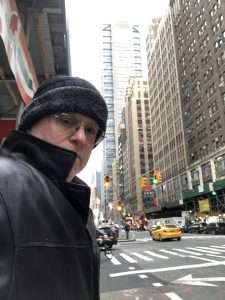 Bill Mesce, Jr. Is an award-winning author and playwright as well as a screenwriter. He is an adjunct instructor at several colleges in his native New Jersey.
The book is on sale for only $0.99 at Amazon.


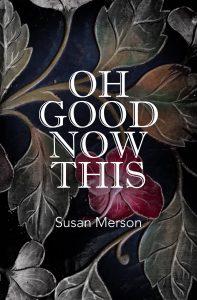 Starting over is hard enough but when ghosts decide to hitch a ride into the future—things can get complicated.
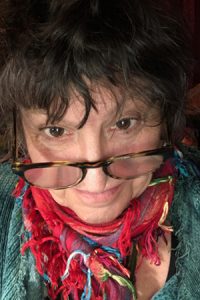 Susan Merson began her career as an actress on and off Broadway, in television and film. Co-founding the LA Writers Bloc in 1985 with award winning writer Jane Anderson, she has mentored writers through the Bloc and through her private and university classes in Playwriting, Life Stories, Writing as a Spiritual Practice, Tarot for Writers and the popular VOICING Series. Her short fiction has been featured in The Jew in America, Nice Jewish Girls (Penguin), The Worcester Review, the Chicken Soup series and several other online platforms. As a playwright, her award-winning plays have been performed internationally, including her 8 solo plays featured and used as example in YOUT NAME HERE: An Actor Writers Guide to Solo Performance. (Amazon). Long form fiction available on Amazon is her award-winning blog, WHEN THEY GO AND YOU DO NOT and her first novel DREAMING IN DAYLIGHT. OH GOOD NOW THIS, her newest novel launches 12/1/21. She is a tarot reader and counselor, a maker of quilts, clothing and whimsy. Susan is a humble mother and a proud resident of New York City.


 Sometimes first impressions are far from the truth…
 Growing up, Zoe Allison loved stories about falling in love. But rather than being rescued by a knight in shining armour, she imagined herself fighting dragons alongside him, battling supervillains as heroic allies, or teaming up to dive into perilous waters in order to save a loved one from drowning. Once Zoe did grow up, she became a doctor. But as time went on, she craved a creative outlet to counter the soul sapping burnout that her career inflicted upon her, and also to achieve those happy endings that were so often lacking in the real world. She wanted heroes who truly love and value women, who find their true love inspiring, are fascinated by her, want to connect with her as a soulmate and fully open themselves to her on an emotional level. And so, Zoe began to write her romances.

 Her three sexy houseguests are forbidden fruit, and she really wants a taste…


 What you can’t see could kill you.
 Eleanor Harkstead likes to dash about in nineteenth-century costume, in bonnet or cravat as the mood takes her. She can occasionally be found wandering old graveyards. Eleanor is very fond of chocolate, wine, tweed waistcoats and nice pens. Her large collection of vintage hats would rival Hedda Hopper’s.
 Catherine Curzon is a royal historian who writes on all matters of 18th century. Her work has been featured on many platforms and Catherine has also spoken at various venues including the Royal Pavilion, Brighton, and Dr Johnson’s House.

 Hostages of fate…rescued by love.

 Constellations follows Tess Lee and Jack Miller after three years of marriage as they navigate the meaning of love and family over a series of holidays. Tess is a wildly successful and world-famous novelist. Her inspirational books explore our innermost struggles and the human need to believe that there is light at the end of the tunnel. Jack is a former federal agent. After spending decades immersed in a violent world, a residue remains. Both healing from past trauma, together they have finally built the life they wish to live. What will happen to their blissful union when Jack’s childhood family resurfaces? When Tess and Jack visit the Millers for Christmas, how will insecurity, a sense of missed opportunities, and the need for redemption test their relationship? When a terrible accident threatens everything in an instant, will they learn the true meaning of unconditional love? Their loved ones are along for the ride: Omar, Tess’s sarcastic best friend who calls her Butterfly; the female president of the United States, with whom Tess talks politics and bakes cookies; Joe, Jack’s friend from the Bureau who understands the sacrifices he’s made; Bobby and Gina, their younger friends who never fail to lighten the mood; and the Miller family. Constellations is a novel about family – those into which we’re born and those we create – the human desire to belong and feel connected, the true nature of intimacy, and the power of love to heal and redeem. Written as unfolding action, Constellations is a poignant novel that moves fluidly between melancholy, humor, and joy.
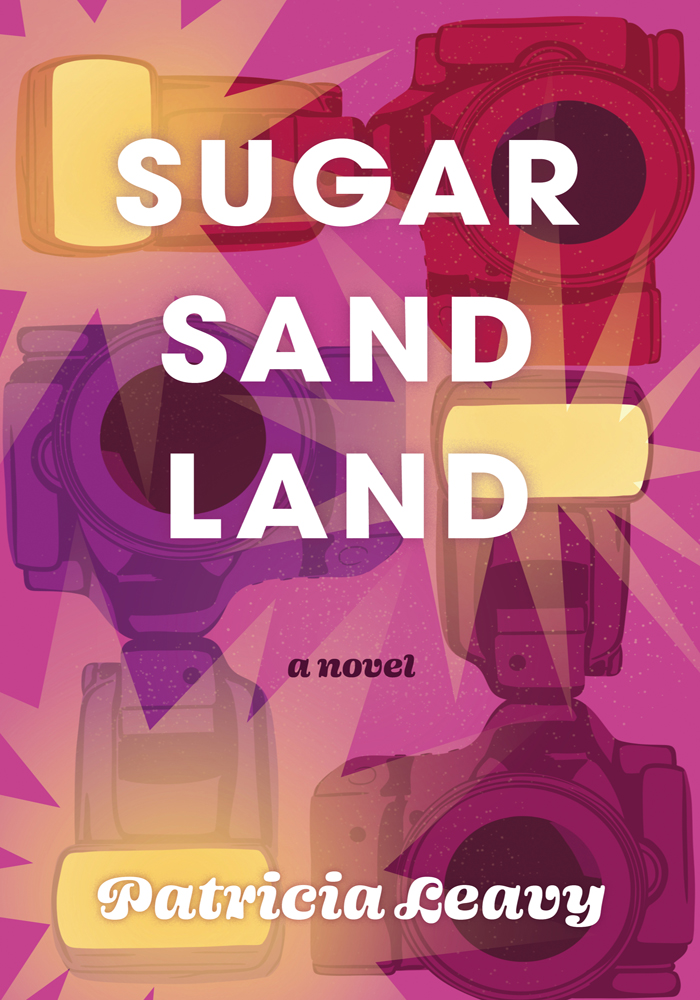
 Patricia Leavy, Ph.D., is a bestselling author. She was formerly Associate Professor of Sociology, Chair of Sociology and Criminology, and Founding Director of Gender Studies at Stonehill College in Massachusetts. She has published over thirty books, earning commercial and critical success in both fiction and nonfiction, and her work has been translated into many languages. She is also series creator and editor for ten book series with Oxford University Press, Guilford Press, and Brill/Sense, including the ground-breaking Social Fictions series. Patricia has received dozens of accolades for her books. Recently, her novel Film won the 2020 American Fiction Award for Inspirational Fiction, her 3-novel set Candy Floss Collection won the 2020 American Fiction Award for Anthologies, and her novel Spark won the 2019 American Fiction Award for Inspirational Fiction and the 2019 Living Now Book Award for Adventure Fiction. She has also received career awards from the New England Sociological Association, the American Creativity Association, the American Educational Research Association, the International Congress of Qualitative Inquiry, and the National Art Education Association. In 2016 Mogul, a global women’s empowerment network, named her an “Influencer.” In 2018, she was honored by the National Women’s Hall of Fame and SUNY-New Paltz established the “Patricia Leavy Award for Art and Social Justice.” She has residences in Maine and Massachusetts where she lives with her husband, daughter (when she’s not away at college), and her dog. Patricia loves writing, reading, watching films, and traveling.