The Artificial Elephant by Eric J. Hull


The Artificial Elephant – stories of loss, magic, and hope by Eric J. Hull
Publisher: Self-Published
Genre: Sci-Fi/Fantasy, LGBTQ, Horror, Paranormal, Romance, Holiday, Contemporary, Historical
Rating: 5 Stars
Reviewed by Astilbe

Character-driven literary speculative fiction for readers who crave haunting emotional payoffs.

A boy grieves the impossible beast that healed him. A house searching for its lost family. A vampire steals back her lovers’ tears. A scavenger hunt gone hilariously awry. Two lovers dancing at the end of the world.

Ghosts. Love. Winter. Hope. These 22 stories of fantasy, science fiction, and horror cast flickering light against the crowding darkness. They embrace the transformations between grief and love, kindness and bitter fate.

Sometimes the line between facts and feelings is paper thin.

In “Christmas Lights,” a smart house searched for its missing family for many years. I loved the fact that this was written from the perspective of a building instead of a human one. It was a unique way to frame the storyline and made me wonder if the house would ever find out what happened to the parents and two children who had once lived there. The twist ending was as poignant as it was logical for this universe as well.

Katie was a three-year-old girl whose body grew so impossibly cold she couldn’t eat anymore in “Katie Dreams” because any food or liquid she tried to consume froze solid when it was moved too close to her. I was nearly as fascinated by the scientific attempts to understand and reverse her condition as I was by her mother’s response. The strong emotional bond between them made this something I couldn’t possibly stop reading until I knew how it ended. In my opinion, memorable science fiction begins with the relationships characters have with each other before anything unusual occurs, and I would have happily read a full-length novel about Katie’s family and how they coped.

A teenager’s grief for his dead sister took on a new form in “Charcoal.” As he recalled a few of their shared childhood memories during his last few days at home, strange things began happening that were as bittersweet as they were inexplicable. This was a beautiful metaphor for how gut-wrenching it is to say goodbye to someone who died far too young in life, and the plot worked just as well on that level as it did when read from a paranormal perspective.

What ultimately convinced me to give this collection a five-star rating was the breadth of characters and experiences that were included here. I wish I had the space to mention all of them in my review as there were so many other gems to discover that included genres ranging from romance to horror. It takes talent to imagine such a wide variety of characters, all of whom remained distinct in my mind.

The Artificial Elephant – stories of loss, magic, and hope was exactly the sort of diverse speculative fiction I enjoy reading, and I can’t wait to see what Mr. Hull comes up with next.

Movie Review: Lead Children


Lead Children
Writers: Michal Jedryka and Jakub Korolczuk
Director: Maciej Pieprzyca
Starring: Joanna Kulig, Agata Kulesza, Kinga Preis, and Michal Zurawski
Publisher: Netflix
Genre: Non-Fiction, Historical
Rating: 4 Stars (8 Stars on IMDB)
Reviewed by Astilbe

A young doctor uncovers lead poisoning in children near a steelworks. Despite state opposition, she strives to treat the sick kids.

Success is never guaranteed.

I appreciated how much time was spent exploring the effects of lead poisoning and why so many people in the 1970s were unaware of how it can disable and even kill children. This wasn’t something I knew much about before watching this series, but knowing the stakes the inhabitants of Silesia were facing was critical in order to understand why Dr. Wadowska-Król’s campaign was of utmost importance. Some of the best scenes in my opinion were the ones showing children playing in the dirt, going swimming, eating vegetables from their mother’s gardens, or doing other innocent things that took on a much darker meaning once the audience understood how polluted this community was and the many ways lead can enter the human body.

There were times when I found this mini-series to be a little uneven in its pacing and repetitive, especially when it came to Dr. Wadowska-Król’s conflicts with various Communist party members about how much information the general public should have about how lead poisoning was affecting the children of Silesia. These scenes were powerful the first few times but began to lose their effectiveness a little for this viewer by the time I reached the last two episodes and had seen them play out multiple times.

Understanding the culture of this time and place was necessary in order for the later episodes to make the most sense. Silesia was a complex town that relied on everyone following orders and not asking questions about what they were instructed to do. Normally, of course, this can be a good thing, but there are cases when obedience can have tragic unintended consequences when those in power may not have the best interests of the common person at heart. The scenes that dug into the discrepancies between what the leaders said and what they actually did behind closed doors were among the most powerful ones for me, and they were a big part of what kept me going despite my gentle critique of certain scenes.

Lead Children was an illuminating look at a chapter of history I’d never heard of before.

The Demon’s Delight by L. Alexander


The Demon’s Delight by L. Alexander
Publisher: Self-Published
Genre: Action/Adventure, Historical, Paranormal, Romance
Rating: 4 stars
Reviewed by Fern

Summoning a demon may be my only option for survival.

Captured.
Exploited.
Bonded to a Demon Prince.

After being taken from the forest near my home, I’m tormented in the name of research, and forced to use my healing gift for my captor’s profit.

Desperate to escape, I risk it all. I steal a spell book, and summon a demon for aid.

I’m prepared to beg a creature that’s vicious and cruel for help, but a Prince of Hell arrives instead. One that’s devastatingly charming. Kind. It’s easy to forget he’s a demon at all.

Though the contract demands he travel with me on my journey back home, I start to wonder if our bond is more than just obligation. I can’t resist his charm or his thoughtfulness, and his protective flirting seems genuine.

What awaits me back home will test not only our connection, but everything I know about myself and my magic.

Have the fates forsaken me altogether, or have they given me the greatest gifts of all?

Hailon is a healer, but having been captured and sold, trafficked and experimented on these last few months for her powers and gift, she’s on the edge, utterly desperate. When she manages to steal a small notebook she discovers in it enough knowledge to piece together how to summon a demon. Seir is the demon prince from Hell who answers her call. Both of them embark on an adventure, one that neither of them had ever expected.

After picking this up on a whim I discovered it’s the third in the series – but having never read anything previously by this author I found this book stood very well on it’s own. I found Seir to be an enjoyable and amusing main lead character – totally different to the “demon prince” I was half expecting – and I thoroughly enjoyed how he simply relished experiencing everything on Earth. Hailon was in many ways a far more normal and relatable character to me and one I could empathise with for much of the story.

Readers should be aware that while this book does have romance and “fated mates” and a bit of spice – for much of the first ha;f of the full length novel it’s primarily Seir and Hailon getting to know each other and travelling. Readers looking for a “dark romance” novel or something heavily erotic might not enjoy the pace of this story. I greatly enjoyed the almost epic traveler/fantasy sort of style and thought it was quite well written. The fact Seir and Hailon were interesting characters and learned to trust each other was well worth the time and read to my mind.

Once the action kicked off I felt the pace of the book really did speed up a bit. Admittedly a number of secondary characters also appeared (like Seir’s brothers and their wives, whom I presume are from previous books). There is some spicy romance scenes in this but I strongly feel the book is predominantly a paranormal/adventure style of book. While the romance is present it felt very much “in addition to” the plot and actual progress of the book – not front and center or taking up an enormous portion of the storyline.

An interesting blend of paranormal, alternate reality and romance, this was a fun and enjoyable full length novel and a book I really enjoyed. There appears to be two connected series with this book and I’ll be looking into both of them. Recommended.

The Hematophages – Splatterings by Stephen Kozeniewski


The Hematophages – Splatterings by Stephen Kozeniewski
Publisher: French Press Publishing
Genre: Sci-Fi/Fantasy, Paranormal, Mystery/Suspense/Thriller, Historical, LGBTQ
Rating: 4 Stars
Reviewed by Astilbe

In a galaxy riven by paranoid greed, profane forces marshal to consume humanity…

– On an abandoned ice moon, broadcasts from a long-dead civilization warp both body and soul.

– On a bizarre medical asteroid, a deranged physician discovers a gruesome “cure” for parasitic infection.

– On a deep space derelict, time becomes utterly meaningless and suffering transcends infinity.

– And on Earth itself, a lake transforms into pure blood and becomes infested with the hate-filled, eel-like aberrations known as…

The Hematophages.

With this quartet of short stories, Splatterpunk Award winner Stephen Kozeniewski is delighted to welcome newcomers to the brutal universe Sci-Fi and Fantasy Reviewer calls “the gold standard for the Space Horror subgenre.”

Meanwhile, veteran ink surfers will find a treasure trove of new material to broaden their event horizons, including extensive background information from the author and a never-before-published tale of alien terror.

So, strap on your boom suit, ready your eye spoon, and try to prepare yourself for…

Splatterings.

They’re the same universes but with bigger problems this time.

The protagonist in “The Blood-Red Lake” was awoken from a nap by his daughter, Marina, after she noticed the lake near their home had changed in some alarming ways. I liked the nightmare-like qualities of this short story and thought it was spooky, but I also found myself wishing that there had been a stronger explanation for the strange things that were happening in and near the water.

“Derelictus” showed what happened in the distant future when some scavengers found an ancient spacecraft that was launched by the country formerly known as the United States but that didn’t appear in any of the formal records of previous space missions. The mystery elements of the plot were well done, and I would have happily dove even more deeply into them. I also liked the main character’s stubborn streak and how it influenced his decision to explore this vessel and report back on what he found there.

Anneka was desperate to get out of quarantine to see her wife and newborn twins in “Blackfish.” The reason why she was stuck in quarantine is best left for other readers to discover for themselves due to how important it was to the storyline later on, but as I slowly pieced together the clues I was intrigued by how my opinions of all of the characters had shifted. There is definitely something to be said for playing around with the reader’s expectations only to trust us to land on the best answer in the end. I would have happily read a full-length novel about Anneka if one were written.

Imagine building an old-fashioned castle in outer space. “Gerstein” explored a partially-completed version of this blueprint long after the original investors had run into problems. This was the goriest story in this collection, and I thought each plot twist that revealed another layer of horror only made the entire thing more frightening. Just like in “Blood-Red Lake,” I once again found myself wishing for a deeper explanation of what the antagonists were hoping to accomplish, although there was enough here for me to make some pretty educated guesses about their motives. These are minor criticisms of a collection I thought was otherwise well done and memorable, and I look forward to hopefully reading more of Mr. Kozeniewski’s work in the future.

The Hematophages – Splatterings was deliciously scary.

Ali Baba and the Forty Thieves by Author: Anonymous and Albert Seligman (Editor)


Ali Baba and the Forty Thieves by Author: Anonymous and Albert Seligman (Editor)
Publisher: Dulacebooks
Genre: Sci-Fi/Fantasy, Historical
Rating: 5 Stars
Reviewed by Astilbe

The story is about two brothers whose father died and left them little. Ali Baba married a poor woman and lived frugally, but Cassim married a woman who soon inherited a fortune and lived in luxury. One day while Ali Baba was in the forest cutting wood to sell he saw a great cloud of dust approaching and the sound of many riders. He feared for his life, so he hid his three donkeys and hid himself in a tree. The band of forty riders and their leader stopped in front of a cave. When the leader said “ Open Sesame” the door of the cave magically opened. The whole troop went inside while Ali Baba stayed hidden. When he was sure they had gone, he approached the cave door and said “ Open Sesame” himself as the cave door magically opened to his command. Inside the cave he saw vast riches and golden coins, which he liberally took for himself and returned home with his donkeys, remembering to properly close the cave door with the “Shut Sesame “ command.

His wife was astonished at all the gold coins he brought home and wanted to count them before Ali buried them in his yard. As there were too many to count, she borrowed a measuring cup from her sister-in-law. She was curious as to what they might have to measure something, so she cleverly put some suet on the bottom to see what would stick. After the cup was returned with a gold coin stuck to the bottom, she called her husband Cassim to tell him what happened.

Cassim went to Ali’s house and demanded to know how he got a gold coin, and Ali told him everything, including the magic password. Cassim was very greedy, so the next day he set out with many donkeys to find the cave and removed as much treasure for himself as possible. In his haste, he forgot the magic words to open the cave and was trapped inside when the robbers returned. They killed him and cut his body in pieces.

When Cassim didn’t return, Ali feared the worst and returned to the cave to find him. He found his brother’s body and returned to town. He knew the robbers would find out if anyone had been murdered in such a fashion, so they sewed Cassim’s body back together and pretended he died a natural death.

The robbers sent scouts to town to determine if anyone had died and discovered Ali Baba’s house. The captain of the robbers disguised himself as an oil merchant and hid his band in leather jars planning to murder all the household. When Morgiana, Ali Baba’s clever slave girl discovers the ruse, she murders all the robbers. The captain flees, but soon returns in another disguise to take his revenge. Again she discovers him, plunges a dagger into his heart and saves her master.

Moderation is the key to survival.

I once again loved the way this tale transported me to a time and place in the past that I would otherwise know very little about. This is part of the reason why I continue to give new instalments in this series such high ratings. It’s not always easy to make a reader feel immersed in what they’re reading, much less give them a taste of what life was like for some people in the far east over eleven hundred years ago, but Mr. Seligman had all sorts of intriguing ways to close that gap for his modern audience that new fans should discover for themselves.

Many old legends are sanitized for modern audiences, so I appreciated the fact that not every character remained safe from harm and that there were choices made here that are less common in modern adaptations. That is to say, this is something I’d particularly recommend to readers who enjoyed the older versions of fairy tales before The Brothers Grimm began collecting and softening up their sharp edges for younger audiences.

It’s not necessary to know anything about the plot in advance, but readers who do might notice some interesting twists that often seem to be left out of more recent translations of Ali Baba’s life. I thought I knew exactly what to expect going in, but I was still pleasantly surprised by a few things I didn’t realize were part of this universe in at least some retellings. The editor excels at this sort of thing which is yet another reason why I try to read as much of his work as I possibly can. There’s nothing like learning new facets of old favorites thanks to fairly recently uncovered versions of them.

This is part of a series that does not have to be read in any particular order.

Ali Baba and the Forty Thieves was a fantastic and beautifully illustrated adventure.

Ghost Town by Dr. James R. Gregory


Ghost Town by Dr. James R. Gregory
Publisher: Morgan James Fiction
Genre: Mystery/Suspense/Thriller, Romance, Historical
Rating: 5 Stars
Reviewed by Astilbe

In the isolated coal mining town of Sulphur Creek in the late 1800s, young Sammy Murphy’s world is a blend of shadowy tunnels and unspoken secrets. Born into solitude and pushed into reclusion, Sammy’s quiet life starkly contrasts with the booming industry that surrounds him. But as he searches for connection in an era of ruthless expansion, he finds himself at odds with forces far greater than he imagined.

Enter Barry Bacon, an ambitious industrialist who fancies himself a peer to magnates like Andrew Carnegie. Driven by unbridled ambition, Bacon’s dreams stretch far beyond the soot-covered rooftops of Sulphur Creek. But as the weight of his empire bears down, his unchecked arrogance threatens to unravel everything he’s built.

As Sammy faces an unexpected awakening brought forth by a fleeting love, and Bacon’s empire teeters on the brink of collapse, both men must face truths that transcend time—true love extends beyond mere attraction and real power is more than forceful arrogance.

A little intrigue goes a long way.

The strong, steady pacing kept my interest levels high from beginning to end, and this was accomplished while including characters who tended to have quiet, reflective personalities and a preference for avoiding conflict when possible. These are the sorts of folks I love to read about and don’t get to meet in fiction nearly as often as I’d prefer to. I appreciated the fact that the plot, while sometimes rightfully given precedence over character development in the most dramatic moments, never overshadowed the gentle souls who inhabited this world. Having such a natural ebb and flow to what or who was being described worked alongside the pacing even if some scenes did temporarily veer a little further into one direction or the other. As someone who has been writing book reviews for many years, this doesn’t happen as often as I’d like to see, and it’s made me incredibly curious to see what the author writes next.

There were a few memorable plot twists that kept me wondering what might happen next. I especially appreciated the fact that not every aspect of the storyline was tied up neatly by the final scene. There was enough of a resolution to make me feel comfortable saying goodbye to these characters while still having a few things left to mull over that could make for a reasonable starting point for a sequel if the author ever chooses to write one. I have no way of knowing if that will occur, of course, but I enjoy having that possibility, however faint, dangled in front of me all the same.

Dr. Gregory did an excellent job of balancing the thriller, romance, and historical fiction themes here. It isn’t necessarily easy to write something that includes multiple genres, especially with a plot that already filled with so many different types of conflict, from quiet internal struggles for some characters to life-threatening events such as natural disasters in other scenes. They were all blended together so seamlessly that I’d need to pause for a moment before deciding which genre to mention first while describing this tale to someone else. It truly was a little of everything in the best sense of that term.

Ghost Town made me feel as if I’d stepped into a time machine to visit the past. What a ride!

Charlie-Man by Thomas Cullen


Charlie-Man by Thomas Cullen
Publisher: Brandylane Publishing
Genre: Young Adult (14 – 18 y.o.), Historical
Rating: 5 Stars
Reviewed by Astilbe

It’s August 1994, and Charlie Stewart begins his final year at St. Mark’s Episcopal School, a prestigious all-boys school in Richmond, Virginia. Charlie, an undistinguished student by St. Mark’s standards, faces tough odds as he seeks to rekindle his relationship with Katy Hendricks, a beautiful tennis star, and gain admission to a highly selective state university.

Through it all, Charlie relies on Beau Miller, his best friend and the top student athlete in their class. Despite Beau’s movie-star looks and infectious charm, he has a darker side, which becomes more apparent as the year progresses.

Charlie endures his trials with wry determination and ultimately emerges with a renewed sense of purpose. This is a heartrending but hopeful story of one boy’s journey toward manhood in the American South.

Innocence never lasts forever.

Mr. Cullen had a smooth writing style that I deeply enjoyed reading. He seemed to intuitively know precisely how many details to share about a scene to make it come alive in my imagination without ever slowing down the pacing of the plot in the process. I especially enjoyed his descriptions of the various locations in Richmond, Virginia where Charlie and his friends experienced their final year of high school. They were as vivid as they were achingly honest.

One of the things that puzzled me about Charlie for the first half or so of this novel involved his muted reactions to things like his father’s death or his traumatic experiences at summer camp that I would have expected him to have much strong feelings about. Figuring out why these scenes were written this was what propelled this to a five-star read for me. The author knew exactly what he was doing here, and a few twists later on in the storyline not only explained why Charlie behaved the way he did but gave me an opportunity to get to know this character on a much deeper level than I previously had.

I also loved the complex friendship between Charlie and Beau, especially as it related to Beau’s character flaws impacted both of these teenagers. One of the most challenging parts of growing up can be seeing how childhood friendships permanently change as everyone involved in them transitions into adulthood and begins making choices that cannot always be undone. These were the moments that made me wonder if this was a memoir in disguise due to how skillfully Charlie’s mixed emotions about his oldest and closest friend were woven into the storyline. They genuinely felt real to me.

Charlie-Man made me yearn for more.

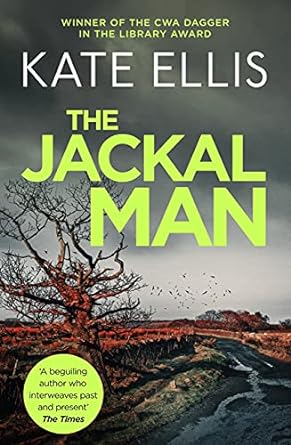
The Killing Place by Kate Ellis


The Killing Place by Kate Ellis
Publisher: Piatkus
Genre: Contemporary, Historical, Mystery/Suspense/Thriller
Rating: 3 stars
Reviewed by Fern

November. With the tourist season over in South Devon, Detective Inspector Wesley Peterson is looking forward to a quieter month in the CID. But when a man is shot dead on Bonfire Night, he finds he has a complex murder case on his hands.

The body of Patrick North was found in woodland connected to Nesbaraton Hall, a grand estate dating back to the eighteenth century. The Smithson family, who own the estate, are away on holiday. However, when an anonymous letter threatening to abduct the Smithson son is uncovered, Wesley fears North’s death might have been collateral damage in a sinister kidnap plot.

Meanwhile, archaeologist Dr Neil Watson discovers a hidden grotto in a developer’s field – land that was once part of the Nesbaraton estate. Evidence of past rituals and the discovery of a skeleton buried next to the grotto raise questions about strange occurrences, past and present, on the estate.

Then, just when Wesley’s team seem to be making progress in their investigation, a resident of the nearby village is killed in a near identical shooting. A race is on to find a ruthless killer, before they strike again . . .

DI Wesley Peterson and his team are called in to investigate when the body of a local boy’s tutor is found in woodland connected to the estate he was living at. With conflicting tales from the locals and the family away and incommunicado on a holiday it takes Wesley some time to begin to piece everything together. But when another body is found soon afterwards it quickly becomes apparent that there’s a lot more to this than they first suspected.

I have enjoyed this series and in particular the way in which so often the past is merged into the present-day murder mystery. With Wesley and his old college friend both interested in Archaeology the old and new is often sewn together. I found this story was a little lighter with the past and with more sub-plots related to the present day, yet I really didn’t feel the story lacked too much for this. Neil was still present – albeit far more in the background than usual – and with a small grotto playing a fairly pivotal role I personally wasn’t upset by the heavier hand this book gives the present day.

I thought the author did a good job keeping a few different plot threads ticking along nicely – and I was even surprised by a few of the twists towards the end. While I do think readers might find that some of the storyline is a little easy to guess, there were definitely a few aspects that slipped my notice, so I enjoyed the fact there were still some surprises for me.

This is a solidly written British police procedural style of mystery, and a series as a whole I have really enjoyed from the beginning. While much of the secondary cast – the police team and Wesley’s family in particular – might resonate stronger with readers who have enjoyed at least some of the previous books in this series, I absolutely feel the mystery is very well encapsulated in this story and can easily be read just by picking this book up alone. Readers shouldn’t be shy about picking this up and if you do enjoy the prose and style then there’s a huge backlog that you can read and enjoy as well.

A Symbol of Time by John Westley Turnbull


A Symbol of Time by John Westley Turnbull
Publisher: Self Published
Genre: Sci-Fi/Fantasy, Historical
Rating: 3 Stars
Reviewed by Astilbe

Survival requires sacrifice. But what if the price is an entire world?

Their home is cold and dying, choked by the toxins of their own progress. Now, an advanced alien species looks toward the Third Planet—Earth—with hope and fear. They see a fertile paradise, but one that is hostile, hot, and dominated by massive, predatory reptiles.

The choice is stark: die in the heat, or remake this new world in their own image.

As they descend to alter the climate and purge the planet of its prehistoric masters, they set in motion a chain of events that will echo through geological time. A Symbol of Time weaves palaeontology and astronomy into a chilling tale of survival. As the new masters of Earth terraform the planet, the question remains: does high intelligence inevitably carry the seeds of its own destruction?

Nothing is more important than survival.

The world building was thorough and kept my interest levels high. I especially enjoyed gradually discovering the many physiological and psychological differences between this species and our own. Their expectations about everything from relationships to how to organize a society created challenges for them on the Third Planet that were as unique as they were critical to understanding later plot twists. Exploring a familiar subject through the perspective of a species so unlike my own is one of the reasons why I love science fiction so much, and there were certainly many opportunities to do so here.

It would have been helpful to have stronger character development, especially for Elthyris and the other protagonists. Sometimes I struggled to keep track of all of the secondary characters due to how many of them were introduced and how little I knew about them as individuals. Had this not happened, I would have happily chosen a much higher rating as there were so many other things I loved about this book.

There were multiple times when plot twists caught me by surprise. It was a great deal of fun to be surprised so often, especially given how many different types of twists and turns were shared with the audience. Various types of threats were included, none of which I can go into detail about here other than to say that they ranged from interpersonal conflicts to accidents to environmental issues that these characters couldn’t have predicted would happen in advance.

A Symbol of Time was an adventurous and imaginative read that made me want to hear more from Mr. Westley Turnbull.

The Stars Must Wait by Carmelo Rafalà


The Stars Must Wait by Carmelo Rafalà
Publisher: Guardbridge Books, Scotland
Genre: Sci-Fi/Fantasy, Historical, Contemporary
Rating: 3 Stars
Reviewed by Astilbe

Carmelo Rafalà writes stories that are profound, surprising, and beautifully realised. He imagines fantastic worlds and protagonists of immense complexity, subtlety and depth. His stories do not give easy answers, but stimulate and absorb the reader.
In this collection of science fiction and fantasy stories you will find:

A zealous convert, a woman of rumour and myth, and a dangerous pilgrimage across pirate filled seas.
A warrior travels to a far land to mourn and put his violent past behind him, but strange gods of an even stranger people intrude.
Abandoned in the Ozarks, sisters face a malevolent presence reaching out from the darkness.
Two friends struggle with their strained relationship, but reconciliation may literally require other realities. These are stories of identity and belonging, and our deep-seated desire to control our own narratives.

Everyone deserves to tell their own tales.

Lord Banning had spent nearly his entire adulthood in battle, and now that he was growing older it was time for him to reflect on his choices in “Heart of the City, Heart of the Sea.” The character development in this piece was what drew me so deeply into it. Some of Lord Banning’s decisions were difficult to understand until I got to know him better and discovered a few of the secrets surrounding his life. I only wish I could know what happened to him next.

I did struggle to connect to with some of the short stories in this collection due to some confusion I had about their world and character building. “The Clarity of Ice” was one such example of this. Performing what were essentially farming and terraforming duties while in outer space was a unique way to introduce Karlyn to the audience, but I struggled to understand what motivated her to choose this career and what she hoped to gain from it. I also had some trouble understanding the project she was working on, especially when she made references to possibly bio-engineering humans to better suit certain environments. Had this scene and similar ones in other tales been given more detailed explanations, I would have happily chosen a higher rating as I thought Mr. Rafalà had a vivid imagination and a fresh take on some common tropes in this genre.

My favorite instalment was “Slipping Sideways” which explored Džemo and Leo’s grief after the death of their friend Rachel. The science fiction spin to such a common but heartbreaking part of life made me smile. I’ve often wished for the same solution that these characters talked about as they mourned her passing, and I thought the ending fit the themes beautifully. This was a short piece which only made it all that more powerful.

The Stars Must Wait was memorable.