Search Results for: Wish list

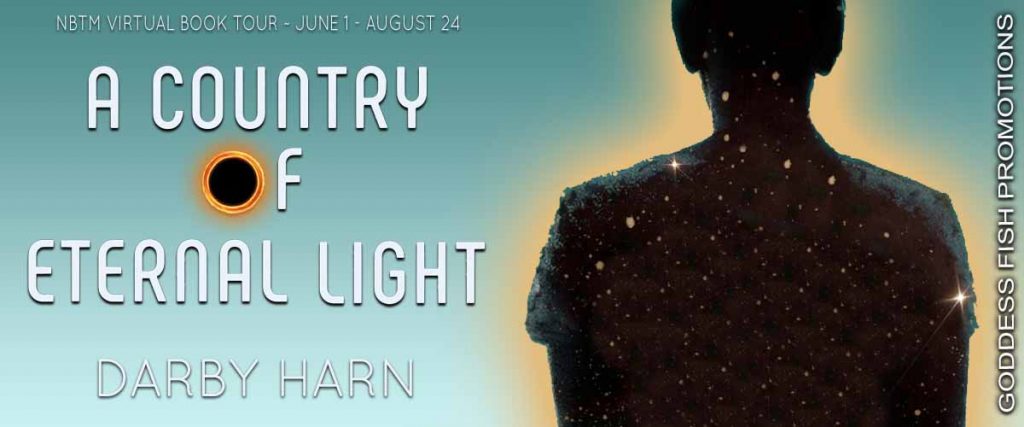
The Hardest Part About Writing by Darby Harn – Guest Blog and Giveeway

This post is part of a virtual book tour organized by Goddess Fish Promotions. Darby Harn will be awarding a $25 Amazon/BN GC to a randomly drawn winner via rafflecopter during the tour. Click on the tour banner to see the other stops on the tour.

The hardest part about writing is…

Doubt. There is no greater impediment to writing, or any creative endeavor, than self-doubt. That voice in your head that says You can’t do this, or I’m not good enough, or No one will care, is the only antagonist in the story of your being a writer. You’re going to face many challenges – the more you do, the more success you’re having – but the first, best, and last villain in your journey is your own doubt.

I wrote A Country of Eternal Light largely in 2015 and 2016. I sought agents and publishers, without success, through 2019. I also struggled with whether to even do so. This is a deeply personal book to me, a great creative risk in my telling this story from the perspective of an Irish woman, and I wasted a lot of time thinking it had no value at all. It took me years to find the courage to publish it now in 2021.

In some way I still doubt its value, and mine, but I also know its worth. This is a story that resonates with people when they read it. More than that, this is why I write. It’s to tell stories. It’s to share stories and connect with people, on some level. I have to fight that doubt, that indecision, that fear, every day. Some days it’s debilitating. What is the point? Does anyone care? Am I making a fool of myself?

But this isn’t the voice you need to listen to. As a writer, you are living in language. Your greatest asset is your pair of ears. Listen to the world. The way people talk. How they talk, what they say, what they don’t say. Listen to the rush of the river and the creak of the trees. Listen to the whine of the rocks as the waves crash into them. Focus on the world and all its music and you won’t hear that nagging doubt so much anymore. All those voices you collect in the world will keep in your writing, and keep you plenty distracted.

A rogue black hole tears apart the solar system. Mairead’s life is already in pieces.

The Earth has less than a year to survive.

Asteroids rain hell; earthquakes rattle cities; manic tides swamp coasts. Mairead intends to give herself to the erratic waves that erode her remote Irish island, the same that claimed her child. When Gavin, an American, arrives to scatter his father’s ashes, she becomes torn between wanting for life and death.

Despite the tides, fuel shortages, and closing borders that threaten to trap him on the island, Gavin can’t seem to scatter the ashes. He doesn’t know how to let go any more than Mairead does and they find a strange comfort in their confusion.

Their affair draws Mairead back to the world of the living, but the longer Gavin stays, the more it seems there might be a future for them. There is no future.

Life closes down around them. The world they know shreds. Life drains into an inescapable abyss. And yet Mairead fights, both the gravity of her grief and the restless, dissonant desire to find some kind of peace no matter how brief.

Enjoy an Excerpt

There is success in death.

Fish flop in confusion as the sea peels back to the mainland. Dinner tonight. Breakfast tomorrow, if I’m thinking of tomorrow. I leave them in the goopy, gasping muck. I keep walking. I am far now, farther than I can run when the tide returns. Bereft water jostles in pitted rock. Strands of seaweed coil around my feet. I feel your pull.

Here I am.

This buzz in the air. The tide coming back, surely. I look up, expectant. Meteors rip through the blue, faster than any wish can catch. Broken stalks of rainbows on the horizon. Comets like white lies. Three more today, competing with the big one they call Medusa, with all her snake tails.

I wait for my success.

The sea must have run off to the States with everyone else. That buzz again. Louder. Closer. The turboprop from the mainland comes out of nowhere. The plane hasn’t been over in weeks. Most days, high tide swamps the eastern horn of the island, the bit of Inishèan that can accommodate a runway. Right next to the cemetery.

Take offs and landings.

The sea is out. The plane is able to make a landing. He might have medicine, the pilot. Food. He’ll have room, for the trip back to Galway. Someone will get delivered today.

About the Author:Darby Harn studied at Trinity College, in Dublin, Ireland, as part of the Irish Writing Program. He is the author of the sci-fi superhero novel EVER THE HERO. His short fiction appears in Strange Horizons, Interzone, Shimmer, The Coffin Bell and other venues.

Website | Amazon Author Page | Goodreaads | Twitter | Facebook

Buy the book at Amazon.

a Rafflecopter giveaway

The Ghost Hunter and Her Guy by Larissa Vine

Long and Short Reviews welcomes Larissa Vine who is celebrating the recent release of The Ghost Hunter and her Guy, the fourth book her Women on Top series. Enter and get a FREE romance book from the author!

A love so strong, it’s supernatural.

When medium Jolene Gray is offered a lucrative contract as a psychic on a television show, she jumps at the chance. The money will pay for her spiritualist meetings that help connect people with their departed loved ones…and she’ll get to work with smoking-hot TV director Red MacFarlene. Jolene’s life is woefully lacking in romance. It’s hard to have a boyfriend with her spirit guide, Iris, always in her head.

This is Red McFarlene’s golden ticket, an opportunity to direct an episode of the phenomenally popular TV series Canada’s Most Haunted. By doing this, Red hopes to launch a new career directing movies like his sickeningly perfect brother. Bonus—the show’s ghost hunter is the gorgeous and gifted Jolene.

As filming starts on a famously haunted farm, a place steeped in tragedy with a history of vengeful ghosts, Jolene senses that the spirits want something, but her guide is blocking them from her, and she’s also sidetracked by her steamy romance with Red.

The ghost activity increases, though, and soon it’s not just the TV show that’s at stake. To face the specters and protect Red from dangerous paranormal forces, Jolene must ignore the voice in her head, and listen to her heart…before it’s too late.

Reader advisory: This book contains references to death and violence.

Enjoy an Excerpt

Jolene raced up the steps of the Mountain View Evangelical Baptist church and into the entrance area, dodging a few of the latecomers. She approached Eion, the head of the British Columbia Spiritualists’ Society, sitting at a trestle table with the collection box. He looked like he was on safari in a white linen suit. His gray cravat matched his steely hair.

He shot Jolene a pointed stare. “You’re nearly late.”

“I’m sorry. It’s the buses,” she panted. “How is it in there tonight?” She jerked her head toward the hall.

“We’ve got a full house as always,” Eion said. “I thought the heat would deter them, but it hasn’t.” He rattled the collection tin at an approaching couple then switched his attention back to Jolene.

“Go wait in the wings,” he said to her.

She hurried past him along the corridor into the room at the back, where she took off her purse then wound the strap around a metal hanger on the coat rail. She ducked into the tiny washroom. At once, Iris, Jolene’s spirit guide, started up in Jolene’s head. “Where’s your comb, lovie? Please tell me that you brought your comb. A pretty girl like you can’t be seen like this.”

Jolene rolled her eyes at Iris then checked her reflection in the mirror. It was true. People had often said that she was pretty with her big mouth, streaky blonde hair and slanting eyes. But Iris was right. At the moment, she did look a mess. Her hair hung in sweaty strands around her face.

She combed it with her fingers then hurried to the side of the stage and peered out from the wings. Her throat tightened. The hall was full like Eion had said. All the two hundred and fifty folding metal seats were occupied, and some people stood around the sides.

She and Eion had been running this meeting every Wednesday for the past two years. It had taken them a while to find a venue. All the nearby community centers had been booked and most of the churches that they’d approached hadn’t wanted to host her show. Some people viewed what she did as close to witchcraft. But then Eion had discovered this place and so every Wednesday, once Jolene had finished her shift at the hospital, she would change out of her scrubs and jump onto the bus. At first, the meetings had been small, but word had spread and, week by week, the numbers had grown.

A ripple of applause rang out from the crowd. Jolene realized that Eion had stepped onto the stage from the other side of the wings. He stopped in the center by a table and chair that had been set up for her. A microphone rested on a stand, set to chair height.

“Welcome, everyone,” he began.

There was a squeal of feedback, and Jolene flinched.

“My name is Eion Hughes”—Eion soldiered on—“and I run the Spiritualists’ Society of British Columbia. Now, I’m sure you don’t need me to introduce our guest. The waiting is over, ladies and gentlemen. Here’s the lady who’s brought so much comfort to many people…Jolene.”

The clapping grew louder. Jolene’s heart quickened.

Eion climbed down the steps to the front of the hall and fetched the roving mic. Drawing a breath, Jolene walked onto the stage. She stopped in the middle and stared out at the sea of faces. As she sat down on the chair, a hush fell over the audience. Jolene felt their anticipation in her chest. She knew that some people had traveled for hours to see her and that some showed up week after week, desperate for a message that never came. What if there aren’t any voices?

“It’s okay, lovie,” Iris said. “Calm yourself. The spirit world will look after you.”

Jolene licked her dry lips then spoke into the mic.

“Hello.” Her voice was shaky. “First, I need you to know that this doesn’t always work. Sometimes those in the spirit world don’t want to talk, and I can’t make them. You have to encourage them. This will only happen if you join in. And it’s done through love. You’ve got to open your hearts and let the love flow. Okay, so let’s see what I have here.”

A clamor of spirit voices sprang up in her head. Jolene smiled. Everyone spirit-side wanted to have their say. There was going to be no problem tonight. But they were all speaking at once in an unintelligible jumble. Male and female voices overlapped and undercut each other.

“Relax,” Iris piped up. “Tell them you’ll get to all of them. Focus on the quiet man.”

Jolene slowed her breath and tried to shift through the din. A man was speaking. His voice was softer than the rest and she sensed that he’d just passed.

“It’s Todd.” His voice was faint. “I’ve got a message for Judith.”

“Is there a Judith in the audience?” she called.

She looked around the hall. No one acknowledged her, and she felt a lurch of fear. People were going to start calling her a fake at any second. Then, two rows from the back, a hand went up.

“I’m Judith.” A woman in a headscarf got to her feet.

Eion walked to Judith’s row. He reached past several people and handed her the mic. She was in her forties and had a tight, pinched face.

“Wood. I’m getting something about wood,” Jolene continued. “Do you live in Woodland Road?”

“Woodland Way,” Judith said.

“That’s right.” Jolene nodded. “I’m not getting that,” she said to Todd. “Sorry, come closer to me, not to your mom. Todd wants you to know, Judith, that you mustn’t worry about the insurance money.”

A moan fell from Judith’s lips. “Then it’s all right?” she asked.

“It’ll be paid by the end of July,” Todd said.

Jolene relayed the message to Judith who sat, smiling.

“Okay.” Jolene cleared her throat. “Now I’ve got a man coming in. I think he said his name was Craig. Does anyone recognize someone called Craig? Wait a minute. It’s Shirley he’s looking for. Shirley Black.”

A woman near the front row raised her hand.

“Can you stand up, please?” Jolene said.

The woman stood up. “My name’s Shirley, but it’s not Black.”

“And do you have a son called Craig?” Jolene asked. “He’s sixteen, right?”

Shirley’s eyes filled with tears and she nodded.

“He said he saw John recently and that you were talking about him.”

Shirley gasped.

“Sorry,” Jolene said. “I can’t hear him anymore.” The jangle of other voices had become too loud.

“Tell her to wait,” Iris said. “I’ll get him back.” Jolene imagined Iris elbowing her way through the rabble, maybe jabbing people with her knitting needles, then dragging Craig to the front. Suddenly, Craig was talking again.

“How did you pass, Craig?” Jolene asked Craig aloud.

Shirley gave a shuddering sigh into the mic.

“You’ve got some of his hair in a locket, haven’t you?” Jolene said to Shirley, who nodded.

“And how did you pass, Craig?” Jolene repeated. “He said he had cancer.”

Shirley gave a tiny nod. Jolene sensed that it was taking all her self-control to not break down.

“He says you’re going on a holiday, aren’t you?” Jolene said.

“I don’t know,” Shirley replied.

“He says ‘Wherever you go, I’ll go with you’,” Jolene said.

Shirley started to cry and laugh at the same time.

The session continued with Jolene and Iris working as a team. Iris cajoled the quieter spirits and reprimanded the bossy ones, and Jolene passed on the messages to the audience.

An hour later, Jolene left the stage to a rousing storm of applause. She headed to the room at the back and collapsed onto the bench. She felt drained and her stomach hurt. When she channeled the spirits, they used up the energy from her solar plexus. Iris, who Jolene guessed was exhausted too, stayed silent.

Eion appeared with two mugs of tea, one of which he pressed into Jolene’s hands. She took a sip and made a face. It was so sweet. She could have stood a spoon up in all the sugar.

“Did you hear about April?” Eion asked, sitting.

Jolene shook her head. April was also a medium at the Spiritualists’ Society.

“Last Tuesday, she was sent to a house,” Eion said. “The owner was having incredible trouble with a spirit. So April went to calm the spirit and do you know what happened?”

“What?”

“The spirit followed her home. I mean, honestly. She should have known what to do.”

“What’s that?” Jolene asked. Her mind was still on the meeting, and she was only half interested.

Eion blew on the steam from his mug. “If you look around a spirit’s place, they sometimes feel that they have the right to visit your place too. Before she left, she should have said to the spirit, ‘Go away. Don’t follow me.’”

“And that would have been enough?”

“It works like a charm. Did you see we were past capacity tonight?”

“Wasn’t it great?”

“We were over the fire regulation limit,” Eion said. “If it gets like that again, I’ll have to close the doors early.”

“What?” Jolene stared at him in horror. “But you can’t turn people away. You just can’t. Did you see how happy that woman was when she heard from her son? We’ll have to find a bigger hall.”

“I’ve tried and there aren’t any. I spoke to the priest here, and he said that this church is also free on Monday nights. Maybe you could run two meetings a week.”

“I can’t cut another shift. I have to make the rent.”

“You should never worry about money,” Eion said briskly. “The spirit world will always provide.”

It was easy for him to say, Jolene thought, with his waterfront house in West Vancouver and his comfortable cushion of retirement savings.

They drank their tea. Sometime later, when Jolene’s strength had returned, she said goodbye to Eion and left the church. As she walked down the steps, the sun was sinking low in the rose-colored sky. It was a gorgeous summer evening and the whole of Vancouver seemed to be on heat. She passed a couple who were making out at a bus stop. The man’s hand was high up inside the woman’s top. They seemed so in love—or was it lust?—that Jolene’s heart twisted. She wished that she had someone to share her life with, but it was tricky when she had Iris.

Iris had appeared on Jolene’s eleventh birthday and had announced that she would be Jolene’s spirit guide. Even after all these years, Jolene still knew little about her, which was surprising considering that she never shut up. Jolene had learned that Iris came from a fishing village in the West Country of England and that she’d lived in the Victorian era and had passed from tuberculosis when she was eighty-two. She’d spent her time baking scones and knitting while her husband Fred had been catching cod at sea.

Jolene imagined Iris to be stout from all the baking and with well-defined jaw muscles from talking too much. She pictured her in an ankle-length dress and an apron with her gray hair pinned, primly, on top of her head.

All of Jolene’s medium friends had spirit guides too, but theirs were a lot cooler and considerably more chilled. Juanita had Romanov, a Russian dissident. Sophia had a philosopher. Although Jolene loved Iris, she wished that she wouldn’t interfere quite so much. It was hard to get anything done—let alone have a romance—with a chatterbox grandmother living inside her head.

About the Author British-born Larissa Vine spent way too long traveling before settling in Vancouver, Canada. Now she lives close to the ocean and the mountains with her ever-patient family and her army of cats. Larissa tries to write what she loves to read – books which are tender, cheeky, even dirty sometimes. Books which are, above all…fun!

Goodreads | First for Romance

Buy the book at your favorite online venue or First For Romance.

ENTER HERE AND GET A FREE EBOOK FROM THE AUTHOR! Notice: This competition ends on 22nd June 2021 at 5pm GMT. Competition hosted by Totally Entwined Group.

Awakened Are the Starry-Eyed by Christine Dore Miller


Awakened Are the Starry-Eyed by Christine Dore Miller
Publisher: Evernight Publishing
Genre: Young Adult (14 – 18 y.o.), LGBTQ, Romance, Contemporary
Rating: 5 Stars
Reviewed by Astilbe

A new city and unexpected freedom give Andrea the fresh start she craved, but her haunting past threatens to unrest an already tangled future. In this tense and emotionally stirring sequel to Forgiven Are the Starry-Eyed, Awakened will leave you breathless as it navigates the heartbreaking disquiet of one survivor’s scattered and uncertain path towards healing.

Healing can be hard work, but it’s always worth it.

Andrea had a wonderful support system. Some of my favorite scenes were the ones that showed how her parents and two best friends reacted to her when she was really struggling with her mental health. They were so kind and compassionate even when they didn’t always necessarily understand why she was behaving the way that she did.

This book’s depiction of the trauma, anxiety, and Post Traumatic Stress Disorder Andrea faced as a result of the abusive relationship she was in when I first met her was realistic and well written. Healing can be a painfully slow process sometimes, and I appreciated the fact that the author was so honest about that. There were times when I wanted to hug the main character and other scenes when I wished I could drive her to a therapy appointment myself.

My review of the first instalment of this series mentioned some pacing issues I noticed in it. I was quite pleased with the fast but even pacing this time around! Naturally, there were times in Andrea’s life when things were quieter or busier than usual, but I always felt like I had exactly the right amount of time with her no matter what she was going through. It’s a thrill to give a five-star rating to an author the second time around, and I’m excited to do it for her today. She did a wonderful job smoothing out the pacing and keeping this reader sitting on the edge of my seat from the first scene to the last one.

This is the sequel to Forgiven Are the Starry-Eyed. I’d strongly recommend reading this series in order due to how much character development takes place during it.

Awakened Are the Starry-Eyed should be read by anyone who is interested in a compelling example of what life can be like after escaping an abusive relationship.

The Girl Who Fell to Earth by Sophia Al-Maria


The Girl Who Fell to Earth by Sophia Al-Maria
Publisher: Harper Perennial
Genre: Historical, Memoir, Non-Fiction
Rating: 5 stars
Reviewed by Lavender

Award-winning filmmaker and writer Sophia Al-Maria’s The Girl Who Fell to Earth is a funny and wry coming-of-age memoir about growing up in between American and Gulf Arab cultures. With poignancy and humor, Al-Maria shares the struggles of being raised by an American mother and Bedouin father while shuttling between homes in the Pacific Northwest and the Middle East. Part family saga and part personal quest, The Girl Who Fell to Earth traces Al-Maria’s journey to make a place for herself in two different worlds.

Sophia is a young woman caught between two worlds. She was born in America to an American mother and a Bedouin father and goes back and forth between the Seattle area and the Middle East, specifically Qatar. Sophia’s comments on her experiences are brutally honest, at times humorous, and at others, tragic.

Her delightful insights allow readers to get a feel for what it is like growing up with two very different value systems pulling at her. She is strong, independent, and takes chances, based on her internal callings. Her father wishes for her to be more traditional, and when she lives with his family, she resents being constrained due to her gender and does something about it. Her father’s people are minorities in their own land though. Other more modern groups see them as “backwards,” and Sophia has to manage her feelings about this.

It is gripping to follow along and see how Sophia handles the cultural clashes and especially situations with young men. The other characters are so realistically drawn that readers can feel what Sophia feels in encountering and interacting with them. The author’s descriptions of the two worlds are stark and bring her point across well.

As Sophia grows up, goes to college in Egypt, and continuously tries find herself, readers will be entertained, surprised at times, and moved emotionally by the talented author telling her story.

This was an enjoyable book, and I would recommend it to others. I would definitely read more from this author.

Rattling Chains by T. Strange – Spotlight and Giveaway

Long and Short Reviews welcomes T. Strange who is celebrating today’s release of Ratttling Chains, book one in the Bound to the Spirits series. Enter to win a fabulous gift package and get a FREE T. Strange romance book!

Ghosts are popping up where they shouldn’t. Harlan, a ghost janitor for the police, suspects there’s a serial killer on the loose—but no one believes him.

Harlan Brand is a medium who was abandoned by his parents at a school for the psychically gifted. He grew up lonely but safe from the ghosts that terrorized his childhood.

But now, at twenty-one, he’s out in the real world. He works as a ghost janitor for the Toronto Police Service, cleaning up after crimes and hauntings in the Greater Toronto Area. Adding to the anxiety of leaving the ghost-warded safety of his school, the cop assigned as his partner seems to hate him, he’s having confusing feelings for a BDSM club owner who brings out his deepest fantasies and ghosts are popping up where they shouldn’t.

Using the ghosts as clues, Harlan begins to suspect there’s a serial killer loose, but no one believes him. Harlan will stop at nothing to discover who—or what—is preying on his city.

Reader advisory: This book contains mention of implied rape and implied violence, references to murder, torture and body horror.

Enjoy an Excerpt

Harlan stared at the scuffed, dented metal strip across the bottom of the doorway. Behind him was worn linoleum, with a pattern so familiar that he could have drawn it from memory. Ahead was a concrete sidewalk. It was scribbled with cracks, and there were piles of sodden leaves gathered anywhere the wind couldn’t touch them, dark spots where people had spat out their gum, cigarette butts, candy wrappers and so many people.

Inside—order, sameness, routine.

Outside—chaos, change… Excitement.

Harlan wasn’t looking for excitement or change. He wanted very much to turn around, away from the physical and mental threshold the doorway represented and vanish into the building that had housed him since he had been five years old.

“Do you need a push?” Tom asked, gently.

It was still difficult for Harlan to think of him as Tom. He’d known the man since he was eight as ‘Mr. Addison’.

Mr. Addison had called Harlan into his office a few days before. There had been a paper on his desk with an official-looking stamp that Harlan hadn’t been able to identify before the man had covered it with his broad, hairy hand.

‘Am…am I in trouble, Mr. Addison?’

Mr. Addison had laughed and said, ‘No, of course not! Please, call me Tom. You’re an adult now, and I’m no longer your teacher.’

Those words had dropped something heavy and poisonous deep into Harlan’s guts and it had stayed there for the last three days. It had been there while he’d packed his few belongings, while he’d said goodbye to everyone he’d ever known his whole life—everyone who gave any kind of shit about him, anyway.

Harlan shook his head. No, he didn’t need—didn’t want—a push. He wanted that letter to have never arrived. He wanted to stay in the Centre, the only home he could really remember.

After leaving him there, his parents had visited for a few years, and it had been strained for all three of them. Then Harlan’s parents had had a new baby, one without ‘the’ ability. They’d visited once a month, then twice a year—his birthday and Christmas—then just sent cards. And after a few years…nothing. He couldn’t remember the last time he’d heard from them, but it wasn’t a relationship he intended to pursue, in or out of the Centre. They’d made it clear that they wanted nothing to do with him—and the feeling was mutual.

He didn’t really consider anyone at the Centre his family, but it was his home, and he was being forced to leave with only his tiny, overstuffed duffle bag. Most of the things inside were just silly little presents the other kids had made him, not even personal items. He was also holding an envelope that Mr. Addison—Tom—had pressed into his hand with great importance, telling him there was three thousand dollars in it.

Harlan had never had to worry about money before. The resident children were given allowances, to spend or save as they chose, and some kids snuck out of the Centre to buy candy—or cigarettes and alcohol when they were older—but Harlan had never been tempted to leave. He’d been given everything he needed there, and they’d kept him safe. A cigarette that smelled bad and made him cough or a beer that made his head swim and made him sick in the morning weren’t worth the risk of stepping beyond the Centre’s encircling walls. He would have been happy to stay forever, maybe even eventually become a teacher like Mr. Addison… Tom. But apparently that wasn’t his decision to make.

“Harlan? Is everything all right?” Tom asked.

No. Everything was not all right. It would never be all right again. “Fine, Mr.— Tom.”

Tom grinned at Harlan—the smile of a man who would, in just a few minutes, be shutting himself back in the safety of the Centre, closing out the rest of the world.

Harlan tried to return the smile, close-mouthed, afraid that if he opened it, he’d throw up.

Looking past Harlan, Tom waved. “Ah! Your ride’s here!”

A sleek, black car with tinted windows drew up beside them. The driver climbed out, circled the car and opened the door closest to Harlan without speaking.

“You’ve got everything?” Tom asked. The too-enthusiastic, bubbly voice that had encouraged Harlan as an eight-year-old didn’t have the same effect at twenty-one.

Harlan shrugged, throwing his bag into the back seat and climbing in after it.

Tom sprawled one elbow on the roof of the car, leaning way down until his face was uncomfortably close to Harlan’s. “Great! And don’t worry—the car’s been specially treated. Didn’t want to stress you out too much on your first day! Give me a call if you need anything.” His voice was positively saccharine, and Harlan wanted to punch it.

Tom slammed the door and rapped on the trunk as though he were dismissing an ambulance.

Harlan didn’t look back.

He closed his eyes when he saw the first ghost. He’d seen plenty, first as a kid, then when his parents finally realized what was going on, in the controlled environment of the Centre. As a child, he hadn’t understood that other people couldn’t see his ‘visitors.’ They’d been excellent playmates, until one wouldn’t go away. Harlan had been too afraid to sleep, jumping at noises no one else could hear, having screaming fits with no apparent cause.

His parents had taken him to psychiatrist after psychiatrist, desperate to deny that their son might be a medium. They’d wanted something medical, something they could cure with pills and therapy. They hadn’t wanted their son to be one of those people.

Answering the doctors’ questions, Harlan realized for the first time that he really was the only one who saw the ‘see-through people’. He’d always thought his parents were just ignoring them.

The psychiatrists tried to convince Harlan—and his parents—that it was just a phase, imaginary, nothing to be afraid of. The ghosts didn’t go away, no matter how hard Harlan tried not to believe in them. Finally, the Centre had called Harlan’s folks. He’d found out later that one of the psychiatrists they’d seen had taken pity on Harlan, contacted the Centre and informed them she had a patient who was potentially a medium. The Centre had invited Harlan and his parents for a tour. His mom and dad certainly didn’t believe in that sort of thing, despite the overwhelming scientific evidence, but they had run out of options and Harlan wouldn’t even go into his bedroom without screaming. He hadn’t slept in days, and the whole family had been desperate.

Young as he’d been, Harlan remembered his first step past the threshold of the Centre. It was…silent. There were no voices here—unlike everywhere else, where they surrounded him like a wall of sound, people he could and couldn’t see clamouring for his attention. There was no one but those he knew were really there—him and his parents. He realized he’d never felt this blissfully alone before. There had always been ghosts. And now they were gone.

He closed his eyes and breathed it in—the silence, the solitude.

He startled when he felt a soft touch on his shoulder. A few minutes of peace had been wonderful, but he knew it couldn’t last.

An older man—even older than the grandparents Harlan was no longer allowed to see after he’d frightened them by passing on messages from people who’d died long before he was born—was kneeling in front of him.

“You must be Harlan.”

Not wanting to speak, to shatter this beautiful silence, Harlan nodded.

The man smiled. “Do you like it here, Harlan?”

“Yes! Very much!” Harlan had said. He’d been afraid that if he didn’t speak up, didn’t answer this man’s question, he might have to leave. He’d wanted to stay…as long as possible. Just a few more minutes.

“There’s someone I’d like you to meet. If I’m right, she won’t be much of a surprise to you. And if I’m wrong, you can go on home.”

Harlan nodded again, fighting to keep his face blank. He didn’t want to go home, where it was always noisy and crowded with people only he could see or hear, never mind the thing in his bedroom—

The man offered Harlan his hand to shake, just as seriously as he would an adult.

Harlan shook, just as solemnly. The man’s hand was pleasantly cool and dry, and he didn’t squeeze too hard. Harlan wished his own hands weren’t so clammy.

“I’m Dr. Cunningham, the director here at the Centre. It’s a pleasure to meet you, Harlan.”

Harlan tensed—just another doctor, more tests to see what kind of crazy he was. And that was a pity, because it was so lovely here. Harlan didn’t think he was crazy, but his parents did, so he must be. They just hadn’t found anyone who could prove it.

Dr. Cunningham laughed. “Don’t worry. I’m not… This test will be different than any you’ve done before. I promise.”

Standing, Dr. Cunningham gave Harlan’s parents a reassuring wave before immediately returning his attention to Harlan. “Would you like to come with me?”

Harlan had heard plenty of stories from ghosts about how to tell if someone was dangerous, what would get a person killed and who to trust. Dr. Cunningham felt safe and genuine.

He nodded, allowing Dr. Cunningham to take his hand and lead him deeper into the building. They left his parents behind, but he didn’t mind very much.

This part of the building was different. The front part, where they’d come in and where they’d left Harlan’s parents, had carpets and art on the walls, like a hotel lobby. Here, the floors were bare concrete, the walls plain white with pipes visible overhead.

Dr. Cunningham’s shoes clicked as he walked. The sound, the way the doctor walked with confidence, as though he belonged here and expected everyone to know it, made Harlan feel special. He belonged here, too, and he’d take any test they wanted to prove it.

Maybe reading Harlan’s excitement as nervousness, Dr. Cunningham gave his hand a gentle squeeze. “Don’t worry. The dormitories are far more comfortable. This is the lab, and you won’t be spending much time here. That is,” he said, smiling down at Harlan, “if you pass this test, which I very much think you will.”

The doctor winked, and again Harlan felt as though he was being included in a wonderful secret, one not even his parents knew.

“We have a ghost in here.”

Harlan stiffened. He’d never had a grownup talk about a ghost like it was real, and he felt a surge of bitterness when he realized the doctor had just been making fun of him like everyone else did.

Dr. Cunningham gave Harlan a reassuring smile. “Don’t worry. She’s quite safe. She won’t hurt you.” He laughed. “She actually used to work here, in the lab. She always talked about becoming a research ghost when she died.” His face turned grim. “She should have had many years ahead of her, but… Well, she still works here, just in a different capacity. You don’t have to be afraid.”

“I’m not afraid.” He was, though—afraid that Dr. Cunningham was teasing him and afraid that he wasn’t. Ever since that horrible woman had taken over his bedroom, ghosts weren’t fun anymore.

“Good lad.” Dr. Cunningham gave Harlan’s shoulder a brief squeeze. “I’ll be right here with you the whole time. When you’re ready, step onto that pad.” He pointed at a metal circle set in the concrete floor. “This whole building is warded against ghosts, except for a few select places like that one. You won’t run into any by accident here…if you choose to stay.”

Harlan bit his lower lip, hard, so he wouldn’t cry. He wanted to stay. He had to pass this test.

“If, at any time, you get scared or you want to stop, just step outside the circle and she’ll disappear again.”

“W-what do I have to do?”

“Just talk to her. Say ‘hi’. It’s only polite. She’ll tell you a special word that will let me know you’ve really seen her.”

“I just have to talk?”

Dr. Cunningham nodded.

Harlan drew in a slow, deep breath and briefly closed his eyes. He could do that. He’d always found it easier to talk to ghosts than to ‘real’ people. He could never tell what the living were thinking or feeling, but ghosts kind of…projected their feelings, whether they meant to or not.

Breath hitching in his chest, Harlan stepped forward onto the pad. He realized he had his eyes closed and had to force them open. His hands were trembling.

She appeared slowly, not just popping into his view the way ghosts sometimes did, and he suspected she’d done it on purpose so she wouldn’t scare him.

“Hello. Are you Harlan?”

He nodded, just a tiny tilt of his head. He’d learned to hide when he was listening to a ghost, and he almost never spoke to them out loud anymore. He glanced back at Dr. Cunningham, but he just gave Harlan an encouraging nod. He didn’t look at all angry or mocking.

“It’s very nice to meet you. I’m Gwen. Are you ready for the word?”

He nodded again, a little more confidently.

“The word is ‘ludicrous’. Ludicrous. You’ll remember?”

“Yes,” he said, shyly.

She waved and started slowly fading.

He stepped out of the circle and turned to face Dr. Cunningham again. “She said…ludicrous.”

Dr. Cunningham beamed. “You passed the test.”

About the Author

T. Strange didn’t want to learn how to read, but literacy prevailed and she hasn’t stopped reading—or writing—since. She’s been published since 2013, and she writes M/M romance in multiple genres, including paranormal and BDSM. T.’s other interests include cross stitching, gardening, watching terrible horror movies, playing video games, and finding injured pigeons to rescue. Originally from White Rock, BC, she lives on the Canadian prairies, where she shares her home with her wife, cats, guinea pigs and other creatures of all shapes and sizes. She’s very easy to bribe with free food and drinks—especially wine.

First for Romance | Instagram | Goodreads
Buy the book at your favorite online venue or First for Romance.

T. STRANGE IS GIVING AWAY THIS FABULOUS PRIZE TO ONE LUCKY WINNER. ENTER HERE FOR YOUR CHANCE TO WIN A LOVELY GIFT PACKAGE AND GET GET A FREE EBOOK FROM THE AUTHOR! Notice: This competition ends on 15th June 2021 at 5pm GMT. Competition hosted by Totally Entwined Group.

All Sorrow Can Be Borne by Loren Stephens – Spotlight and Giveaway

Long and Short Reviews welcomes Loren Stephens who is celebrating the recent release of All Sorrows Can Be Borne. Leave a meaningful comment or ask the author a question for a chance to win a copy of the book.

Inspired by true events, ALL SORROWS CAN BE BORNE is the story of Noriko Ito, a Japanese woman faced with unimaginable circumstances that force her to give up her son to save her husband. Set in Hiroshima, Osaka, and the badlands of eastern Montana and spanning the start of World War II to 1982, this breathtaking novel is told primarily in the voice of Noriko, a feisty aspiring actress who fails her audition to enter the Takarazuka Theater Academy. Instead, she takes the “part” of a waitress at a European-style tearoom in Osaka where she meets the mysterious and handsome manager, Ichiro Uchida. They fall in love over music and marry. Soon after Noriko becomes pregnant during their seaside honeymoon, Ichiro is diagnosed with tuberculosis destroying their dreams.

Noriko gives birth to a healthy baby boy, but to give the child a better life, Ichiro convinces her to give the toddler to his older sister and her Japanese-American husband, who live in Montana. Noriko holds on to the belief that this inconceivable sacrifice will lead to her husband’s recovery. What happens next is unexpected and shocking and will affect Noriko for the rest of her life.

Enjoy an Excerpt

Knocking on the door, the tearoom manager asked, “Who’s in there?”

I unlocked the bathroom door. “It’s me. Noriko. I didn’t want you to see me like this, Ichiro.” My face was covered in tears and blotchy from crying. I handed Ichiro today’s newspaper. On the front page was a photograph of Mizuki Abe with the headline, “Newest Junior Star of Takarazuka is Sensational in Cinderella.” I blew my nose and then explained. “Mizuki was my schoolmate. We tried out for the Takarazuka Theater Academy together. She got in and obviously I didn’t. And now look where she is, and look where I am. Still playing the part of a tearoom waitress while Mizuki’s name is up in lights. I should go back to Hiroshima. There’s a small theater company there and, if I apply myself, I can make my way up the ranks. I’ll be a big fish in a little pond instead of a Miss Nobody.”

“Your father is a sushi maker, am I correct?”

“And your point is…?”

“He would appreciate your choice of words, Noriko.”

“Are you making fun of me?”

“Just a little.”

His eyes were so expressive. Fascinating dark eyes that looked sad and strong at the same time. No wonder he never looked directly at me. I might uncover secrets he didn’t want to reveal. Taking my hand for the first time, he said, “Please don’t leave. I look forward to coming to work every day just to see your lovely face.” And then he led me over to the upright piano in the corner of the tearoom. Sitting down at the bench, he asked, “Would you like me to play something for you, Noriko? You have such a sweet speaking voice and such an engaging laugh; I’d love to hear you sing.”

“Do you know ‘You Are My Everything?’”

Ichiro lit a cigarette and rested it on the lip of the ashtray on top of the piano. “It’s the theme song from the American movie The Eddy Duchin Story, isn’t it? The one about the bandleader married to a socialite who dies in childbirth. Tuberculosis, I believe. He’s so heartbroken he abandons his son, but they finally reunite. It’s very sad.”

I agreed, the story was sad.

“Well, let’s give it a try. We’ll use our imaginations.” Taking in the empty tables of the tearoom with his eyes he said, “Imagine this is a Manhattan nightclub. I’m dressed in a tuxedo, and you’re wearing a red silk gown and a diamond necklace I’ve just given you for our first anniversary. Are you ready? Our patrons are holding their breath, waiting for you to begin.” Pointing out the window at a beggar who was pushing a cart loaded with brooms and pails, he said, “See that man. He’s the famous film director George Sidney. This could be your lucky break.”

About the Author:Loren Stephens is a widely published essayist and fiction and nonfiction storyteller. Her work has appeared in the Los Angeles Times, the Chicago Tribune, MacGuffin, the Jewish Women’s Literary Annual, The Forge Literary Magazine, Crack the Spine, Lunch Ticket’s Amuse Bouche series, The Write Launch, The Summerset Review, The Montreal Review, and Tablet travel magazine, to name a few. She is a two-time nominee of the Pushcart Prize and the book Paris Nights: My Year at the Moulin Review, by Cliff Simon with Loren Stephens was named one of the best titles from an independent press by Kirkus Book Reviews. She is president and founder of the ghostwriting companies, Write Wisdom and Bright Star Memoirs. Prior to establishing her company, Loren was a documentary filmmaker. Among her credits are Legacy of the Hollywood Blacklist with on camera narration by Burt Lancaster, produced for PBS and nominated for an Emmy Award; Sojourner Truth: Ain’t I A Woman? produced for Coronet Films and recipient of a Golden Apple from the National Education Association; and Los Pastores: The Shepherd’s Play produced for the Latino Consortium of PBS and recipient of a Cine Gold Eagle and nominated for an Imagen Award. She is a member of the Regional Board of the Anti-Defamation League; a member of its Deborah Awards Committee for Outstanding Women; and a member of Greenlight Women, an organization of women in the entertainment industry who serve as mentors. For more information visit her website.

Website

Buy the book at Amazon.

The Hot Summer of 1968 by Viliam Klimáček (Author), Peter Petro (Translator)


The Hot Summer of 1968 by Viliam Klimáček (Author), Peter Petro (Translator)
Publisher: Mandel Vilar Press
Genre: Historical, Fiction
Rating: 4 stars
Reviewed by Lavender

In 1968, the Czechoslovakian Communist Party introduced “socialism with a human face” — known as the Prague Spring, citizens of Czechoslovakia suddenly enjoyed new freedoms, among them, an uncensored press, an end to arbitrary wiretaps, and the right to travel without prior authorizations. However, the Soviet Union rejected these reforms and sent half a million Warsaw Pact troops and tanks to occupy the country. Every citizen was faced with the choice to leave or stay. In celebrating the identity of a people, its folklore, its beauty, and its vitality, Viliam Klimáček — Slovakia’s foremost novelist and playwright —tells the story of ten people enmeshed in this difficult moment in history and reveals the dramatic impact of these events on his characters and the lives of their families.

This voyage back to 1968 during an exceptional event is eye-opening and sure to inspire a variety of emotions. Communists in Czechoslovakia decide to try something new and liberating. Refreshing freedoms are granted to the people. For example, now there is freedom of the press and freedom of travel.

The Hot Summer of 1968 is a brilliant novel featuring a handful of Czechoslovakian citizens who experience the Soviet invasion. Tanks and troops roll in, and freedoms vanish. Now, people must make the heart-breaking decision of whether to stay under the repressive regime or leave their homeland forever.

Here we meet interesting characters such as Petra, the young doctor, Tereza, a young Jewish woman, or Józef, a pastor, and their families. All of them have their own troubles and face these difficult times with strength, endearing them to readers. Readers will likely follow their stories, wondering about their fates. The danger is palpable.

The descriptions of the cities make it clear how these people lived. The experiences of these characters as immigrants and refugees paint a vivid picture and is enlightening. Eastern Europe comes to life in this touching novel. I would recommend this book to those who enjoy historical and vintage true stories.

How I Ended Up Writing Historical Fiction by David Hirshberg – Guest Blog and Giveaway

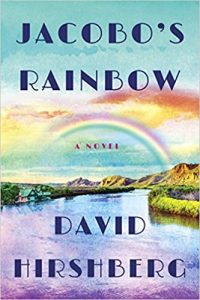
Long and Short Reviews welcomes Davide Hirshberg who is celebrating the recent release of Jacobo’s Rainbow. Leave a meaningful comment or ask the author a question for a chance to win a copy of the book and his debut novel, My Mother’s Son (US only please).

How I Ended Up Writing Historical Fiction

So how did a former biotech CEO and American history buff end up writing historical literary fiction? At first blush, there doesn’t seem to be a connection, but the truth is I used a lot of my experience in developing drugs for rare diseases when I began to write. I can hear the responses, which start with, “What?”

One of the main takeaways for me from the drug development process was the need to focus on the areas of highest priorities, but to still be flexible enough to entertain the idea of mid-course corrections, especially if the scientific data is leading in another direction. It’s actually pretty similar to the process I go through when writing a novel. I try not to get side-tracked by interesting yet unnecessary tangents that take away from the narrative beat. And, at the same time, when something isn’t working, I don’t force it, preferring instead to explore departures that may in fact turn out to be important and even critical elements of a reworked paragraph, chapter or even the novel itself.

Had I written a literary fiction account of some of the recent election campaigns or the war in Afghanistan or the COVID-19 pandemic, I would’ve touched some political or cultural nerves that would’ve likely had reviewers and other readers focused on the politics of the day, which then might’ve relegated my book to a position on the shelf as left, right, or center, as opposed to a story in which I wanted readers to get a better understanding of how the world actually works. Placing a novel in an earlier time allows me to talk about the major issues that affect Americans today, while it provides some distance from the current ‘talking heads’ climate that instantly categorizes and analyzes events from a narrow, partisan perspective.

Jacobo’s Rainbow—which was released on May 4th—focuses on the dramatic events of the decade known as the ‘Sixties.’ I dug deeply into the Free Speech Movement on a college campus to expose the intolerance of many on campuses today who refuse to listen to or even allow people with different views to have a forum. In addition to tackling the Free Speech movement and its legacy, I wanted to bring campus anti-Semitism—which was then just emerging out of the shadows of the 1950s—to the front and center as a mirror for what’s going on nowadays in a much more virulent form. Writing about this tumultuous decade also allowed me to bring in the Vietnam War, which so traumatized the country at that time—and its reverberations haven’t ceased to this day.

Historical fiction allows the writer to blend elements of what happened (mostly in concept as opposed to a reporting of actual events) with fictitious people and activities, which provides the reader with a perspective on what happened in earlier time and how it may be relevant to what’s going on today.

I hope that the “What” is now replaced by an “Okay, I got it!”

—David Hirshberg, author of Jacobo’s Rainbow (Fig Tree Books, 2021) and My Mother’s Son (Fig Tree Books, 2018)

JACOBO’S RAINBOW is set primarily in the nineteen sixties during the convulsive period of the student protest movements and the Vietnam War. It focuses on the issue of being an outsider, an altogether common circumstance that resonates with readers in today’s America. Written from a Jewish perspective, it speaks to universal truths that affect us all.

On the occasion of the 15th anniversary of a transformative event in Jacobo’s life – the day he is sent to jail – he writes about what happened behind the scenes of the Free Speech Movement, which provides the backdrop for a riveting story centered on his emergence into a world he never could have imagined. His recording of those earlier events is the proximate cause of his being arrested. Jacobo is allowed to leave jail under the condition of being drafted, engages in gruesome fighting in Vietnam, and returns to continue his work of chronicling America in the throes of significant societal changes. Nothing is what it seems to be at first glance, as we watch Jacobo navigate through the agonies of divisive transformations that are altering the character of the country. Coming to grips with his own imperfections as well as revelations about the people around him, he begins to understand more about himself and how he can have an impact on the world around him … and how it, in turn, will have an effect on him. The novel can be read on three levels: 1) as a coming of age story; 2) as a metaphor for what is happening on college campuses today, in terms of the shutting down of speech and the rise of anti-Semitism; 3) as a novel about Jewish identity and what life is like for the outsider.

About the Author: David Hirshberg is the pseudonym for an entrepreneur who prefers to keep his business activities separate from his writing endeavors. As an author, he adopted the first name of his father-in-law and the last name of his maternal grandfather, as a tribute to their impact on his life. His first novel, My Mother’s Son was published in 2018 and won nine awards. Reviewers have compared Hirshberg’s writing to Michael Chabon’s and Saul Bellow’s, among others. Learn more at David Hirshberg’s website.

Website

Buy the book at Amazon, Barnes and Noble, Fig Tree Books, or IndieBound.

Lessons I Learned from my Villain by Michael Ross – Guest Blog and Giveaeway

This post is part of a virtual book tour organized by Goddess Fish Promotions. Michael Ross will be awarding a $25 Amazon or Barnes and Noble GC to a randomly drawn winner via rafflecopter during the tour. Click on the tour banner to see the other stops on the tour.

Lessons I Learned from my Villain

As the first story in my anthology, “A Nice Easy Steal”, evolved I found myself more and more judgemental about my main character.

It was one of those stories with no pre planning, just a vague idea about a likeable rogue going about his day to day business. He was modelled on quite a few characters I had met during my business life; people living on the edge, fairly decent humans overall but always willing to push open the envelope a bit further than they should. People who had done me no harm, but people I would rather keep at arm’s length.

So in the story, by a stroke of good fortune, he comes across a once in a lifetime opportunity and within the context of the story no-one got hurt, no-one lost out; just a bit of good luck that came his way and he took advantage. I typed ‘The End,’ and got on with other bits and pieces. However, over the months it niggled away at me and I felt a guilt for letting get away with ‘one.’ I started thinking about him and the more I thought the more I disliked him – taking advantage of a poor old lady and her family. What was I thinking? He needed to be taught a lesson; so I tried to imagine a different outcome, a way for him to get his due rewards. When I realised the truth behind the story; that he was not as bright as he thought, I had to go back and play around very slightly with some of the previous scenes. But in the end I got him and taught him a lesson he will never forget.

Why can time consumed reliving memories provide enough motivation to carry on? Why keep a diary if you don’t want people to read it? Why let prejudice cloud your judgement? Why do the most simple of smells bring memories back to life? Why is it possible to believe the impossible? What does it feel like to take another person’s life? Will the good deeds we do come back to us in different forms?

These are of some of the questions posed in this imaginative collection of short stories involving, amongst others; a private detective with super powers, a loveable car salesman, a dour public health inspector, a vicar’s daughter with a dark secret, a sculptor with a destructive obsession, a young man with a passion for language, a reluctant public executioner, two sisters whose petty disputes hide something deeper, a job hunter with an unusual skill.

There are so many diverse characters and in this intriguing and imaginative collection of stories everyone has a tale to tell.

A collection of stories that will surely leave its mark on the reader.

Enjoy an Excerpt

From my window, I spot my fellow students grouped in excited conversation, circling around, probing each other with thoughts and words, questions and answers. After two years, we know each other well. I know they all wish they could play the violin as well as me, and in my turn, I wish I could be as happy as them. I wind down by running through scales for twenty minutes, and then I hear the old grandfather clock in the hall strike eleven—my other life beckons.

In Chinatown, it is easy to find a restaurant where you can spend £100 a head on a meal. At my parent’s place, six people can eat like kings for less money.

The walk from the rehearsal rooms takes the best part of an hour. I cast aside my musical mantle as I walk, so that by the time I reach Uncle Wong’s, I am prepared for my twice-weekly four-hour shift. This is the only payment my father and mother have ever asked of me. It is nothing.

Two years ago, my parents ushered me into the tiny lounge area above their restaurant, and wordlessly, my mother passed me my gift. My eyes moved to my father and then back to my mother. I could not speak. It was beautiful. Feeling its dark ebony grain, I turned it tentatively through my fingers, tilting, and twisting—gazing, unsure of my breath.

“Baba. Mamma. It’s beautiful, but you cannot afford it.”

“Shush, my son.” The look on my mother’s face said that my joy was all they required.

About the Author:Born and raised in Bristol, England. I spent my adult life in business, the majority of that time marketing cars. I eventually owned the largest Saab specialist in the world, before a divorce put an end to that part of my life.

This led me to leave Bristol to live halfway up a mountain in the Welsh Valleys; start a part-time six year English Literature course at Bristol University, and attend creative writing classes in Cardiff. My interest in English literature flourished and I have since won several prizes for my short stories. My first book, ‘Twenty Short Stories – Settling a score,” reached No 1 in the Short Stories Best Sellers and is still available, as is “Twenty-One (more) Short Stories,” and “Another Twenty-Two Short Stories.”

Also available are the first 5***** crime thrillers in the Tanner and Pin-up series:

Hand over Fist
Hand in Glove

Plus a 5***** light hearted rom-com “Chasing What’s Already Gone.”

I still live very happily halfway up that mountain in the Welsh Valleys with my wonderful partner, Mari, and our two rescue dogs, Wavy and Wenna.

Website | Facebook | Twitter

The book will be free.

a Rafflecopter giveaway

What Would I Tell a New Author? by Janice Tremayne – Guest Blog and Giveaway

This post is part of a virtual book tour organized by Goddess Fish Promotions. Janice Tremayne will be awarding 1 of 5 digital copies of the book via BookFunnel to a randomly drawn winner via rafflecopter during the tour. Click on the tour banner to see the other stops on the tour.

What Would I Tell a New Author?

When I first started writing my first book, I didn’t know anything. I thought if I completed a writing course, wrote a good story with an exciting plot, I would be on my way to writing success. Because everyone is just waiting for the release of your book. Right? Until reality set in. Seven books later, I realized how naïve I was, and I learned some hard lessons along the way. So, If I went back in time, what would I do differently?

No matter how educated you are and a literary expert you claim to be, if the premise of your story does not connect immediately with the reader, you’re going to struggle to sell books. That one sentence that describes the storyline is the emotional attachment the reader will have to your precious work—the wow factor. If your writing is stilted with terrible dialogue and your character development is insufficient—you’re going to get negative feedback and question yourself as a writer. And believe me, there are horrible reviewers out there that will have no problem giving you a one-star result—some of them get a kick out of it!

This is what I learned in no particular order:

1. You need a great book cover to connect with your genre and your reader, and this is not an activity where you should save money.

2. You need a good editor to clean up your work. Hopefully, you can establish a good relationship so they can understand you and your writing objectives.

3. Develop an author mailing list of fans that are interested in your work straight away. You will learn that they are your number one marketing initiative.

4. Don’t spend too much money on marketing your first book. Wait until you have written at least your third book before you start spending more significant amounts on promoting.

5. Complete a book marketing course like Mark Dawson’s Self-Publishing 101. You need these tools to assist you in growing your brand and build your audience if you are an indie author.

6. Don’t quit your day job unless you are financially secure.

7. Keep persevering with your writing style and set a routine. You will get better with each book as your writing style becomes more polished and engaging—it’s an evolution.

8. Decide what you will be—an indie author with complete control of the process or a traditional author seeking a literary agent. They are two different frames of mind and thinking. You need to understand where you want to be.

9. Don’t believe all the hype you hear. You need to become good at sifting through all the noise and pluck out the relevant aspects for your publishing career.

Of all the actions I mentioned above, I wish I developed a process for collecting reader emails for my mailing list as soon as I launched my first book. I wasted money on marketing with no offer to my readers—no follow book in the series—wasted opportunities to collate hundreds of reader email addresses. It was one big mistake after another as I continually squandered opportunities.

Accept you’re learning about yourself too. It wasn’t until the second book that I started to understand which genre I really wanted to write. It was the process of trial and error about understanding myself better. I can assure you that if you’re not passionate about the genre you write, it will show in your literary work. Readers can be very astute.

I hope this doesn’t sound too dreary because I want to help you avoid the pitfalls that I went through. And one important thing—writing gives you something other professions don’t. When I returned home after a hard day’s work in the office, nobody cared, and I never received any gratitude. It was a grinding corporate environment full of people only looking after themselves. But when I started writing and receiving emails from fans worldwide on how much they liked my writing, I was overjoyed. Did I have that much of an impact on this person’s life that they felt compelled to write me an email? In all my years of corporate life, nobody ever sent me such a note. And not because I was terrible at my job—far from it. It was just the culture. That’s the beauty of writing—because if you do it well, you touch people’s hearts and emotions.

A demon hell-bent on playing psychological games to torment its victims. A guilt-edged past comes to the fore to be relived again. Can Bolder overcome his mental suffering and destroy the voracious demon?

In the Australian ghost town of Ravenswood in North Queensland, a gruesome suicide occurs after the famous annual Halloween ball. Bolder is called in by Detective Wellock to help track the evil incarnate responsible.

However, has Zack Bolder met his match? Can a trained parapsychologist by the Church withstand the guilt-edged torments of the demon? This poltergeist dangles psychology as its weapon by tempering that frail part of the mind to those that get in its way. Bolder is taken back to relive dark secrets—ridden and guilt-edged.

Can Bolder overcome this tempest of the mind and save the town before more people take their lives?

Enjoy an Excerpt

Bolder handed him the book of prayers and marked out the section containing the love of worship. “We plan to compel the negative energy to leave her body and direct it to another place—to cross over to the other side. We are lightworkers, remember? Not exorcists.”

“I can at least bless her with holy ointment … can’t I?”

Bolder nodded and said, “Well, why don’t you start with that first?”

Father Brennan walked toward Kelly as the old rustic timber floors creaked underneath. He opened his small container with holy ointment and brushed his index finger across it. Then he gently marked her forehead with the sign of the cross.

“In the name of the father, and the son, and the holy spirit … amen.”

Kelly jolted as though something had bitten her and her body trembled for a few seconds. She was still sleeping but aware of what was going on around her.

“What was that?” said Bolder.

“What was what?”

“You mean you didn’t see it? The dark shadow that was standing beside her.”

“I didn’t see it … but I felt something gripping my hand.” Father Brennan was perplexed.

An ominous image of a woman in a faint white dress glided across the bed—motionless and stoic but holding her stomach with both hands in hurtful prose. Within seconds it was gone with barely enough time for Bolder to capture a glimpse of it.

“I sense something else in the room,” Bolder said.

A pulsating wave of energy screeched from within, penetrating the bodies of Father Brennan and Bolder. They shook from the sensation—there was no movement or breeze, and the windows to Kelly’s room shut. But it still required they hold their balance as the snappy spiritedness vibrated their eardrums with a ringing noise.

“Whatever is in here is not going to give up with prayers of love,” said Father Brennan. He was ready to launch into a full-blown exorcism.

About the Author: Janice Tremayne is an Amazon bestselling and award-winning ghost and supernatural writer. Janice is a finalist in the Readers’ Favorite 2020 International Book Awards in fiction-supernatural and was awarded the distinguished favorite prize for paranormal horror at the New York City Big Book Awards 2020.

She is an emerging Australian author who lives with her family in Melbourne. Her recent publications, Haunting in Hartley and Bolder Blindsided, reached number one in the Amazon kindle ranking for Occult Supernatural, Ghosts and Haunted Houses categories hot new releases and bestseller. Janice is well-versed in her cultural superstitions and how they influence daily life and customs. She has developed a passion and style for writing ghost and supernatural novels for new adult readers.

Website | Facebook

Buy the book for only $0.99 at Amazon.

a Rafflecopter giveaway