This post is part of a virtual book tour organized by Goddess Fish Promotions. Jay Armstrong will be awarding a $10 Amazon or Barnes and Noble GC to a randomly drawn winner via rafflecopter during the tour. Click on the tour banner to see the other stops on the tour.
18 notes on writing from a high school English teacher turned award-winning author:
1. There are two types of writing: private and public. Private writing is for your eyes only like journals, diaries, and memos on your phone. Public writing is meant to be read by a reader. It includes blogs, emails, novels, or an angry letter to the Department of Motor Vehicles. The point of public writing is to connect to the reader. A public writer must be selfless. A public writer must attempt to identify, visualize, and connect to their private reader.
2. The first draft is always for the writer. Every other draft after is for the reader.
3. Good writing is vulnerable writing. Let your reader hear the things they’re reluctant to say out loud.
4. Young writers often think long sentences mark good writing. Silly. Short sentences show poise and control. They are easily digestible and appreciated by the reader.
5. However, long sentences are sometimes needed to vary the rhythm of a piece, convey a complicated feeling or to show action. The 142-word first sentence in Tim O’Brien’s “The Man I Killed” taught me more about writing than four years of college.
6. Get comfortable with contradictions. Humans are contradictory creatures. We value privacy yet we post our lives on the internet. We want to know other people’s secrets yet fear being exposed. We want to hold on but we yearn to let go. The point is, contradictions are the hub of human conflict. Whether you write fiction or nonfiction, you want to develop characters who—like you and I—are struggling with their own contradictions.
7. Include natural imagery in your writing. As you or your characters live life, gravity pulls, the world turns. Juxtaposing human strife with the grand yet indifferent natural world will stir your reader’s imagination and offer them comfort. Because while they are reading your writing, nature is outside their window doing its thing.
8. Include sensory imagery in your writing. Readers want their senses tickled. Describing how something smells, tastes, feels, or sounds helps the reader further appreciate and experience your writing.
9. When you doubt yourself as a writer, take a deep breath, and repeat, “I am a writer” as many times as you need to drive self-doubt away. Also, know that self-doubt never goes away. You can only hope to exile self-doubt to the time-out corner for a brief period. A good rule is one minute of time-out for every year of the writer. For example, a forty-year-old writer should hope to keep self-doubt in time-out for forty minutes.
10. Young writers often measure their writing ability by scores or teacher evaluations. This is a trap, especially if you earn high marks. A good writer knows writing will never be completely mastered.
11.Do not capitalize, concern yourself with punctuation, grammar, or consider proper writing etiquette when writing a first draft. Save this tedium for the second and third drafts.
12. Have enough confidence to write a poor first draft and enough guts to write a second.
13. Write with humor. Remind your reader laughter is essential for survival.
14. The pursuit of perfection leads to procrastination. You or your writing won’t be perfect. Get used to it.
15. Start walking. This will help clear your mind and allow for writing breakthroughs you can’t achieve while sitting at a computer. Also, walking is a fine metaphor for writing. Go at your own pace, breathe, be patient, and take one step at a time.
16. When you’re ready—buy, read, and study the following four books on writing: Consider This by Chuck Palahniuk, Bird by Bird by Anne Lamott, On Writing: A Memoir of the Craft by Stephen King and The War of Art by Steven Pressfield. Once you finish reading, go write. Reading about writing is helpful, but only the act of writing will make you a better writer.
17. A story is only as interesting as its conflict.
18. 95% of writing is overcoming these four words, “I can’t do this.” Heck, 95% of life is overcoming those four words. You may wonder what the remaining 5 % is. I don’t know. I think it’s for us to figure out on our own.
Diagnosed with a progressive brain disease, a young father is determined to teach his children the importance of pursuing their dreams.
A cell phone’s ring interrupts the silence as Jay Armstrong sits in his high school classroom preparing for the year ahead. Something about the ring makes his stomach drop. It’s his doctor.
The words, “diffuse cerebellar atrophy, a rare, degenerative brain disease” float through the speaker. All of Jay’s youthful dreams of being a writer rush back, flooding the twenty years he has spent teaching students how to appreciate novels, memoirs, and poetry. The care he put into teaching them how to write with clarity, insight, and humor, and how to dance at the prom. The bedtime stories he never told his children spin in his imagination. It will all die when he dies.
Jay chooses to experience his condition as an inspiration here to teach him to appreciate the time he still has. He writes letters and stories to his three children about his failing voice, his impaired motor skills, and falling down on Christmas morning. Writing helps him cope with the illness and its symptoms. And so, he accepts the mission of writing more stories for them: the difference his father’s wink made at a critical moment of a baseball game, why they should take walks even in cruddy weather, and how he avoided having to explain what semen is for.
As his condition worsens, Jay’s faith in the power of storytelling deepens. His daily life is wildly different than he foresaw, and possibly shorter, but he can leave his children a legacy more valuable than any financial inheritance. He writes “Bedtime Stories for the Living”, an episodic memoir to show his children how to accept their limitations and find joy. The collection of tender, witty stories about fatherhood, persevering despite illness, and pursuing your dreams, demonstrates how love gives us the strength to face heartache with bravery and grace.
Enjoy an Excerpt
There is something you should know. In the history of my ordinary suburban life, I’ve never told any of my three children a bedtime story. Not telling your child a bedtime story seems like a major dad offense. Like forgetting them at Target or wearing a clown costume to “Back-to-School Night” or letting them swim twenty-six minutes after lunch.
Do I love my children?
On most days I do.
On most days, like you, they’re decent people. So why didn’t I tell them bedtime stories?
Selfishly, I don’t like the pressure. The nightlight. The slow swirl of the ceiling fan blades. Their big eyes staring up at me, expecting me to entertain them, to stir their imagination. Who do they think I am? Bruce Springsteen? No. I’m a dad who gets his sushi from a supermarket. I wear sneakers with khaki pants. I once taught high school English in New Jersey. I mean, to be creative and tell a story on demand is down-right stressful. Who needs that kind of stress after 9 pm?
My parents were better parents. When I was a kid, Mom and Dad would tuck me into bed and tell me stories about my grandfathers and grandmothers, about how Mom and Dad met, or about playing stickball in narrow Philadelphia streets. Bedtime stories were history. They brought my little universe into focus, shaped my identity, and instilled a love of storytelling.
As good suburban boys do, I fell in love, got married, and had three kids. Just when things were going as planned, in 2013, I was diagnosed with a progressive brain disease called diffuse cerebellar atrophy. The disease degenerates my motor skills, balance, coordination, eyesight, and speech. A fall can lead to a head injury and weakening esophageal muscles to choking and asphyxiation, and so on—a veritable smorgasbord of potentially fatal complications. Two years later, sarcoidosis, a complicated autoimmune disorder that attacks every major body organ, was added to my list of health issues.
It was only when the prospect of death became real that I began writing.
In 2015, I created Write On Fight On (writeonfighton.org), and for the next five years I wrote and posted bedtime stories I never told my kids. By writing these stories, I began to reexamine who I once was, who I am now, and the man and father I hoped to one day grow up to be. Writing made me realize, in the face of our inevitable death, our time to tell our story is painfully brief. And that we should make like Springsteen and do what we can to achieve our dreams.
As I wrote this book, time passed. The kids grew up. My diseases progressed. People I love died. And one spring morning, standing in the driveway with my hands in my pockets, time’s yellow chariot turned the corner. The air brakes exhaled, “Bye Dad” was said, and as the bus, my children, and a swirl of exhaust smoke disappeared down the street, I realized the irony of my effort. I was trying to preserve time while it was passing like a school bus in the morning. We can’t stop time. We can only slow time by doing what we love. Doing the things that make us feel alive. And I have never been more alive than when telling a story.
This is a book of bedtime stories for the living. Stories that, if I did my job well, slow time, and make you and me glad to be alive. These stories are real. Or as real as memory allows them to be. As I discovered, life is both a funny and a heartbreaking experience. These stories are the moments I want to share with you because I believe, deep in my dad heart, we all have stories worth sharing.
I came across an article about how, in the mid 1990’s, Dr. Marshall Duke and Dr. Robyn Fivush of Emory University developed and conducted a twenty question survey of children entitled, “Do You Know” which asked them about their families. The results showed that the more stories, both positive and negative, the children knew about their family’s history, the more resilient the children tended to be. As the study concluded, knowing family stories was “the single best predictor of children’s emotional health and happiness.” For better or worse, our family stories help us navigate our own troubles. Stories gift us courage when we’re afraid, offer direction when we’re lost, or comfort when we’re lonely.
Dear reader, please know that I’m humbled you are reading this book. Thank you. I hope my stories help you, give you permission to dream, and maybe give you the strength to tell your own stories. I hope you paid full price for this book because college for three ain’t free.
But if this book doesn’t offer my children financial prosperity, more than anything, this book is a gift for them. It’s a family history, an instruction manual, an honest reflection about a fleeting moment, a smile, a glance, and the goodnight kiss I often failed to give them.
Maybe one day, when they’re lost or confused or angry or sad or daydreaming about the prom queen, they will open this book and read a story or one of the letters I’ve written to them. Maybe my words will let them hear my voice again. Feel my lips pressed against their ears. And maybe they’ll know they’re not alone. That Dad is here. With them. Helping them through life forever.
Be well,
Jay
About the Author: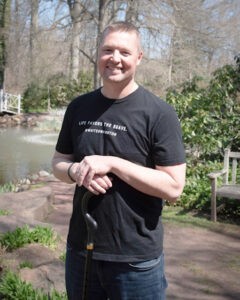 In 2013, Jay Armstrong was diagnosed with diffuse cerebellar atrophy. A condition that causes dysfunctional motor skills, speech and vision impairments, and balance deficiencies. At the time of diagnosis, he was establishing himself as an endeared high school English teacher, a varsity soccer coach, and an above average dancer. However, the progressive disorder forced Jay to reevaluate his life.
Supported by his high school sweetheart turned wife (Cindy) and their three children (Haley, Chase, Dylan), Jay retired from teaching in 2021 to pursue his dream of becoming an author.
Jay believes in the power of storytelling. He also believes in dad jokes, laughter, and the unrelenting pursuit of dreams. Jay’s debut book, Bedtime Stories for the Living, is an episodic memoir in which Jay shows his children how to accept their limitations and find joy. The collection of tender, witty stories about fatherhood, persevering despite illness, and pursuing your dreams, demonstrates how love gives us the strength to face heartache with bravery, humor, and grace.
Born in Philadelphia, Pennsylvania, Jay is passionate about Philly sports, soft pretzels, and Rocky Balboa.
Buy the book for only $0.99 at Amazon.
It is also available at Lulu, Kobo, Vivlio, Barnes and Noble, or iBooks.
 Rock Gods & Messy Monsters is one woman’s search for herself among the blood-soaked walls, dangling body parts, and alien-hatched explosions inside Acht Records.
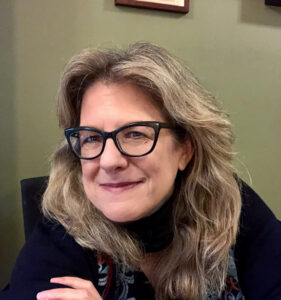 Diane Hatz worked at major and indie record companies, managed a band, and freelanced as a music publicist. She is co-founder of The Relay, a fanzine on The Who, which is in the Rock and Roll Hall of Fame. She’s attended thousands of concerts.
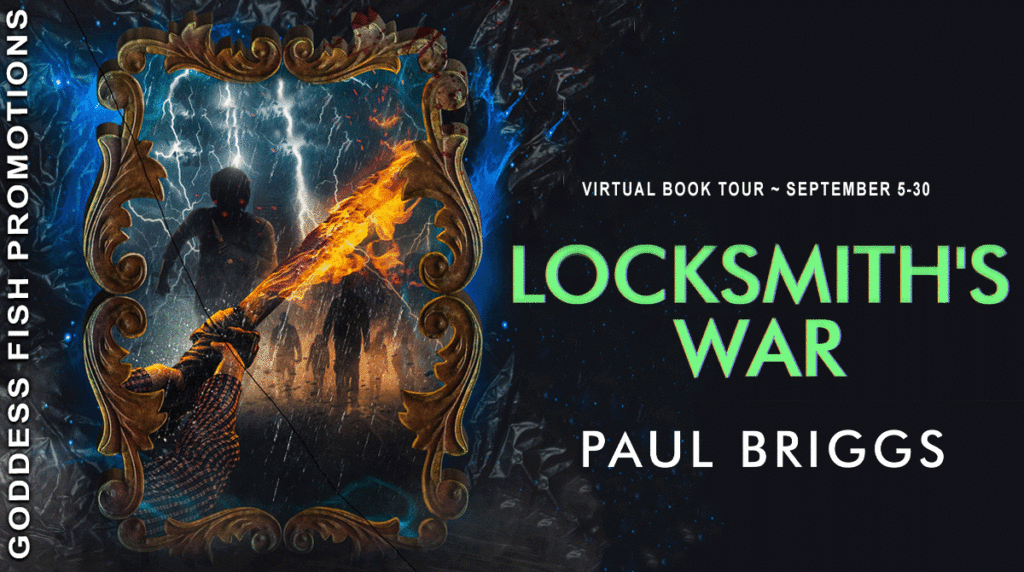
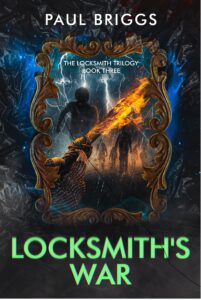 For Lachlan Smith, learning the secret of the apocalypse was the easy part.
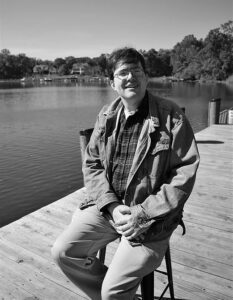 In addition to writing books, Paul Briggs has worked as a newspaper editor, court reporter’s assistant, and audio transcriber. In his spare time (when he has any) he sometimes performs in community theater, most recently taking on the roles of Bottom, Petruchio, Macbeth, Rosalind, and Richard III in a Shakespeare compilation. An Eastern Shore native who grew up in Chestertown, Maryland, Paul earned a BA in English from Washington College and a master’s degree in journalism from the University of Maryland – College Park.




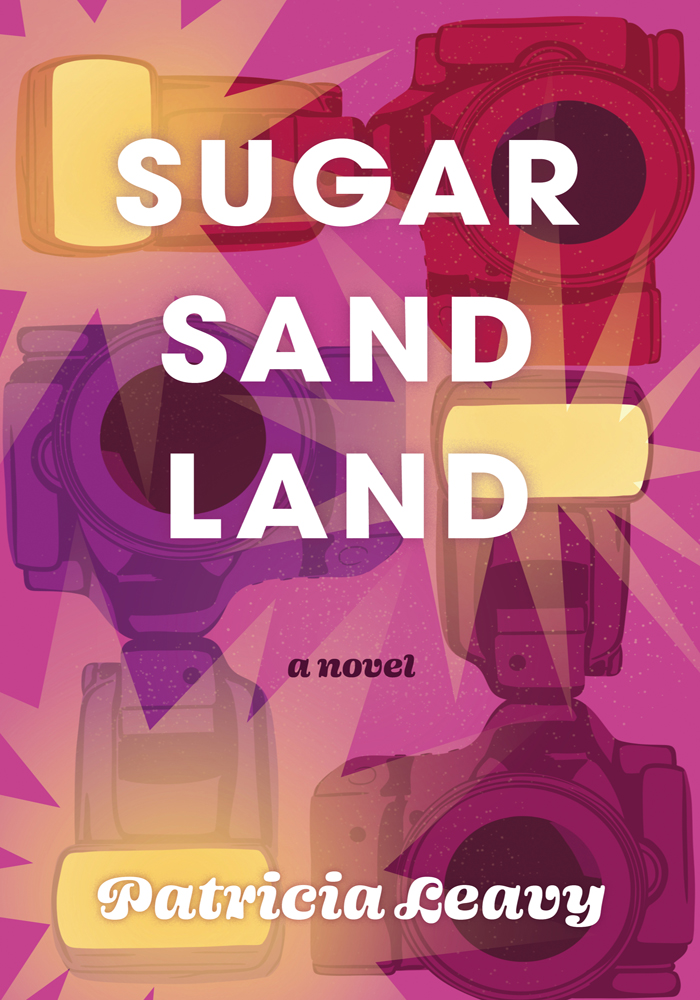
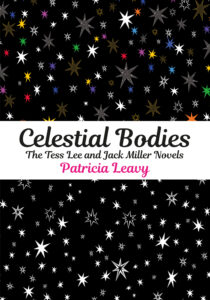 Heart-warming and wonderfully romantic, written with the sharp wit of Candace Bushnell and the sensitivity of Meg Donahue, comes best-selling author Patricia Leavy’s tour de force about learning to balance darkness and light in our lives.
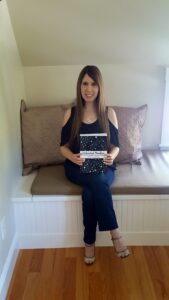 Patricia Leavy, Ph.D., is a bestselling author. She was formerly Associate Professor of Sociology, Chair of Sociology and Criminology, and Founding Director of Gender Studies at Stonehill College in Massachusetts. She has published over thirty-five books, earning commercial and critical success in both fiction and nonfiction, and her work has been translated into many languages. Patricia has received dozens of accolades for her books. Recently, her novel Shooting Stars won the 2021 Independent Press Award Distinguished Favorite Contemporary Novel, her novel Film won the 2020 American Fiction Award for Inspirational Fiction, the 2021 NYC Big Book Award for Chick-Lit, and the 2021 Independent Press Award Distinguished Favorite Chick-Lit, her 3-novel set Candy Floss Collection won the 2020 American Fiction Award for Anthologies and the 2021 NYC Big Book Award for Anthology, and her novel Spark won the 2019 American Fiction Award for Inspirational Fiction, the 2019 Living Now Book Award for Adventure Fiction, and the 2021 National Indie Excellence Award for New Adult Fiction. She has also received career awards from the New England Sociological Association, the American Creativity Association, the American Educational Research Association, the International Congress of Qualitative Inquiry, and the National Art Education Association. In 2016 Mogul, a global women’s empowerment network, named her an “Influencer.” In 2018, she was honored by the National Women’s Hall of Fame and SUNY-New Paltz established the “Patricia Leavy Award for Art and Social Justice.” She lives in Maine with her husband, daughter (when she’s not away at college), and her dog. Patricia loves writing, reading, watching films, and traveling.


 The crisp fragrance of pine trees and the warm spice of fresh cookies aren’t the only blessings that Christmas brings, and no one knows more about happy homecomings than three couples who are celebrating the greatest gift of all . . .
 In 1983, Charlotte Hubbard sold her first story to True Story. She wrote around 70 of those confession stories, and she’s sold more than 60 books to traditional or online publishers. A longtime resident of Missouri, she’s currently writing Amish romances set in imaginary Missouri towns for Kensington. She now lives in Omaha, NE with her husband of 40+ years and their Border collie, Vera.


 In this new collection from well-established authors Cendrine Marrouat and David Ellis, enjoy a series of love poems delicately crafted to stimulate emotional and endearing aspects of our deep connections with each other.
 Cendrine Marrouat is a poet, photographer, author, and creator of literary forms. She has released more than 40 books, including Tree Reflections (2022), In Her Own Words: A Collection of Short Stories & Flashku (2022), After the Fires of Day: Haiku Inspired by Kahlil Gibran & Alphonse de Lamartine (2021), Songs in Our Paths: Haiku & Photography (2020-2021), and In the Silence of Words: A Three-Act Play (2018).
Cendrine’s work has appeared in many publications. She is the creator of the Sixku, Flashku, Sepigram, Vardhaku, and Reminigram.
 David Ellis is a poet, multi-genre writer/author and co-creator of literary forms, with a fondness for found poetry.
He has released several poetry collections including Life, Sex & Death (which won an Inspirational Poetry Award), Soul Music the Colour of Magic, Lemons, Vinegar & Unvarnished Truths, See A Dream Within (based on the entire collected poetic works of Edgar Allan Poe), along with a Fifty Shades of Grey parody 50 Shapes of Cakes.