This post is part of a virtual book tour organized by Goddess Fish Promotions. Lisa Ard will award a $10 Amazon/BN gift card to a randomly drawn winner. Click on the tour banner to see the other stops on the tour.
Critique groups are invaluable, but that doesn’t mean every critique group is valuable to every writer. If you’re committed to producing your best work, then be choosy when looking for a critique group. Consider the following tips for the best experience:
1. Work with other writers that write in the genre you write in.
Publishing expectations vary depending on the genre you work in. For instance, picture books have a particular page count and structure that stem from printing and book production. Young adult fantasy will have a longer word count than novellas, memoirs, or other forms of fiction. Non-fiction is a different beast altogether. Length is only one of the attributes that differ by genre. Critiquing within the same genre ensures that all writing partners are working toward the same goals.
2. Join the right size group
Each critique member will bring a unique perspective on your work. One person will hone in on the voice in your work. Another will have opinions on the point of view. Another might be expert in spotting showing vs. telling. You want enough helpers to round out the critique, but not too many that you’re infrequently up for review. What’s the right amount? That depends on the group composition, the operating rules of the group, and your expectations. As a general rule of thumb, I’d suggest 4-6 writers.
3. Be open to constructive criticism
Develop a thick skin. Whether you’re submitting an early-stage or polished piece, you’re looking to make it even better, which means someone’s going to tell you what’s not working. Remember that good critique partners want you to succeed. When you receive critique, you should leave inspired to get back to work–because you now know how to improve the submission.
4. Adopt a set of guidelines
Decide together how often each person submits for critique, an acceptable word count, how polished it needs to be, etc. Agree on a format for offering critique. My group likes the Oreo approach: start with what you like, outline ways to improve the piece, and wrap up with encouraging remarks. Another way to say that is: commendations, recommendations, and encouragement.
5. Be clear about the type of input you’d like
Help your critique partners help you by stating what you’re looking for. That might mean asking: Is the story arc apparent? How’s pacing? Do you care about this character? Is there too much backstory? Also be clear on what you don’t want. For example, when submitting an early draft, you might not care about punctuation or detailed line edits.
6. Take what you like, and leave the rest.
Listen for the consensus of the group. If everyone says you need to lighten up the backstory, believe it. If multiple people point out improving the piece by using more active (rather than passive) verbs, consider it. In the end, it’s your work, and you decide what changes you make and what you leave behind.
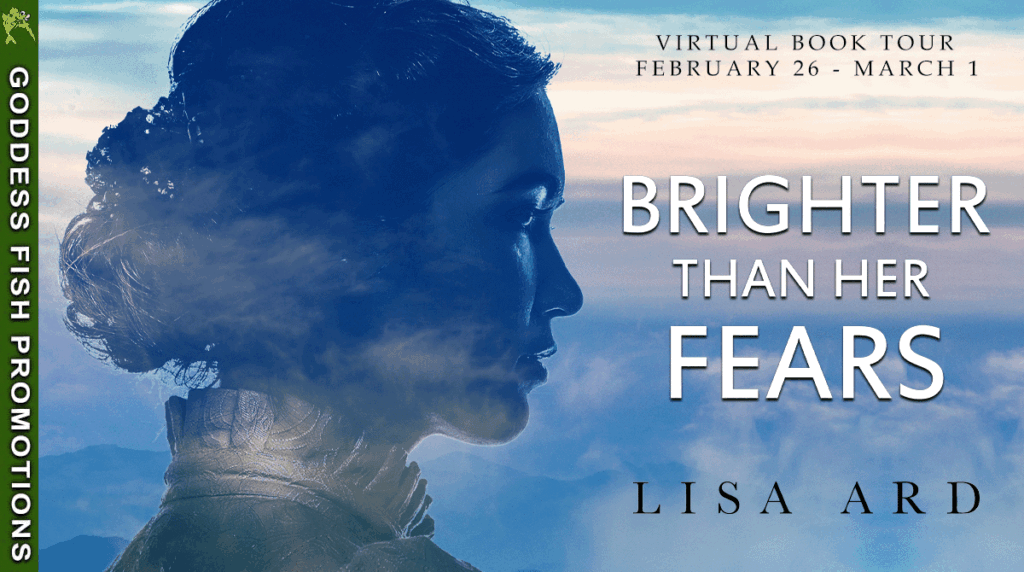
The 19th century women’s rights movement and the rise of public education intertwine with one woman’s story of struggle, perseverance, and love.
When her father dies and the family inn falls to ruin in 1882, western North Carolina, thirty-year-old Alice Harris is compelled to marry Jasper Carter, a Civil War veteran twice her age. Far from home and a stranger in a new family, Alice remakes herself. She learns to farm tobacco, mothers her stepson, and comes to love her husband.
However, Alice uncovers pending trouble with the family’s land holdings, which threatens their livelihood on the farm. The growth in Asheville promises a different future—one of manufacturing, transportation, tourism, and wealth. Alice believes this future demands an education and she rebels against the limited rural instruction. She joins forces with other women campaigning for Asheville’s first public schools. Her actions spark the rebuke of the Carter men.Tragedy strikes and Alice’s newfound security is ripped away. The family challenges her property rights and files for guardianship of her stepson. Battered but determined, Alice turns to the law—and a friendly court clerk—to fight for her independence. Will Alice lose everything? Not if she can help it.
Lisa Ard’s debut historical fiction novel will resonate with readers for its parallels, between then and now, on women’s rights, inequality, and racism.
Enjoy an Excerpt
The dressmaker probably saw every kind of bride—joyful, nervous, excited, even frightened, yet rarely two sisters on the same day and seldom ones of our advanced age. At thirty years old, I’d long since abandoned the idea of marriage. The War had ended when I was thirteen and with battlefields turned to cemeteries, the marriage prospects in the South had dimmed considerably. I didn’t favor the title spinster, but I valued my independence. Especially now, as it slipped from my grasp.
“Shorter, Miss Harris?” Miss Shackton asked. “You might wear it after the wedding.”
“Yes, thank you. It’ll make a fine church dress.” My cheeks warmed at the suggestion for thrift. My thoughts thundered over my family’s losses. A hastily arranged marriage to a man I barely knew was my only option.
While Miss Shackton circled to pin the dress’s hem, my eyes swept the neatly kept shop. It was narrow, not two wagons’ breadth across with a front counter crafted from a rich, dark slab of wood laid on top of postmaster shelving. The many nooks and crannies held the dressmaker’s tools of the trade: threads, spools, pin cushions, bolts of fabric, scissors, and more. The orderliness soothed me.
“I’m almost finished here. Be with you in a minute,” Miss Shackton announced to my sister.
Jennie slumped on a faded settee and dabbed her eyes with a damp handkerchief. She’d always been delicate and our rushed marriages, and that of our two sisters, Louise and Ina, didn’t help.
About the Author 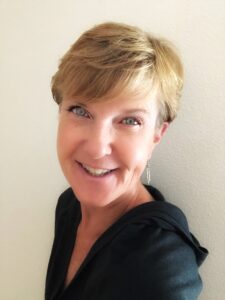 Lisa Ard is the author of the new historical fiction novel Brighter Than Her Fears, which is based on her great-great-grandmother’s experience in 19th century western North Carolina. Her previously published children’s books include Fright Flight, Dream Team, and the Kay Snow award finalist Saving Halloween. When not writing, Lisa enjoys reading, hiking, golfing and sharing her love of history as a bike tour docent with the Palm Springs Historical Society. She and her husband live (and golf) in both Palm Springs and Portland, Oregon.
Buy the book at Amazon.

 Alex is twenty and confused. He always is. The world presses on him with its horrors and pain, with scintillating auras that bewilder his eyes and drive the migraines deeper. He hears the cries of the children, sees the brutal images of tortured victims. He feels out of control and his mind slips…
 Dianne grew up in one of the older homes in the middle of Los Angeles, a place of hardwood floors and secret closets and back staircases. A house where ghosts lurk in the basement and the faces in the paintings watch you walk up the front stairs. Rooms where you keep the closet doors closed tight at night. It’s where her love of the mysterious and wonderful came from. Dianne is the author of m/m romance, paranormal/suspense, fantasy adventure, the occasional thriller, and anything else that comes to mind.

 Move over Susan B. Anthony. There’s an unsung woman asking for the vote 224 years before you, and murderous rebels and bigoted gentlemen can’t prevent spinster Lady Margaret Brent from wielding her power to defend Maryland settlers from plunder and obliteration.
 Charlene Bell Dietz lives in the central mountains of New Mexico. She taught kindergarten through high school, served as a school administrator, and an adjunct instructor for the College of Santa Fe. After retirement she traveled the United States providing instruction for school staff and administrators. Her writing includes published articles, children’s stories, short stories, and mystery and historical novels.


 How far will you go to save a friend?
 In his first life, BRIAN H. ROBERTS worked as a contractor and civil engineer in bustling Seattle. In his spare time he read novels by the greatest names in science fiction: Andy Weir, Frank Herbert, Arthur C. Clarke, Ray Bradbury, Isaac Asimov, and so many others. As he read these authors’ works, he was inspired to write Sci-Fi Thrillers to engage and entertain readers like him.





 Sorcha is a descendant of the Atlantean people, a race of humans who were once the blood slaves of the vampires of Atlantis. She grew up knowing that the vampires were enemies, the werewolves were beasts, and the witches were their friends. When she starts to question the situation her clan has been put into with the witches, a vampire who haunts her erotic dreams comes to the rescue. Samson didn’t grow up in Atlantis and didn’t choose to become a vampire. He hates what he has to do to survive, and can’t imagine ever deserving love. When he finds a Descendant of Atlantis near death and nurses her back to health, he expects her to run at the first opportunity. When she offers him her willing body, he knows he would do anything to keep her, and that means hiding his monstrous side. But you can’t love someone if you’re hiding part of yourself. One look at Samson and Sorcha knows she erased him from her memory on purpose, but why? What could he have done to make her risk such a dangerous spell? With battle on the horizon and Descendants in trouble, will Sorcha’s memories be the end of any chance at Samson’s happiness, or will it lead to a new understanding of what these monsters really are?
 Courtney Davis is an author of urban fantasy/paranormal/supernatural fiction with a little romance and humor thrown in. She loves creating worlds and exploring human, and inhuman, interaction. She lives in North Idaho with her husband and children where she teaches and enjoys time spent relaxing in the summer sun and winters by the fire. She has always had an affinity for reading and writing and a goal to make a career of it. There is no greater joy than to know her words took a reader out of reality for a time and into another world.