As an Author, What Scares Me the Most by Cynthia Flowers – Guest Blog and Giveaway

This post is part of a virtual book tour organized by Toddess Fish Promotions. Cynthia Flowers will be awarding a $10 Amazon/BN gift card to a randomly drawn winner. Click on the tour banner to see the other stops on the tour.

As an author, what scares me the most is…

That I’m creating “make work”—pieces that may technically get published but won’t be read, talked about, recommended, or remembered. The idea that I could pour myself into a story, sculpt every sentence, and still have it vanish into the void terrifies me. I fear irrelevance more than rejection.

There’s also a deeper fear: the audacity to believe I can write something worth reading. Sometimes I wonder if it’s hubris to think I can create characters people will care about, narratives they’ll follow, or themes that resonate. What if I’m wrong? What if the emotional truth I’m trying to convey gets lost in translation, and the picture I’m painting in my head never fully reaches the reader?

I worry about clarity—about whether my intentions are coming through. That the scene I see vividly might feel flat or confusing to someone else. That the nuance I’m chasing is too subtle, or worse, too obvious. I fear becoming stale, repeating myself, or running out of something new to say. That my voice will lose its edge, and what once felt authentic will start to feel manufactured.

But perhaps the scariest part is that writing demands vulnerability. And at times I find it difficult to dig down to unearth the substance for a character and/or their motivations. Also, that the characters I create, which are bits and pieces of people I have known or know in my life, will feel revealed, betrayed and/or insulted.

When Jacqueline follows her trusty Labrador Bailey down a hidden path to the beach, she’s unaware that her vacation plans on a small island off the New England coast has already taken her life in a new direction. Running into an unassuming local beach comber stirs new thoughts, desires, and a self-determination she never knew she possessed. Jacqueline will need to trust her instincts and make the most of what fate has in store if she wants the future that, until now, she has only dared to dream of.

Enjoy an Excerpt

The ferry was taking its sweet time making its way to Block Island.

Time is the ultimate dictator. Where did I hear that? I couldn’t have just come up with that one on my own.

Jacqueline French grabbed one of the last outside seats on the Block Island Ferry. It had only left Point Judith, RI, ten minutes ago, but for her, it seemed like ten hours ago. This would be her fourth September visiting this tiny tear drop-shaped island nestled between the south coast of Rhode Island and Montauk Point, located at the eastern tip of the south fork of Long Island, New York.

Over the last several years, both Montauk Point and Block Island had become popular and expensive vacation destinations for well-to-do Manhattanites. They came seeking a reprieve from the overly manicured crowds who flocked every summer to the more fashionable vacation locale known collectively as the Hamptons.

She always preferred visiting Block Island this time of year, after many of the Labor Day vacation stragglers dispersed and the kids were back at school. Although there were still a fair number of visitors, the din of racing mopeds was confined mostly to the weekends. Thanks to Michael, who she met on her first trip to Block Island, she came to know virtually every back road and trail on this seven-mile-long by three-mile-wide island. Beyond its beauty, Jacqueline’s deeper connection with the island was its shape. She shed many tears lately over the fate of her marriage and the direction her life had taken.

About the Author: Cynthia Flowers, a recently retired advertising professional, now grant writer, resides with her husband and four-year old Labrador named Eddie, at their “sanctuary” in Upstate New York, Although previously published, this is Cynthia’s first book of fiction. Early on in grade school, Cynthia looked forward to creative writing class and enjoyed reading her stories aloud to her eager classmates.

Buy the book at Amazon.
a Rafflecopter giveaway

Ten Things Most People Don’t Know About Me by MG da Mota – Guest Blog and Giveaway

This post is part of a virtual book tour organized by Goddess Fish Promotions. One randomly chosen winner via rafflecopter will win a $25 Amazon/BN.com gift card. Click on the tour banner to see the other stops on the tour.

Ten things most people don’t know about me
1. I don’t like dresses or skirts. And since my 18th birthday the times I wore a dress or a skirt can probably be counted by the fingers of one hand!

2. I love the night sky and can stand looking up at the stars for hours in a dark place, with little or no light, in the middle of nowhere.

3. People know me as a classical music, opera and ballet lover but I enjoy some rock music too. When I lived in Germany I went, among others, to the live concerts of Queen, Bruce Springsteen, Pink Floyd and Gary Moore. The experiences were memorable.

4. I worked in IT for many years but before that I was a TV presenter, a translator and a teacher of foreign languages and history but always continued to write in parallel to these jobs during my spare time.

5. I kept my writing secret from most people, except my brother and best friend, for many years because I thought people would think I was weird.

6. I don’t like ice cream and I will always prefer cheese to cake or sweets, however, I love chocolate, especially dark chocolate and find it difficult to resist.

7. I don’t like tea. It is something I never drink. I find it just tastes like hot water though it can have nice aromas.

8. I like fast cars and motorbikes and I used to fly as a co-pilot fixed-wing small planes with a friend of mine in Germany a long time ago. When I moved to the UK I learned to fly helicopters.

9. The things I most hate in life are boredom and stupidity.

10. I lived in Germany ten years and while there I hitchhiked often and travelled all over the country in that way.

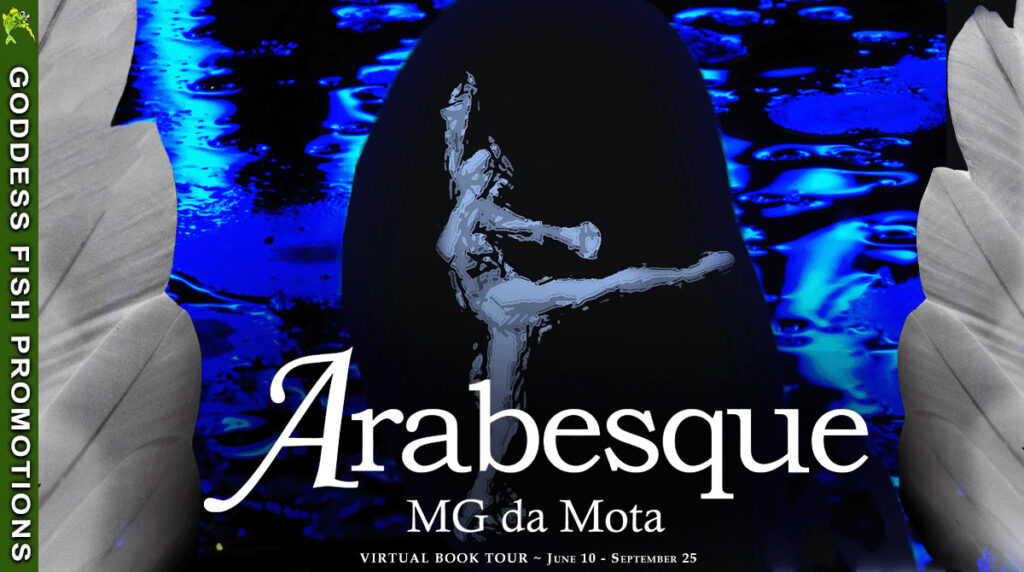
A woman living alone in a coastal Sussex town in 1998 plants a copper beech sapling at 3 a.m. on a dark, cold night. Why?

A ballet dancer in 1960s East Germany is oppressed, longs for escaping with his little daughter but not his wife. Why? Will he make it?

In 2022 Karsten von Stein, widower and principal of the Royal Ballet, with two young children, meets Ivone Benjamim, a Portuguese, newly-arrived principal dancer. They discover a magical chemistry when dancing and soon it transfers to their private lives.

Against the background of ballet and its dancers, a woman called Grace tells her story from a rehab centre. Obsessive, delusional she begins believing Ivone robbed her of the man of her dreams—Karsten. And then a skeleton is found in a garden…What connects all these people and their stories?

You’ll be the audience facing the stage of this balletic novel.

Enjoy an Excerpt

Prologue
Southeast England, late November 1998

She looks out of the window. Dark night. Black but clear. Twinkling dots punctuate the raven velvet of the sky. Stars shimmer cold and icy. Their light slightly wavering. She knows it is the Earth’s atmosphere. But that’s neither here nor there. It doesn’t matter a jot. Not at this moment anyway.

Darkness is the important thing. No moon. New moon. Why do people refer to a new moon when there is no moon or when one cannot see the moon from our revolving, ever turning blue dot? The moon is still up there in the sky. It’s just that at some point during its orbit its farther side from us is facing the sun. So the side facing us is dark and we can’t see it. As simple as that.

Tonight is new moon. An ideal night. She opens the window quietly and glances at the houses to her right first, then to her left. Like hers they are all immersed in silent darkness. People sleep. She looks at the luminous hands of her alarm clock on the side table. The shorter hand points at the number three, or close to it, and the long hand at somewhere between ten and fifteen. Probably around 3:12 in the morning. Her house stands almost but not quite alone on top of the hill. To her right, looking from her bedroom window that faces the back garden, there are two houses. The one closest to hers is empty.

About the Author: M G da Mota is Margarida Mota-Bull’s pen name for fiction. She is a Portuguese-British novelist with a love for classical music, ballet and opera. Under her real name she also writes reviews of live concerts, CDs, DVDs and books for two classical music magazines on the web: MusicWeb International and Seen and Heard International. She is a member of the UK Society of Authors, speaks four languages and lives in Sussex with her husband. Her website, called flowingprose.com, contains photos and information.

Website | Facebook | LinkedIn | Instagram
Buy the book at Amazon.

a Rafflecopter giveaway

Wedding Planning by Kathy Forbes – Spotlight and Giveaway

This post is part of a virtual book tour organized by Goddess Fish Promotions. Kathy Forbes will be awarding a $10 Amazon/BN gift card to a randomly drawn winner. Click on the tour banner to see the other stops on the tour.

This book has everything you need to know to plan your perfect unique wedding.

This is not your typical wedding planning book. Chapter titles alone will tell you what needs to be done, and the subtitles break it down further. The book includes tips, advice, stories, templates, and notebook to keep track of everything.

All the other books, magazine articles, Instagram and Pinterest timeline posts state on the “day of” to have a good breakfast. They don’t mention the people that take care of all the duties and tasks throughout the day so you can be VIP guests at your own wedding.

The five easy steps and how they relate to each other is the foundation of this book, which will make sure you have an educational, memorable, stressless, wonderful experience throughout the whole process:

1) Timeline
2) Budget
3) “Day of” schedule
4) Duties and tasks
5) Lists and assignments

The secret is having a planned schedule that catches everything, and a specific person in charge on the “day of” that pulls it off while you enjoy with the guests. Let me show you how to perfect your wedding planning experience.

Waiting to your wedding day is just too late to realize the importance of this thought process and having a specific/special go-to-person working the “day of” on your behalf.

You will enjoy the days up to the wedding as much as the day itself, as this book helps make it all come true.

Read an Excerpt

Wedding Planning 101

This book has everything you need to know to plan your perfect unique wedding.

This is not your typical wedding planning book. Chapter titles alone will tell you what needs to be done, and the subtitles break it down further. The book includes tips, advice, stories, templates, and a notebook to keep track of everything.

All the other books, magazine articles, Instagram and Pinterest timeline posts state on the “day of” to have a good breakfast. They don’t mention the people that take care of all the duties and tasks throughout the day so you can be VIP guests at your own wedding.

There is more to planning a perfect “day of” than you think – believe me.

So, you can enjoy the days up to as much as the “day of”, this book will help.

The Reality is: 3 things are kept – your spouse, the ring, and your photographs. All the rest is but a fading memory over time. You most likely have read the saying “don’t sweat the small stuff” or as I suggest, we rewrite it for wedding planning to state “plan for the small stuff details and you won’t sweat”.

I have been married since 1973 – the oops, challenges and happenings – they all happened at our wedding and at least one of them happens at every wedding. Some things never change. This book will help you Plan for them, Minimize them and Smile through them.

This wedding planning book will help you to succeed in putting on a memorable, unique, and stress free wedding. Forge onward through these pages to discover the secret to learning how to pull it all together by just following the easy 5 steps.

Included is the industry insider stuff such as what the vendors and suppliers would like you to do, ask them and the reason why it is important. Through this direction you will acquire the knowledge of what questions to ask your vendors and suppliers. All you must do is fill in the blanks on the easy to complete templates supplied for all the steps.

As I said earlier, this is not your typical wedding planning book filled with wedding dress styles, centerpiece designs and how to walk down the aisle at the ceremony. Everyone has access to that in books, internet, and visuals on Pinterest. This book has the real stuff you need to know. It is a gift you give yourself to be happy and successful in the whole exciting process of your wedding planning.

This book shares real stories (to make a point, relate to real people and tips to make it easy) and of course professional advice.

About the Author: I knew that our youngest daughter was going to be engaged soon, so I enrolled at BCIT and got my wedding and event planning credentials in 2005. I changed careers from corporate sales analyst to something that puts meaning and joy into my life every day. In no time I put it to good use: one daughter married in 2006 and the other in 2007. I retired in 2020 but continued to expand my world. I paint and am a miniature hobbyist—both produce a connection with a memory that I want to preserve and share. I wrote this book as a memory for me, and as an educational reference book to educate you all. My goal is to make planning a wedding a wonderful experience.

My life’s motto is: be interested and interesting.

Author Website | Event Planning Website | Goodreads

Buy the book at Amazon


a Rafflecopter giveaway

Ideal Writing Space by Colin Sephton – Guest Blog and Giveaway

This post is part of a virtual book tour organized by Goddess Fish Promotions. Colin Sephton will be awarding a $10 Amazon/BN gift card to a randomly drawn winner. Click on the tour banner to see the other stops on the tour.

Ideal writing space

My ideal writing place is my study at home. It is my little sanctuary away from everything. It’s my own little world if you like. I can I like to work in my study surrounded by my inspiration. I am surrounded by bookshelves of fantasy books; my favourite authors being Michael Moorcock and Robert E Howard. These shelves also contain lots of Marvel graphic novels, science / astronomy books, art books, philosophy books, lots of notebooks and sketchbooks, and lots of curios gathered over a long time. I have prayer wheels, singing bowls, comic figurines, meteorites, Buddhist and Hindu statues. I draw all my ideas from these. I find it really relaxing to thumb through my books, especially the art books. These are for traditional artists like Monet, Turner, Constable or Da Vinci, but I also have fantasy art books by Frank Frazetta, Boris Vallejo, Roger Dean, and others. I use these for my own art and sometimes find it easier to paint a character before I use him / her in my writing. My artwork helps me to visualise characters so I can describe them in detail in my novels. I am a very visual person, and I think that probably comes across in my writing.

However, I can work virtually anywhere because I do a lot of my writing either on an iPad or by hand in a notebook. The notebook is also where I keep a lot of my ideas and research. I will scribble chapters down at speed, which leaves my handwriting looking dreadful. I defy anyone else to be able to read some of it. Then when I type it up, I will refine it, add additional detail, and move some text around. I am able to work like this anywhere, in coffee shops, hotels, even the beach or around a pool. I then edit all of this on a laptop in my study. I find it easier to move whole chunks of text around and look at several pages at once on my laptop. I drink lots of tea when I’m working and sometimes listen to music, but I can find that a distraction depending on the track. My music taste is very eclectic. After writing a piece or a chapter, I will think about it overnight and usually come up with additional ideas that I can add. So will edit to a certain extent as I go along. Anything I remove, I keep. I never delete anything, you never know when it will come in handy.

When doppelgangers start appearing in Oxford, Union Jack agents Ignatius and Indigo find themselves on another cosmic quest, one they didn’t set out to investigate.

Drawn into the search for the elusive and dangerous Book of Shadows, they find themselves traveling across the cosmos once again, racing against other versions of themselves, and visiting the Oracle to be given prophecies of terrible destruction that will engulf the cosmos in darkness. Only these two heroes—or their doubles—can open the book, which would lead to dreadful consequences for themselves, the world and the whole of creation.

The agents must outwit their own mirror souls and invade the impregnable Administorium, which holds the answers they need but also fearsome enemies of both the Union Jacks and the entire cosmos. In this quest, Ignatius and Indigo must protect not only England and the Empire, but the world and the cosmos.

Enjoy an Excerpt

As the shadowy figure moved from shelf to shelf, ornate gilt decoration caught what dim light there was on his grey-turquoise armour. Carvings of ancient scribes and tomes written to record the passing of aeons on many worlds across many planes. The books he tended were part of the vast repository of information that he had collected through his long lifetime. Books here took the form of sacred texts carved in clay, or written on scrolls of vellum, or even human skin. Enormous tooled leather-bound volumes with gilt pages or with golden clasps, some were chained and bound, their knowledge too dangerous to be shared or accessed by mere mortals. The shelves had been arranged by subject and ordered in a timeline for each category. There wasn’t any index system. The Librarian worked using only his memory, knowing each and every volume, regardless of when it was written or when it was obtained. Nothing was forgotten, his memory was a storehouse of wisdom and knowledge from across the cosmos.

With his brother and sister, they had probably gathered the entire history of the cosmos. From time to time, they would travel the astral planes in search of new knowledge and rendezvous every millennium to discuss and compare notes to set quests for each of them to fulfil in the search of even more ancient texts. Legend had it the three siblings were born of the Goddess of Wisdom and their father was a High Priest of the Ti-Botta.

About the Author Colin was born in Coventry and worked in the automotive industry for over twenty years before becoming an Engineering teacher. Obtaining his first library card at the age of thirteen, he became an avid reader of Fantasy and the mysteries of the Universe. He has an inbuilt curiosity for lost knowledge and ancient texts that may help to unlock the secrets of consciousness and the universe. Living in Oxford for many years, he has now moved back to his home county of Warwickshire where he enjoys creating and working with his wife on their garden in which he writes and entertains their two grandsons. He has always been an artist and writer and is inspired by the worlds created by Robert E Howard and Michael Moorcock, with the artwork of Frank Frazetta.

Instagram | Website

Buy the book at Amazon

a Rafflecopter giveaway

Why Poetry? by Lori Alden Holuta – Guest Blog and Giveaway

Parlor Poetry: A Victorian Versification Abecedary by Lori Alden Holuta Spotlight and Giveaway

To celebrate my guest spot here at Long and Short Reviews, I’m giving away a free Kindle copy of my book, Parlor Poetry: A Victorian Versification Abecedary.

Due to Amazon restrictions, this giveaway is open to U.S. residents only, and winners must have an Amazon.com account to receive their Kindle copy.

Giveaway Entry Instructions
To enter, simply subscribe to my once-a-month newsletter, Postcards From Industralia. It’s packed with Victorian trivia, steampunk surprises, and (if the rumors are true) the occasional hidden key to unlock a secret room in The Brassbright Chronicle.  Subscribe here!

About the Author
Lori Alden Holuta lives between the cornfields in mid-Michigan, where she grows vegetables, teas, and herbs when she’s not playing games with her cat, Chives. She loves activities from the past, including canning and preserving, crocheting, and reading her Kindle in the dark.

Her lifelong fascination with the Victorian era dovetails nicely with articles she’s written for The Primgraph, an online magazine focused on historical reconstructions in virtual worlds, as well as music and book reviews for Steampunk Magazine.

Her first novel, a young adult steampunk comedy adventure called The Flight To Brassbright, has endeared itself to teenage girls and a surprising number of grown-ups. Its sequel, Down The Tubes, seems to be in an eternal state of “nearly done,” but she plans to surprise readers when it publishes, possibly sooner than you think. Book Three: The Hidden Doors is in a delightful state of disarray, and Book Four: Off The Rails is currently in development.

Full Steam Ahead is a collection of short chapter stories for kids. Steamed and Steamy: Recipes from the Steampunk World of Industralia is a cookbook inspired by Industralia’s characters and their eating habits. Shredding It is a collection of family and friends’ recipes, which contains an alarming amount of cabbage (and there’s even a dessert section). And now, she has taken a poetic view of the Victorian era in Parlor Poetry: A Victorian Versification Abecedary.

Why Poetry?
I’ve written poetry since third grade, but only for my own amusement or to make my friends laugh. A few years back, I had the idea to write a poem for every letter of the alphabet as a personal challenge. I needed a theme, and choosing the Victorian era was no surprise to anyone who knew me — I just can’t get enough of that time in history!

While mentioning my project to an artistic friend, she volunteered to provide illustrations to help turn my challenge into a book. I gave her a list of topics, and she happily took to the task. There was no turning back — I was officially writing a book! Some topics were easy to tackle, others near-impossible, but isn’t that the point of a challenge?

After completing the last poem, I began arranging the artwork and poems into a manuscript. It felt like it needed something more, so I decided to include a short overview of each alphabetical topic for readers who might not know much about, for example, daguerreotype cameras, velocipedes, or the London underground tube rail system. This added bonus knowledge meant each topic spanned three pages. Books display two pages at a time, so I added a fourth page for each topic to create better flow and balance. That’s how Notable Quotables happened — bringing the words of famous people and news sources to the poetry party. Suddenly, I had a book!

Another artistic friend helped me create the cover. I wanted it to look like an old, embossed leather volume that could have existed in the Victorian era — and I think we did it!

I hope readers who pick up my book feel transported back in time and come away both educated and amused by the challenge I gave myself long ago.

In Closing…
Don’t forget — one lucky subscriber to Postcards From Industralia will win a Kindle copy of Parlor Poetry: A Victorian Versification Abecedary. Subscribe by September 19 for your chance to win — the giveaway closes promptly at midnight!

Sound Catchers by Jessica Coriat – Spotlight and Giveaway

This post is part of a virtual book tour organized by Goddess Fish Promotions. Jessica Coriat will be awarding a $10 Amazon/BN GC to a randomly drawn winner. Click on the tour banner to see the other stops on the tour.

Sound Catchers is about Maddy, a twin girl who experiences hearing loss early in her childhood. Initially, she is fitted with bilateral hearing aids. As her loss progresses, she makes the transition to cochlear implants. The book captures the world in which Maddy lives in a lyrical and loving way. It creates an awareness of children with hearing loss as part of the world around them, enabling the reader a glimpse into that experience through Maddy’s journey.

This book contributes to a greater understanding of those who live with hearing loss. It helps the reader to build empathy, and it creates an awareness of differences. As such, it holds a valuable place in the social/emotional curriculum, which is taught in schools nationwide.

About the Author:

Jessica Coriat completed her bachelor of science in Special Education/Elementary Education and went on to earn two master’s degrees, one in Deaf Education and the other in Creative Writing for Children. With over twenty years of experience as a teacher of the deaf and hard of hearing, Jessica continues to teach her students alongside their typical hearing peers.

As a full-time working mother of three teenagers, Jessica has plenty of free time on her hands. She enjoys spending it in her home in New Jersey, with her son, her twin girls and their cavapoo, Bailey. Jessica is also passionate about living a healthy lifestyle. She is thrilled to have written this book and continues to make time to write each day.

Instagram | Goodreads

Buy the book at Amazon.

a Rafflecopter giveaway

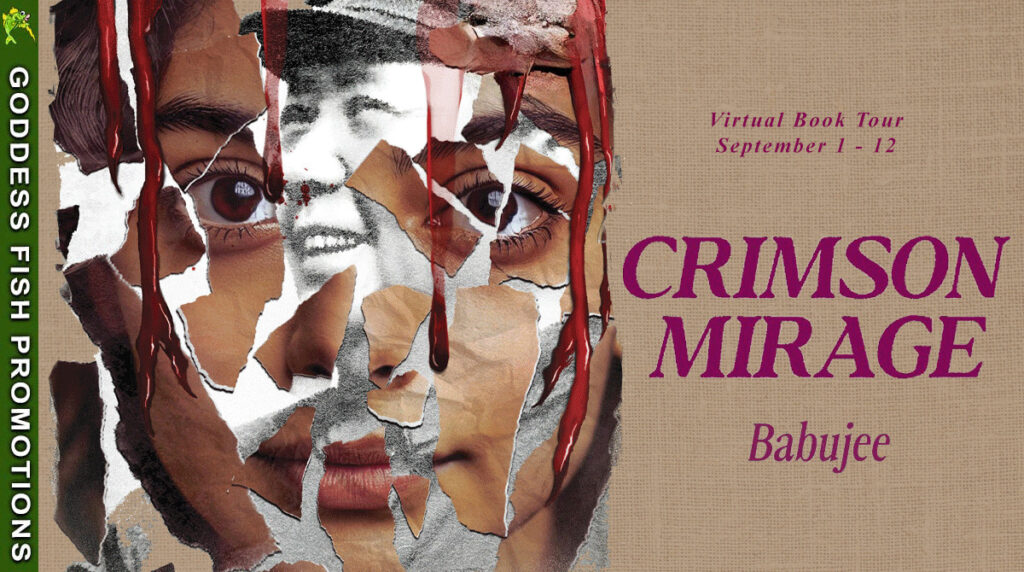
Death in a Coffee House by Babujee – Guest Blog and Giveaway

This post is part of a virtual book tour organized by Goddess Fish Promotions. Babujee will be awarding a $15 Amazon/BN gift card to a randomly drawn winner. Click on the tour banner to see the other stops on the tour.

Death in a Coffee House
(Trigger warning: Suicide.)

The Coffee House is prominently featured in my novel, Crimson Mirage. After all, it would be impossible to capture the intellectual and political life of Kolkata without touching upon this legendary institution. At the time, it was in the epicenter of the city’s intellectualism—a place where ideas brewed as intensely as piping hot coffee. To be recognized as an intellectual, or antel (a contemporary slang borrowed from the French ‘intellectuel’ and often used derisively), one needed the ultimate badge of honor: being known as a ‘Coffee House regular’.

While a handful of these antels were true thought leaders, shaping the culture and ideology of those turbulent times, most were only aspirants. Thick-rimmed glasses; a French-cut beard; a crumpled, oversized panjabi (long shirt); and ill-fitting trousers (jeans were not as much in vogue then!) completed the signature look. Although they were somewhat respected, the general public often saw them as amusing caricatures. Their fortress, their refuge, was the Coffee House.

The Coffee House is vividly described in my novel, but let me paint a picture here. Located in the bustling College Street area of Central Calcutta, it sits at the heart of the city’s academic hub, surrounded by four iconic educational institutions, including the University of Calcutta. The sidewalks are lined with secondhand booksellers, their stalls crammed with forgotten literary gems. Navigating through the crowd of eager book-hunters just to reach the Coffee House is still an adventure in itself.

The café occupies an old building called the Albert Hall, which once housed the Medical College, Bengal, when it was inaugurated in 1835. Inside, a vast hall (locally known as the ‘House of Commons’) with an enormously high ceiling is ringed by a balcony overhang (‘House of Lords’). The ‘House of Commons’ was where aspiring antels congregated, while those at the top of the intellectual hierarchy—smug in their self-aggrandizement—occupied the ‘House of Lords. The café was serviced by turbaned waiters in formal cummerbands (sashes), adding an air of colonial grandeur to the scene.

I have never quite figured out how the café stayed in business. Although food was available, I rarely saw anyone order anything other than a cup of coffee. And even that single cup was nursed for three to four hours—a ticket to endless debates and discussions. The truth is that even the most prominent antels were an impoverished lot. It was a badge of honor. Ordering food—or worse, offering to buy coffee for others—was a fatal mistake. You’d immediately be dismissed as a privileged “rich kid” and banished from the hallowed intellectual circle. A cigarette was shared among three or four people and a cup of coffee between at least two. The legend went that “a full belly blunts the
sharpness of the brain.”

There was another surefire way to get exiled—ordering a simple ‘coffee’. The true antel knew better. The only acceptable order was ‘Infusion’—a black drip coffee—which the antels sometimes liberally ‘fortified’ by tapping cigarette ash into it. Those who mistakenly asked for ‘coffee’ were met with looks of suspicion, even pity. They were, obviously, outsiders attempting to gatecrash past the ‘hallowed portals’ of the antels’ sanctuary.

Tables at the Coffee House formed their own orbits of influence. At the center sat the avant-garde poet (a would-be Irwin Allen Ginsberg), the breakthrough novelist (an aspiring Jack Kerouac), the abstract artist ( a make-believe Wes Wilson)—the intellectual stars of the time. Surrounding them were their closest followers, the chamchas (literally ‘spoons’, but meaning sycophants), who hung onto every word they said. We despised the chamchas because we secretly longed to take their place. Further out stood the hoi polloi—nameless onlookers like myself, hoping to catch fragments of high-voltage conversation.

I never graduated beyond the third row but, in a way, that gave me the freedom to float from table to table, absorbing different perspectives. One day, I found my favorite poet at one of these tables. He was a powerful writer—critically acclaimed, but commercially unsuccessful. His following was small but fiercely loyal. He carried himself with immense pride, often slamming his fist on the table and declaring, “Listen, you blokes, nobody in this world could have written these lines… You can mimic those worthless commercial poets, but I am unique.”

He needed that hubris to survive in a world where he was largely unrecognized, lost in the shadows of poverty. Most artists do. And that’s why they often come across as arrogant and self-centered.Then, one day, he put down his cigarette, scanned the faces around him, and murmured, “I smell burning flesh. Do you guys smell anything?”

A few days later, he hanged himself.

RIP, my Coffee House Hero.
That night I reread his poem
(Translated from Bengali)


Naïve Passionate Dangerous.

Manush is all of these—and more. Caught between the heat of first love and the fire of revolution, he confuses desire with destiny and activism with annihilation. What begins with tender hope ends in blood-soaked betrayal.

Set against the turbulent backdrop of Calcutta’s Naxalite uprising, this haunting debut novel unravels the journey of a boy-turned-assassin—his convictions twisted, his soul scarred, his story unforgettable.

The author grew up in the heart of this upheaval, witnessing firsthand how political fervor tore through families and futures. Crimson Mirage is not just fiction—it’s a reckoning. A meditation on blind love, brutal reprisals, and the elusive promise of freedom.

Enjoy an Excerpt

WASH YOUR HANDS!” the ice-cold voice cut through the stillness of the crisp mountain air and broke through his zombie state.

Manush didn’t remember how long he had been sitting on the rock!

The sun had slid slowly, silently below the horizon of the San Bernardino Mountains. The wind was freshening. The clouds riding the salty air of the Pacific Ocean were changing shade, from angry yellow to flaming crimson, in the harsh, upward glare of a late sunset hour. Venus was still the brightest speck in the sky in the midst of the orange-gold scatter of softly gathering twilight.
From not too far off, a mountain goat with cloven hooves—browsing brush and low-growing shrubs—sidled up to him, fixing its malevolent, yellow gaze on him. Far overhead, a homebound chickadee went ‘chickadee-dee-dee’ as it traced its solitary path eastwards.

To the northwest, the cliffs fell sheer to the ravine below, their surface unbroken. The shadows were lengthening across the vast valley lying snugly among the hills. And now, there were blotches of darkness slowly eating away the green. But the full umbra of the sun’s retirement was yet to descend upon the sprawling, rugged landscape.

“Wash your hands!” the voice was insistent in its urgency.

Manush sat upright with a start. He convulsed—first in astonishment, then with fear—as he looked incredulously at Jeevan.

Jeevan was smiling… his usual shy, reassured smile. He had not aged at all! His thick black hair swept back from his forehead, the creaseless, unblemished young skin on his face a contrast to the light growth of hair on his chin. Jeevan looked just like the post-mortem photograph the police had shown him.

About the Author The author is a professional who grew up in Kolkata during the turbulent times that serve as the backdrop of this novel. He has written short stories and articles. This is his debut novel. More of his writing at babujee.substack.com/archive.

Website
Buy the book at Amazon.

a Rafflecopter giveaway

Character Creation by Alex Zenk – Guest Blog and Giveaway

This post is part of a virtual book tour organized by Goddess Fish Promotions. Alex Zenk will be awarding a $25 Amazon gift card to a randomly drawn winner. Click on the tour banner to see the other stops on the tour.

Character Creation

Having strong, relatable characters will help your story. They do not need to be overpowered and unrealistic, but should feel real. Establish core traits, names, age, background, and role in the story. Work out their personality, identifying key traits such as bravery, cynicism, or compassion. Is your character flawed? What motivates the character to do what they do? Build out the character’s backstory, what was their upbringing like, and what moments shaped their worldview. Who does your character have relations with: friends, spouse, parents, or kids? Does your character have any wounds? Work out their arc and potential growth. Does the character have a positive arc, a negative arc, or a flat arc? The character should have an external conflict to drive growth and reveal the character. As you work out your villain or conflict in the story, use this in connection to various actions that your character could participate in. As you show development, does this show in dialogue and behavior? Where were they once shy, and now they talk to everyone? What does that dialogue look like? Keep your character consistent and stay true to the core of who they are. Try to steer clear of overused tropes, like the “chosen one”. What supporting characters do you have? Do they bring out the best in the main character, or the worst? Avoid the tropes, but you should still use the familiar archetypes, like hero, mentor, or rebel. Add your unique twists to these archetypes. There is a lot to be said about character development. Generally, authors who flesh out their characters extensively tend to have better stories, while those with weak characters often struggle.

In a world where ancient magic is fading and darkness grows, one dwarf mage stands between his realm and destruction.

Ordi, a gifted mage with the rare ability to command all elemental magic, is summoned by his king on a perilous quest. Accompanied by his loyal posh hound Mira and his warrior brother Verdun, Ordi must recover the legendary Otthroite Gems—powerful artifacts thought lost to time.

As they journey through forbidden forests, abandoned dwarven cities, and haunted valleys, they discover these gems are the only hope against the rising threat of the long-banished Dark Lord. With each step, they uncover secrets of ancient magic and face betrayals that test the bonds of brotherhood.

Rich in world-building and filled with magical encounters, “The Chronicles of Ordi” blends classic fantasy elements with fresh perspectives on courage, loyalty, and the price of power.

Enjoy an Excerpt

The battle intensified. The witch’s minions—a mix of twisted abominations and resurrected corpses—swarmed the clearing. Galen led the paladins in a valiant charge, striking down skeletal warriors only for them to rise again. Ordi and the mages unleashed torrents of arcane energy, incinerating the dark creatures. Despite their best efforts, the witch’s power seemed endless. She began summoning more skeletons to add to the chaos of the battle. Mira charged in, pounding and ripping bones apart. The skeletons reformed effortlessly, keeping her busy.

The skeletons pressed in, their bony fingers scraping and clawing, as Ordi and Mira fought back to back, the sounds of battle filling the clearing. Ordi summoned bolts of arcane magic that pierced through the skeletal frames, incinerating them to ash, but it was a fleeting victory. The skeletons reformed with unnatural speed, their rattling bones an unsettling soundtrack to the ongoing fight. Read more – link in comments.

About the Author Alex Zenk brings a fresh voice to the world of epic quests and magical realms. Born and raised in the midwest, Alex’s love for fantasy was kindled early by the works of J.R.R. Tolkien and nurtured through years of immersive role-playing games. As a pastor by day and a storyteller by night, Alex brings a unique perspective to his writing, weaving themes of morality, redemption, and the complexities of good and evil into his narratives.

Drawing inspiration from his experiences in World of Warcraft, Alex has crafted a rich and immersive world in his debut series, “The Chronicles of Ordi.” His background in theology and his deep understanding of human nature inform the complex characters and intricate plot lines.

When not writing or tending to his pastoral duties, Alex can be found exploring the natural beauty of Iowa with his family, using these adventures to fuel his imagination and inspire new fantastic landscapes. With plans for multiple books set in the world of Asheros, Alex Zenk is poised to make a significant impact on the fantasy genre, offering readers a blend of classic epic fantasy with a modern, thoughtful twist.

Instagram | Website | Facebook
Buy the book at Amazon.

Please use the following Rafflecopter code on your post:

a Rafflecopter giveaway

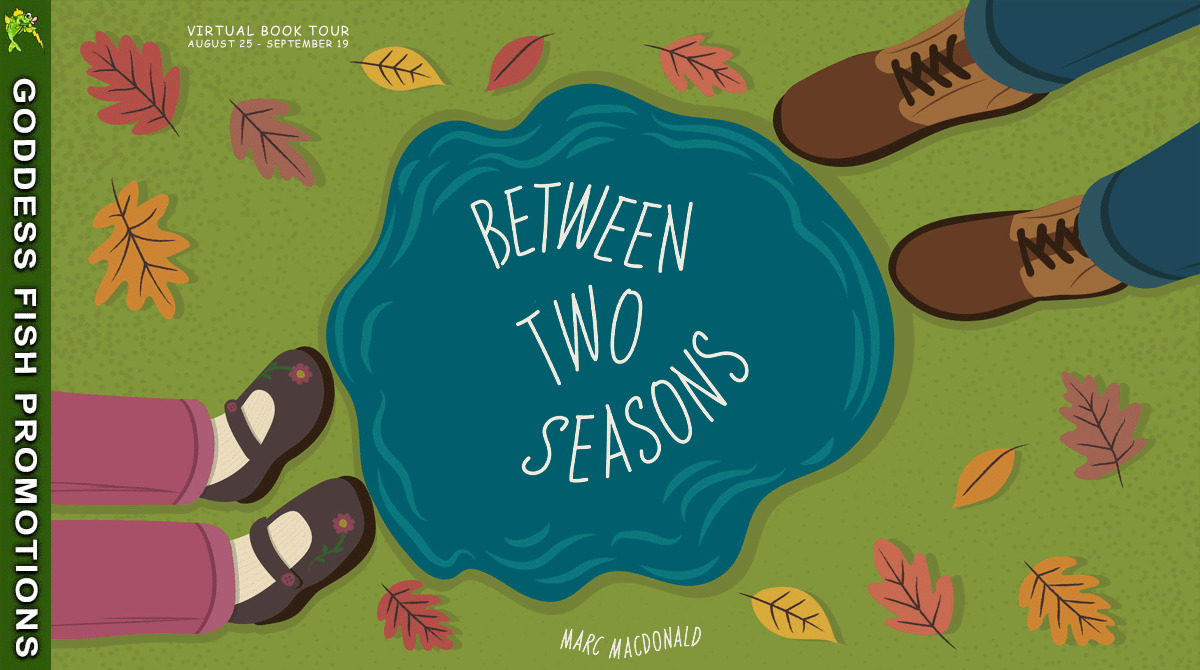
Where Do Ideas Come From? by Marc Macdonald – Guest Post and Giveaway

This post is part of a virtual book tour organized by Goddess Fish Promotions. Marc Macdonald will be awarding a $20 Amazon/BN gift card to a randomly drawn winner. Click on the tour banner to see the other stops on the tour.

Where Do Ideas Come From?
If I could ask one question to a writer of a book I’ve enjoyed, it would be this: where did you come up with that idea? And I don’t just mean the big, sweeping concept that drives the synopsis. I mean the subtler things: the offhand comment a character makes, the way a scene smells like pine or rain, the choice of one word instead of another. Those details are the heartbeat of a book, and they’re the things I think people are truly enamoured with.

So much of what you find in my book, Between Two Seasons, came from real life. That’s not to say it’s autobiographical—it isn’t—but countless pieces of it are borrowed from the world around me. A place I once visited, the way a certain trail curved through the woods. A name overheard at a coffee shop. The sound of gravel under tires on a back road. The faint smell of rain on cedar. Those fragments live in memory, waiting to be called up at the right moment.

Ideas are unique, but they rarely arrive fully formed. More often, they’re collected like stones along the way. Writers are borrowers, observers, magpies of experience. Sometimes we borrow subtly: a stranger’s facial expression, the rhythm of a conversation, the awkward silence that follows a poorly timed joke. And yes, sometimes we steal outright. A friend’s quirky turn of phrase, a look we’ll never forget, a single moment that demands to be placed in a new context. Writing, in that sense, is not about inventing from nothing; it’s about noticing, capturing, and reshaping.

This is why paying attention is one of the most valuable tools a writer has. The world is endlessly generous with details, if you’re willing to slow down and receive them. A walk to the store can give you five new ideas if you let it: the pattern of rain on the sidewalk, the way a child negotiates with a parent, the dog that refuses to be led in any direction but its own. None of these are “stories” in themselves, but they’re seeds. And when planted in the soil of imagination, they can grow into something surprising.

But perhaps the deeper truth is that ideas don’t just come from out there, they also come from within. Every writer carries their own history, perspective, and inner landscape. A story is often an attempt to reconcile those inner truths with the outer world. The settings we choose, the conflicts we shape, the language we fall back on; all of it reflects who we are, and how we see.

So when someone asks, “Where do you get your ideas?” the answer is: everywhere. From life, from memory, from strangers, from dreams, from the tiniest things we notice and the biggest questions we wrestle with.

And maybe that’s the real joy of writing. Not that we invent worlds out of thin air, but that we take the world we already have and see it anew.

So, if you have a chance to ask a writer, “where do your ideas come from?”, do it. You will be amazed where some of them originated.

Haunted by regret and stalled by guilt, Alex Chambers arrives at Silver Springs Health and Rehabilitation Centre searching for redemption. What he finds instead is Mae Seasons—a sharp-tongued, fiercely independent resident with no interest in being anyone’s project.

Alex came hoping to make amends for the mistakes of his youth, especially to the woman he once hurt. But when that hope slips away, he’s drawn into an unexpected role: caregiver and reluctant confidant to Mae, whose irreverence hides a lifetime of buried truths.

As days at Silver Springs unfold in their strange, often absurd rhythm, Alex is forced to confront the tangled grief of his past. Through awkward silences, reluctant confessions, and moments of startling vulnerability, he and Mae forge an unlikely friendship—one stitched together by shared loneliness, reluctant compassion, and the possibility of healing.

At once poignant and quietly humorous, Between Two Seasons is a story about the lives we try to outrun, the people who challenge us to face ourselves, and the surprising ways connection takes root.

Enjoy an Excerpt
I exited the food line like a camper in the mess hall, tray in hand and desperately seeking a friend or two to sit with. I, however, scanned the room for the opposite: an empty table. I didn’t have any friends here and wasn’t intent on making any. I wanted to eat and get back to my room. A budding headache and body ache were on the precipice of significantly derailing my first hours at Silver Springs. And these were crucial hours. I was banking on a good night’s rest to alleviate these symptoms but feared the anxious excitement of finally arriving here would preclude any such endeavour.

“Hey, new guy, over here,” came a voice and welcoming wave from the person sitting at a table to my left.

Shit. There goes anonymity.

I had a split decision to make: be polite and kindly dismiss the invitation or accept and possibly be pulled into the labyrinth of Silver Springs politicking. My therapist would not be pleased with this thought. I was creating an outcome, a negative outcome, to a situation I had not yet experienced. But still, I mean, how was this place unlike high school? I’d already relived several moments from my burgeoning youth, and I’d only been on the premises a very short time.

About the Author: Marc MacDonald is an author who believes every great story starts with a spark—whether it’s a single sentence, an unforgettable character, or an idea that won’t let go. As the writer behind Between Two Seasons, a novel that celebrates the beauty of human connection, Marc weaves heartfelt narratives that linger long after the last page is turned.

When he’s not crafting compelling fiction, Marc applies his storytelling skills as a seasoned communications professional, proving that every message—whether in a book or a press release—deserves to be engaging. He’s also a fierce defender of the Oxford comma, an unapologetic pun enthusiast, and someone who firmly believes that coffee is the most essential writing tool.

Find him deep in his next manuscript, chasing inspiration, or justifying “research” as an excuse to buy more books.

Website | Instagram.
Buy the book at Amazon.

a Rafflecopter giveaway

I Have a Story to Tell by Colleen L. Donnelly – Exclusive Excerpt and Giveaway

This post is part of a virtual book tour organized by Goddess Fish Promotions. Colleen L Donnelly will be awarding a $15 Amazon/BN gift card to a randomly drawn winner. Click on the tour banner to see the other stops on the tour.

Jim Turner writes crime but doesn’t live it. He respects his grandfather’s tales of heroes but doesn’t believe them. When his failing grandfather sends him to a remote peninsula to write the end of his own heroic love story, Jim includes a war criminal interview to maintain his edge.

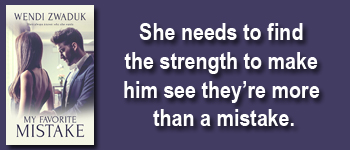
Chastity is an anomaly, a misfit in pre-WWII culture as well as in Jim’s life. Her spritely charm and endearing features turn Jim’s world upside down, especially when she reveals his grandfather’s peninsula as the site of her upcoming wedding.

Do good journalists flee when their interviewee is murdered? Do heroes write fiancés out of another’s story and themselves in? “The End” become the hardest words for Jim to write.

Enjoy an Excerpt

Author’s Note: Boy meets Girl. When fascination turns to love.

She squeezed my hand.

How did she know? Because of Grandpa I came to Grove and searched for a peninsula that brought me to Chastity…who then brought me to it. Even though Seth believed my main purpose here was to meet an informant who dared to malign one of Hitler’s men.

I let go of her hand. “My grandfather is a wonderful man… But before we discuss him, there are things you should know about.” I had to be honest. “Tasks you can’t help me with.” Like crime and violence, dangerous interviews, and the way I felt about her.

A face unlike any I had ever seen…and never would again…should send my heroic heart to the ladder where I would gather a million splinters in my hands by sliding to the ground, risking pain and infection to keep her safe. Her features looked watery as I gazed at her. Tears? I never cried. Her pastel throw rugs turned into colorful puddles blurred by an emotion I had never experienced before.

“You are supposed to be here, Jim. And I am supposed to help you.”

For a moment, something ominous crept into my thoughts. Something of the old crime writer in me, who with several clicks of a typewriter’s keys could turn any story the direction I wanted. I welcomed him back, then set him aside. Because in the blue of her eyes, I saw something stronger—my promise.

If friendship was defined by a long period of time and a large number of interactions, Chastity didn’t qualify. And maybe my initial carnal fascination which became a pitter-patter my heart couldn’t beat without didn’t meet the definition of love. But she was at least partially right. For three days we were supposed to be together and help each other. For three days we had an eternity.

About the Author: Colleen L Donnelly put her science education to use for years and then put it behind her to pursue other passions. Her first love is writing and her second is hunting—hunting for that next good story, hunting for relics and antiques, hunting for the next good author to read. An avid believer in work hard/play hard, Colleen splits her time between indoors and out, always busy at something.

BookBub | Website | Facebook | Goodreads | Instagram | Amazon Author Page | Twitter

Buy the book at Amazon or BookBub.

a Rafflecopter giveaway