INTERVIEW: JAMES S. DORR

Long and Short Reviews welcomes James S. Dorr, whose newest book The Tears of Isis is scheduled for release on May 15 by Perpetual Motion Machine Publishing.  The book is already available for pre-order, though, so be sure and check out the links at the bottom of this interview. Also, the publisher is offering five free copies of The Tears of Isis up until May 15 on the book’s site on Goodreads.

James told me that the easy answer to “what inspired him to start writing” might be that it was a great way to meet girls–and he did, including meeting the Woman Who Was to Become His Ex-Wife.  Actually, though, he came a bit late to writing–having first been interested in the visual arts.

“In college, for instance, I was art editor on the undergraduate humor magazine, though I read a lot too, and the editorial post sometimes included doing some fill-in writing,” he explained.  ”Then I was also doing some writing (and meeting girls) for the school science fiction club and, when I went to graduate school, I became a columnist and then an editor on a campus underground magazine, and then editor on a literary newspaper.  At that point I also got an graduate assistantship with the college’s academic computing center which ultimately became a full time ‘real job’ as a technical writer and editor.  This takes us to around the 1980s where, recession times striking the Midwest where I was located, I started freelancing real estate, business, and consumer topics for a series of newsletters.  Eventually I got a new ‘real job’ outside of writing but that gave me breathing room to get back to the artistic side of writing with short fiction and poetry.”

The Tears of Isis is a collection of short stories.  Seventeen stories in all  plus a poem to begin it.  Most of these have been previously published, but some are original, and with one exception none of these are printed in other collections of his work.  This would make this a collection of stories that will probably be new to the reader.

“If my selection does what I hope it will do, both in the stories I picked and in the order of their presentation, once you’ve finished you may have a feeling of having read something bigger than just the sum of the individual stories themselves,” he told me.

James has a series of short stories he’s been writing set on a far future, dying Earth in and around a vast necropolis called The Tombs.  Something more than a dozen of these have been published in various places, including three (two reprints and one for the first time) in The Tears of Isis, “The Ice Maiden,” “Mara’s Room,” and “River Red”  (another new one, “Raising the Dead,” is also scheduled for later this year in the White Cat Publications steampunk anthology Airships and Automatons).  At one time he had been in discussion with a publisher about a possible novel made up of Tombs stories as a sort of future history, somewhat along the lines of the late Ray Bradbury’s The Martian Chronicles, though problems with the economy at large seem to have put that on hold for now — at least for the moment.   He’s also being more aggressive in trying to place older stories as reprints in various anthologies, partly to get them back into circulation but also as a response to a weak economy. Also, he published a book of vampire poetry, Vamps (A Retrospective), with Sam’s Dot Publishing  two years ago and is thinking about the possibility of a second volume, possibly something like Vamps (And Friends) to allow in some poetry about zombies, werewolves, monsters and the like.

In the “Tombs” stories James began with a map–different areas were defined in terms of the people who lived there. More or less “normal” people lived in the New City and the Tombs; ghouls resided in the Old City;  boat gypsies lived on the river–they were fairly normal, but prone to disease from the river’s poisons, thus leading short but more intense lives;  more or less normal people again lived in the Port City but had a higher proportion of mutants.

“I asked myself how people made a living (in the Tombs itself, for instance, in trades related to undertaking: digging graves, guards to protect from corpse robbers, but also tombstone artists and carvers, curators for record keeping), and then what the social structure would tend to (in the New City an exaggerated version of parts of current America with rich getting richer and more privileged and poor getting poorer — and with hierarchies among hierarchies, as in varying levels of respect even among the city’s beggars),” he explained. “I asked about male-female relations (in New City, especially among the wealthy, rather ‘male chauvenist piggy’; on the river more rigid but also with the sexes more equal; in the Tombs the society in general tending to more individuality but also more collectivist when it comes to meeting mutual threats).  The physical world is a dying Earth with mixed levels of technology (the New City, for instance has electricity, but boats on the river are powered by sail) and with a sun that’s gradually swelling, becoming hotter to the point that it’s dangerous to go out in daytime, so part of the game is watching people within their various societies adapt themselves to a nocturnal existence,  But the thing is, you start with these strictures, then have to work through them to their logical conclusions (one story, as yet unpublished, shows how the New City can still be electrified; another, ‘Mara’s Room,’ reprinted in The Tears of Isis, alludes to a exodus from Earth at some time in the past, so the people we have now are those who were left behind).”

The names in the “Tombs” stories also follow conventions–arbitrary and somewhat of a whimsicality on James’s part, but conventions he feels can be useful to the readers as they become familiar with them. Males in the New City with names ending in “ar” are usually from the more wealthy, higher status classes (but not necessarily always since, after all, a once wealthy family could fall on hard times);  high-status women among the boat people have names that end in “an” (or “ann” or “anne”); ghouls almost always have names that begin with “m.”  In one story, a high caste boatwoman refers to herself as “Ana,” which, it’s explained, is a suffix without an actual name to precede it meaning she’s to be taken as “Everywoman”.

I asked him to describe his writing space.

“I have a particular room I use as an office with an off-line desk computer, file cabinets, and lots and lots and lots of bookshelves crammed with books, a lot of them reference.  Dictionaries. encyclopedias, atlases, travel guides, you name it.  Plus papers and who knows what else scattered all over when I’m in the middle of a project — I’m a messy worker.  I refer to this sometimes as the ‘computer cave,’ but there’s an outer part of the computer cave too, a second on-line computer on a table (with monitor stuffed onto a bookcase) and hooked to the phone for dial-up internet (I also refer sometimes to myself as the ‘caveman of computing’) in a corner of what was the dining room, that I use for email and for submissions, doing original writing on floppy disks which I can then switch to the second computer.  A lot of the equipment I use is second hand and cheap, but that’s my protection, too, from things like computer viruses:  important files are always backed up, and, should a computer become infected, I just replace it.   But also, as sort of a computer annex, I’ll also do work like downloading larger files, or files in more sophisticated form than the home computers are comfortable with, at the public library, thus getting some needed exercise too by usually walking downtown to get there.”

Finally I asked, “What advice would you give a new writer just starting out?”

“One word:  perseverance.  Some might even say pigheadedness.   But seriously writing takes time to develop so be prepared for lots of disappointments before the acceptance letters (emails these days) begin to come – and even then there’ll be lots of editors who, for one reason or another, may turn you down.  Don’t quit your day job.  You’ve heard that before,  but it’s true.  Even fairly steady success, especially if you’re into short fiction and poetry, is unlikely to bring in a lot of money, though there can always be exceptions (novels are better, but if you really want to make a living writing, go for nonfiction).  But then, money aside and, I think, most important,  find joy in writing whether you feel successful or not.  I think it’s the same with any art – if the joy isn’t there it isn’t worth doing.”


About the Author: 

5_7 Dorr-SMJames Dorr combines the charm of a gentleman born in the US South with the wiles of a near-New York City upbringing, the canniness of a one-time New England resident, and the guile of an outwardly stolid Midwesterner, or so he says.  It is known that he was born in Florida, grew up in New Jersey, went to college in Massachusetts, and currently lives in Indiana where he also harbors a cat named Wednesday.  He is a short story writer and poet working mainly in dark fantasy and horror with forays into science fiction and mystery, and  has previously worked as a technical writer for an academic computing center, associate editor on a city magazine, a nonfiction freelance writer, and a semi-professional Renaissance musician.

Dorr’s previous books include two collections from Dark Regions Press, Strange Mistresses: Tales of Wonder and Romance and Darker Loves: Tales of Mystery and Regret; a poetry collection Vamps (A Retrospective), from Sam,’s Dot Publishing (now part of White Cat Publications); and several electronic chapbooks from Untreed Reads and elsewhere, along with nearly four hundred individual appearances from Alfred Hitchcock’s Mystery Magazine to Xenophilia.  An active member of SFWA and HWA, Dorr recently wrote the introduction to Telling Tales of Terror: Essays on Writing Horror & Dark Fiction (Damnation Books, Dec. 2012).

http://jamesdorrwriter.wordpress.com

https://www.facebook.com/james.dorr.9

5_7 TheTearsOfIsisWhat do Medusa and the goddess Isis have in common?  Are both creatresses through destruction?  And why was Isis oftentimes depicted as weeping?

Herewith are some answers as parts of a journey through art and creation, of sculpture and blood-drinking, crafting musical instruments from bone, revisiting legends of Cinderella and the Golden Fleece, of Sleeping Beauty and Dragons and Snow White — some of these, of course, well disguised.  For is not art both the recasting of what is, as well as the invention of what is not?

The Elizabethan poet Sir Philip Sidney spoke of art as “making things either better than nature bringeth forth, or, quite anew, forms such as never were in nature,” so here there be vampires, and ghouls, and insects perhaps from outer space as well as from this Earth, and visions of Saturn and life in the sea, and other wonders “such as never were in nature,” but, above all, Isis.  The Weeping Isis.  Isis with vulture wings, breasts bare and smeared with blood as in the earliest forms of her myth.

And of course, as well, Medusa.

PURCHASE THE BOOK

Publisher


INTERVIEW: ELIZABETH FOUNTAIN

Long and Short Reviews welcomes Elizabeth Fountain whose debut novel An Alien’s Guide to World Domination was published this month by Champagne/BURST! Books.  Leave a comment on today’s interview telling Liz  why you  love to read science fiction and/or fantasy and you might win a $5 Amazon gift card.

She’s working on three more novel-length manuscripts in varioius stages of revision. One is the story of a woman who can write stories that come true . Another is the tale of what happens when Death is looking for early retirement, and meets Guinevere, who is desperate to escape her guilt over inadvertently causing someone to die. And the one she’s most excited about right now is her first foray into writing for young people – middle grades. It’s the adventure of Amy June Pilgrim and her grandfather as they try to find the mathematical formula for immediate forgiveness. If they find it, they can transform the world for the better – and that’s why so many forces are intent on stopping them.

Liz has written stories as long as she can remember. She started out as an arden reader and fell in love with books about Robin Hood and Maid Marian, shy puppies, and “Pickle Chiffon Pie.” So, it wasn’t long before she tried creating stories of her own–illustrating them as well, mostly with pictures of horses.

“I’m not at all sure the stories were about horses, or even marginally related to horses, but I liked drawing horses, so I included them in all my work. That’s the advantage of being a little kid – you don’t have to follow any rules!” she said.

“What is it about fantasy/science fiction that attracts you?” I wonder.

Oh boy, this is one that I really could go on forever about. I’ve written and thought about this a great deal. It comes down to this: as a writer, I can tell truths using the conventions of science fiction and fantasy that are much harder for me to tell if I stay within the bounds of realism. My favorite example of this is time-travel. Science fiction authors did not invent time travel. Human beings experience it all the time (pun intended). Remember the last time you walked into your parents’ house? Boom! You were twelve, or sixteen, or three, again. What did you do last night while trying to sleep? You projected yourself into your future, whether it was that annoying work meeting first thing in the morning, or the house you want to live in ten years from now. Our imaginations don’t register any of this as ‘fiction’ – it’s just life. That’s why I’m trying out a new motto as an author: ‘Fiction – the other white lie.’ Nothing about science fiction would grab your interest if you hadn’t already experienced it somehow. You know what it feels like to land on a strange planet and wonder if you can breathe the air there. You know what it feels like to slip from one universe to another, through some kind of portal, and you know the feeling of panic as that portal closes behind you.  And you know the joy of finding your way back home, to a universe that blessedly makes sense again.”

Liz loves the frenzy of National Novel Writing Month, when she commits to writing fifty thousand words in thirty days.

“When I lived in Seattle, a group of us WriMos would meet at a local tavern for what we called ‘the drunken write-in.’ No one ever got drunk, but I was amazed to find that one beer (usually Redhook), lots of noise, and dodging the tavern regulars who want to play pool or throw darts significantly juiced up my word count,” she said. “Some of my best passages were written in that crazy environment, surrounded by bar-goers and other nerdy writers huddled over laptops. Every now and then I try to re-create it; sometimes silence and privacy just don’t help me get words on a page.”

The job in Seattle paid close to six figures, but she left it and moved herself to the small town of Ellensburg, so she could support herself by teaching university courses while she writes.

“I’m amazed and grateful that it’s worked out so well so far,” she said.

She pretty well stays within the science fiction-fantasy genre, broadly speaking.  She told me that she’s tried many times to write “straight” fiction, but something happens.

“I was writing a really deep piece about a woman trapped in a loveless marriage, while also being in love with her best friend, who was about to marry someone else,” she told me. “I’m working on the opening scene where she is in her kitchen, doing dishes, talking to herself, making wishes, like you do when you’re doing dishes – at least I do, if there’s no one else around – and boom! all of a sudden a genie lands on her faucet. He’s about eight inches tall, with a little green cap holding a long feather tucked in the band. He can’t hang onto the faucet because it’s covered in dish soap, so he slides ungracefully into the sudsy water. Worse yet, he’s there to grant the woman’s wishes. And all of a sudden I’m writing fantasy again.”

I asked, “What books or authors have most influenced your own writing?”

“When I first read Jasper Fforde’s Lost in  Good Book, I realized that’s what I wanted to write – and that I could do it. I mean, I wanted to write about worlds that are ours, but different: his worlds slip between reality and Bookworld, and people can travel through time, and the Crimean War lasts hundreds of years, and mastodons ravage people’s gardens now and then. But as the reader you believe it all, even though it’s nonsense. I hope to create those kinds of experiences for readers of my books too – they will know these worlds, and these characters, even though they are aliens, or genies, or talking goats, or Death seeking early retirement.”

The worls Liz writes about is our world, but just a little different.  Most of the action in An Alien’s Guide takes place in towns and cities Liz has visited, but seen through the eyes of the characters. The aliens, btw, take their names from popular culture–television and movies.

“These are the compelling visions the aliens encounter when they arrive on Earth, so it made sense they’d wind up naming themselves after their favorites. Some central events in the book take place in 1976, and that happens to be the year Charlie’s Angels debuted on network television. I scanned the credits and took several character names from that show,” Liz explained. “It was also a way to show how the aliens don’t really fit in – they take names from the wrong gender, or names that are just silly. They only have the movies and TV shows to go by – they don’t have all the cultural context that we take for granted.”

Finally I asked, “ If you could apologize to someone in your past, who would it be?”

“In junior high, there was a girl who was at the very bottom of the social totem pole. She was so happy anyway, she didn’t seem to notice. She invited me to her birthday party my eighth grade year; and I didn’t go. I lied when we saw each other in school, and told her I’d been sick. But really, I was scared that once the other kids knew I’d been to her party, they’d ostracize me, too. I was already pretty lonely, so that seemed like a fate worse than death. Now, looking back, I know that girl was likely to be a better friend – and better person – than any of the popular kids I was so afraid of provoking. I can only remember her first name. If I ever find her, I’d apologize for missing her party and for lying about it. And I hope she’s still the happiest person around.”


About the Author:   5_2 Liz2Elizabeth Fountain lives in Ellensburg, Washington, in the heart of the beautiful and diabolically windy Kittitas Valley. She started writing in grade school; fortunately, most of her tortured high school poetry and song lyrics are lost to posterity. She teaches university classes in psychology and leadership, and writes short stories and novels that capture the unintentional humor and weirdness of everyday life; or, as she puts it: “Fiction – the other white lie.”

Her work has been published in Randomly Accessed Poetics, a literary magazine, and in Shared Whispers, an anthology of romance and adventure stories. Her first novel, An Alien’s Guide to World Domination, was published in April 2013 by Champagne/BURST! Books.

                                                                                      Website                            Facebook

5_2 BOOK COVERWhen Earth’s future is in the hands of the last person on the planet who thinks humanity is worth saving, it’s lucky her dog knows what to do.

Louise Armstrong Holliday is the last person on Earth you’d expect to save the human race. But when she uncovers proof that her boss is an alien the color of lime Jell-O gone horribly wrong, and is at the center of a plot to destroy humanity, Louie decides to do exactly that. She begins a journey from her company’s suburban Seattle office park to the old cities and castles of Eastern Europe. Along the way, Louie is attacked by flying books, overly-sensitive bat-crow monsters, and her own self-doubts. She must learn the truth about her closest friend, stand up to her boss, confront her oldest enemy, and make peace with her Aunt Emma, who annoys her in the way only true family can. She also has to rely on Buddy, the little blind mini-Schnauzer who saves her life twice – and really is from Mars.

INTERVIEW: BRIAN DAUNT’RE

Long and Short Reviews welcomes Brian Daunt’re, the author of the Illogical Detective series.  His latest release is Illogical Detective II: Holes in Cornwall and he has completed four of a planned seven books in the series.

Brian told me that he doesn’t build worlds as much as he uses and modifies those worlds that already exist.

“The real world, Fairytale /Fairyland, as in the Illogical Detective; history and mythological worlds in various cultures,” he explained. “I explain these worlds as geometric dimensions, that may communicate and or interact with the real world.”

He describes good writing as “impressionist painting with words.”

“It gives a skeleton / points of reference that can be fleshed out by the reader’s imagination. The reader can then interact with the story and characters. This is equivalent, to audience participation,” he said. “In this way the narrative does not need to be in detail. For example the descriptive narrative of a brick wall does not need to describe individual bricks, but the character of the wall. This is reflected in its texture, its function, where and how it was built. It will reflect the attitude of the builder and the person or persons for whom the wall was built. This constitutes the individuality of a brick wall, which may be interactive or at variance with its environment. Therefore the wall has an attitude that is dependent on the time of day and weather. People who view or come with in, the influence of the wall may modulate this attitude. Like wise the wall will modulate the people’s attitude. This is impressionist writing.

“Impressionist writing also applies to action and dialogue. Speech is rarely if ever divorced from action, together they form a communication system. Therefore action and dialogue are interactive and help to create the character. For example: His decision was made. He about turned, in true military fashion of an ex-household cavalry officer. He marched the exact four paces to his own personal oak desk, an eighteenth century military campaign desk. He paused slightly as if having second thoughts; then firmly pushed the button on the intercom. His secretary immediately responded. ‘Yes Sir.’

              ‘Make an appointment for me to see the director of operations. Today!  It’s Urgent!’

The example given also tells the reader that the character has a tertiary classical education, a military-authoritarian approach and an interest in military history. Therefore you would expect his pronunciation to be word perfect. In contrast, the rules of grammar and spelling may need to be distorted when creating a character with a dialect, accent or speech impediment. For example: you, you’s and yew; yaws and yours; them and them’s. In addition a character that speaks a language other than English, the dialogue needs to reflect that language. This may be achieved by mispronunciation; the use of similar sounding words; common recognizable words of that language and the logic of the sentence to give meaning to an unfamiliar word.”

Brian also sees impressionist writing as a powerful tool in humor, where a humorous situation is set up that acts as a thread to other well-known humorous situations or jokes.

“The readers are then taken in to their own humorous world,” he said. “The difficulty here is creating a multi-thread to lead to different types of humor. My own definition of humor is simple. If some one laughs at it, it’s humorous.”

An example from his writing:

The youngest of the three brothers, AH, the proctologist, got married in 1884. The bride to be was given special dispensation by the church, and was upheld in the high court, that she did not wish to take on the family name of Holes, as her given name was Fanny. The result of this union was the birth of Albert Holes in 1885 in the parish of Aston in Birmingham. It was said that AH was now in a SH. When Albert was five years of age his father AH was charged with indecent assault / homosexuality. This came about by a patient complaining that AH had both hands on his shoulders while inserting a suppository. AH went to prison for five years and his son, Albert, and his wife, Fanny, went to live with Uncle Greatholes at Aston Manor in AstonPark that he had just purchased from the Birmingham city Council for exploratory quarrying.

Uncle Greatholes took great care to shield Fanny and Albert from the publicity surrounding the imprisonment of AH. Unfortunately a year after moving to Aston Manor Fanny died of a massive heart attack induced by the embracement of finding out her husband AH had taken up rear-end parking with one of the prison warders, at first she thought they were motor car enthusiasts. Uncle Greatholes adopted Albert and by doing so became the first legal Victorian single parent. He told Albert that his parents had gone to Africa as missionaries, in order to spare the boy further distress from losing both parents, and that he would look after him.

Brian is currently working on experimental writing–using poetry in combination with narrative and dialogue in a horror novel.  The Diary of an Insane Mind:

Daniel had decided to escape; he had done it before and would do it again. He felt the warmth surround him and the heaviness of his body; he had started the journey. He would escape in to the world he had created, not theirs. Far away, cast away within the inner mind, on an Island of dreams, forged in to shape on the anvil of reality; tempered with a murderess theme; that can hide away or be hidden until he navigated that path way far away, cast away within his inner mind. 

“Do you hear from your readers much?” I asked. “What do they say?”

“Not sure if reviewers are readers. The Illogical Detective I has been praised and criticized. The criticism was that the characters were almost cardboard cutouts moved around a theater setting. As previously discussed; impressionist writing gives a skeleton / points of reference that can be fleshed out by the reader’s imagination. Perhaps I expect too much or the reviewer has too little.”

For Brian, research takes up as much time as writing. He has a good collection of reference books on subjects of interest. He also uses the public and university libraries, as well as the Internet.

“I always check things out. Eg:  wanted to add a humorous thread relating to a rude Rugby song ‘On the Good Ship Venus.’ This is what I discovered: In April, 1806, the Colonial brigantine VENUS, owned by Robert Campbell and under the command of Captain Samuel Chase. Setting a course for Port Dalrymple, the Captain soon discovered he had made a grave mistake taking female convicts on board. During the voyage, he found several of the crew in a drunken state and the two women dancing half naked. The crew and the women mutinied when they got to port.”

“What’s the weirdest thing you’ve ever done in the name of research?” I asked.

“One time I was thinking about writing a scene requiring a disguise. I came to the conclusion that you could use behaviour to project your disguise. I was driving my car when a delivery or tradesman’s truck forced me to stop abruptly. I parked my car behind his truck. Walked over to him and said, ‘Tomorrow I will be on duty; I’ve got your number. If I see you drive like that you’re nicked.’ He was most apologetic.”

Brian’s pen name came about when he discovered his ancestor was Daunt’re who died at the Battle of Hastings, and whose name is on the Battle Role in Battle Abby.

“Based on this I have written ‘The Diary of a Battle Knyght’ whose mentor was Merlin. Merlin and Battle rally call knights and warriors because non-people, from the dark vortex, are attacking this world,” he said.    ”It’s written in medieval prose, verse format. Some old English, French and Norman words have been used, but I have attempted, in their use, not to obscure or confuse modern English.  I have also attempted to use the rhyme of the verse to give a modern English meaning to an old word. For those readers who want a more precise definition for some of the old words, a glossary has been included at the back of the book. In this way I hope I have created the atmosphere of the time. It poses the question as to whether or not we have past lives, or is memory passed on in DNA, waiting to be awoken.”

Brian believes that any good story will contain fact, fiction, and fantasy–the Three Fs. The genre classification depends on a matter of emphasis.

For example, in Harry Potter, the facts are: students go to school and take exams, moving from primary to secondary to tertiary education; interaction with school politics and interpersonal relationships; a spectrum of family relationship dynamics. These facts are the foundations on which the story is built. This gives the  families and their histories a believable reality.

“The next step into fantasy becomes a smooth transition in to the realms of well known mythological magic,” he explained. “This is acceptable because it appears not to violate the natural laws of chemistry and physics. In this way a world within a world is created, rather than a total new world divorced from natural laws. It becomes believable and appeals to a broad age group. In other words it is not age group specific, such as magic flying dogs in children’s stories. Therefore adult fantasy may be described as surrealism, a believable reality.

“Examples of unbelievable fantasy are the Vampire Stories. Vampires incorporated in to our present society. This could be made believable by links to reality. For example in our present society they could be classified as an endangered species; heamogloblin (haematophagy) addicts requiring blood shoot up parlors; treatment with artificial blood to break the addiction. Then there is blood borne disease transmission and HIV. Gay and Lesbian vampires.

“If vampires are immortal, then they would be subjects of stem cell research and anticoagulants for the benefit of the non-vampire population. Would there be a black market for vampire organs develop run by poachers or poachers hired to get particular organs? Would vampires be reclassified as a sub species and bred for legal organ transplants?”Would vampires require a separate dental plan relative to non-vampires? The sociological implications are enormous.

“In terms of sociology, the Vampire Stories offer, at the best, a weak reflection of racial discrimination; at the worst successful selfishness.

“The original story of vampires was influenced by the discoveries in physiology, vascular circulation; life giving properties of blood, oxygen carrier, and experiments with blood transfusion, blood groups were unknown at the time.

“The story by Poe, a mummy brought back to life with static electricity, soon after its discovery, using Leyden Jars. The discovery that the contraction of muscle was due to the propagation of an electric impulse by nerve transmission, influenced the story of Frankenstein. This was at the time of the invention of electricity generation, and the realization that lightening was an electrical discharge.

“What I am trying to say, is that these original stories were not only linked to the age, but also to the cutting edge of medicine, science and technology; a glimpse in to the potential future. This is what makes these stories frightening and believable; they contain the three Fs.  The three Fs today may include stem cells, cloning of DNA from dead people and its use in nuclear embryo transfer, Frankenstein-incarnate. Gene transfer from the vampire bat (Desmodus rotundus) to human embryos would be interesting. Would this be the beginning of a new human-vampire species? Dracula incarnate.”

About the Author: University lecturer, human reproduction and cancer; business development consultant. Based on the Gold Coast; Surfers Paradise Australia. Partner and a cat named Toffee who insists on being taken for a walk on a lead and drinks water from a wine glass; his favorite food prawns, but only if you peel them.  Publications, me, not Toffee, in science / medical journals and pharmaceutical trade journals. Medieval prose and poetry. Sketch 2009. Illogical Detective (I of VI) ebook non-exclusive rights Untreed Reads 2012.

Illogical Detective I: Britain’s greatest illogical detective, Albert Holes, uses reverse logic to solve problems.  Holes came from a well-established linage that could trace its ancestry back before the Norman invasion in 1066. As was the custom in those days, the family name was the name of the trade or profession that was practiced. The Holes family made and sold holes.

Holes is supported in his investigations by his logical friend Doctor Aston. In 1914-18 (WW1), they discover that the parallel dimension is Fairyland, and that the dimensions are interactive. The British Government’s stationary is stolen; the Foreign Secretary is a spy, with an interest in genital photography, and commits suicide. The Home Secretary, a descendant of Simple Simon, engages Holes and Aston to find out who is manipulating Europe to go to war. At the same time, Old King Cole engages Holes and Aston on a similar problem in Fairyland.

Illogical Detective II Holes in Cornwall. . Holes theories on reverse logic lead him to believe that a four right-footed cat is the clue to the murder and the treasure of the Pirates of Penzance. This leads him to stolen property being auctioned at the Jamaica Inn on Bodmin Moor. He reasons that the Beast of Bodmin Moor is a Were Cat controlled by the Ghost of Bodmin Moor, both involved with the stolen property being auctioned at the Jamaica Inn and the pirate’s treasure. Who is to inherit the treasure? Tom Bowcock and his four right footed cat, delegates from the Peanut Venders Conference, the inhabitants of Mouse Hole and Camelford, Russian ship wreaked sailors from a riotous beach party,


INTERVIEW: Electra Shepherd

Long and Short Reviews welcomes Electra Shepherd, Her latest book Man or Machine, Book Two in the Body Electric series, was released earlier this month by Ellora’s Cave.  She’s also the alter ego of a bestselling, award-winning women’s fiction writer, who made her up because she wanted an outlet for the weird things in her imagination. The name Electra Shepherd is a tribute to one of her favorite science fiction writers, Philip K Dick, and the title of his android story “Do Androids Dream of Electric Sheep?” which was the basis for the film Blade Runner.

“It’s sort of nice being an alter ego,” she told me. “I get to wear a silk mask in public and I eat all of her chocolate when she’s occupied elsewhere.”

In Man or Machine, Computer genius Ilsa builds a robot, Dallas, to be her sexual companion, but her ex-boyfriend Hal sneaks into her house to steal her secrets. Of course she has to tie him up, and then, of course, Dallas has to have sex with both of them, to extend his knowledge of human sexuality.

All of that is in the blurb. What’s not in the blurb is that the robot Dallas is also trying to extend his knowledge of human love…and by the end of the book, he’s fallen in love himself. With someone quite unexpected.

Electra is currently working on the third book in the series which is going to be called Hardware. It’s about Dallas and his lover as they learn about love in some rather unusual ways.

“What inspired you to start writing the Body Electric series?” I asked.

“It was during Hurricane Irene. The wind was blowing hard enough to lift the house straight up into the air, and I was trying to distract myself by coming up with the funniest book idea I could write. ‘What if,’ I thought, ‘I wrote an erotic novel about a woman who falls in love with a big blue robot?’

“(My mind is quite a strange place sometimes.)

“The power had gone out, but I lit a candle and immediately started writing. When the power came back on and it was safe to go outside, I told the premise to several people and they all fell about laughing, so I knew I had a winner. In fact, that one idea has spawned an idea for an entire series of sexy novels, Body Electric, about a genius family and their robots. It was originally going to be a trilogy, but I’m a big Douglas Adams fan, so I’m planning a trilogy with five books.”

She’s currently reading I, Robot by Isaac Asimov. You might think she’s reading it because she writes about sexy robots, but she’s reading it for another reason.

“My friend’s mother was a huge sci-fi fan, and when I started writing my books about robots, she thought it was great. I, Robot was her favorite book and she took the time to outline Asimov’s rules of robotics to me. She loved that I’d chosen to name myself after a Philip K Dick novel. Sadly, she died of a brain tumor last month and in her memory, we’re reading her favorite book for our book club meeting.”

“What do you do about writer’s block?” I wondered.

“I’ve found that if I make myself sit down and write entirely in binary (00000010000001100001111001111111) eventually I get so bored that I have to get back to the darn story to keep myself awake.”

Electra told me that any book can be improved with the addition of aliens, robots, or monsters.

“And big guns,” she added. “Big guns are also good. If Emily Bronte, Harper Lee and JD Salinger had known this simple fact, they would have been much more prolific in their lifetimes, and think how much richer the world of literature would have been.”

When she was young, Electra wanted to be Princess Leia when she grew up.

“Precisely, I want to be her at the moment where she’s wearing a metal bikini and strangling Jabba the Hutt,” she qualified.  However, I harbor a sneaking suspicion that if I were ever indeed, like Princess Leia, placed in a metal bikini and chained to a grossly obese and drooling alien in the shape of a giant poo, I would utterly fail to wrap my imprisoning chain around the evil alien’s neck and strangle him. I think I would probably just belly dance at his will and become crabby and passive-aggressive. This is an enduring disappointment in my life.”

“How do you do research for your books?” I asked.

“Are you kidding? I make all this stuff up out of my own head. Try Googling ‘make a robot penis’ and see what sort of nonsense you get. My Google searches are the stuff of nightmares. But I have made a research trip in real life. In my first book, Love Machine, the characters have to make a penis for the robot hero, Blue. While I was writing it, I went into a sex shop in Vancouver and carefully examined each one of their blue dildoes and vibrators. Because, you know, insider (ahem) knowledge is vital for this sort of thing.”

Electra told me that the scariest moment of her life was when they stopped making any new Star Trek television series.

“Major panic time!” she assured me. “Fortunately I have several copies of the DVDs of every show ever made, hidden away in a secure metal-lined underground bunker. And at least we have the new movie to look forward to, though as far as I’m aware, it’s shockingly android-free. This is WRONG, people.”

“What would we find under your bed?” I asked.

“He really likes being tied up there, and he’s perfectly contented on a diet of dust bunnies and odd socks. Honest.”

Finally, I asked, ”

  • Could you ever co author a book with someone? If so, who would you choose, and what would you write?”

“Actually, I used to be part of the collective calling themselves B. H. Dark, who wrote a sexy romantic comedy called Close Encounters, about four humans being abducted by aliens in order to form an intergalactic porn empire.

It’s good to belong to a collective. It’s sort of like being part of the Borg.”

Find Electra online at

http://www.electrashepherd.com

http://www.facebook.com/ElectraShepherd?ref=hl

https://twitter.com/ElectraShepherd

Man or Machine

Book two in the Body Electric series.

4_25 manormachine_msrGeek-girl Ilsa Morgenstern has had enough heartbreak to last a lifetime, so she builds Dallas—a smart, sexy male robot—to keep her satisfied without requiring any pesky emotions. She’s not expecting Hal, her computer genius ex-boyfriend, to break into her home in an attempt to steal her family’s tech secrets. And she’s certainly not expecting that Dallas will want Hal and Ilsa to increase his knowledge of human sexuality by having sex with him—both separately and together.

As the robot/human encounters get closer—and even hotter—Ilsa’s feelings for Hal threaten to resurface. She’s determined to avoid heartbreak again, but sometimes a girl has to accept that the man—er, robot—you think you want is only seventy-four percent of the man you need.

Inside Scoop: This book contains male-male action, a male-female-male threesome and a robot who learned his speech patterns from watching internet porn. Yeah, baby.


Electra’s books:

https://www.ellorascave.com/index.php/authors/index/author/slug/electra-shepherd/order/by-title

http://www.amazon.com/s/ref=ntt_athr_dp_sr_1?_encoding=UTF8&field-author=Electra%20Shepherd&search-alias=books&sort=relevancerank

INTERVIEW and giveaway: LISA FOX

Long and Short Reviews welcomes Lisa Fox who is giving away an ebook copy of her latest release Knightly Desire to a random commenter on today’s interview. Knightly Desire was released in March and there’s a bit of a May-December romance dynamic between Brant and Gabrielle in addition to the scorching hot chemistry. Gabrielle is about fifteen years younger than Brant.


Titling a book is the very last thing Lisa does, because it’s always difficult for her–so she likes to put it off as long as possible.

“First, I send an email to everyone I know saying, ‘Help! I have no title for this book!’” she said. “After they respond with a number of suggestions, I systemically reject them all. Then, I drink some coffee and stare off into space wondering what I am going to call the book. I come up with a number of titles that have absolutely nothing to do with the book I’ve just written and have to reject all those too. I suddenly come up with something brilliant, but I when check Amazon, I find there are five hundred other works of varying length and genre with same title. I drink more coffee. Play on the internet. Obsess. I think about writing other books. And then slowly, out of somewhere in the ethers, an idea forms and a title comes.”

Lisa’s writing space changes depending on the season. In the fall and winter, she likes to sit in her overstuff recliner, wrapped in blankets. In the spring, she likes to sit at her desk in her bedroom, because there’s a wonderful breeze. And, in the summer, she likes to sit outside in her background and enjoy the warmth.

As you might guess, Lisa absolutely hates the winter and she told me she honestly doesn’t know why she lives up north.

“One day I will move again, back down South,” she told me, “where the weather is more civilized.”

She’s actually from New Rochelle, New York, and told me that the best part about it, apart from it being the setting of the Dick Van Dyke Show,  was that she could catch a train any time, any day, and be in New York City in about forty minutes.

“If you were stranded on a desert island and were only allowed to have five modern conveniences with you, what would they be?” I wondered.

“1.

  • Toilet Paper – I think this a thing most people overlook and take for granted, but I could not live without it. It is indispensable. 2.
  • A Complete Barista Set-Up Including a Never-Ending Supply of Fresh Ground Coffee – no explanation is really necessary for this one. 3. A Source of Electricity – so my coffee machine works 4. A Working Email Account – I could live without the internet, but I need my email. Besides, how else would I submit new things for people to read?

5. Hugh Jackman.”

Lisa doesn’t watch a lot of television–she prefers to spend her downtime playing video games–but she told me that she really likes American Horror Story.

“I was surprised by how much I enjoyed it actually because I generally prefer my horror in written form rather than visual,” she said. “Horror movies and shows can be very, very cheesy, often little more than cliché-riddled gore-fests, but American Horror Story is well-written and perfectly acted.”

Things that make her happy?  Writing, cookies, her PlayStation, lazy summer afternoons, champagne, new shoes, beautiful men, coffee, the smell of the ocean, chocolate cake, and reading really good books.

Finally, I asked, “What is something you’d like to accomplish in your writing career next year?”

“I’d like to just keep on putting out new work. I feel like every time I finish a story and it gets accepted, it is a huge accomplishment. And I love that feeling, the mixed tremble of anxiety and delight when I see my editor response in my inbox, the awesome thrill getting new cover art, the crazy, hectic plans for release day promo. I’d like more of all of that for the rest of my life!”

About the Author:  4_23 LF_logo_2World-renowned neurosurgeon, jet fighter pilot, secret member of American royalty, seducer of legions of beautiful, outrageously sexy angels and demons and vampires and werewolves and the occasional pirate, Lisa Fox has done it all… in her own mind. In reality, she can generally be found at her desk with a cup of coffee close at hand. Or maybe a martini. It really depends on the day.

Email: lisa@lisafoxromance.com

Website: www.lisafoxromance.com

Twitter: @LisaFoxRomance

Facebook: https://www.facebook.com/LisaFoxRomance

4_23 knightlydesire_msr

A routine mission turns disastrous when knight Captain Brant and his men encounter a renegade mage. Injured and near death, Brant is brought to a nearby sanctuary of the god Ison, where the chaste sisters heal all those in need.

He is given into the care of Gabrielle, a talented healer. She is young, vivacious, bold—and a mage. She is everything wrong for him, and yet their desire can’t be denied.

Brant lives for his duty. Gabrielle belongs to a god. The lust-filled passion between them is powerful—and forbidden. But their erotic bond cannot be ignored, no matter the consequences.

INTERVIEW and giveaway: VOSS FOSTER

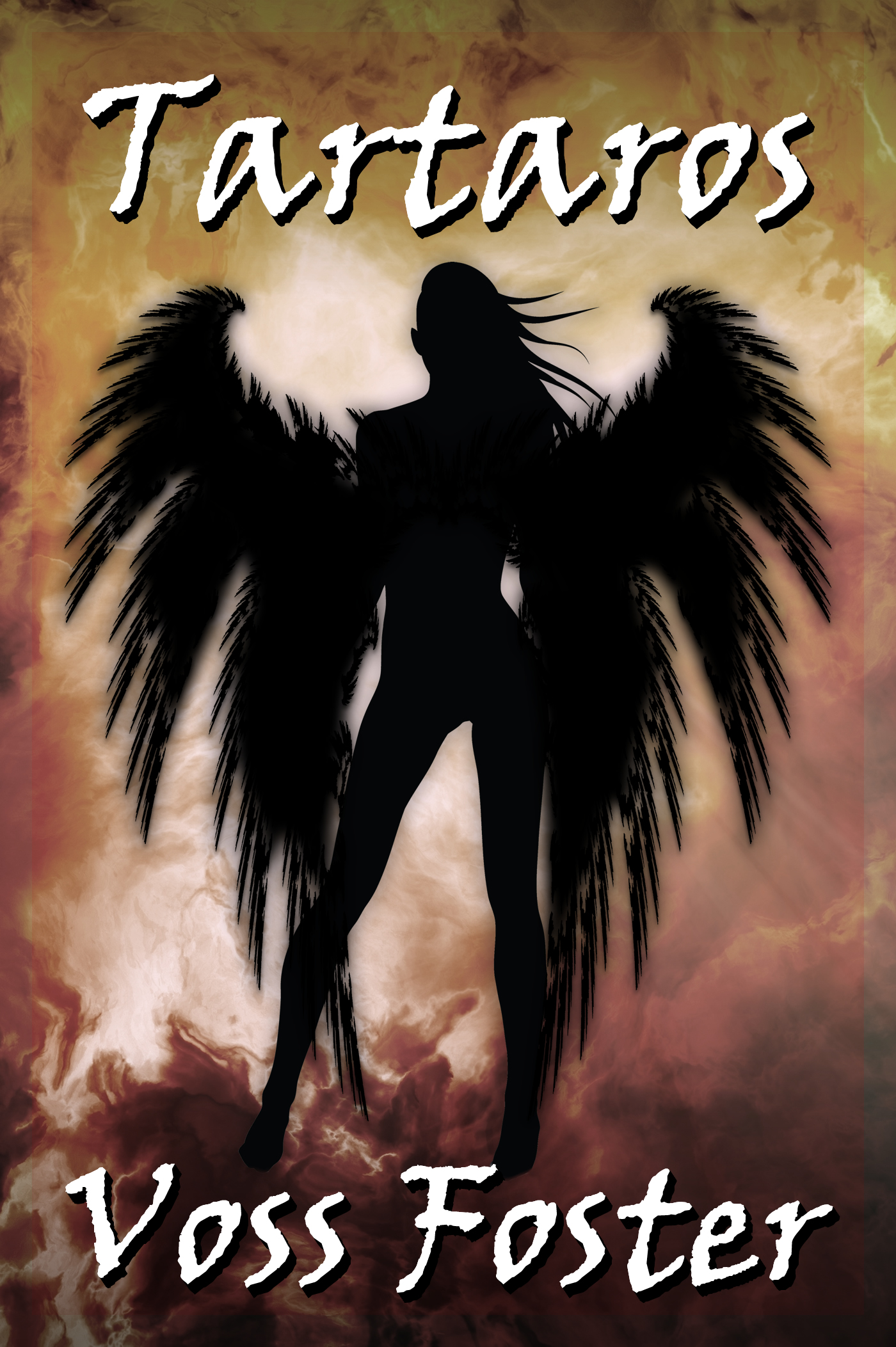
Long and Short Reviews welcomes Voss Foster, whose newest book Tartaros was released in January. Leave a comment for the chance to win a download of Tartaros.

Voss decided to use a pseudonym and I asked his reasons.

“Partly because I share a name with another author, which can end in a lawsuit, and partly because my name sounds rather similar to the name of yet another author that I didn’t want to be associated with (not naming names). Coming up with the name was easy. Voss was my grandma’s name when she died, and my mother’s maiden name, and Foster was my grandma’s maiden name. And, you know, it makes me sound like some character in a crime noir novel.”

When choosing titles, Voss tries to either make a play on words or use the name of something important in the story. For example, Tartaros was chosen because the name of the main character is Daniel Tartaros, but also because it’s a play on Tartarus, the ancient Greek pit of torture for nasty dead souls. Another book Rings of Treachery, which is currently with beta readers, is a play on words. The culture in the book is based on a complex code involving rings, but also like a suspicion, i.e., “Hmmm. This rings of treachery.”

Voss has been writing for a long time and, in fact, still has the first short story he wrote on a typewriter when he was in the first grade.

“Super Duck,” he told me. “I remember he used ‘duck tape’ to tie up the ‘bad guys.’ Then, for a while in middle school, I got into writing poetry. Really bad poetry. Cliches stacked on top of saccharine imagery and held together with teenage angst. But, around my junior year of high school (and I fully attribute this rediscovery of fiction writing to my English teacher at the time) I got back into real writing. My senior year, we all had to do a project–I wrote a novel. Not a good novel, since I wrote it under protest, but a novel. Then, the month after I graduated, I wrote Tartaros– NaNoWriMo that November and I was lost to the world of fiction.”

“What would you say is your most interesting writing quirk?” I wondered.

“I’d say, and anyone that’s ever been in the same room with me while I write will back me up, it’s the moving. When I think, I move. I make faces, I copy my characters’ movements, I try to capture what’s going on. It helps me get things straight in my head. I remember once, writing with some other writerly friends, I got up and had to act out an entire battle scene, because I’d lost track of how many chakram my character had left to throw. So I counted while I acted.”

When he is preparing for a project, part of the prep work is putting together a playlist to listen to when he writes—the music ranges from anything from K-Pop Filk, Country to Death Metal, Symphonic Rock to Techno. If it has the right vibe, he throws it into the playlist.

“Of course, sometimes, if I’m really into something, I end up just listening to that instead,” he said. “The last novel I wrote was done half to the playlist I put together and half to K-Pop.”

“What group did you hang out with in high school?” I asked.

“I was a nerd (I know. Shocker). I was a band geek, and I was in Science Olympiad. Yep. I was also later informed that I was committing social suicide. I didn’t care. These were intelligent people with minds just as out there as mine. Plus, you know, when you spend days on end with people, you can’t help but form some bonds. High stress performance situations or competition situations. It happens. And it helped that a number of them all read the same things I did.”

He’s not that far out of high school himself, so keeping up with the YA market is not an issue for Voss. He still has friends in high school and a lot of his own reading is in the YA genre.

“Do you write in multiple genres or just one?” I asked. “If just one, do you ever consider straying outside your genre?”

“I write under the whole blanket of speculative fiction. I can’t honestly be expected to choose just one, can I? Even if that’s what people expect, it’s just not going to happen. I’m very happy to write paranormal, fantasy, science-fiction, and horror. A few times, mostly on shorter works, I’ve strayed into (gasp) mainstream. But, if I was required, forever, to write just one genre, I’d pick YA. It’s the only way to really cheat–I can write in whatever genre I like under YA. I’m sneaky like that.”

When it comes to world building, most of his sci-fi world building comes in the social interactions. What are the conventions of the culture? Why did the culture evolve? How do they flirt or marry? Is there a religion? In fantasy, he does the same things, but he also draws maps, plans magic systems, and finds out where their technology level would fall in comparison to Earth.

“No matter what, I normally just type up and scribble down pages and pages of notes and drawings. And then I attempt to figure out where I put everything when it comes time for me to actually use it,” he admitted.

“Are you a pantser or a plotter?”

“I pantsed my first book. Then, the first time I read it, I figured out that I had to completely cut out half of it because it was completely pointless. So, from then on, I’ve always had at least some idea of what to do. It ranges from book to book. Sometimes, I fill out a form that details every single point you need to touch on in a plot, has it broken down into a formula. Other times, I go to the opposite end of the spectrum, just have a beginning, middle, and end. But, normally, I’m a moderate. I’ll just write out a couple pages of outline, mostly just to get the plot straight in my head. And I do stray from there, almost every time, but it makes the book better, I’ve found.”

I asked Voss what kind of mythical creature he would be interested in owning and he told me without hesitation, “A unicorn. Not even a question in my mind. I want a unicorn. A pretty unicorn with a long horn. And it would be like a giant lap dog. And I would love it pet it and squeeze it and call it George. I’m just not sure where to get unicorn chow. Anyone know what they eat? I’d be happy to find out.”

Voss has one group of friends that can tear him away from writing, editing, marketing, and submitting most of the time; however, apart from them, unless he completely burns out there’s always something going on in his head about his writing. However, when he is burned out, he sits around and plays what he called “stupid online games.” However, when he gets with that one particular group of friends, things can go anyway.

“I just, in about three days, shot a short film with them inspired by ‘Repo! The Genetic Opera’ and ‘The Devil’s Carnival.’ We watch movies, have game nights, sing. And they’re also my Rocky Horror crowd. I’m a part of the local cast for our Rocky Horror showcases,” he said.

“Do you have a favorite quote or saying?”

“I do. I actually keep a list of quotes, constantly growing. And I have two favorites. Why yes, I am cheating. How kind of you to notice. The first is from Walt Whitman: ‘I too am not a bit tamed, I too am untranslatable, I sound my barbaric YAWP over the roofs of the world.’ I first heard that watching ‘The Dead Poets’ Society’ in Junior English. I eventually looked up the full quote and fell in love. Now, the other one is from Marianne Williamson, but often gets wrongly attributed to Nelson Mandela: ‘Our deepest fear is not that we are inadequate. Our deepest fear is that we are powerful beyond measure.’ That’s one I just came across in my meanderings and it teared me up a little. So it’s definitely going to stay as one of my favorites.”

About the Author: 4_9 Voss Foster Author PictureVoss Foster lives in the middle of the Eastern Washington Desert, where he writes speculative fiction from a single wide trailer. When he can be pried away from his keyboard, he can be found belly-dancing, cooking, singing, and practicing photography, though rarely all at the same time.
Facebook                                                                    Twitter                                                                 Goodreads


4_9 Tartaros Cover ArtA demon hunter, Daniel Tartaros is sworn to slay the denizens of Hell and, for over a decade, he has. He’s kept the world, and his girlfriend, safe. But, one night, the demons cross the threshold to his home. His girlfriend is taken, possessed by a powerful demon. Too powerful for him.

But the horror increases when he finds out the truth: it’s not just a demon. Lilith, the Queen of Hell, has bound herself into a human body to be with him. But broken free and without the restraint of a human life, she still needs him, and plans to use all of her power to keep him. She’ll do what it takes to keep him, even if it means the end of life. With Earth hanging by spider’s silk, the tiniest ripple from either Daniel or Lilith could send it swinging into the fires of destruction.

INTERVIEW and Giveway: IAIN S. THOMAS

Long and Short Reviews welcomes Iain Thomas whose latest book Intentional Dissonance is available. Leave a comment and you will have a chance to win one of two ebook copies of Intentional Dissonance.

Iain is currently working on three different books: a revised version of his first book I Wrote This For You, a second book due the end of this year that’s still untitled, and How to Be Happy, which isn’t due until the start of 2014.

“I can’t seem to stop myself from writing it,” he admitted, “even though I shouldn’t even be thinking about it right now.”

“When did you first consider yourself a writer?” I asked.

“My first book, I Wrote This For You, has spent a year on the Amazon and iTunes poetry bestseller lists and frequently finds itself at #1, and I still don’t know if I’m actually a writer. I think when I’m writing, I’m a writer and when I stop, I become something else. I still have trouble introducing myself at a dinner table as a writer.”

He’s been writing since he started keeping a diary when he was around 13; he stared writing prose a couple of years later. He told me he’s always found writing to be cathartic—a way to get rid of whatever demons were in his head.

“They’ve always seemed easier to face and defeat when they’re put down on paper,” he said.

He’s written professionally since he was 19, mainly for the design industry.

Unlike many authors, neither plot nor characters comes first in Iain’s books—instead scenes and dialogue come to him. Moments within the book that could happen inspire him and then he builds the characters and plot to serve those moments.

“How do you develop your plot and characters?” I asked.

“All my characters are amalgamations of people I’ve encountered in my life and the plot is something that serves my own purpose, which is to create beautiful, surreal moments and environments that draw the reader in. I believe the most important elements of writing are having an original idea, the ability to tell the truth about what you’re saying and the desire not to waste the reader’s time.”

Iain usually comes up with his titles first, and then the book follows. Intentional Dissonance was a name that floated around in his head for a while. It described a feeling of being disconnected, of not wanting to play by the rules. It’s a cyclical book, much of it has to do with the repeating patterns we fall into as human beings. I Wrote This For You defined itself and How To Be Happy is doing the same thing.

I wondered, “What would you say is your most interesting writing quirk?”

“I think the strangest thing I’ve ever done literary wise is the entire I Wrote This For You project. I wrote more than a thousand poems that all have titles that start with the word ‘The’ and every single one has the word ‘You’ in it. I think constructing your own rules around what you’re writing gives you something to play with and can lead to really creative, interesting solutions.”

Iain writes poetry and science fiction, but he believes that both fit only loosely into their respective genres. In fact, he tries to defy genre.

“Originality is important to me and I do my best to break literary conventions as much as possible to achieve that, with varying degrees of success,” he said. “I’d rather fail while attempting to be original than succeed at obeying a convention.”

He admits that I Wrote This for You was an incredibly bizarre literary debut. It was a real struggle for him to find a publisher who could see why it was as popular as it was and the potential behind it.

“I wrote I Wrote This For You under the pen name ‘pleasefindthis’ as I believed that every part of a story, including the name of the person writing the story, can be an entry point into that story. I chose the name because it invited people to find out more,” he told me. “A young girl discovered I Wrote This For You while she was undergoing treatment for a tumour in her brain and she wrote me a letter telling me how strong it made her feel. She wrote the words ‘I Wrote This For You’ on the paper bracelet the hospital put on her and sent a picture along with her mail. I don’t even know how I managed to respond to that. Another person wrote me a message saying that my words had inspired her to get off the streets as a prostitute and go back to studying. I still speak to her about once a year. She’s doing well.”

Iain believes that the more input you have, the more output you have. So he works in chaos, surrounded by comic books, antiques, paintings, old books and whatever else he’s picked up along the way. He also creates procedurally generated music to listen to while he works.

“I’ll load up a relaxation application on my iPad that plays the sound of the rain, load a YouTube video of someone whispering for 45 minutes, then load an ambient music album at the same time and have all three playing at once,” he explained. “It’s familiar yet new music every time I listen.”

Finally, I asked, “What advice would you give a new writer just starting out?”

“Writers write. Every word you write makes you a better writer, and there are a lot of bad words that you need to get through before you can get to the good ones.”

About the Author:2_20 IainThomas Iain S. Thomas is a new media artist and author. As an author, his most famous work is I Wrote This For You, which he writes under the pseudonym ‘pleasefindthis’ – a blog then book that’s been on both the Amazon and iTunes poetry bestseller lists since its launch in December 2011.

As a writer for the design and new media industry, he’s won numerous local and international awards for his work. Amongst other things, he created a never-ending sentence for a monument for South Africa’s Jazz Artists and recently collaborated with musical phenomena BT on the packaging design for his last album. He wrote his first book, Ignite, at the age of 23 for the Markham clothing company. It won the Grand Prix at the First Paper House Art of Design Awards and a gold individual craft award at the Loeries. He currently lives in Cape Town, South Africa.

Find the author online:
Twitter @iwrotethisforu

2_20 9781926760858medIt’s been 10 years since the world officially ended. In the last city on Earth, Jon Salt is addicted to Sadness, a drug that invokes its name, and obsessed with his lover, Michelle; both of which threaten to drive him insane.

Strange creatures and new technologies appeared in the last days of humanity and the widespread adoption of teleportation technology sundered the fabric of time and space, leaving a smattering of looping ghosts. It is a sad, monotone world, but the remaining populace is happy, thanks to the anti-depressants in the water supply.

The last government on Earth has taken a special interest in a gift that Jon possesses: the ability to make his thoughts real. Jon must rely on that gift and the help of a few unlikely friends to stay one step ahead of those who desperately want to use him for something far more sinister than even he could dream…

AUTHOR INTERVIEW: CIARA KNIGHT

Photobucket
Long and Short Reviews welcomes Ciara Knight, who is giving away an e-copy of each of the first two books of the Battle for Souls series, Rise from Darkness and Fall from Grace. The third book, Ascension of Evil, is now out.

All of the characters from those two books return in Ascension of Evil for an epic battle of light versus darkness.

“By the end of the book, you’ll know why the war began, who side the characters are truly on, and who survives the final battle. It is an intense conclusion to the series that I hope everyone will enjoy,” she told me.

She’s currently working on Escapement, the first book of The Neumarian Chronicles, which is due to release in February 2013. A post-apocalyptic prequel novelette with Steampunk elements, Weighted, released earlier this year to glowing reviews.

“I’m so excited to announce that the cover for Escapement will be revealed soon,” she said. “Book II, Pendulum will be out late 2013, and book III, Balance, will be out in early 2014.”

In total, Ciara has written six novels, several short stories, and two novella/novelettes. Four books are currently published, with one due out in February, and both novellas. You can find all her work at her Amazon Author Central Page or on her website.

“I love Ascension of Evil because of the inspiration it gives people at the end of the story. There are some shocking facts provided about how everything came to pass during the first war and how it plays a part in what they are currently facing,” she said. “Also, I absolutely love The Neumarian Chronicles. The alternate world is fascinating to me. I’ve enjoyed studying power sources and inventing technology. It’s a crazy and intense series that challenges all my writing abilities. I love a challenge!”

“What did you want to be when you grew up?” I asked.

“I wanted to be the first American women in space, but when Sally Ride beat me to it I decided to move on. At that point, I wanted to be an actress and took some classes. For a short time, after high school, I pursued the dream, but when I was injured dancing at Disney I was told not to return for final call-back for a Nickelodian show. They couldn’t have a host with a cast on her leg. I also wanted to be an archeologist so I could date Indian Jones.”

Ciara is the only female in her house full of seven males: her husband, three sons, two male cats, and a male dog. One of her boys was diagnosed with PDD-NOS, a mild form of autism.

“It’s caused me to grow so much as a person and a mother. Someday I hope to write the fantasy, middle grade book where my son is the main character. He amazes me daily,” she told me. “My eldest is lead singer and guitarist in a metal band. At only fourteen, he cut a demo, scheduled and played at various venues around town, and dominated social media in a way I’ll never be able to. I’ll never forget the day he opened his fan page and had 600 likes in two days. I’d just hit 550 after six months. The youngest is one of those kids that everyone knows. He’ll walk into class and every one stops and yells his name. He’s the Norm of the elementary school. My amazing husband is a great dad, and is totally binary. How a left brain and a right brain have a successful marriage is beyond my comprehension, but somehow we complement each other.”

She told me that her first agent urged her to use a pen name.

“At the time we thought it best to protect my family, especially with a son who has sensory issues. My agent’s concern was that even if I only became a modest selling author, I could be recognized locally. If that did happen, I wanted to still be able to have successful trips out of the house without my son being overwhelmed,” she explained. “Also, it’s been great because my real name was already taken by an author.”

When she’s not writing, Ciara likes to hike, play with her kids, read, knit, travel, and find trouble.

“I’m not kidding. Anyone who knows me will tell you that trouble can find me no matter where I hide. It is a gift for telling great stories, and a curse for living,” she said with a smile.

“What was the scariest moment of your life?” I wondered.

“As I said, trouble always finds me. One incident happened while backpacking through Europe during college with two of my friends. We decided to head to Prague after someone had talked about how fabulous it was. This occurred shortly after the wall went down and there were still a lot of issues with travel. After checking with the proper ticket agent to make sure we had all necessary documentation, we boarded the overnight train. Sometime in the early morning hours we woke to someone pounding on our car door. I managed to crawl over my friend and unlock the door. Three men stood outside with automatic weapons. They start shouting at us. After several minutes I realize they work there and want to see our passports. We hand them over and the shouting continues. I’m pulled out of the car by my hair and we are marched off the train at gun point. After several scary hours, in a cold cell where no one spoke English, we were put on a train and sent back to Germany. Finally, we discovered that one of the girls needed a visa because she didn’t have an American passport. The ticket agent didn’t catch that she wasn’t American.”

“What challenges do you think teens face today that you did not?” I asked.

“The most difficult thing for teenagers now is the instant blasts of failures, tragedies, break-ups, or poor decisions. Teens are meant to make mistakes as they grow up, but now one little mistake can be a life-sentence for some young adults. I’ve seen Facebook and Twitter cause some serious pain.

Ciara always thought she was an e-book person, but she shared with me an experience that changed her opinion.

“I was sitting in a restaurant waiting for a friend and I was reading a great book. It was in paper copy since I’d received it from the author in exchange for review. As I’m sitting there completely engrossed in the story, I hear someone arguing on their phone. I paused and looked at everyone with their phones, laptops, and tablets with solemn looks on their faces. I realized that I didn’t have email popping up as I read, or other electronic distractions. I felt like I was stuck in the dark ages, and loved it.”

About the Author:

Ciara Knight writes to ‘Defy the Dark’ with her fantasy and paranormal books. Her debut novel, The Curse of Gremdon, was released to acclaimed reviews, securing a Night Owl Top Pick and five stars from the Paranormal Romance Guild. Also, released in 2012 is her young adult series, Battle for Souls. Book I, Rise From Darkness, won July Book of the Month at Long and Short Reviews.

When not writing, she enjoys reading all types of fiction. Some great literary influences in her life include Edgar Allen Poe, Shakespeare, Francine Rivers and J K Rowling.

Her first love, besides her family, reading, and writing, is travel. She’s backpacked through Europe, visited orphanages in China, and landed in a helicopter on a glacier in Alaska.

Ciara is extremely sociable and can be found at Facebook, Twitter, Goodreads, Pinterest, and her blog.

The final installment of the Battle for Souls series, Ascension of Evil.

Gaby Moore fails to stop a demonic war which released condemned ancient angels and Lucifer’s minions to Earth. When all hope is lost, Herak, an Ancient sentenced to eternal solitude for starting the first demonic war, pledges to save the world. But is he really reformed and ready to fight, or will he betray Gaby and Alexander forcing them to sacrifice their love and each other to save the world?

INTERVIEW: PAUL XAVIER JONES

Photobucket
Long and Short Reviews welcomes Paul Xavier Jones, whose latest book Ameca J and the Legacy of Menindus was released by Storyteller Publishing in October. The second book of the series will be coming out in December.

I asked Paul to tell us about his family.

“My wife is Mandy, and we’ve been married 23 years. We both knew each other in school, and if you’d asked us both then would we ever believe we’d be married to each other, we would both probably have answered that we were the least likely partners we could think of. My oldest daughter is Ameca (16), and the youngest is Fraya(12). The Ameca J series is obviously based around their physical and mental traits, and when I wrote them originally, for them to learn how to get along with each other! That never worked…”

He’s currently working on a sequel to his sci fi thriller, Boundary Limit, which is called No Boundaries, and next year he will be writing the fifth book in the Ameca J series, which is as yet untitled. He’s also working on a short story for a friend called “Tales from Talgarth,” which is aimed at younger readers.

“What inspired you to start writing?” I asked.

“I started writing after a colleague came into my office and showed off his new book. When I saw it and read it, I thought to myself, there’s no reason I couldn’t write a book. My first book was dedicated to my late Grandfather, who raised me. I previously wasn’t very good at finishing big projects, but I knew if it was dedicated to him, then I would feel so guilty if I didn’t finish it that it would drive me to do it.” This was in 2003 and his first book was published in 2007. He’s written seven books since then, but with the publication of the Ameca J series by Storyteller Publishing, he told me that he considers himself “‘more’ of a writer.”

In his opinion, the plot is important—it has to be believable and the author has to emphasize plot points so the reader remembers them and makes logical links.

“I also think it’s fairly important to use senses based descriptions to make the book came alive,” he told me. “That means not only showing the readers what the characters see, but what they smell, touch, taste and hear.”

The hardest part of writing for Paul is fitting it into his day job.

“I run two businesses which are service based and depend on my personal time, so trying to get writing in as well is really tricky. It usually involves throwing my laptop open on a train or in a café before I start work,” he explained.

When he’s not working or writing, he loves watching his local regional rugby team, the Ospreys, and their neighbours the Scarlets, as long as they’re not playing against each other. He llikes to read when he has the time, but apart from that, his weekends are generally spent being a taxi service for his kids.

“Do you hear from your readers much?” I asked. “What do they say?”

“I get comments mainly by Facebook, asking me when the next in a particular series is going to be written and released, or in the case of some of my fans, nagging about when it may be released, which incidentally is a fantastic feeling for a writer to have.”

About the Author:

Paul Xavier Jones is a Welsh writer living in the Swansea Valley with his wife and two daughters. Xavier is his pen name, based on an old nickname.

Paul is and always has been an avid sci fi and fantasy fan, graduating from Marvel and DC comic book superheroes to the realms of Middle Earth and Cimmeria. Authors who have influenced Paul’s thinking and writing are Stephen King, Dean Koontz, J R Tolkien, Robert E Howard, Edgar Rice Boroughs, Tom Clancy, Clive Cussler and more recently, Andy McNab.

His own work is Epic Fantasy (the Ameca J Series) and Science Fiction Thrillers (Boundary Limit).

Publisher: http://www.storytellerpublishing.com
Blog: http://darkdomains.wordpress.com
Twitter: http://twitter.com/#!/Paul_X_Jones
Linked In: http://uk.linkedin.com/in/paulxjones
Facebook: http://www.facebook.com/xavierbooks
Reviews on Goodreads: http://www.goodreads.com/book/show/15704515-ameca-j-and-the-legacy-of-menindus

Teenage life seems vastly unfair to fourteen year old Ameca—or Ameca J, as she prefers to be called—always being pressured by her Dad to watch out for her stupid and annoying ten year old sister, Fraya. But when the girls are mysteriously transported by The Spirit to a dangerously different world populated by medieval Men, noble Elves, magnificent Dragons, and savage creatures, Ameca’s whole perspective has to change—and change quickly if they are to escape the clutches of an evil entity known as the Scelestus, who wants them for the magical powers they did not even know they possessed.

Their stressed out and overworked father, Paul is summoned by The Spirit to join his daughters in the mythical land of Mythrania, where he learns that they are “the One, the Flame, and the Flower.” They are the heirs to the legendary High Magi, Menindus, who foretold of their coming to save this world and their own…But this is no fairytale; the dark entity known as the Scelestus has a plan to harness the power of the universe and to completely dominate all life…Can Ameca and her family stop the Scelestus, and prevent a catastrophe that would see the enslavement of countless worlds, as well as the destruction of their own…?

AMECA J and the REVENGE OF REX-ULTAR
Part II of the Ameca J Chronicles
RELEASES DECEMBER 13, 2012

AUTHOR INTERVIEW: J. GABRIEL GATES

Photobucket
Long and Short Reviews welcomes J. Gabriel Gates, the author of The Track Series, modern fantasy YA books. Books One and Two, Dark Territory and Ghost Crown, both garnered five-star reviews.

He has also written a horror book, The Sleepwalkers, which was inspired by an incident when Gabriel was in college—he sneaked into an abandoned insane asylum called “Sunnyland” in Tallahassee, Florida. He has a sci-fi book coming out in the fall called Blood Zero Sky.

Blood Zero Sky, Gabriel told me, is a dystopian sci-fi, and Publisher’s Weekly has already compared it to the classic Brave New World.

“It’s really sort of an anthem for the Occupy movement, so I think it’s incredibly timely, and will get people thinking,” he said. “It comes out in October. I’d also like to find the right home – and by home I mean publisher – for the horror novel I just completed. My agent is about to stop shopping that one around. Aside from that, I’m finishing book 3 of The Tracks series now, and I have an idea for another horror novel that I’d like to complete after that. So, it will be another busy year!”

Gabriel has been writing for a long time.

“I remember when I was a kid I was signing in on some sign-in sheet with my family (I have no idea for what) and there was a slot for ‘occupation,’” he said. “I put ‘writer,’ only I spelled it ‘wrighter.’ That’s how long I’ve been a writer: since before I could spell it!”

When he was in high school, he had a really diverse set of friends. He did theater, choir, and a lot of sports—soccer, tennis, track, and wrestling–, and he was also in advanced classes with the honors society crowd. Most of his best friends were into several different things like he was.

“I was really lucky to go to school where I did, in the small town of Marshall, Michigan. The people were great, it didn’t seem too cliquey (to me, at least) and I really had an amazing time. I wouldn’t trade those years for anything,” he said.

“What, in your opinion, are the most important elements of good writing?” I asked.

“This might sound like your English teacher talking, but the most fundamental ingredient of good writing is sound and correct construction of sentences and proper use of words. It takes a lot of reading and writing to become really proficient, but it’s necessary, because the sad reality is that when you read something that’s not well written, it kinda makes you want to barf,” he said. “For aspiring writers, that means you need to do a lot of reading and a lot of writing as practice, because no matter how good the story is, if it’s not well-written, no one will take the time to read it. Imagine a house. You might have the best architect in the world design it, but if the workmen who build it don’t know how to measure or cut or build properly, and they use lousy materials, then the place is going to look like a junk heap, it’s going to collapse, and no one will want to live there. Writing is the same way. Conversely, even the dullest story in the world can be fascinating if the writing is exquisite. (Don’t believe me? Read Mrs. Dalloway by Virginia Woolf.) After the nuts and bolts of the writing are correct, for fiction, you need an original idea – not a re-tread of every book you’ve read in your genre of choice – a truly original idea. Those don’t come along every day. Once you’ve gotten those things down, it’s about keeping fiction and reality carefully balanced for the entirety of the story you’re trying to tell.”

Gabriel told me that probably the criticism is the hardest part of writing for him.

“Unlike most tortured souls who might be geniuses but still think their work is manure, I think everything I write is awesome,” he admitted. “It’s always jarring when other people disagree. That said, 99% of all the reviews I’ve gotten have been amazingly positive, so I really can’t gripe too much! And after all, you can’t please everyone, and I write for those who enjoy my work, not for the few who don’t.”

When Gabriel still worked a day job, he would have to carve out an hour of writing when he was on his lunch break. When he started writing full-time, he began doing two sessions a day—a morning session about 10 and an afternoon session around 3. Now the day has kind of blurred together to the point where he works all day long from about 10 AM to 5 or 6 PM with a lunch break and a dog walk or two interspersed through the day. The mornings are generally reserved for working on first drafts of projects while the afternoons are set aside for editing a second project, with correspondence, social media, interviews, etc. mixed in.

“When you’re not writing,” I asked, “what do you enjoy doing?”

“I like fitness. I go for runs, lift weights at the gym. I like mountain biking and camping. I spend time with my family – I have four wonderful grandparents who I hang out with a lot. My girlfriend and I like to take my dog Tommy for long walks and talk each other’s ears off. I’m also a huge NPR fan, so I listen to that a lot and try to keep up with the news. I read, of course, and listen to audio books. I love to travel, too, and would love to get back to Europe. It would be especially fun to visit some of the places where I’m starting to hear from people who’ve read my books: Romania, Belgium, Australia, India, and places like that. It’s amazing to me that people halfway around the world are reading the words I wrote!”

I wondered what the scariest moment of his life.

“I was riding with a friend of mine to go snowboarding when I was in college and we rolled the SUV we were in on a patch of black ice. I could see the impact coming and all I thought was )Oh, this is going to hurt a lot. We rolled and ended up hanging upside down from the seatbelts with the roof of the car caved in and our faces in the snow where the windshield had busted out. We climbed out and looked at one another and were amazed to find that we were both okay. It was a profound thing, though, to fell that crushing power all around you as the accident was unfolding. It proved to me how fragile life is, and that it should never be taken for granted.”

“What is your favorite meal?” I asked.

“My mom makes this stuff she calls Jacob’s Spaghetti. It’s basically pasta and little pieces of crispy bacon in a super-rich parmesan, garlic white sauce. It’s pretty much a clogged artery waiting to happen, and my mom has been on too much of a health kick to make it lately, but ho-ly is it good!”

Gabriel told me he is a Christian, “in the broadest, most liberal, most inclusive sense of the word.” He continued, “I’m all about spreading a message of love, and empowerment – even though I sometimes write books about people getting their eyeballs ripped out and stuff. But truly, in all my work there’s an undercurrent that’s points to the deep metaphysical truths, the meaning of life, which, in my view, is centered around loving one another. As a corollary of those beliefs, I’m a big proponent of marriage equality, social and economic justice, and sustainable environmental practices. Every action we take as an individual or a society has an inescapable effect. Collectively, we need to face that fact and start making our choices a little more carefully.”

He would love to spend one day with Jesus—just hanging out.

“I’d take him to Momo’s Pizza in Tallahassee, Florida, and share one of their huge pizza slices with him – pepperoni, salami, and sun-dried tomato. While we ate, I’d ask him to explain all the metaphysical nuts and bolts of existence, stuff about resurrection, reincarnation, heaven, hell, life, death, love and eternity. Then I’d go with him to a poor neighborhood and watch him heal people for a while. Since we’d be in Tallahassee anyway, we’d probably go to a Florida State football game. Maybe we’d go camping in the evening, strum the guitar around a campfire for a while and just chill out, sing a few songs and eat some s’mores. If I got up the nerve, I’d ask him exactly what he’d like me to do with my life – then I’d hope that whatever it was, I’d have the strength to do it!”

About the Author:

J. Gabriel Gates is the author of Dark Territory and Ghost Crown, books 1 and 2 of The Tracks Series, and horror novel The Sleepwalkers. Look for his epic, dystopian sci-fi novel Blood Zero Sky coming out in October. For more info, please go to his website: www.jgabrielgates.com or follow him on Facebook and on Twitter: @JGabrielGates.

A priceless mystical treasure, a dark secret order, and a vengeful fallen angel—forces collide as the battle for Middleburg continues . . .

For gang members Raphael and Ignacio, plans for the homecoming dance are almost as harrowing as their recent victory against the demonic forces that threaten their town. Despite their tentative alliance, a fight breaks out between the preppie Toppers and the goth Flatliners when Topper girl Aimee shows up at the dance with Raphael, the rival gang’s leader. In the midst of an all-out rumble, the homecoming queen discovers a supernatural power that causes a potentially deadly catastrophe. Meanwhile, a charismatic half-angel, half-human arrives in Middleburg with plans to steal Aimee from Raphael.

To add to the bizarre circumstances surrounding the town, real-estate moguls begin buying up most of the Flats and evicting the tenants. These mysterious men seek a priceless treasure prophesied in ancient Chinese writings and will stop at nothing to find it. But Raphael and his friends vow to get to it first and use it to reclaim their homes.

As Raphael and the Flatliners and Zhai and the Toppers hone their supernatural abilities and search for the treasure, Aimee begins kung fu training, intent on using her new skills to locate and rescue her mother. When she discovers that the elusive treasure may be the key, the race to find it intensifies.

But there are others who seek the treasure too, and they have the power to reduce all of Middleburg, and perhaps the world, to ashes. . . .