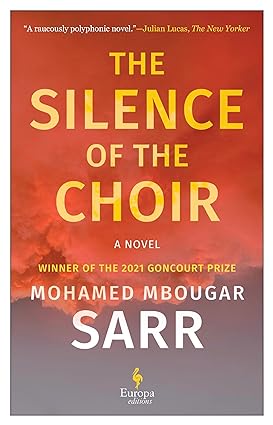
The Silence of the Choir by Mohamed Mbougar Sarr
Publisher: Europa Editions
Genre: Literary Fiction, Contemporary
Rating: 5 stars
Reviewed by LavenderSeventy-two men arrive in the middle of the Sicilian countryside. They are “immigrants,” “refugees” or “migrants.” But in Altino, they’re called the ragazzi, the “guys” that the Santa Marta Association have taken responsibility for. In this small Sicilian town, their arrival changes life for everybody.
While they wait to know their fate, the ragazzi encounter all kinds of people: a strange vicar who rewrites their pasts, a woman committed to ensuring them asylum, a man determined to fight against it, an older ragazzo who has become an interpreter, and a reclusive poet who no longer writes.
Each character in this moving and important saga is forced to reflect on what it means to encounter people they know nothing about. They watch as a situation unfolds over which they have little control or insight. A story told through a growing symphony of voices that ends only when one final voice brings silence to the choir.

Can you imagine what life would be like for immigrants? You don’t know the language or culture, and you are a stranger in a new land. Mohamed Mbougar Sarr immerses us into this situation with skill and sensitivity.
“The Ragazzi” show up at the doorstep of a cast of characters in a small Sicilian town based in the countryside. These people are unique, as are their new neighbors. They interact differently with them.
The Ragazzi are trying to start a new life, but things aren’t so simple. Problems come up, and readers could be moved emotionally by their plight. There are issues one may not even consider. Will the conflicts ever find resolution?
As the story unfolds, we feel tension for those involved. We are also treated to the personality quirks of those who make this tale come alive. This is an interesting book that many are sure to enjoy.