Search Results for: Wish list

Ultimate Dinosaur Rumble by Jerry Pallotta, Illustrated by Rob Bolster


Ultimate Dinosaur Rumble by Jerry Pallotta, Illustrated by Rob Bolster
Who Would Win? series
Publisher: Scholastic, Inc.
Genre: Historical, Non-Fiction, Children’s (0 – 6 y.o.), Middle Grade (8 – 12 y.o.)
Rating: 4 stars
Reviewed by Xeranthemum

Sixteen different dinosaurs battle it out in an epic prehistoric fight! Who will be the champion?
This nonfiction reader compares and contrasts 16 ferocious dinosaurs. Readers will learn about each animal’s anatomy, behavior, and more. Then compare and contrast the battling animals before finally discovering the winner! This nonfiction series is full of facts, photos, and realistic illustrations, and it includes a range of mammals, sea creatures, insects, and dinosaurs to satisfy all kinds of animal fans.

I adored dinosaurs while growing up but exciting books about them were few and far between. I wish they had the Who Would Win? Series back then. I would have been learning a lot more while having fun.

This picture book had awesome illustrations and the battle wounds for the losing dinosaurs in the matches were tastefully done. It shows where the winner bites to defeat its opponent but there’s nothing gory or worrisome for parents. Some kids might find it really cool. It’s not always the teeth that gives consistent advantage, there were some surprises.

The picture book has the names of the contestants, has fun facts about the meaning of a particular dinosaur’s name, and lists the attributes of each dinosaur that nature gave them to defend themselves. A reader will start with 16 dinosaurs, but there will only be 1 winner. Who will it be?

Now, for parents who might read this book with their kids, which would be a good idea if only to help them out with pronunciations, I would like to share that there is one battle that caught me by surprise. I blurted out a very loud, HA! As in, laugh out loud funny. If you were a fan of the early years of Saturday Night Live, this scene might bring back memories. I showed that dinosaur battle with my not-so-young-anymore son who had never seen SNL and even he thought it was hilarious and in turn said, “You gotta show dad!”.

All in all, this was a delightful read that was brought to life with wonderful illustrations by Mr. Bolster, coupled with facts, like one dinosaur has feet like a chicken, and great battle descriptions by Mr. Pallotta. The most interesting thing for me was that the winner wasn’t the dinosaur I expected.

Even though the range for this book is ages 6-9, and this book is labeled as non-fiction, I think the battles portrayed are wonderful and pure, storytelling at its finest. It uses fiction to make the non-fiction interesting, engaging and entertaining. Could those battles have actually taken place, and used the fighting techniques described therein? Quite probably, but we’ll never really know, will we.

I think this is a wonderful book and I do believe both parents and kids will enjoy watching (reading) The Ultimate Dinosaur Rumble.

Empty Vows by Mary Monroe


Empty Vows by Mary Monroe
The Wiggins Series, book 2
Publisher: Dafina
Genre: Historical, LGBTQ, Mystery/Suspense/Thriller
Rating: 5 stars
Reviewed by Ginger

Forty-something widow Jessie Tucker is beloved throughout Lexington, Alabama, for her kind heart and endless generosity. But she feels it’s past time she rewarded herself—especially when upstanding Hubert Wiggins tragically loses his wife and son. Making herself indispensable, yet discouraged by Hubert’s lack of romantic interest, Jessie cooks up a deception she knows will make pious Hubert do right by her…

Hoax or not, Hubert couldn’t be happier. The passionate self he’s long hidden from everyone has a new, much-riskier secret love. And the unsuspecting second Mrs. Wiggins will help him maintain his ever-so-devout image in the community…

But when Hubert is not the ardent lover Jessie always dreamed he was, she turns her desires to handsome younger man Conway. Suddenly the “good church wife” can’t resist temptation at all. And someone is watching: Conway’s new girlfriend—and Jessie’s longtime rival—Blondeen. Now Blondeen has the perfect opportunity to harass Jessie, destroy her reputation, drive her out of town—then become the real wife Hubert should have had all along…

In one shattering night, Jessie, Blondeen, and Hubert will each go too far. And when their web of deceit threatens to drag them under for good, they will have only one chance to erase the past and claim everything they’ve ever wanted. If their secrets don’t destroy them first…

What lengths would someone go to hide their secrets?

I was excited to return back to Lexington, Alabama! Empty Vows picks up where Mrs. Wiggins left off. You’ll need to read book one to get Maggie’s story. Book two is told from Jessie and Hubert’s view. True to her writing style the author includes colorful characters, an enthralling storyline and engaging dialogue.

Grief stricken Hubert Wiggins has lost his wife and son and soon finds himself an available widow in the small town of Lexington, Alabama. Jessie, Maggie’s best friend wasn’t interested in Hubert until her meddling sister Minnie put the thought in her head. In book two we get a different version of Jessie. In book one she was dominated by her now deceased husband and appeared helpless. Now readers see a calculating scheming side of Jessie.

If you’ve read book one you know Hubert has no interest in any of the women that are throwing themselves at him. He is only needing to find someone to cover suspicions of his secret lifestyle. With that premise I was drawn into the deceit and lies. But who is fooling who? As the saying goes be careful what you wish for and who you listen to. The characters make vows that were completely empty and based on selfish gain. Will the marriage turn out as they envisioned? This is the 1930’s and to cover a story with so many themes such as LGBTQ lifestyle, a strict religious family, segregation and the mention of a serial killer on the loose I couldn’t read fast enough. The author did an awesome job in pulling all this together to create an absolutely riveting drama.

I enjoyed the first book better, however this is a very entertaining read. In my opinion Jessie and Hubert are not on Maggie’s level. Maggie took action to help others and to defend herself while Jessie and Hubert are taking action for their own selfish reasons. Maggie’s upbringing wasn’t the best so that led me to have compassion for her and it made her actions more acceptable. For Jessie and Hubert, I don’t feel the same compassion.

I enjoy reading about the history during this era and learning about the culture in the Black community. I can picture the meddlesome neighbors and the humorous conversations. Living in the South the foods that are mentioned are staples in many households still today. I guess that’s why I enjoy the author’s stories so much, I can relate to living in a small town in the South and I can visualize people I know acting out the scenes in the book.

I am definitely looking forward to book three in this series to see how the author will conclude The Wiggins series. This is a good series that is sure to entertain many readers.

Port Anywhere by J.S. Frankel – Spotlight and Giveaway

Long and Short Reviews welcomes J.S. Frankel who is celebrating the recent release of Port Anywhere. Enter for the chance to win a $50.00 First for Romance Gift Card! Competition hosted by Totally Entwined Group.

A restaurant in space, a waystation for all those who need a meal. When one of the guests turns out to be forbidden cargo, everything changes.
Rick Granger, seventeen, is the sole human occupant of Port Anywhere, a floating restaurant in space. His parents are dead, and he is aided by an alien called Nerfer—a pink alien that looks a lot like Spam. They journey throughout the galaxy, making a precarious living by offering meals in exchange for whatever their alien guests can pay.

As well, Port Anywhere, while powered by ion engines, has one unusual feature. It can suddenly jump from place to place, although Rick doesn’t know why. It simply happens.

His mundane existence changes when a warlike group of aliens led by a man named Kulida ask Rick to guard a possession of theirs. Upon further examination, Rick finds out that the cargo is a young alien woman named Merlynni from a planet called Kagekia, who carries a secret inside her—a mini galaxy.

The tiny galaxy was placed inside Merlynni by her father, a genius scientist, in order to hide it from hostile forces. As Port Anywhere continues its journey, Rick finds himself falling for Merlynni, and he will not give her up. When Port Anywhere shifts to various galaxies with various aliens in pursuit, they manage to escape time and again, but there comes a time for the inevitable showdown, and Rick has to use all his wits in order to save Merlynni and solve the riddle of the power she carries inside her.

Reader advisory: This book contains scenes of violence and murder.

Enjoy an Excerpt

Randorran Galaxy. Sometime around noon. Earth Year, 2134

“Is that griddle clean, yet?”

Nerfer’s call emanated from the storage room, a question that went past impatience but stopped just shy of outright anger. Deep and harsh, his voice sounded like it belonged to a giant, but he stood on the short side of one-hundred-sixty centimeters. His actual height was contentious at best, as he was essentially pink jelly encased in a clear plastic containment suit. But the commanding tone was unmistakable.

In days gone by, people would have called him Spam-In-A-Can. Perhaps calling him ‘crushed fruit in a suit’ would have been more appropriate. But after thinking about it…no. It wouldn’t have worked.

With a sigh, knowing he wouldn’t believe me, I answered, “Yes, it’s clean. So are all the other tables. Come see for yourself.” I doubted he’d take my word for it. Nerfer was notoriously difficult to please.

“I will. Give me a second.”

He could have a second—or ten. My journey to spotlessness on the bridge continued. The bridge itself took up a third of the total space, with a captain’s chair and a console in front of the main viewing window, an interstellar communicator, which sat on the console to the left of the captain’s chair, and helm controls to the right.

Behind the helm was the other two-thirds of the bridge. That was the restaurant. The glass that made up our main window to the stars was spotless, and it offered an incomparable view of the heavens.

If the view was incredible, so was the restaurant, in its own way. My late father had designed it after looking at countless vid-photos of diners from the mid-twenty-first century. For some reason, he’d had a fascination with that era.

Our restaurant had plush leather booths—ten in all—a counter with eight stools and a syntha-fridge that could synthesize any kind of food, but only in its raw form. I still had to cook it. We also had a combo grill-fryer where the food got prepared by me, Rick Granger, co-captain of Port Anywhere, our ship’s name.

This place was where I belonged, where my focus was. As the co-captain of this ship, I had a duty to guide our ship among the stars as well as to be on guard for anything that might threaten the safety of—

“Coming out,” Nerfer said, interrupting my dreams of a full captaincy.

The door to the storage room opened. It housed numerous old food crates and doubled as his sleeping quarters. He came toward me, his semi-solid body undulating in his containment suit as he moved along. From what he’d told me, he was a member of the Gliddod race. His people came from a distant galaxy, one so far away that no one really knew where it was.

He’d shown up here six months ago in a spacecraft that had fallen apart after he’d docked with ours, and he’d asked my father for a job. My father, being the decent person he had been, had given him the position of running this restaurant while he went off to attend to the daily mechanics of operating this ship. Oh, and he’d also made him co-captain.

Did that piss me off? There was an old saying—‘Did a one-legged duck walk in circles?’ In a private moment, I’d asked my father, “Dad, why’d you hire this guy? You don’t know where he’s been or if anyone’s chasing him or what. Weren’t you training me to be the captain and the head cook?”

“When it’s time, you’ll be both,” he’d answered.

Thanks for your confidence in me, Dad.

After a while, though, I had to admit that our new pink crewperson had proved to be an excellent cook, and after my father’s death from Bridorran Fever, Nerfer had also ended up being a more than capable captain. It still bothered me at times, though, being relegated to the ‘also-ran’ position.

In a quick, economical motion, Nerfer moved around to check each table. Finally, he finished his inspection with a grunt that sounded like a bubble popping underwater. “Good job, kid.”

Finally, a compliment. A pseudopod shot out from his suit—the suit was porous in a sense, and it allowed him to do that—and he pointed to a table. “Number six has a spot on it. We got Janoorians comin’ in soon, and they hate dirt.”

Compliment given, compliment withdrawn—and with that, he went back to the storage room. Fine, I’d clean the table—again. We had only ten, but he’d spotted a tiny imperfection one-fifth as large as my pinky fingernail on one of them. In days past, people had called it being anal. These days, people called it attention to detail.

Our vessel, an Earth-class freighter, had been converted from a freighter-slash-exploration vessel to an exploration-vessel-slash-interstellar restaurant. So, when we entered a new galaxy and if some alien life forms contacted us, once they found out we weren’t armed, they’d either drop in for a meal or tell us to keep moving.

Usually, they partook of a meal with us, we chatted, then they departed after paying us whatever they could. You could call it a precarious living, because we never knew who’d come our way. My parents had always believed in randomness, and my existence here was as random as it got.

We called our ship Port Anywhere, mainly because we went everywhere, to every galaxy and beyond. We had self-sustaining ion-conversion engines, and the great thing was that they left no radioactive residue upon the stars, unlike other ships. Recycling was cool. ‘Go green,’ the old saying went. We were in space, so, ‘go non-radioactive’.

Our journey had started two years before, just after I’d turned fifteen. We’d lifted off on a bright, sunny day in June from a flight field located near Salt Lake Flats, Utah. A sudden surge, the G-forces had pulled me back, and soon, we’d been in space.

After that, our voyage to wherever continued unimpeded. The ship didn’t have a wormhole device, not exactly. Unlike other, newer ships, it couldn’t go very fast, but it had a recyclable fuel supply, it was safe and from that point on, I’d learned almost everything there was to learn about spaceships and fixing them.

My parents were first-rate engineers as well as designers, and they’d willingly taught me everything I needed to know about the ship, save the engines. “They’re self-sustaining,” my father had once said. “All you have to do is keep the place clean.”

Of course, I learned about other things, such as basic repairs to the hull, space walking, electrical wiring and more, but, by and large, my parents handled things.

The first six months had been cool. Outside of my cleaning and service duties, charting the stars and training against battle droids had taken up most of my time. On occasion, we’d touch down on distant worlds, but like desert nomads, we were always on the move, except we moved among the stars and not sand, although the grains of the universe were always there.

On the surface, everything was wonderful—up until my mother had died from cancer a year ago, just after I’d turned sixteen. Modern science could cure a lot of things, but it still hadn’t gotten around to curing that.

The picture in my cabin showed a tall woman with long, flowing brown hair, a pretty face and a pleasant smile. My father had also been tall, around a hundred and eighty-two centimeters, with an aquiline nose, short brown hair and brown eyes, traits which I’d inherited, although I wasn’t quite that tall—yet.

In all honesty, I’d never thought much my looks. After all, there were no girls here to date, and the closest I ever got to female companionship of my age was watching old holo-vids. Decades back, they’d been called movies.

“I’m sorry about your mother,” my father had said to me after her funeral. He’d encased her in a metal coffin, we’d said our goodbyes then he’d pressed the button that ejected her into space. “She was a good person.”

Yes, she had been, and from that point on, he’d rarely spoken of her. Grief was a powerful thing. Still, we’d soldiered on, and our lives had continued among the stars…

“Rick, you wiping those tables down again?”

Nerfer had poked his head out of the storage room to ask me that question. I gave him the standard answer. “Yes, captain.”

His standard grunt came my way. “Fine.”

He moved to the captain’s chair while I finished doing the tables and gave the grill another touch-up job as well.

We’d been in the Randorran Galaxy for three days. It was the home to Janoorians, Melattans and Sillosians, among others. They were traders, they got along with each other, but they didn’t keep company very often. Something about a guild operating here…

“Rick!”

Nerfer’s voice—loud and stern—made me jump. I’d been spacing out—literally—and while it made me laugh silently, it also confirmed that I had to pay attention more. A good captain paid attention to everything. “What?”

“Check the computer. Company should be coming soon.”

Sure enough, the interstellar com-link device crackled to life. “This is Vadda, of the Janoorian people. We have a reservation. Your Captain Nerfer agreed to this.”

Captain Nerfer. Captain. What about me? However, I had to act professional. “Acknowledged. Co-captain Rick Granger speaking. How many in your party?”

“Three. We requested that you prepare one of our planet’s delicacies. We will bring the raw form of it. Can you make it to our satisfaction?”

If there was one thing I could do, it was cook. I checked our onboard computer’s database. They’d asked for tenlos, a plant of sorts.

“I’ll do my best, sir. Sending coordinates for docking procedures.”

“Acknowledged.”

The com-link fell silent. Nerfer swiveled around with a grunt. “Was that Vadda?”

“Yeah. They’re bringing tenlos aboard. That’s what they want for lunch.”

He nodded. His version of a nod was to bob back and forth, his semi-solid body making a swishing, squishy sound. “Good. You’d better let me handle it first, though. I know about tenlos. It’s alive.”

Nerfer had to be kidding. “Alive?”

Bob-bob. “Yep. You have to kill it first. After that, fast fry it with oil, then slice and dice it. Trust me. I been around,” he said in his usual not-quite-correct way.

Aw, whatever, already! I went to the airlock and waited. Vadda and his friends would be coming soon, and…there! Their ship, a small vessel maybe twenty meters in length, was inching its way over to the landing dock.

Seconds later, a tiny thump accompanied by a vibration indicated a successful docking procedure. I punched the airlock intercom. “When you’re ready, please enter the airlock for decontamination procedures.”

“Acknowledged,” a deep voice said.

The door on their side slid open and three blobs squiggled their way in. One of them carried a sack slung around its neck—or was that its waist? I couldn’t tell. The sack was wriggling. Nerfer would have to be right. Anyway, I started the decontamination procedure. Ten seconds later, a beep signaled that everything was clear.

Once the door opened, three black semi-solid puddles of ink roughly fifty centimeters in height and around sixty centimeters in circumference faced me. A low thrum of a voice spoke from the middle puddle-blob. “I am Vadda. You are the one we spoke with before?”

I nodded. Ordinarily, communicating with an alien species—weren’t we all?—would have been difficult. However, my father had designed a universal translator that operated on interpreting sounds and breaking them down into something understandable. The device was tiny, roughly the size of a pinhead. It was implanted behind my left ear.

“Uh, yes, sir. My name is Captain Rick Granger. I’ll be preparing your meal. This way, please.”

I gestured for them to follow me to the dining hall. They didn’t walk, just squidged along, sort of like a snail moving at a faster pace but leaving no slimy trail behind. Inside the restaurant, I waved my arms at the seats. “Any booth is okay.”

Vadda and one of his crew immediately went to the closest table to our position. The third member of the party, the one that carried a sack, went to the grill area where Nerfer was waiting. The sack was writhing furiously, and the puddle said in a high-pitched voice, “Be careful. The tenlos must be killed first by crushing its root.”

“Got it,” Nerfer said.

Two pseudopods shot out of him and took the bag. He opened it, and immediately, a gray plant around a meter long leaped out and hit the ceiling—literally. It hung there, waving numerous spindly branches around and screeching an unearthly sound.

Well, if I were about to be roasted or grilled, I’d scream, too. “C’mere,” Nerfer said, and his pseudopods quickly grabbed the plant and crushed its root. It gave one final shrill cry then let go.

“You’re on, kid,” Nerfer said as he tossed it on the griddle that already had a coating of oil on it. “Start ’er up!”

Showtime, and I went to the griddle to take out a knife and a spatula and start cooking the mess. A horrible odor came from it, and why couldn’t alien plants or meat smell decent like bacon and eggs…or grilled cheese? Rhetorical—they couldn’t.

While I suffered through a stink that was a combination of wood alcohol and crap, the Janoorians went wild over the odor, undulating their squishy bodies this way and that. “Ah, the young man is a master chef,” one of them said. “He knows our tastes!”

They could have their tastes and keep them. Once it was done, it resembled fried rocks. I divided the portions just so, slid them onto plates then served our guests. Did they use utensils?

No, they simply bent over the mess and ingested it…noisily. Once they’d finished, Vadda leaned back. “A fine meal! The tenlos is a foul plant on our world. It attacks our people from time to time, so please, do not feel bad for killing it.”

I didn’t feel bad for cooking it up. I would have felt bad, though, if I’d had to eat it. Vadda then got up and pointed to the door. “We are sorry not to spend more time here, but we must be on our way. We are delivering cargo to another sector in the galaxy.”

“Not a problem,” I said, attempting to keep my stomach’s contents inside.

His friends also rose, getting ready to leave. Vadda slid a pseudopod inside his body, took out a red jewel and handed it over. “Take this as payment, please. Should you visit this sector of space again, we will most certainly partake of a meal with you.”

Oh, please don’t.

But I said nothing and led them to the airlock. While I waited for it to pressurize, I asked him about the jewel.

“It is called energa,” he said.

Energa? “What does it do, exactly?”

“It has the property of reflection and is considered valuable on our world. Please use it as you see fit.”

Reflection? Maybe it was a mirror. It was shiny, anyway, and I bowed, out of respect. “Thank you.”

They departed, and once they were free of the ship, I checked out the jewel. It sparkled, but that was about it. Out of curiosity, I walked into a storage room nearby, found a small hand-laser and did my best to slice off a tiny piece. The beam simply deflected away and burned a hole in the door. “Oh, so that’s what it does.”

Interesting…and a call that came over the ship’s intercom interrupted my thoughts. “Prepare to shift. Prepare to shift.”

Why now? The computer never gave a reason, although the sensors detected another vessel approximately four thousand kilometers away, its purpose, unknown. No communication came from it, so…

“Shift occurring. Shift occurring.”

With all haste, I ran to the restaurant where Nerfer was in the process of putting all the dishes and cutlery away. “Get ready,” he said. “Shift’s in forty-five seconds.”

“Right.”

I parked my butt in a booth, wrapping my legs around the table support. The shift was simply the interspatial move of this restaurant-vessel from one quadrant of space to another. I had no idea why it happened, and neither did Nerfer. It simply did. After my father had died, the shifts had begun.

And when we shifted, talk about massive! The energy of the movement flung us far and wide, and if I weren’t sitting down, I’d end up on my back or head at the far point of any room I was in.

Good thing we had our interstellar computer. It held all the information on the various galaxies we’d visited thus far. Our ship had no weapons, but it had powerful sensors that could map out any planet’s dimensions and details almost instantaneously, and while it couldn’t tell us about the inhabitants’ culture, it gave the basics on what to expect. It could also translate any language instantly.

Still, face-to-face communication had to be done, and in my almost two years on this interstellar barge—a flying brick that was one-hundred-twenty meters in length by seventy-five meters in width—I’d seen sludge, rock-people, lizards and other life forms that were too difficult to describe. I’d spoken with them all, and it was interesting to learn their ways. But I still missed Earth.

Nerfer’s race—so he said—could learn languages much faster than humans could, within a couple of hours. Very useful for him…

“One,” the computer said, bringing me back to reality.

Then it came, that great heave from here to wherever. I kept my head down on the table and waited it out. “Hey, Nerfer, how are you doing?”

“Still in one piece.”

When we stopped shaking, I asked the computer for more information.

“We are currently in the Madlia Galaxy,” it said in its tinny voice. “Scanning. We are orbiting a planet known as Rattan One.”

“Display information on the planet.”

Whir…click. “Displayed.”

A hologram popped up with the pertinent information. The planet was similar in size to Earth, with approximately fifty percent of its surface covered by water. Oxygen-nitrogen atmosphere, suitable for breathing. Rich vegetation.

As for the people, they were around two meters in height, slender yet muscular, with oversized hands and feet. Hairy all over, they resembled the cavemen on Earth that I’d studied when I had been younger. Two mouths, one on top of the other. Tiny ears. A slit for a nose. Gray-skinned. In a word, ugly. I wondered if they were warlike and if our entrance into space would provoke them…

“Unidentified vessel, respond.”

The crackling of the interstellar com-link and the voice—deep, raspy, and unfriendly—made me jump. “This is Port Anywhere,” I answered.

“What is the nature of your vessel and your visit?”

“We’re a, uh, a restaurant ship. My name’s Rick Granger, and I’m in charge of—”

“You are in orbit around our planet. We have the right to inspect any alien spacecraft or repel it if we wish.”

Jerk. If I’d had a space cannon, I would have decimated that slime, but we had nothing to defend ourselves with. “Understood,” I answered, striving to enhance my inner calm. “I’ll send the coordinates for our docking site.”

“Does your ship not have a landing bay?”

It did, but it had only enough room for one of our ships, a reconnaissance vessel. “We do, but it’s probably too small to accommodate one of your ships.”

Silence…then, “Very well. Send your coordinates.”

The voice cut out, and I dutifully sent the coordinates to our—ahem—hosts. Nerfer was hard to read, mainly because he didn’t often form expressions. He invariably relied on his voice to make his thoughts and intentions known, but now, his mushiness formed itself into a frown and his voice was full of grave misgivings.

“Rattanians don’t take no for an answer. Deal fairly with them and they’ll be nice, but if you cross them in a deal, then you won’t be worth vellora spit.”

In space, vellora were akin to maggots, the lowest of the low. “I’ll be careful.”

He bobbed back and forth. “Good. Did they tell you what they wanted to eat?”

“No, they only wanted to look around.” That was what bothered me.

Nerfer grunted. “Fine, they can look around, for all I care.”

Yeah, that reminded me. “How do you know everyone, Nerfer? You never told me, and you’ve been in charge here for six months.”

His frown deepened. “My world no longer exists,” he said after a time. “A plague hit us. It broke down our cellular matrixes.”

“Which means…what?”

“It means we dissolved into organic ooze. There is no treatment, no cure.”

Geez, no wonder he was impatient and angry much of the time. Even though I hadn’t seen Earth since I’d been just past fifteen, at least I had a home. He didn’t. Nerfer continued in a voice devoid of self-pity.

“I got out, just in time. After that, I became a courier. I delivered goods and sometimes arms to other worlds. Had my own ship, did well, but then I pissed off a warlord and he blew my ship out. I managed to make it here, and…”

The com-link crackled. “Alien vessel, this is Commander Kulida, leader of the Rattanian space forces. We are nearing your space dock.”

Nerfer shut down his bio, formed a finger and punched the intercom-link button. “Understood. Our representative will meet you at the airlock. You are welcome here.”

He clicked off, and had he had eyes, he probably would have rolled them. Instead, he only muttered, “Welcome like hell. I don’t like this one bit. Kid, you be careful.”

Kid, it was always ‘kid’. I’d turned seventeen about a month before, and he still thought of me as an infant. It was enough to make me scream in frustration.

A few seconds later, a dull thud signaled that Kulida’s ship had docked with ours. I ran to the airlock and punched in the command for the airlock doors on the visitor’s side to open. Three tall beings wearing gray containment suits entered. Two of them carried a large metal crate. They looked around the eight-by-eight-meter room with interest.

There wasn’t much there, only the walls and some shodokutan lights which used concentrated light to destroy any possible pathogens from alien races. I pressed the button to start the decontamination process. Their world may have been similar to Earth, but pathogens were pathogens.

“Activating decontamination procedures, Captain Kulida,” I said. “Just a few seconds.”

“Acknowledged,” he responded.

After ten seconds, the process finished, and the readout showed no pathogens. I opened the door to my side, and three massive men stepped out. “Thank you for allowing us aboard your vessel,” said the person who didn’t have his hands on the crate.

He took off his helmet to reveal a gray skull of a head with deep-set black eyes and a visage so gaunt that it appeared that he was suffering from malnutrition. Perhaps everyone on his world looked like that.

With a sniff, he examined the ceiling of the hallway then turned his gaze upon me, as though he were viewing a particularly ugly species of insect. “I am Commander Kulida. I come bearing cargo. We need to talk.”

About the Author: J.S. Frankel was born in Toronto, Canada, a good number of years ago and managed to scrape through the University of Toronto with a BA in English Literature. In 1988 he moved to Japan and started teaching ESL to anyone who would listen to him. In 1997, he married the charming Akiko Koike and their union produced two sons, Kai and Ray. J.S. Frankel makes his home in Osaka where he teaches English by day and writes by night until the wee hours of the morning.

You can check out his blog and follow J.S. on Facebook and Twitter.

Blog | Facebook | Twitter | Goodreads | First for Romance Author Page

Buy the book at your favorite online venue or First for Romance.

a Rafflecopter giveaway

Advice for Writers by Robert Creekmore – Guest Blog and Giveaway

This post is part of a virtual book tour organized by Goddess Fish Promotions. Robert Creekmore will be awarding a $10 Amazon or Barnes and Noble GC to a randomly drawn winner via rafflecopter during the tour. Click on the tour banner to see the other stops on the tour.

Advice for Writers

One of the misnomers concerning the way we think about writing is our focus on the act itself. Of course, your book will never get written if you don’t actually sit down at the keyboard or with a notepad. However, that’s merely the final act of a longer process.
The advice I’m about to dole out isn’t something you shouldn’t take to heart if you wish to advance in the milquetoast office culture of western nations. It’s a recipe for financial and social marginalization.

The first step is the only sensible bit. If you live in a country with some semblance of public education, absorb as much as possible. Being intellectually well-rounded never hurt anyone, the destitute or billionaire.

Now, throw away the idea of buying superfluous material possessions and avoid working at a boring job located in some office complex, surrounded by dull people whom you’ll likely despise. How many more times can you stand to have some jackass ask you about whatever sports team they vicariously live through, or whatever? Instead, find something nontraditional and adventurous to make ends meet. This will likely not pay well. Do with less. All you have in this life is time, and you’re likely selling it to people who don’t care about you for a pittance.

Go on adventures. And I don’t mean guided tours. Live somewhere few people dare to. Work with those the wider world sees as ‘untouchable.’ Do something dangerous. If you’re abled, climb mountains, live in the woods, or swim with sharks. Could you die? Yes, but likely you won’t. It’s better to really live than just survive. You’re going to die one day. Make it count. And yes, I’ve done all of those things and more. The shark part was not intentional. I had a really bad experience surfing.

Now that you’re filled with narratives of an interesting life, take time to synthesize them and truly realize what they mean.

Never stop adventuring, but now that you have rich experiences, make a schedule and ritual whereupon you write almost every day. Pay no attention to elitist pricks who claim you should write so many thousands of words a day. If you only write fifty, so what? However, if your mental health or other circumstances arise, don’t berate yourself for spending time on more pertinent issues.

I can’t tell you if your style should be to map your story out in detail before writing or to just sling words onto a page and hope for the best. Artists never truly stop creating. I think about my books most of the day. I come up with some of my best ideas while out trail running because I push so hard that I don’t have the energy for higher-level cognition, which allows me to focus on the essentials.

Once you get to this point in your life, you’ll likely be somewhat socially isolated. Your peers will drudge through mundanely. Perhaps they’ll shun you. But in their private thoughts, they will envy every inch of you. Those who stick by are truly the only ones worth caring about, anyhow.

At fourteen, Naomi Pace knows she loves her best friend, Tiffany. During the Perseid meteor shower of summer 1993, she finds out Tiffany feels the same, just as they’re outed.

Naomi is sent away to a conversion program in the remote Appalachians of North Carolina, knowing nothing of the horrors that await or the strength they will catalyze.

Escaping into the frigid wilderness, she forges her own destiny. Trapped in hiding, Naomi fights to conquer fear and find her way back to Tiffany.

Taking bloody vengeance to end a cult that tortures and murders children seems impossible, but so is having the guidance of a mythic creature of strength and violence.

Those who hurt Naomi as a girl will come to fear the woman she has become and the path she will tread to find revenge, safety, and Tiffany.

Enjoy an Excerpt

I kissed a neighbor boy the summer before. He was sweet, but it felt odd and fake. Later that year, when my mind turned to kissing him, I felt repulsed. As I gave thought to how much physical affection would be expected of me by boys, I became terrified. I don’t want their physical advances. I would never be in love with a boy, nor do I want to try. Tiffany and I often express our love. I always assumed I loved her as my best friend, but now there is a new, exciting dimension that I never expected. I am in love, and it has manifested itself into a physical desire I was previously unaware existed.

We continue to hold hands and kiss. We wrap our arms around each other and pull ourselves as closely as physics will allow. I want to disintegrate together, combine our atoms, drift into oblivion, and experience the infinite joy of our togetherness.

We stay intertwined longer than either of us realize.

“Tiffany!” I hear a shriek across the placid water.

It is Lesley.

I can feel Tiff’s hands begin to shake, but not like before. This time it is pure terror. We both pop up and whip our heads and torsos around simultaneously to see her no more than five yards behind us.

About the Author:Robert Creekmore is from a rural farming community in Eastern North Carolina.

He attended North Carolina State where he studied psychology. While at university, he was active at the student radio station. There, he fell in love with punk rock and its ethos.
Robert acquired several teaching licenses in special education. He was an autism specialist in Raleigh for eight years. He then taught for four years in a small mountain community in western North Carolina.

During his time in the mountains, he lived with his wife Juliana in a remote primitive cabin built in 1875. While there, he grew most of his own food, raised chickens, worked on a cattle farm, as well as participated in subsistence hunting and fishing.

Eventually, the couple moved back to the small farming community where Robert was raised.
Robert’s first novel Afiri, is a science fiction love letter to his childhood hero Carl Sagan. It was nominated for a Manly Wade Wellman award in 2016.

Robert’s second novel is the first in a trilogy of books. Annoyed with the stereotype of the southeastern United States as a monolith of ignorance and hatred, he wanted to bring forth characters from the region who are queer and autistic. They now hold up a disinfecting light to the hatred of the region’s past and to those who still yearn for a return to ways and ideas that should have long ago perished.

Website | Twitter | Smashwords

Buy the book at Amazon or Barnes and Noble.

a Rafflecopter giveaway

The Fix Up by Raven McAllan – Spotlight and Giveaway

Long and Short Reviews welcomes Raven McAllan who is celebrating today’s release of The Fix Up, the first book in her Happy Ever After at Romansa Castle series . Enter for the chance to win a $50.00 First for Romance Gift Card! Competition hosted by Totally Entwined Group.

Romansa Castle, where love is all around—if you dare to take a chance on it.

Arietta writes romance, she doesn’t participate in it.

A posh wedding? No thank you, not when it’s the wedding of an ex-but-not-for-long-boyfriend. And an ex-but-never-really-a-friend-flatmate.

Her brother has other ideas. He answers ‘yes’ for her and sends his friend to be her partner.

Moss Kirby, heartthrob film star.

Arietta reckons no one would believe he was interested in her…would they?

Is he?

She’s about to find out.

Enjoy an Excerpt

To add to the gloom of a storm where the end of the garden was hidden by mist, raindrops bounced off the terrace like golf balls. The pond overflow spout was akin to Niagara Falls in full spate and the postman brought bad news.

Two lots of bad news.

The first was a scribbled note, in a handwriting Arietta didn’t recognise. That got her wondering even before she opened the envelope. Who sent notes like that these days? When she checked the signature she understood. It was from a so-called friend who did not and now never would have Arietta’s phone number, saying she’d met Arietta’s ex a few days before in Mauritius. Wasn’t it fab, she gushed—if gushing in bright green ballpoint was possible—that he was loved-up and his partner expecting a baby in the very near future? As it hadn’t been that long since he and Arietta had split, and he’d always been adamant he hated flying and asserted even from Glasgow to London brought him out in hives, Arietta decided she was entitled to be upset. Especially as it now appeared that the bloke who’d professed she was the love of his life and had been pressuring her to move in with him—or was it him with her?—had been bonking someone else at the same time.

Thank God for condoms. Okay, it was time to forget him, but that was easier said than done. Not that she ever wanted to see or speak to him again, but the bugger had hurt her big-time.

Bye-bye, Stu.

If that wasn’t enough, she’d also received an invitation. A very unwelcome one.

What next? The roof to cave in? The electricity to be cut off? An alien invasion?

Dramatic or what? Enough already.

Arietta opened the other envelope, took out the contents, stared at the piece of very elegant, heavy and expensive card in her hands and grimaced.

“Mr and Mrs Arthur Berkley-Tong request the pleasure of Harriet Clare and partner to the wedding of their beloved daughter, Kristin Therese Maude, to The Honourable Tarquin Algernon Carstairs Kinsley Smith on November 13th at Pannerburn Castle…”

If she hadn’t realised whom the invitation was from, the way her name was incorrect would have told her. She’d never bothered to correct them that Arietta wasn’t and never had been a version of Harriet.

Honourable? Ha, not when I knew him. Tar…Tack for initials? Oh my, hahaha, that fits… Very tacky. Maude? She never mentioned that. Go to their wedding? Not in a million years. November? In Scotland? No chance, I might be stranded there in a snowstorm. Any Scottish snowstorm I’m stranded in is going to be here. The thirteenth, no way. That would be an unlucky thirteen and was a scary thought. Enough to make her shiver. Stuck with a load of people she didn’t know for however long, in a hotel, however sumptuous, wasn’t a scenario Arietta favoured. She’d have to look tidy, not wear jeans without non-designer rips in them, and remember to put on a bra.

Yuck, not to be considered.

Nor was the idea of seeing two people loved-up when her loved-up-ness was zilch. A big fat do-not-go-there zero. She’d sworn off men for the duration. Being dropped with no warning had hurt too much. Even if she’d found out afterwards he was a two-timing, two-faced rat fink.

The idea of a wedding was anathema to her. Especially that one.

She stared at the card again.

It had to be a joke. Was a bloke in tighty-whities going to jump out from behind the front door, take her photo and shout gotcha? She hoped not. Her current attire of a pair of leggings that had seen better days with a large bleach mark down one leg like an exclamation mark and a scarlet uni sweatshirt that had once read ‘writers do it the right way’, and since faded to a dark pink—with splotches of something unmentionable—wasn’t the sort of look she wanted captured for posterity.

Arietta dropped the card onto her desk, just missed her cold cup of coffee—she had been carried away with her writing and forgotten all about it—and caused three pencils and a toffee to rattle off the surface and onto the floor.

Request the pleasure indeed. Pull the other one. That was called rubbing her nose in it, big-time—or it would have been if she’d been bothered. Which, she ruminated, she wasn’t. Ten years was a long time to get over the non-event of a short and not-so-sweet romance, and a barely begun friendship. Strange how it mattered to other people, though.

Nevertheless, why the invite? Just to show what they’d got up to? Perhaps, but seriously, she was not bothered. Life was too short, and she had a book to write.

“Hey, what’s this?” Thomas, her twin and, as she often said, the annoying ten-minute-older half of their twinship, came into her study unnoticed. He picked up the discarded card and whistled. “Whew… Posh place. Who do you know who can afford to get hitched there?”

“I don’t, not really.” Arietta plucked the card out of his fingers and dropped it back on her desk. This time the corner dipped into her coffee mug. “Someone’s being funny—not. It’s a snarky attempt to rub my nose in something. It won’t work.” She might have been upset—for all of half an hour—at the time, but she could honestly say she had not given the two people concerned a thought in the past years. In fact, she could probably pass them by in the street and not recognise either of them. “I don’t give a monkey’s these days. Over, done with, and the proverbial T-shirt burnt almost immediately.” She flicked her finger at the now getting-soggier-by-the second card. “Overkill.”

Thomas tutted at her handling of the card. “You can’t treat it like that. I bet you need to take it with you to get into the place. Think how downmarket you’ll look with it covered in coffee stains.” He took it out and wiped it on his T-shirt. “Mind you, November… Maybe it’s winter rates and cheaper?”

Arietta shrugged. “No idea. Knowing the bloke, it could well have a lot to do with it, but then I’d bet he’s not dipping his hands in his pockets anyway. Not big on sharing his coffers. Or he wasn’t. It’s a long time since I knew ’em.” She pointed to Thomas’ T-shirt. “You’ll need to rinse that or it’ll stain.” Gah, she was conscious she sounded like their gran. She’d be suggesting a blue bag—whatever that was—next.

“The card?” Thomas, an up-and-coming actor and well on the way to becoming the teenagers’ latest, or next, heartthrob, perched on the edge of her desk and swung his legs. As ever, his jeans were ripped in places no jeans should be and still be worn, and his T-shirt with a hole under one armpit was a hand-me-down from when their dad had gone to concerts and had been three stones lighter. In faded black it proclaimed ‘Iron Maiden’.

“No, twerp, your shirt.”

He winked and she growled. He held his hand up in the universal peace gesture.

“Just makes it look distinguished.” He plucked at the faded material. “Actually, could you tell it was stained? It looks part of the pattern to me. I guess if it was still proper black you’d not see it at all.”

Arietta shrugged. “If that’s what you think.” The T-shirt was ready for the ragbag anyway. “Who am I to argue.”

She saved her work on her laptop and pushed her chair back from her desk. From past experience, she accepted she would get no more written until Thomas had gone home, and as he announced he was stopping for lunch, that wouldn’t be any time soon. “What would your fans think if they saw you now?”

“I’m retro cool?” Thomas hooted with laughter. “The shirt’s not a problem, it’s my car mending one.” He housed his elderly MG in Arietta’s garage and tinkered with it whenever he visited. “I do have another one with me. And it’s not even one of Dad’s, just plain boring blue.” He picked up the card again. “You’ve got to go, you know. Apart from seeing how the other half live, or whatever, it will do you good to get out and about again. I worry.”

“Nope, and what do you worry about? I’m fine.”

“Hmm.” Thomas tapped the card on the corner of the desk. “If you call sitting here writing for ninety percent of your time, not socialising, and ignoring your friends fine, I don’t.”

“Honestly what a load of cobblers,” Arietta said defensively. “I do get out, and I do mix. I’ve got lots of friends and I do see them.”

“Nope,” Thomas corrected her. “Who you rarely see. Not since… Okay.” He held his hands up in a ‘peace’ gesture. “I won’t mention it again, but that arsehole isn’t worth your thoughts.”

“And I don’t give him any,” Arietta assured him. But it stung to be so gullible. Stu with his, ‘Oh I’m away for work’. “I don’t know about him being a good screw salesman, but it seems he was a great one for screwing. Ach.” She dusted her hands together. “I’m just a bit wary now. Okay?”

Thomas nodded. “If you say so, no problem. But I can sense a mystery. C’mon, spill. What’s with the Harriet bit?”

Brothers. How on earth had she thought she could put him off? He was like a truffle hound on the scent of truffles. Arietta pushed him off her desk as she walked to the door then turned to look at him with exasperation and affection.

“The people concerned never ever bothered to get my name right. It annoyed me then, it doesn’t now. It’s not a problem, for either of us. Any of it. What do you want for lunch, or are you off before then?”

“Here’s your hat?” Thomas said wryly as he followed her into the kitchen. “It’s not eleven o’clock yet. I can smell a good story when I see it.”

Of course he could.

“Mixed metaphors, love.”

“So?” He put every ounce of incredulity possible into that one word. “Stop trying to change the subject. Come on, tell your lovely brother all about it. I’m a good listener, and I promise not to share it…unless it’s juicy and I can get one of the ghastly rags that dog me for an interview to print it for mega millions. Then all deals are off. I can retire on the money, and lotus eat.” He opened his eyes wide and blinked theatrically. “Er, what does that mean? It sounds uncomfortable.”

“Idiot.” It was just as well she loved him.

“That’s me. Look, on a serious note, this is one fancy deal,” he said earnestly. “I’ve heard it’s at least two to three tho’ a guest, and that’s without a meal, bed or booze.”

“Two or three thousand pounds?” Arietta said, aghast. “What for?”

“A seat in the chapel, exclusive use of the place—the chapel, not the whole kit and caboodle. There’s cottages to rent in the grounds, and if someone’s got in first, tough luck—and a bun fight I guess.” Thomas stared at her. “Without the buns. At the venue of the decade, and I mean the. Where the oh-so-beautiful go to be seen and talked about and are prepared to pay the big bucks. No press, or at least not without prior notice and invitation. The rooms start at five k a night, and that’s for a shoebox. You can however add many noughts on for a suite or a cottage.”

“Sounds pretentious.” Arietta observed. “And you know all this how?”

“Because Rob Toleman, a fellow actor, enquired about renting one for his parents’ golden wedding and his mum told him if he wanted to waste his money, would he waste it on flying lessons for her instead.”

“What about his dad?” Arietta asked, fascinated by the insight into the life of someone Thomas associated with. As an up-and-coming actor he was, as he said, “happy rubbing shoulders with the good and great, but not quite on a par yet”. “What did he do?”

“Bought his mum the lessons and gave his dad his dream.”

“Which was?”

“An allotment.” He paused for effect. “With a shed, a bench, a coffee maker, comfy chair, radio, iPad and a generator. And Netflix.”

“Oh I love it.” That sounded amazing. Sometimes Arietta wished she had somewhere like that—well, she wasn’t bothered about Netflix or any streaming gubbins. As long as no one except her knew where the allotment was. Why did people assume because you were at home you weren’t doing anything important? She’d lost count of the number of times someone assumed she’d do whatever, because “you’ve nothing on”. However, as she rarely told people what she did, she guessed she only had herself to blame. Goodness knew what they thought she lived on. A private income? A sugar daddy? One day she’d have to try to find out. “Were they pleased?”

“Oh yes, and back to the subject in question.” Thomas waggled his finger at her. “There has got to be a good reason why you don’t want to go. Apart from being anti-social and anti-weddings, and not over that arsehole Stu, I sense a mystery.”

He was like a truffle hound on the scent.

“I am so over him,” Arietta said indignantly. The note she’d got that morning had been for her information only. Thank goodness she’d thrown it in the shredder. Why did some people enjoy being bitchy?

There was no answer to that.

“Earth to Arietta.”

She jumped. She’d forgotten she was having a conversation with Thomas

“This is me, you’re talking to, love,” Thomas said. “He who knows you as well as he knows himself. Well, almost. The sod hurt you, and you wouldn’t let me hurt him back.”

“Yes, okay, he did, but that was then, now I’m just wary and off men. Present company apart…as long as you stop this interfering.”

“Stopped,” Thomas said hastily. “But spill the deets over why the invitation and why the antipathy.”

“No mystery,” Arietta said, resigned to telling him everything—almost everything—as she spooned coffee into her stovetop coffee maker and slid it onto the hot plate of her Aga. “Just someone trying to be superior, and I’d guess they think they’re rubbing my nose in it. Which they aren’t, but I bet my next royalty cheque they wouldn’t believe that even if I swore it on oath.”

“I need more.” Thomas sat on top of the work surface, as close to the Aga as he could without burning. “Lots more. What’s better than coffee and gossip?”

Arietta rolled her eyes. It didn’t matter how many times she complained about his preferred seat, he just grinned and carried on doing it. One day he’d burn his bum and it would be his own fault.

“Bride or groom?” he asked as he began to juggle the salt and pepper pots. “As I have no idea what it’s all about it is still a mystery to me”—he began to sing It’s a Mystery in a very tuneful voice—“spill the beans. Who?”

“Both, sort of, but I suspect it’s the bride.” Arietta grabbed the condiment set before all the contents ended up on the floor and put them down out of his reach. Then she handed him a cup of coffee and sighed. “She was a bit of a bitch, and that’s doing bitches a disservice. Ditto if I said a cow, to cows.”

Thomas raised his eyebrows and rolled his eyes. “Ooh…you’re not usually spiteful. Tell me more, sister mine.”

It was Arietta’s turn to roll her eyes. “Oh all right, Mr Nosy. Let’s sit in the conservatory and I’ll give you chapter and verse.”

“Done.” He jumped down and tweaked Arietta’s nose. “Let’s go.”

“Anyone would think it’s the story of the century and it’s really not,” Arietta said as they settled in the sun-warmed room. She watched two robins eyeing each other up with suspicion and smiled. Her garden wasn’t large but she loved it. This room and her study both overlooked the lawn, pond and bird table. Contrary to popular belief, she was never distracted from work by the view. It gave her inspiration. Many a hero in the historical romantic crime stories she wrote had had his complicated love life resolved as she’d stared out of the window.

Thomas coughed ostentatiously. “Earth to Ari.”

“Don’t call me that,” she said automatically. He always made it sound as if he’d deliberately dropped the “H”. “Okay, well, you remember when I first went to St Andrews, to uni? I shared a flat with four other people?”

Thomas nodded. “Yeah, you, Jan, Daisy, Helen and someone I don’t remember. Long hair she tossed around at every opportunity and over-plump lips. Do you think she’d had them done? She definitely needed her roots done.”

“Miaow.”

Thomas laughed. “Got the claws out,” he agreed. “She had to be a cat to upset you. What was her name again? I can’t keep calling her trout lips.”

“Kristin, who called herself Krystal, and regarding her lips, who knows? Her roots, yup, always two-tone but not by style. Several years older and evidently she’d swanned around, ‘trying to find herself’—that’s a direct quote by the way—before she chose to go to uni. She wasn’t with us for many weeks. She got a feller, got fed up of actually having to work and got a better offer from Daddy. Went to live the life of a…well, a well-heeled lady in London, I guess.”

“It’s her wedding?”

Arietta nodded. Thomas whistled. “And you’ve kept in touch?”

“Oh no, never heard from her since she left.” Which Arietta decided was a plus. “Weird or what?”

“Then why now?” Thomas sounded as puzzled as she felt. “‘Weird or what’ is about right.”

“Ah, that’s the rest of the story.” Arietta sipped some coffee then put the cup down. It must had been her mood because the best Kenyan blend tasted like cardboard. Soggy, cheap cardboard. That was annoying. She was limiting the amount of full strength, full flavour, full-on caffeine coffee she drank every day, so for one not to be up to par didn’t seem fair.

“You remember for a few weeks back then, in the first few weeks of my first year, I said I was sort of seeing a bloke?” she asked. “He was a post grad. I wasn’t sure about him, but was prepared to give him a chance? He had… I dunno, something about him that was appealing. Up to a point, I guess. He had an appalling taste in socks. Anyway, we had a barney and I told him to sling his hook? You were in Spain filming that TV series where you played an alien, so all my angst was by phone and email?”

“Oh yeah,” Thomas said fervently. “When I got back all fired-up and ready to kick ass, you told me to calm down, it was well over and done with. I’ve never seen you so…so disgusted, I guess. You never did say why, though, and I was too much of a gentleman to pry.”

Arietta laughed. “Get it right, love. You were too much involved with that pretty blonde who called you Tommy. Or was it the one who lisped and called you Th…hom…uth and kept sending you pouty kisses?” She mimed blowing him a kiss with her bottom lip stuck out. “And cwoowtie pie.”

“Susie and Loretta,” Thomas commented with a reminiscent smirk. “I’d forgotten them. Ah, to be young and have stamina. Actually, it was neither then. They came, they went, I was gutted. Until it was Maybelle Fortune. Lovely Maybelle. She married a vicar and has six kids at the last count. Even one named Thomas. Lives in Cumbria. I get a Christmas card every year. And stop changing the subject.”

“I wasn’t,” Arietta said indignantly. “Well, not very much,” she added with honesty. “And it’s boring, the old, old, story. I met him in my first few days at uni. He tried to monopolise me and didn’t take kindly to me not letting him. Then, after only a couple of weeks, he wanted to have sex. I didn’t. Too much, too soon. I mean, you and the parents had drummed into me…be sure, and I wasn’t. We were having a heated discussion about it in the communal lounge when Kristin walked in and said, well, if I didn’t want sex with him, she did.” She smiled at the memory as Thomas let out a long whistle. “Not good.” With hindsight it was humorous, but it hadn’t been at the time. Kristin had sent her a malicious smirk as she had spoken. It had been obvious by her snarky comments she’d been smitten by the guy and most annoyed he’d chosen Arietta to ask out.

“Oh…my… And?”

“He said, ‘last chance, babe’, to me. I said not interested, too much too soon, and I didn’t realise he was that desperate, so he shrugged, said my loss.” She snorted. “I said not really, plenty more fish in the sea, less needy, not much of a loss.

“He said I was well named—he’d thought my initials were HRC and said it was short for hah-archaic. Then he said to Kristin, ‘yeah, why not’.

“She said to me, ‘All’s fair in sex and war’ and they walked out of the room together. I laughed loudly, well, it was laugh or throw things and I wasn’t stooping to that. Not wanting to be around to hear anything—the walls weren’t that thick and we already knew she was a screamer—I went down to the union.”

Thomas spluttered his coffee. “Oh my a…” He shook his head in mock sorrow. “Look what I missed. Luckily.”

“You better believe it. Anyway, I met up with the others, had a good slag-off fest and lots of dodgy cocktails. Eventually we meandered back, slightly mellow, shall we say, and her room was empty. Just a toothbrush and a packet of contraceptive pills on the bathroom floor. Mega oops there, we reckoned. Even so, that was the last we saw of her in the flat. We were told she’d changed halls. For a while after that you’d see the pair of them arm in arm, or tonsils against tonsils all over the place. The term ended, and then… No one saw her again. Nor him.”

“But it’s over, what, fourteen years since then,” Thomas pointed out. “Nothing since then?”

“Not a lot. I did hear third or twentieth hand about six or seven years ago that he was working for her father, who has a multi-million-pound company recycling rags, and that she was modelling.”

“The rags?” Thomas said and almost fell over as he snorted. “I’d love to see it.”

Arietta punched him. “Idiot. I never saw her name mentioned anywhere afterwards, so who knows. Anyway that’s it. A non-story. I don’t half know how to pick ’em.”

“I don’t get it.” Thomas ignored her woe is me remark, picked up two pencils and began to juggle with them. “Why has she suddenly decided to ask you to her wedding?”

“I’m guessing that’s got a lot to do with her groom,” Arietta said and sniggered. “All those years and…” She did the ‘da…da…dah daaah’ out loud.

“You mean?” Thomas smiled, very wickedly. “You mean…”

Arietta nodded. “Whatever the pair of them have been up to in the meantime, the bloke I ditched is the groom to be.”

Thomas howled. “Ohh, the cat she is. You have to go, you cannot miss it. Don’t you have a handsome, hot-as-hell bloke tucked away? Someone to make her drool? Someone you can ask to be your partner?”

Arietta rolled her eyes. “Nope.” Droolworthy men in her orbit were few and far between, as in zilch, none she wasn’t related to. “The only one of those is you. Stop grinning, you sod, I was going to add allegedly, though I can’t see it myself and frankly you’re too well-known for anyone not to know you’re my brother. Plus you’d be mobbed and I’d be stuck in the corner as Ari-no-mates.” She couldn’t stand the thought of Kristin’s smirk if she turned up alone. “I’ll send my apologies and say I’m at some writer’s convention in Ulan Bator or somewhere.” That sounded sort of plausible, and she had a mate who could mug up some tweets if need be.

“Tut, tut.” Thomas shook his head in mock sorrow. “What is that our dear mama always says about liar, liar, pants on fire?”

“She also says if you have to lie, do a big one,” Arietta pointed out. “And I’m doing that. Mega big. Though I might say Hong Kong and go visit Jan. She’s still out there.”

“Ah, the lovely Jan. Still refusing to admit I’m the love of her life?” Thomas patted his heart. “Gutted, I am.”

“’Fraid so.” Arietta looked at him curiously, struck by the wry note in his voice. “Would you like to be?”

“Gutted? Nah. The rest? Who knows,” Thomas said in what Arietta decided was a cryptic manner. “Dammit. I really wanted to find out what Pannerburn Castle was like, even if it’s second-hand. You’re cruel, love.”

“That’s me.” She didn’t mention his change of subject. On the odd occasion that Jan and Thomas were in the same vicinity, sparks flew, and Arietta had long wondered why, made her own conclusions and decided never to interfere. “When you get your Oscar, you’ll just have to treat yourself,” Arietta said, unmoved by his ‘woe is me, poor deprived male’ expression. He was a bloody good actor and used that at his convenience. “Or just be brass-necked and go and have a look around. It’s only on the other side of the loch. Not far as the crow flies.” Although a lot longer by road. “Now make yourself comfy with the paper or something while I write my sorry, but thank you note and sort out something to eat for lunch.”

“I’ll need to slip into the village and buy a paper.” Thomas patted his pocket. “Wallet in place. You write your scaredy-cat note and I’ll pop it into the post box for you. Anything else you need?”

“Nope.” Arietta nipped back into the study, found an appropriate card and scribed her apologies. She handed it to Thomas with a flourish. “Are you happy with my pâté and stuff for lunch?”

“Well, duh. Look, my last attempt. Are you sure you’re not letting what happened with them and that bloody Stu cloud your judgement? I mean, you should go and say sod ’em all.”

“I shouldn’t go and be miserable. Which I would be. To say nothing of bankrupt and not able to feed you when you visit. Now are you going to give it a miss and give over, shut up and let it be and stop for lunch, or have me throw a hissy fit and chuck you out?

“Shutting up. Lunch, please.”

“Great. It’ll be ready when you get back. Here you go.” She handed him an envelope. “I’ve even found a stamp for it.”

About the Author: After 30 plus years in Scotland, Raven now lives near the east Yorkshire coast, with her long-suffering husband, who is used to rescuing the dinner, when she gets immersed in her writing, keeping her coffee pot warm and making sure the wine is chilled.

With a new home to decorate and a garden to plan, she’s never short of things to do, but writing is always at the top of her list.

Her other hobbies include walking along the coast and spotting the wildlife, reading, researching, cros stitch and trying not to drop stitches as she endeavours to knit.

Being left-handed, and knitting right-handed, that’s not always easy.

She loves hearing from her readers, either via her website or by email or social media.

Website | Goodreads | First for Romance Author Page

Buy the book at your favorite online bookstore or First for Romance.

a Rafflecopter giveaway

We Just Had a Baby by Stephen Krensky


We Just Had a Baby by Stephen Krensky
Publisher: Capstone Young Readers
Genre: Children’s (0 – 6 y.o.), Contemporary
Rating: 4 Stars
Reviewed by Astilbe

It’s not easy getting used to a new baby in the house. Everyone in the world thinks whatever the baby does is amazing! And if you aren’t the baby, everyone acts like you’re invisible. This clever, funny picture book is told from a slightly older sibling’s point of view. The observations about living with a new sister or brother are poignant, spot-on, and will make even the youngest reader chuckle.

Change isn’t always easy, especially for children who had no say in the matter.

One of the things I liked the most about this picture book was how honest it was about the positive and negative aspects of becoming an older sibling. The main character loved his sister, but he also had some perfectly reasonable reasons to be occasionally irritated with how she had affected his life. For example, some adults favor babies over older children, and all babies cry. Acknowledging the difficult portions of this experience can make it easier to also notice the benefits of it.

I found myself wishing that the narrator’s parents would have been a little more involved in the storyline. Yes, this was about the creation of a brand new sibling relationship, but parents influence how these things develop in both helpful and unhelpful ways. It would have been nice to see the mom and dad encourage their children to become close as the baby grew up.

The ending made me smile. I enjoyed seeing how the main character had matured as a result of his experiences. He was a kind kid who ultimately needed some time to adjust to his family’s new routines. This was such a realistic take on the subject matter. It made me wish for a sequel about these siblings as they grow older, but I was also satisfied with how the reader left them in the final scene.

We Just Had a Baby was a well-balanced look at how a family changes after they have another child.

When We Return by Eliana Tobias – Spotlight and Giveaway

This post is part of a virtual book tour organized by Goddess Fish Promotions. Eliana Tobias will be awarding a $25 Amazon or Barnes and Noble GC to a randomly drawn winner via rafflecopter during the tour. Click on the tour banner to see the other stops on the tour.

Who should be held responsible for public wrong? By 2008, it finally seems that the Peruvian government is ready to make amends to its citizens after the violent guerilla movement of the last three decades.

Otilia and Salvador, a mother and son torn apart during the conflict and separated for twenty years, are eager to have their pain and suffering acknowledged. But they hit a roadblock when the government denies responsibility in their legal case.

Things begin to look up however when Otilia meets Jerry, a kind man and the son of Jewish parents who escaped the Holocaust. Grappling with his own upbringing and the psychological struggled his parents endured, Jerry is just the person to empathize with Otilia’s feelings. Together, Otilia, Jerry and Salvador must support one another through the turbulent journey that is healing from historical trauma. And through it, find the courage to rebuild their lives and open themselves to love and companionship.

Artfully weaving together different timelines and countries, this novel examines the nuanced topic of grief a community endures after a collective tragedy. In this exploration of the culture of remembrance following displacement and loss, we discover what happens when out past calls us back to what we must do to achieve justice and reconciliation when we return.

Enjoy an Excerpt

The email came late one night as Jerry Gold lay at home in his bed. He rubbed liniment on his right knee before applying an ice pack and, a little apprehensive, asked himself if he should consider giving up jogging at his age. Jerry didn’t make it a habit to look at his messages this late, but the pain kept him awake. When he reached for his cell, he noticed an unfamiliar name. Jerry almost deleted the message, but for some reason, opened it.

Mr Gold, my name is Dario Alvarez and I’m reaching out to you, wondering if you could be my relative. I was born in La Paz, Bolivia in 1949 to my mother Soledad Figueroa. When she was close to her death, my mother confessed that I was not the son of the man I lived with and called my father, but of a foreigner she had known by the name of Milan Goldberg. If you have any information about Milan Goldberg, I would appreciate hearing from you. Thank you for your help.

As Jery lay in bed, he remembered how, at the end of his life, his father began to talk more about his time in Bolivia. Jerry tried to remember what his father had said about his time as a refugee, when he had been known as “Milan” but Jerry hadn’t paid much attention. At the time, he thought it was best the old man dream about his romantic entanglements rather than what he would have faced had he remained in his homeland in Eastern Europe. Jerry’s father had rambled on about his relationships with Latin women in Bolivia, extolling the virtues of one in particular named Soledad. He said he’d had a serious relationship with this Soledad, who lived in a sheltered environment and had to lie every time she sneaked out of the house.

But had his dad fathered a child? This went ‘round and ‘round in Jerry’s mind. Would communication with Dario expose a family secret? He wondered if he should ask Dario for more information before committing to becoming involved. Young adult relationships came and went, and sometimes tough choices had to be made, but Jerry hadn’t really believed his father was in an intimate relationship with Soledad. Not in Jerry’s wildest dreams had he thought the. relationship his father had described had, in fact, taken place.

About the Author:Eliana Tobias was born in Santiago, Chile, to immigrant parents who escaped the Holocaust. She graduated from the University of Chile then completed
other degrees in early childhood and special education in the United States and
Canada. After working in this field in various capacities, including teaching at
the National University of Trujillo in Peru, she moved to Vancouver, where she
has lived for thirty years and where she discovered her love of writing.

Her rich experience of political turmoil, of listening to stories of the Holocaust when
Jewish communities in Europe were shattered, of losing family in Chile under
military dictatorship, and living in Peru during a time of intense civil conflict
fueled her passion to write about the ways in which people caught in devastation
rebuild their lives.

Eliana Tobias lives in Vancouver, B.C.

Website | Goodreads | Twitter

a Rafflecopter giveaway

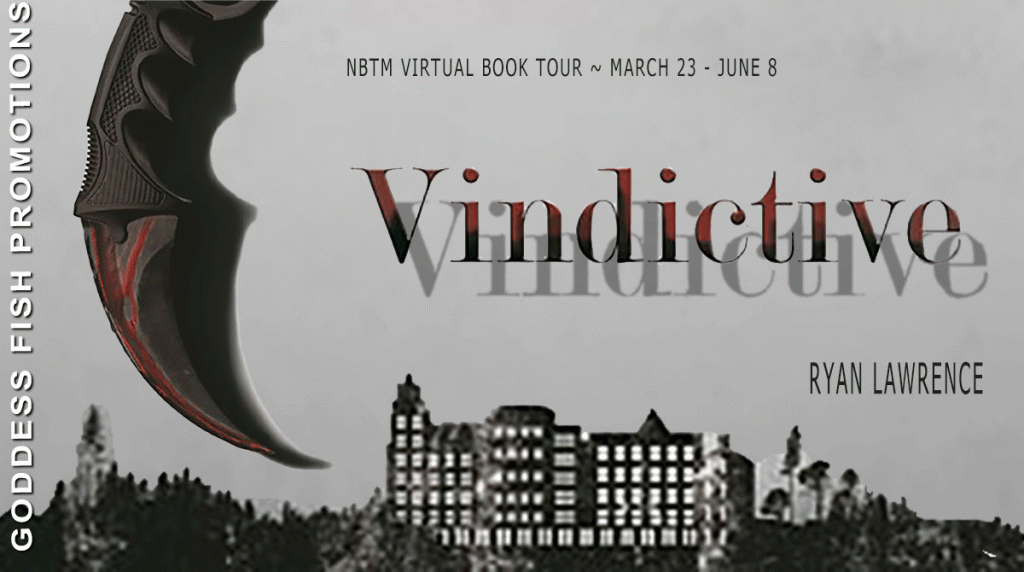
A Difficult Lesson For Any Writer To Learn by Ryan Lawrence – Guest Post and Giveaway

This is part of a virtual book tour organized by Goddess Fish Promotions. Ryan Lawrence will be awarding a $15 Amazon/BN GC to a randomly drawn winner via rafflecopter during the tour. Click on the tour banner to see the other stops on the tour.

A Difficult Lesson For Any Writer To Learn

As an author, one of the most challenging parts of the writing process is knowing when to stop. What does that mean exactly? Well, when you write your story, you have to understand that there comes a time when the rewrites and the editing process have to reach a final stage of acceptance that the story is complete. While I do not wish to speak for anyone but myself, I think it is safe to say that it is a common thing many writers have to feel like they could do more, write more, edit further, and tighten or tweak that last bit of storyline to make it perfect.

But what is perfection? How do we make something perfect? Is that even attainable? I spent months upon months going over my novel, rewriting and editing back and forth to make sure my sentences were tight, my storylines made sense, and my timeline flowed seamlessly. Of course, the more I went back to my story, the more “opportunities” I saw to adjust and make perfect. It became a rabbit hole I fell into, and I could not see a way out. I had blinded myself to any potential path out of this trap of perfectionism.

I had my novel, Vindictive, professionally edited and Beta tested; even still, I could not trust anyone but myself to tell me my story was ready for publication. The thought that I had only one chance to make a first impression crippled me. What if someone thought my novel was not well-written or thoughtful or exciting or—?! And there is that rabbit hole of self-doubt and perfectionism I was stuck in.

Eventually, my husband had had enough of seeing me on this hamster wheel and intervened. He asked me several poignant questions. Did I write this book for my own sense of creative fulfillment? Did I write this novel because I had a story to tell? Did I write this story for myself and hope it would resonate with like-minded people? Did I do everything I could to make it literarily professional and accessible? Did I understand that it’s okay if not everyone likes it, gets it or appreciates it?

Talking with my husband about my goals helped me clear my head and realize that perfection only exists in the worldview of people who want everyone to like them and, by extension, everything they produce. I soon realized that what I had written was something I had read a hundred times and still enjoyed, was still proud of, and that was enough.

Perfectionism is a trap and an unrealistic expectation for human beings who are, naturally, imperfect creatures. But it is in the attempt to understand that imperfection that makes a writer the creative artist they are. Sometimes you have to get out of your own way to see the truth, and having someone you trust to help you see the path clearer is a gift one should never take for granted.

The best revenge is revenge. Getting it is all that matters.

Jules Cartell has it all: wealth; beauty; a handsome, loving husband; a partnership in her father’s law firm; and the top executive position at one of Canada’s leading corporations, Cartell Worldwide. Aside from her secret, problematic desire for the married owner of the internationally renowned Château Bergé, Jules believes she and her life are pretty perfect. But the discovery of an unforgivable crime perpetrated against her family by her husband, Phillip, years before the two met sets Jules down the path of revenge. There is no option for forgiveness. Phillip has to pay. An eye for an eye.

It is said that when seeking revenge, you should dig two graves. Someone from Jules’s past, someone aggrieved by her actions, seeks vengeance for themselves. This is an enemy without compassion, without morality, without mercy. An enemy who will accept no restitution short of Jules’s death.

In the city of Fairporte, ON, secrets, lies, and betrayal can be found everywhere. As adversaries close in, will Jules get revenge before her past catches up with her? Unexpected allies may be instrumental to her success. They may also be the key to her very survival.

Enjoy an Excerpt

She cried for Ethan and for the bright-eyed girl she could no longer be. Jules wanted to run away from this place of death. She also wanted to run away from her selfish choice to ensure her survival, her future. Jules wished all of it had never happened. But it did happen, and she would have to live with it for the rest of her life.

“Ethan! No! Ethan!”

Startled, Jules quickly turned and looked in the direction of the shrieking bellow. It was William, tearing down the woods, screaming his brother’s name over and over again.

Having discovered his charges missing from the house, William had reluctantly gone about searching for them outside. Sadly, it was not soon enough to intervene and prevent the devastating incident.

When William finally reached the clearing, he stopped at the edge of the lake and looked out upon the scene of broken ice and still water. With clenched fists, he fell to his knees and screamed in anguish. His brother was dead and gone, swallowed whole by the cold, murky depths.

Angrily turning towards Jules, William showered upon her a rage so pure, so palpable it might as well have been a physical smack across her face. His glare was full of hate. And so were his words.

“Why didn’t you help him, you fucking bitch?! You did nothing! You let him drown!”

Jules stood as immobile as a stone and ate her emotions, swallowing all her sadness, guilt, and self-reproach. She owned the choice she had made. The only one possible. The correct choice. She understood William’s pain, but she was well aware of his vile nature.

Jules had her suspicions of what might diffuse her attacker: using his own words—his ignorance and prejudice—against him. Maybe then he would leave her alone. She had only done what was necessary. All she could do.

And who was he to blame her anyway? Was he there when it happened? No! He had been too busy playing video games to look after them, too busy to save his brother, too busy to have prevented all of this in the first place.

Be mean, Jules silently told herself. Act like a grown-up.

With unwavering resolve, staring William down with cold, hard eyes, Jules scoffed, “What the hell could I have done? I’m just a girl. Right?”

About the Author:
Ryan Lawrence was born and raised in Guelph, Ontario. He is a 2000 graduate of The University of Guelph in English. Ryan has worn many hats professionally, including working over 12 years as a custom art framer. While writing has always been a part of his life, it was only after leaving this profession that Ryan seriously took his education and passion for writing by the horns and began the journey towards Vindictive, his first novel.

Since 2002, Ryan has lived in London, Ontario, with his husband, Todd, together since 1997, their cat Dora, and his massive comic book collection that once fell on Todd. He’s okay.

Website | Facebook | Instagram | Twitter | Goodreads

Buy the book at Amazon, Amazon CA, Chapters Indigo, Barnes and Noble, or iBooks.

a Rafflecopter giveaway

Hello, Puddle! by Anita Sanchez


Hello, Puddle! by Anita Sanchez
Publisher: Clarion Books
Genre: Children’s (0 – 6 y.o.), Non-Fiction, Contemporary
Rating: 4 Stars
Reviewed by Astilbe

A nonfiction picture book exploring a deceptively simple but unexpectedly crucial resource for wildlife: puddles! This lyrical, gorgeously illustrated nonfiction picture book is perfect for young science learners and nature lovers.

Hello, puddle! Who’s here?

A normal everyday puddle may not seem very special. But for a mother turtle, it might be the perfect place to lay her eggs. For a squirrel, it might be the only spot to cool off and get a drink when the sun is shining down in July. And for any child, it can be a window into the elegant, complex natural world right outside their window.

With lush, playful illustrations and fun facts about the animals featured, Hello, Puddle! is a joyful celebration of the remarkable in the ordinary, and the importance of even the most humble places in fostering life.

Nature is filled with marvelous things.

This was a detailed introduction to the wide variety of plants and animals that rely on puddles for food, shelter, cooling baths on a hot day, and, of course, fresh water to drink. No one species dominated the plot, so it would be quite easy to use this as a jumping-off point to explore anything from how tadpoles turn into frogs to how seedlings grow to why bats are such an important part of the ecosystem. I thought this was a brilliant way to encourage young children to be curious about the world around them and have some idea of which plants or animals they might want to explore in depth in the future.

While puddles definitely aren’t as active in the winter, I did find myself wishing that Ms. Sanchez had dedicated an extra page or two to what happens in them during that season since she spent so much time discussing spring, summer, and autumn. After all, puddles do sometimes melt during the winter. This was a minor disappointment, and it could be easily remedied by a little research online or at the local library for readers who want to learn more. If all four seasons had been discussed, I would have eagerly given this a five-star rating.

It was refreshing to find a nature book that was accessible to so many different types of people. Puddles form in cities, suburbs, and small towns just like they do in the middle of the woods, and the text supported that fact. They can be observed by folks from a wide variety of backgrounds, too. One doesn’t need to run fast, spend money, listen closely, or carry any special equipment to observe what’s happening in them. This is a fantastic way to introduce kids to nature at story time, especially for families who have tight budgets, special needs, or other circumstances that might make wandering around out in the middle of nowhere difficult for them.

Hello, Puddle! offered an intriguing and educational glimpse into the sort of natural habitat that nearly everyone can find somewhere in their own neighborhood.

Finding the Emotion by Barbara Casey – Guest Blog and Giveaway

This post is part of a virtual book tour organized by Goddess Fish Promotions. Barbara Casey will be awarding a $20 Amazon/BN GC to a randomly drawn winner via rafflecopter during the tour. Click on the tour banner to see the other stops on the tour.

Finding the Emotion

Emotional situations in a story often remain with the reader, even long after a book has been read.

The Seraphim’s Song, Book 5 of The F.I.G. Mysteries, takes Dara, Mackenzie, and Jennifer, collectively known as the three FIGs – Females of Intellectual Genius, along with Carolina, their teacher from Wood Rose Orphanage and Academy for Young Women, to a hidden cave on the Yellow Sea in China. It is there that they must find the secret location of where an ancient artifact – a “key” – must be returned in order for the world to be safe. Natural disasters are occurring all over the world, Carolina is ill, all of them are exhausted as they fumble their way through the dark cave. As rocks and boulders fall around them and the cave starts to collapse, they barely escape only to discover that Jennifer is not with them.

*****

They could hear the vibrating hum of B flat minor, the “aum” sound loud and distinct, clear and pure, no longer off key.

And they could hear the terrifying sound of the stone walls crumbing and the ceiling collapsing from within the inner deep dark depths of the cave and moving closer toward them. Thick choking dust filled the air around them making it almost impossible to breathe or see. “Get out!” shouted Dr. Stanwick. “Run! The cave is collapsing!”

Protecting their heads with their backpacks from the falling rocks, blinded by the thick dust and barely able to breathe, the F.I.G.s ran back the way they had come, toward the entrance, stumbling over broken rocks, pulling Carolina, urging her to hurry, trying to keep her from falling, with Dr. Stanwick right behind them. When they approached the opening of the cave and could see the daylight beyond, Carolina glanced back. The last thing she saw was the crevasse in the stone wall slowly close around the artifact as though to once again conceal it and protect it. The cymatic pattern of the god’s eye was now just a pile of rocks.

Startled by the sudden loud rumble and seeing the thick yellow dust spew from the mouth of the cave, Li Lee quickly got out of the car and rushed toward the noise of falling rocks just as Carolina and the F.I.G.s and Dr. Stanwick exited out of the yellow cloud of darkness and into the bright sunshine. From a safe distance, they watched in stunned silence as huge boulders, uprooted shrubs, small trees, and chunks of yellow clay fell from the outcropping and cliffs above, completely sealing the entrance. Any visible evidence that there was a jinzhi de cave or ever had been was gone—destroyed. All that remained was the thick yellow dust slowly rising and dissipating into the air.

“Jennifer!” Dara looked around. “Where’s Jennifer?” Dara yelled, moving toward the cave. “Oh, no! Jennifer!”

With everything happening, they hadn’t noticed that Jennifer wasn’t with them. Running back to the cave’s entrance, horrified, Carolina, Dara, and Mackenzie screamed for Jennifer as they clawed and heaved and pushed at the heavy stones in desperation, trying to move them out of the way, trying to get back into the cave—trying to save the female of intellectual genius. Knowing it was futile, Dr. Stanwick fell to the ground, gasping for breath and overcome with emotion. Li Lee knelt beside him, his heart breaking over the tragic hopelessness of it all, knowing there was absolutely nothing they could do.

*****

Thank you for inviting me to visit with you and for your interest in my books. I wish you and your bloggers all the best. ~Barbara

Many changes have taken place at Wood Rose Orphanage and Academy for Young Women while Carolina and Larry were on their honeymoon in Frascati, Italy, on the Granchelli farm. The newlyweds have been given a larger bungalow; Ms. Alcott, niece of the founder of Wood Rose, and Mrs. Ball, assistant to the headmaster, have moved into a bungalow together; and Jimmy Bob, caretaker and night watchman at Wood Rose has moved from his family home down the road a bit into a small bungalow on the orphanage property with his hound dog Tick, as well as his new cat and her litter of kittens. Most important, thanks to the persuasive powers of Ms. Alcott and Mrs. Ball, the F.I.G.s have been given a forever home at Wood Rose.
Summer is coming to an end and the F.I.G.s will soon return to the universities to complete their special projects. They are starting to feel anxious, and the coping mechanisms they have used their entire lives are starting to work overtime. Dara’s thoughts turn to an unknown language, possibly from another world; Mackenzie focuses on the relationship of math to music; and Jennifer keeps hearing the note of B flat minor and is drawing dark swirls on her canvas board.

Deadly forces and natural disasters are unleashed into the world when Milosh, the evil young man who placed a curse on Carolina when she searched for her mother, steals an ancient artifact—a “key”—from an archaeological site near Puli, China on the Yellow Sea where he is working. This artifact, when paired with a certain note—B flat minor known as the Seraphim’s song—opens a portal that enables man to communicate with the gods.

When the key gets lost in a storm, Carolina comes into possession of it through Jimmy Bob’s dog, Tick, and when she does, she hears Lyuba, her gypsy mother, tell her that time is running out. The F.I.G.s and Carolina must go to the forbidden cave on the Yellow Sea, the place where the early gypsies are believed to have settled before travelling into Europe. For it is there where the key must be returned before all is destroyed.

About the Author:Originally from Carrollton, Illinois, author/agent/publisher Barbara Casey attended the University of North Carolina, N.C. State University, and N.C. Wesleyan College where she received a BA degree, summa cum laude, with a double major in English and history. In 1978 she left her position as Director of Public Relations and Vice President of Development at North Carolina Wesleyan College to write full time and develop her own manuscript evaluation and editorial service. In 1995 she established the Barbara Casey Agency and since that time has represented authors from the United States, Great Britain, Canada, and Japan. In 2014, she became a partner with Strategic Media Books, an independent nonfiction publisher of true crime, where she oversees acquisitions, day-to-day operations, and book production.

Barbara has written over a dozen award-winning books of fiction and nonfiction for both young adults and adults. The awards include the National Association of University Women Literary Award, the Sir Walter Raleigh Literary Award, the Independent Publisher Book Award, the Dana Award for Outstanding Novel, the IP Best Book for Regional Fiction, among others. Several of her books have been optioned for major films and television.

Her award-winning articles, short stories, and poetry for adults have appeared in both national and international publications including the North Carolina Christian Advocate Magazine, The New East Magazine, the Raleigh (N.C.) News and Observer, the Rocky Mount (N.C.) Sunday Telegram, Dog Fancy, ByLine, The Christian Record, Skirt! Magazine, and True Story. A thirty-minute television special which Barbara wrote and coordinated was broadcast on WRAL, Channel 5, in Raleigh, North Carolina. She also received special recognition for her editorial work on the English translations of Albanian children’s stories. Her award-winning science fiction short stories for adults are featured in The Cosmic Unicorn and CrossTime science fiction anthologies. Barbara’s essays and other works appear in The Chrysalis Reader, the international literary journal of the Swedenborg Foundation, 221 One-Minute Monologues from Literature (Smith and Kraus Publishers), and A Cup of Comfort (Adams Media Corporation).

Barbara is a former director of BookFest of the Palm Beaches, Florida, where she served as guest author and panelist. She has served as judge for the Pathfinder Literary Awards in Palm Beach and Martin Counties, Florida, and was the Florida Regional Advisor for the Society of Children’s Book Writers and Illustrators from 1991 through 2003. In 2018 Barbara received the prestigious Albert Nelson Marquis Lifetime Achievement Award and Top Professional Award for her extensive experience and notable accomplishments in the field of publishing and other areas. She makes her home on the top of a mountain in northwest Georgia with three cats who adopted her, Homer – a Southern coon cat, Reese – a black cat, and Earl Gray – a gray cat and Reese’s best friend.

website | Agency

a Rafflecopter giveaway