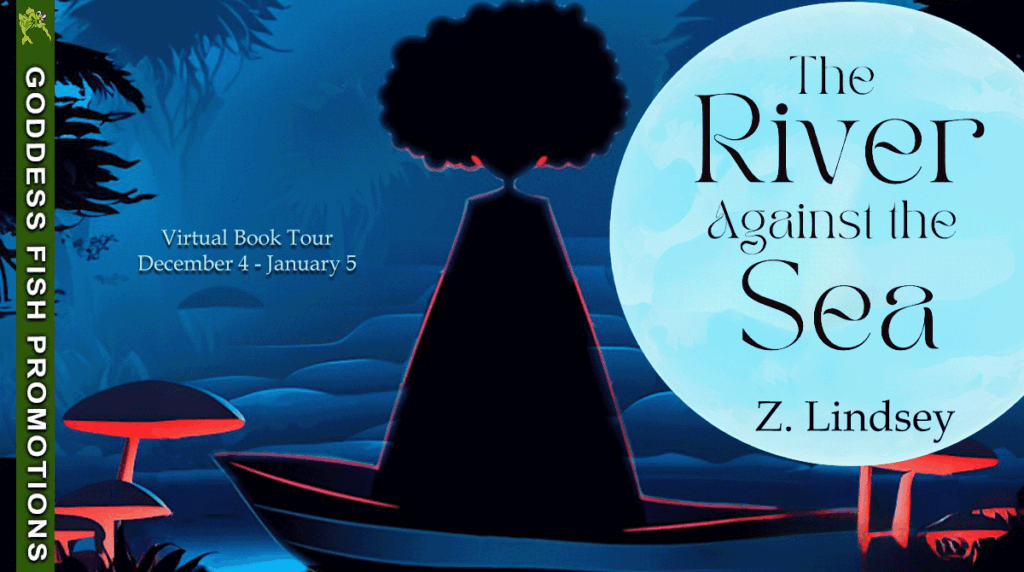
This post is part of a virtual book tour organized by Goddess Fish Promotions. Z. Lindsey will be awarding a $20 Amazon or Barnes and Noble GC to a randomly drawn winner via rafflecopter during the tour. Click on the tour banner to see the other stops on the tour.
Human culture is complicated. Add elves, orcs, lizardmen, and more to that, and things get very complicated. When you’re writing about fictional cultures, it’s tempting to find a culture you like from the real world and ‘copy-paste’ it into your story.
On Facebook science fiction and fantasy writing groups, I see questions like, “How can I sensitively base my mountain-dwelling dwarven miners off of ancient Mongol culture?” (This question is based on a real post, but I changed details to avoid shaming a specific writer, because this is not about shaming.) As an anthropologist, I know how to address this–but it may not be the answer the writer wants to hear.
Sometimes writers will say that it’s their right to write about anything they want, whether sensitive ears are offended or not. If I want to base my lizardmen on the Aztecs, who’s to stop me? But the issue isn’t some culture war question about who has the right to write about what. If you base your lizardmen on the Aztecs but profoundly fail to understand Mexica culture, those of us who study these things will not be offended. We’ll think you’re dumb. I assume no writer wants that.
So how can you base your dwarven miners off of Mongolian culture without coming off as a dope?
The answer, I’m sorry to say, is you probably can’t. Culture develops very much in response to its environment and its neighbors. That means starting with an existing culture is usually doomed to failure.
Mongol culture as we understand it today began on a plateau. While there are mountains around, that’s not where the ancient Mongols grew up, and Mongols didn’t usually harvest minerals by digging deep into the mountains like we typically imagine dwarves doing. Even today, most mines in Mongolia are open-pit mines, not in the mountains.
So there’s dissonance taking dwarven miners and putting them in Mongolian clothing. Your dwarves can be Mongols, but why would they use yurts, for example? Yurts work best on flat land because of their construction style. In the mountains, you can take advantage of caves for shelter.
If you say, “Fine, they won’t use freaking yurts,” well, home is where activities like cooking take place. Without yurts, you’ll have to reevaluate food culture and how people cook. In the end, what is Mongolian about your dwarves? They look like it? Superficial appearance is a road to racial stereotyping.
The other option is not doing that.
Instead, say, “My dwarves need to be miners for my story, so how did ancient cultures who mined live? What kind of houses did they have? What social patterns were common?”
This research might seem more abstract. You can’t google “Mongolia” and read the Wikipedia article. But I suspect you’re doing more than that already. It’s not a matter of doing more research, but shifting the focus. Focus on how a variety of real-world cultures adapt to environments similar to the ones in your story.
If we want to emulate Mongols, we’d probably have our dwarves make incredible woodcarvings. Mongols were famous for wooden sculptures. But maybe our dwarves don’t have many trees on the high mountains where they work, so they create incredible sculptures out of stone. Maybe they even find wood art to be repulsive. They work with stone all day, so why not? Wood is for the elves!
Focusing on the environment does two things: 1) It lessens the chance of creating stereotypes and unflattering portrayals of real cultures. That’s because your base point is an environment, not a people. And 2) It gives you more freedom, because you’re not bound by the facts of a real culture. You can build elements into your story that you want to, regardless of facts. If your dwarves still look Mongolian after all that reverse-engineering, there’s nothing wrong with that. They’ll look like that for logical reasons, not because you thought Mongols looked cool.
You don’t have to throw away your visions of rugged mountains. But if that’s where you want your story to take place, research how people adapt to the mountains. There are lots of fascinating details, like higher infant mortality rates because of oxygen issues! I recently wrote a story about a young woman who comes down from the mountains while pregnant to ensure her child comes to term … only to find a devastated and apocalyptic world waiting for her.
Rather than picking real-world cultures to emulate in your fantasy (especially when creating monsters), consider researching how people respond to certain environments. A great starting point is The Alternative Introduction to Biological Anthropology, by Jon Marks. And don’t copy-paste!
Some heroes have swords. Essimore Darkenchyl has a pen. But it’s a magic pen.
Some wizards have spellbooks. Essie has Gossen’s Guide to Shipping Law. But it’s a current edition.
Some sailors have . . . experience. Essie has a new diploma and a year-long contract, and her people have won wars with less.
And that’s good, because between stolen weapons, a coup, and a strange disease creeping in around her and the crew, she might need to win a war.
In a world that blends traditional fantasy with the Age of Exploration, Essie knows a pen is mightier than a sword, especially since hers sometimes shoots lightning.But what she thinks is a routine political dispute turns out to be something much, much more, and she may have finally met the one problem she can’t talk her way out of.
Enjoy an Excerpt
Essie cleared her throat. From her backpack, she removed the letter of service that granted her travel permission to sail on the ship. It was folded neatly into thirds, with a glittering blue wax seal on it.
“Essimore Darkenchyl at your service, sir. I’m your new fully licensed shipping coordinator with Power of the Pen. It’s an honor to be aboard.”
The captain took the letter without opening it, folded it in half with no regard for the beautiful wax seal, folded it messily again, and jammed it into his pocket. The whole time, Essie winced.
“Right-o.” As he smiled, the older man’s cheeks dimpled and his white teeth shined in the sun. “Well, I thought we were leaving without you, but here you are. Good on you. Great. Yeah.” The captain turned to the teenager at his side. “Grab her bag and get her stuff to her room. She can hang out there til dinner.”
As the teenager shouldered her bag and grunted, she and the captain looked at each other, the captain with his beaming smile. Once the teenager left, she said, “Thanks for welcoming me onto your ship.”
“Yeah. Fully licensed, you say?”
“Absolutely!”
“Okay. Have a nice one. See you at dinner.”
“Don’t we need to . . . uh . . . onboard?”
“You’re already on board. You managed that just fine.”
“But . . . signing things. Paperwork. Reviewing the staff log. Staff log, sir!”
The captain’s smile faded, but reappeared so fast she wasn’t sure if she’d seen it go.
“Okay, fine. Let’s talk in my cabin.”
About the Author Zac Lindsey is an anthropologist and a linguist who focuses on the Maya people of Quintana Roo. Since childhood, he’s had a not-so-secret love of weird, silly, and well-structured fantasy. When other people’s parents were reading them picture books, his mom was reading him Terry Brooks. He typically writes hopeful and character-driven fantasy.
Today, he lives in Quintana Roo, Mexico with his wife, daughter, and various stray cats.
Buy the book at Amazon or Barnes and Noble.


 Re-examine all you have been told. Dismiss what insults your soul.”
 Tania Kiaizadeh (Kia) was born in Teheran, Iran but in 1977, at the age of nine, she moved to Montreal with her family in order to avoid the political rumblings which gave way to the Iranian Coup d’état. With new beginnings in Montreal, adaptations to be made, she carved a life in North America. She received her Bachelor and Master of Education in Educational and Counselling Psychology, at McGill University. Since 1991, she has been working with her students in classrooms and in private practice, teaching them French as a second language, literature, history, as well executive functioning skills, while reminding them that they are limitless beings with gifts and capabilities that extend far beyond their imagination. It all starts with setting an intention and implicitly believing in yourself. Education, knowledge, self-improvement and self-empowerment paired with curiosity and her favourite aphorism, “leave no stone unturned,” define the fabric of her life. With Spirit nestled in stereo, she now has access to a crisp means of learning, which involves a great deal of hands-on, experiential learning.

 With only three weeks left in December, travel editor, America Greene, arrives in the idyllic Christmas Cove to find it… Christmasless!
 Sarah Dressler, originally from Florida, now calls the mountains of Colorado home. Beginning her writing career as an award winning fashion blogger, Sarah now writes fiction full time. She has spent her life traveling the world, first as the daughter of a US Air Force officer, and later as a military spouse. She enjoys sunset walks with her husband of nearly twenty years, and raising two very busy teenagers.


 Accelerate your marketing career by learning concrete strategies to reignite your creative spark and build a compelling case for your promotion to director. From creating a standout project portfolio to evaluating your skills to salary negotiation, networking, and interviewing best practices, this book equips ambitious marketing professionals with the tools necessary for long-term success.
 Fatemah Mirza is a Certified Resume Master and a highly sought-after speaker and coach who helps ambitious job seekers find higher-paying, more fulfilling jobs. She’s been helping job seekers since 2010 when she founded CareerTuners, which is a small team of skilled professionals from various industries who specialize in providing professional resumes, cover letters, LinkedIn profiles, and many more career-related services to help ambitious people land their dream jobs and achieve career goals.She has created free resources that have seen more than 160,000 downloads, helped hundreds of clients increase their pay, and built a network of more than 3000 recruiters.
 Sumayyah Rafiq Haider is an experienced author and career mentor with a passion for helping individuals excel professionally. With an MBA in Human Resource Management and SHRM-CP certification, Sumayyah has assisted numerous clients in their job search, providing guidance on resume writing, LinkedIn optimization, cover letters, interview skills, and career direction.

 Five years ago, Jack Ballinger was a police officer.

 Fairytale’s Truth: This is a children’s fantasy adventure. I used my first granddaughter as the MC. Her personality and some true events she’s done has been added to the story. It made her live forever. Of course, I did get permission from her parents before writing the story. My granddaughter had a rough beginning in her life and almost didn’t make it. She has a pacemaker. She’s seven now and has had that pacemaker for quite a few years (she was just over a year old). This is the first book in a series called Fairytale Adventures.
 Murder Through Time. I love time travel and this story is probably my best written story. I love the detail and had so much fun moving through time. I thought it was interesting how one person could be killed multiple times and the reason for her murders was actually clever, I think. I can’t take credit for it, the character came up with it.
 Peterson Estate: This was my original top favorite story because it had been with me since I was a kid. It was the first finished book I ever wrote and the third book that was traditionally published. Emily Peterson, the MC has been with me almost my entire life and has helped me through a lot of things growing up. I actually lost this story once and Emily kept coming to my dreams demanding I told her story. I rewrote it from memory which turned out making it even better!
 Two lives are forever changed when a virus sweeps the nation.
 I was bullied my entire childhood and through high school. It ended when my family and I moved to Fort Wayne, IN during my junior year in high school. By then, my life and choices had already been affected. I tried to commit suicide when I was ten years old. I’m thankful today that it wasn’t successful. A year later, I discovered writing and knew that was what I wanted to do for the rest of my life. I read everything on writing and did everything on my own, not knowing what I didn’t know. It took me twenty years to get my first book accepted by a traditional publisher. I’d say another ten years later, I changed my publishing routine to self-publishing and rewrote all of my books and changed my pen name to A.R. Grosjean, which is what I write under now. To this date, I have 23 books published in various genres including fantasy, science fiction, romance, paranormal, thriller, mystery, children’s books, YA, and more.

 An ancient relic. Two solitary quests. A chance to prove one’s worth.
 Born in the late 1960’s, K. M. has lived most of her live in the Pacific NW. While she’s always been creative, she didn’t turn towards writing until 2008. Writing under the pen name of KateMarie Collins, she released several titles. In 2019, the decision was made to forge a new path with her books. The Heroes of Avoch series, along with a new pen name, is the end result.
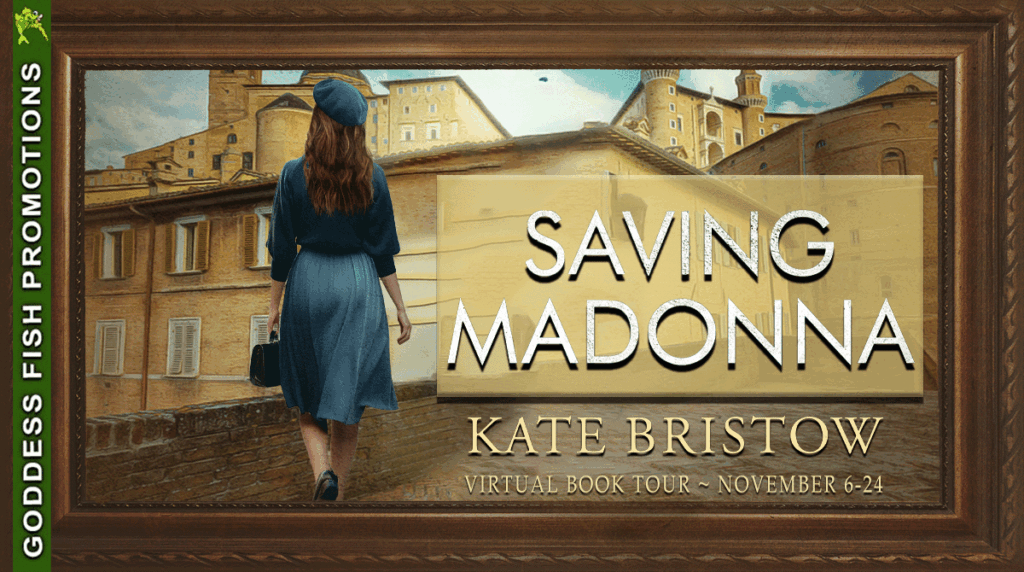
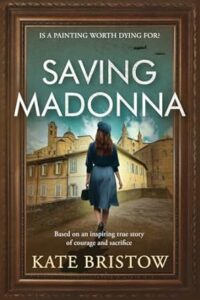 Is a painting worth dying for?
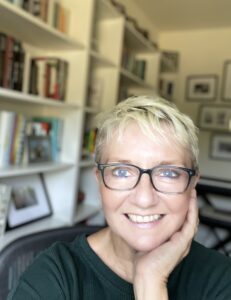 Kate Bristow was born in London. She fell in love with reading when she got her first library card at the age of four. Her first attempt at writing and publishing for a wide audience was a local newspaper typed laboriously at home on her mother’s typewriter while at primary (elementary) school in north London. It is surely a loss to cutting-edge journalism that only one issue was ever produced. Kate divides her time between her small-but-perfectly-formed modern home in Los Angeles and her five-hundred-year-old farmhouse just outside Sassocorvaro in Italy.