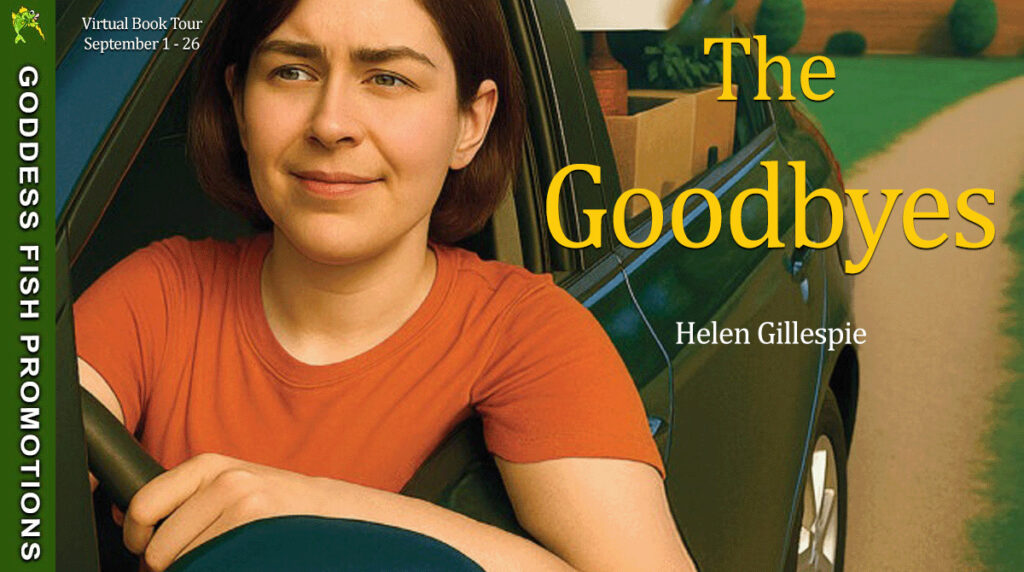
Researching Tip by Helen Gillespie – Spotlight and Giveaway

This post is part of a virtual book tour organized by Goddess Fish Promotions. Helen Gillespie will be awarding a $25 Amazon/BN gift card to a randomly drawn winner. Click on the tour banner to see the other stops on the tour.

Researching Tip

The Internet isn’t the “end all” to research. I love that we have the World Wide Web at our fingertips, allowing us to gain knowledge about any subject. However, it sometimes falls short. Even with Chat GPT and other AI tools, knowledge seekers need to ask the correct questions to get the correct answers. Oftentimes, we need to augment technology with human intelligence.

During my writing of The Goodbyes, I was firm that it took close to two hours to travel from Marshfield, Missouri to Fort Leonard Wood, Missouri. My editor said it took much less time. Of course, I used a map app, and she was correct; it takes maybe an hour. I couldn’t shake off the nearly two-hour trip I thought I had remembered. “Perhaps the Interstate wasn’t completed at the time,” I thought. My computer search proved me wrong. I decided to call a librarian at the local library in Marshfield in hopes of clarifying why I thought the trip was longer. I shared my challenge with her, and right away she responded, “I lived here during the time. The speed limit was 55 then.” Surely, that would have accounted for the more extended trip. However, two hours was still an overestimation. As a result, I rewrote the sentence to exclude the time spent traveling the distance, in case a reader doesn’t recall the 55 miles per hour speed limit as I hadn’t.

This wasn’t the only time while writing The Goodbyes that I depended on human intelligence. I asked a police officer friend of mine if my portrayal of an officer approaching a crime scene was believable. To my relief, she said yes and offered a few suggestions to enhance the scene.

In the sequel to The Goodbyes, I am relying heavily on human intelligence. I’m interested in learning what life was like in the early ’90s in an area I am only somewhat familiar with. I have a multitude of facts, but an accurate and believable picture of people’s feelings and memories is what makes a plausible and enjoyable story. Therefore, I’ll ask others.

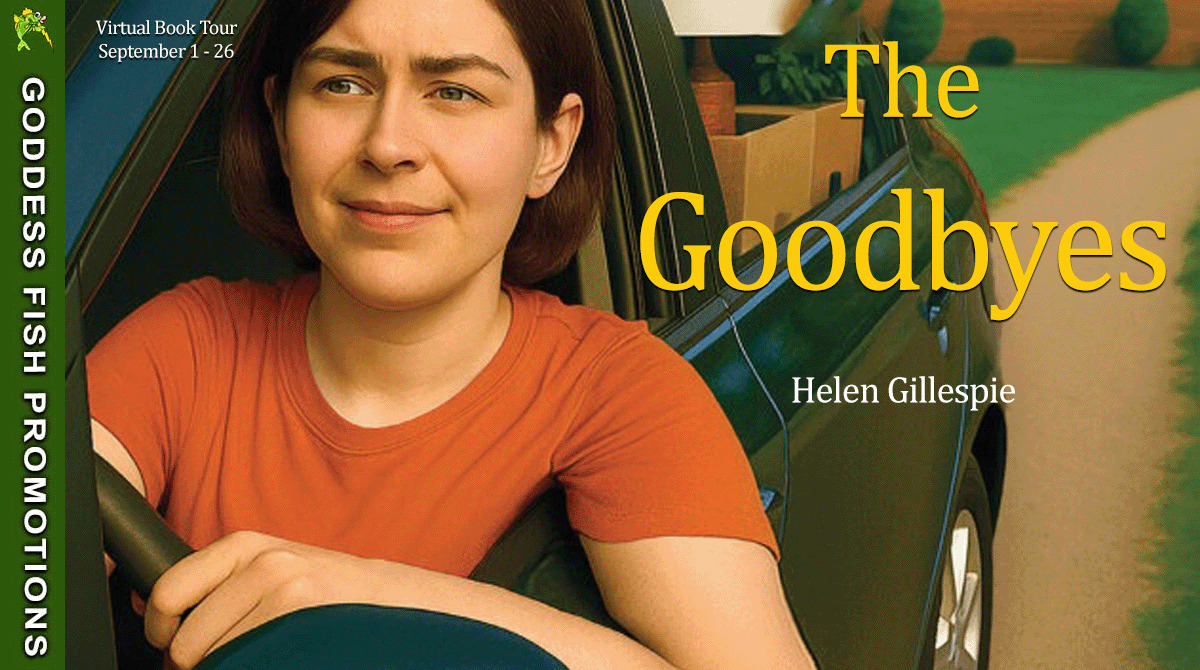
Struggling with becoming an adult in a small mid-western town, Dianne must confront family secrets, deception, and discovery during her last year of college. As she cares for her ailing mother, her world begins to unravel and she is challenged to navigate through lies, friendships, love…and murder.

Meeting the wrong person makes it possible for her to recognize the right ones and to find the strength she needs to survive. Realizing that she is responsible for her own destiny, she learns that to say hello to a new life, she must first say goodbye.
Enjoy an Excerpt

All living creatures hold secrets for basic survival. Humans keep secrets to preserve their image, hide their misjudgments, or protect those they care about. Only in the safest conditions, absolute trust or vulnerability, can humans feel safe divulging their secrets, laying bare their hidden selves.

Katrina England and her husband did not keep secrets from Dianne or indulge in the usual childhood fantasies of princesses or fairy godmothers with her daughter. Even Santa Claus was introduced from a historical perspective rather than as a magical elf. The Englands were doting parents who disciplined their daughter when necessary and answered her questions honestly, only withholding information that surpassed Dianne’s maturity. Yet, despite this philosophy, Katrina did hold a few secrets, one very close.

As Dianne approached adulthood, Katrina began to share these secrets. By then, Dianne’s father had died, leaving the two women to navigate life together as a family with no other relatives living close by. Katrina often grappled with the lifelong weight of a childhood secret and her secret of late, a terminal cancer diagnosis. Both became weightier as her cancer took hold. When Dianne began dating the MegaMart store manager, Katrina’s concern of her daughter’s future turned to worry.

Dianne, nearing graduation while dealing with her mother’s illness, found herself facing unexpected challenges. When Michael D. Glossen entered her life, her challenges became problems. Oddly, she met “Michael D” when a cream rinse emergency arose.

About the Author: Throughout grammar school and college, Helen Gillespie loved developing story sketches or full stories but kept them hidden within herself. That creative spark proved valuable in unexpected places, first on assignment as a musician in the US Army, and after leaving the Army, when she earned a degree in elementary education. After reentering the Army in 1981, she put pen to paper, or rather, “fingers to an Olivetti.” She officially learned the art of journalism to serve the Army, but it quickly became a personal passion. Interviewing fellow soldiers, exploring their jobs and personalities, and publishing useful information for the military community formed the basis of her skill and enjoyment. Those years of thought, training, education, and experience laid the foundation for crafting her first novel, The Goodbyes.
Facebook | LinkedIn | Website | Instagram | Facebook

a Rafflecopter giveaway

Ten Things Most People Don’t Know About Me by MG da Mota – Guest Blog and Giveaway

This post is part of a virtual book tour organized by Goddess Fish Promotions. One randomly chosen winner via rafflecopter will win a $25 Amazon/BN.com gift card. Click on the tour banner to see the other stops on the tour.

Ten things most people don’t know about me
1. I don’t like dresses or skirts. And since my 18th birthday the times I wore a dress or a skirt can probably be counted by the fingers of one hand!

2. I love the night sky and can stand looking up at the stars for hours in a dark place, with little or no light, in the middle of nowhere.

3. People know me as a classical music, opera and ballet lover but I enjoy some rock music too. When I lived in Germany I went, among others, to the live concerts of Queen, Bruce Springsteen, Pink Floyd and Gary Moore. The experiences were memorable.

4. I worked in IT for many years but before that I was a TV presenter, a translator and a teacher of foreign languages and history but always continued to write in parallel to these jobs during my spare time.

5. I kept my writing secret from most people, except my brother and best friend, for many years because I thought people would think I was weird.

6. I don’t like ice cream and I will always prefer cheese to cake or sweets, however, I love chocolate, especially dark chocolate and find it difficult to resist.

7. I don’t like tea. It is something I never drink. I find it just tastes like hot water though it can have nice aromas.

8. I like fast cars and motorbikes and I used to fly as a co-pilot fixed-wing small planes with a friend of mine in Germany a long time ago. When I moved to the UK I learned to fly helicopters.

9. The things I most hate in life are boredom and stupidity.

10. I lived in Germany ten years and while there I hitchhiked often and travelled all over the country in that way.

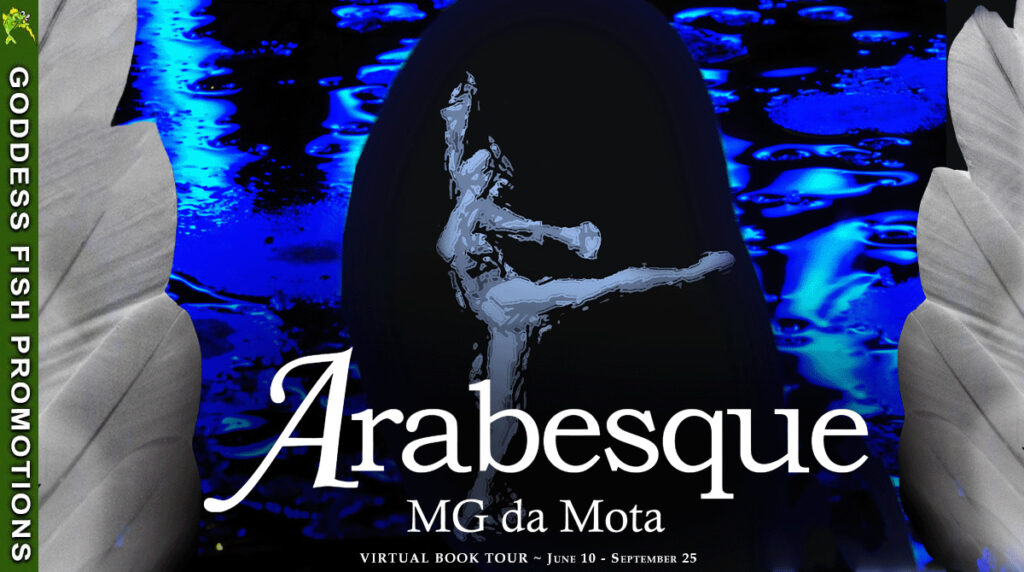
A woman living alone in a coastal Sussex town in 1998 plants a copper beech sapling at 3 a.m. on a dark, cold night. Why?

A ballet dancer in 1960s East Germany is oppressed, longs for escaping with his little daughter but not his wife. Why? Will he make it?

In 2022 Karsten von Stein, widower and principal of the Royal Ballet, with two young children, meets Ivone Benjamim, a Portuguese, newly-arrived principal dancer. They discover a magical chemistry when dancing and soon it transfers to their private lives.

Against the background of ballet and its dancers, a woman called Grace tells her story from a rehab centre. Obsessive, delusional she begins believing Ivone robbed her of the man of her dreams—Karsten. And then a skeleton is found in a garden…What connects all these people and their stories?

You’ll be the audience facing the stage of this balletic novel.

Enjoy an Excerpt

Prologue
Southeast England, late November 1998

She looks out of the window. Dark night. Black but clear. Twinkling dots punctuate the raven velvet of the sky. Stars shimmer cold and icy. Their light slightly wavering. She knows it is the Earth’s atmosphere. But that’s neither here nor there. It doesn’t matter a jot. Not at this moment anyway.

Darkness is the important thing. No moon. New moon. Why do people refer to a new moon when there is no moon or when one cannot see the moon from our revolving, ever turning blue dot? The moon is still up there in the sky. It’s just that at some point during its orbit its farther side from us is facing the sun. So the side facing us is dark and we can’t see it. As simple as that.

Tonight is new moon. An ideal night. She opens the window quietly and glances at the houses to her right first, then to her left. Like hers they are all immersed in silent darkness. People sleep. She looks at the luminous hands of her alarm clock on the side table. The shorter hand points at the number three, or close to it, and the long hand at somewhere between ten and fifteen. Probably around 3:12 in the morning. Her house stands almost but not quite alone on top of the hill. To her right, looking from her bedroom window that faces the back garden, there are two houses. The one closest to hers is empty.

About the Author: M G da Mota is Margarida Mota-Bull’s pen name for fiction. She is a Portuguese-British novelist with a love for classical music, ballet and opera. Under her real name she also writes reviews of live concerts, CDs, DVDs and books for two classical music magazines on the web: MusicWeb International and Seen and Heard International. She is a member of the UK Society of Authors, speaks four languages and lives in Sussex with her husband. Her website, called flowingprose.com, contains photos and information.

Website | Facebook | LinkedIn | Instagram
Buy the book at Amazon.

a Rafflecopter giveaway

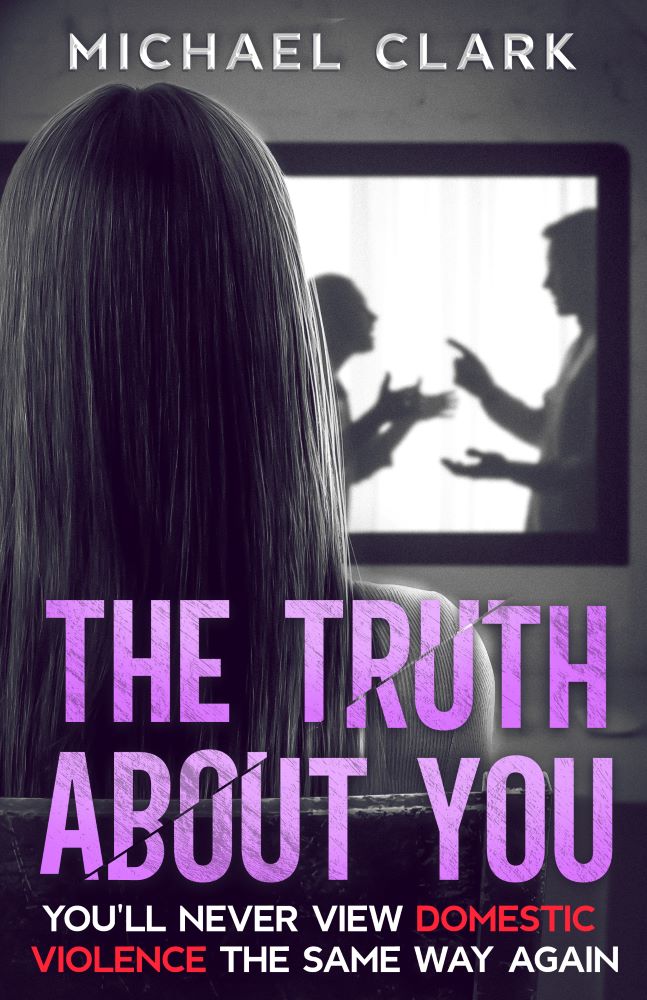
The Truth about You by Michael Clark – Spotlight

There are novels that entertain, and then there are novels that unsettle, provoke, and linger.

Michael Clark’s The Truth About You belongs firmly in the second category.

Lucy and Meg are sisters caught in the middle of their mother’s abusive marriage. When her husband Greg is arrested for assault, they believe the worst is over—until their mother chooses to stay with him. Their desperate plan to capture the truth with hidden cameras is meant to protect her, but instead it reveals a far more complex reality. Through Lucy’s eyes, Clark explores the troubling gap between society’s assumptions about abuse and the messy, contradictory truths families actually live. With literary depth and emotional force, The Truth
About You is a thought-provoking work for readers drawn to dark, layered fiction. Michael Clark brings a rare perspective to his writing. As the founder of the Ananias Foundation, he has dedicated his career to helping thousands confront and overcome abusive behaviors.

His voice is shaped by his own past—once a domestic violence offender, he transformed his life and now leads with humility, compassion, and hope. He is also the author of From Villain to Hero, a candid memoir chronicling his personal journey of change. With The Truth About You, Clark turns to fiction, weaving his insight into a story that challenges readers to see beyond black-and-white narratives. Learn more at michaelclarkauthor.com.

When Lucy and Meg’s mother is assaulted by her husband, stepfather Greg, his arrest seems to mark the end of a nightmare. But when their mother chooses to stay with him, the sisters are thrust into a disturbing moral dilemma.

Desperate to protect her, they take a drastic step: secretly install hidden cameras to capture the truth for themselves—and the rest of the world. What unfolds isn’t what Lucy expected.

Told with emotional clarity and literary depth, The Truth About You probes the unsettling gap between what we’re taught to believe and the evidence. As Lucy grapples with conflicting narratives of abuse, loyalty, and manipulation, she’s forced to question not only her mother and stepfather’s roles in this abusive relationship, but the entire framework of judgment, justice, and victimhood.

This is a bold, timely novel for readers who crave psychological insight, emotional complexity, and stories that challenge assumptions. Fans of dark literary fiction and contemporary women’s drama will find themselves haunted by the questions this story refuses to answer easily.

Read it, question everything, and decide for yourself.

Enjoy an Excerpt

Shortly after 7 p.m., Greg and Paula pulled into the driveway in Greg’s SUV. They stayed in the car for
several minutes. Stacy peered through the family room curtains to check what was happening. “They’re
still sitting in the car,” she reported.

“Is he hitting her?” someone asked.

“No. At least not as far as I can tell,” she said.

“Are they arguing?”

“I’m not sure.”

“Should someone go out there?”

“I’m not sure about that, either.”

Finally, the doors to the SUV opened and Greg and Paula got out. Greg went to the back and started filling his arms with bags from their shopping trip. Paula headed for the kitchen’s side door.

“Are you okay?” Christine asked Paula as she came through the door.

“I’m fine,” Paula said.

“Is Greg coming in?” Julie asked.

“Yes,” Paula answered. “He should be in soon. He’s bringing in the groceries.”

“He knows we’re here?”

“He knows there are several people here, yes.”

“How did you convince him to come in?”

“I told him that if he wants any chance of us staying married, he will come in and listen,” Paula said.

About then, Greg walked into the kitchen, clutching four bags of groceries in each hand. He glanced at the crowd gathering at the other end of the room but said nothing.

“I need to get some of this stuff into the refrigerator and freezer,” he said as he placed the bags on the counter and began unpacking their contents.

An awkward silence fell as he avoided their stares. Others in the group, including Lucy, remained in the family room.

Greg, having stowed away the groceries, glanced at the bystanders. “I’m guessing you’re not here for a party.”

“No, Greg, we’re not,” Denise’s husband, Mark, said. “Why don’t you come into the other room and have a seat? We have something we’d like to talk to you about.”

“I can only imagine what that might be,” Greg grumbled quietly, yet audible to those nearby.

About the Author: Michael Clark is the founder and Executive Director of the Ananias Foundation, a nonprofit organization committed to ending domestic violence at its root, by working with those who have caused harm. Through the foundation, Michael has supported thousands of individuals seeking to break free from abusive behaviors, offering guidance, and hope for change.

What makes Michael’s voice distinct is the depth of personal experience he brings to his work. A former domestic violence offender himself, he has walked the difficult road of transformation. Today, he writes, speaks, and leads from that hard-won perspective, helping others understand the mindset behind abuse, and how real, lasting change is possible.

He is the author of The Truth About You, a domestic violence themed novel, and From Villain to Hero, a candid and powerful memoir that traces his journey from being abusive to becoming a safe and emotionally healthy partner. His writing is marked by honesty, compassion, and a deep understanding of the internal and relational dynamics at play in abusive relationships. Michael Clark is the founder and Executive Director of the Ananias Foundation, a nonprofit organization committed to ending domestic violence at its root, by working with those who have caused harm. Through the foundation, Michael has supported thousands of individuals seeking to break free from abusive behaviors, offering guidance, and hope for change.

What makes Michael’s voice distinct is the depth of personal experience he brings to his work. A former domestic violence offender himself, he has walked the difficult road of transformation. Today, he writes, speaks, and leads from that hard-won perspective, helping others understand the mindset behind abuse, and how real, lasting change is possible.

He is the author of The Truth About You, a domestic violence themed novel, and From Villain to Hero, a candid and powerful memoir that traces his journey from being abusive to becoming a safe and emotionally healthy partner. His writing is marked by honesty, compassion, and a deep understanding of the internal and relational dynamics at play in abusive relationships.

Website

Buy the book at Amazon. Free to read on KindleUnlimited.

Where Do Ideas Come From? by Marc Macdonald – Guest Post and Giveaway

This post is part of a virtual book tour organized by Goddess Fish Promotions. Marc Macdonald will be awarding a $20 Amazon/BN gift card to a randomly drawn winner. Click on the tour banner to see the other stops on the tour.

Where Do Ideas Come From?
If I could ask one question to a writer of a book I’ve enjoyed, it would be this: where did you come up with that idea? And I don’t just mean the big, sweeping concept that drives the synopsis. I mean the subtler things: the offhand comment a character makes, the way a scene smells like pine or rain, the choice of one word instead of another. Those details are the heartbeat of a book, and they’re the things I think people are truly enamoured with.

So much of what you find in my book, Between Two Seasons, came from real life. That’s not to say it’s autobiographical—it isn’t—but countless pieces of it are borrowed from the world around me. A place I once visited, the way a certain trail curved through the woods. A name overheard at a coffee shop. The sound of gravel under tires on a back road. The faint smell of rain on cedar. Those fragments live in memory, waiting to be called up at the right moment.

Ideas are unique, but they rarely arrive fully formed. More often, they’re collected like stones along the way. Writers are borrowers, observers, magpies of experience. Sometimes we borrow subtly: a stranger’s facial expression, the rhythm of a conversation, the awkward silence that follows a poorly timed joke. And yes, sometimes we steal outright. A friend’s quirky turn of phrase, a look we’ll never forget, a single moment that demands to be placed in a new context. Writing, in that sense, is not about inventing from nothing; it’s about noticing, capturing, and reshaping.

This is why paying attention is one of the most valuable tools a writer has. The world is endlessly generous with details, if you’re willing to slow down and receive them. A walk to the store can give you five new ideas if you let it: the pattern of rain on the sidewalk, the way a child negotiates with a parent, the dog that refuses to be led in any direction but its own. None of these are “stories” in themselves, but they’re seeds. And when planted in the soil of imagination, they can grow into something surprising.

But perhaps the deeper truth is that ideas don’t just come from out there, they also come from within. Every writer carries their own history, perspective, and inner landscape. A story is often an attempt to reconcile those inner truths with the outer world. The settings we choose, the conflicts we shape, the language we fall back on; all of it reflects who we are, and how we see.

So when someone asks, “Where do you get your ideas?” the answer is: everywhere. From life, from memory, from strangers, from dreams, from the tiniest things we notice and the biggest questions we wrestle with.

And maybe that’s the real joy of writing. Not that we invent worlds out of thin air, but that we take the world we already have and see it anew.

So, if you have a chance to ask a writer, “where do your ideas come from?”, do it. You will be amazed where some of them originated.

Haunted by regret and stalled by guilt, Alex Chambers arrives at Silver Springs Health and Rehabilitation Centre searching for redemption. What he finds instead is Mae Seasons—a sharp-tongued, fiercely independent resident with no interest in being anyone’s project.

Alex came hoping to make amends for the mistakes of his youth, especially to the woman he once hurt. But when that hope slips away, he’s drawn into an unexpected role: caregiver and reluctant confidant to Mae, whose irreverence hides a lifetime of buried truths.

As days at Silver Springs unfold in their strange, often absurd rhythm, Alex is forced to confront the tangled grief of his past. Through awkward silences, reluctant confessions, and moments of startling vulnerability, he and Mae forge an unlikely friendship—one stitched together by shared loneliness, reluctant compassion, and the possibility of healing.

At once poignant and quietly humorous, Between Two Seasons is a story about the lives we try to outrun, the people who challenge us to face ourselves, and the surprising ways connection takes root.

Enjoy an Excerpt
I exited the food line like a camper in the mess hall, tray in hand and desperately seeking a friend or two to sit with. I, however, scanned the room for the opposite: an empty table. I didn’t have any friends here and wasn’t intent on making any. I wanted to eat and get back to my room. A budding headache and body ache were on the precipice of significantly derailing my first hours at Silver Springs. And these were crucial hours. I was banking on a good night’s rest to alleviate these symptoms but feared the anxious excitement of finally arriving here would preclude any such endeavour.

“Hey, new guy, over here,” came a voice and welcoming wave from the person sitting at a table to my left.

Shit. There goes anonymity.

I had a split decision to make: be polite and kindly dismiss the invitation or accept and possibly be pulled into the labyrinth of Silver Springs politicking. My therapist would not be pleased with this thought. I was creating an outcome, a negative outcome, to a situation I had not yet experienced. But still, I mean, how was this place unlike high school? I’d already relived several moments from my burgeoning youth, and I’d only been on the premises a very short time.

About the Author: Marc MacDonald is an author who believes every great story starts with a spark—whether it’s a single sentence, an unforgettable character, or an idea that won’t let go. As the writer behind Between Two Seasons, a novel that celebrates the beauty of human connection, Marc weaves heartfelt narratives that linger long after the last page is turned.

When he’s not crafting compelling fiction, Marc applies his storytelling skills as a seasoned communications professional, proving that every message—whether in a book or a press release—deserves to be engaging. He’s also a fierce defender of the Oxford comma, an unapologetic pun enthusiast, and someone who firmly believes that coffee is the most essential writing tool.

Find him deep in his next manuscript, chasing inspiration, or justifying “research” as an excuse to buy more books.

Website | Instagram.
Buy the book at Amazon.

a Rafflecopter giveaway

The Smallest of Miracles by Douglas Carpenter – Spotlight


Literary Fiction

Date Published: March 6, 2025

Publisher: Seacoast Press


One choice. One moment. A ripple that changes everything.

In The Smallest of Miracles, Douglas Carpenter crafts a masterful literary
debut that merges gripping storytelling with profound life lessons. The novel
follows Ted Carrington, a wealthy, brilliant, and emotionally distant man on
the autism spectrum, who returns to the private elementary school that shaped
him—for better and worse. He intends to make a large donation, but what
begins as a business transaction slowly becomes a reckoning with his past.

As the story transitions between Ted’s present and his childhood,
readers meet the deeply flawed, often cruel boy he once was—especially
to a vulnerable new classmate named Anna. But life, in its quiet way, begins
to turn his world upside down.

What emerges is not only Ted’s transformation, but an invitation to the
reader: to reflect, to slow down, and to reconsider how the smallest
decisions
—the ones we barely notice—can lead to the greatest
changes
.

This is not just a novel. It’s a call to awareness. A self-improvement
guide disguised as a coming-of-age story.

📘 “Just like everything in life, meaning is found in the small details.”


📘
“A golfer knows a 2-inch putt counts the same as a 200-yard drive. Life is
very similar…”
📘 “Change is the fertilizer of life. It often stinks,
but it is necessary for growth.”


🔹 Perfect for fans of literary fiction with depth
🔹 A powerful read for young adults and up
🔹 Ideal for classrooms and book clubs seeking discussion-worthy themes

Read it once for the story. Read it again for the insight.


About the Author
Douglas Carpenter is not your typical author. A Certified Public
Accountant (CPA) and Chartered Financial Analyst (CFA), Douglas became the
youngest stockbroker in the U.S. at just 17 and currently owns two accounting
firms and an asset management company in New York. Despite a thriving career
in finance, his true passion lies in storytelling.

His debut novel, The Smallest of Miracles, took ten years to write—a
deeply personal and intricately crafted journey of self-discovery and
transformation. Drawing on his keen eye for detail and analysis, Douglas
poured over every word, shaping a literary fiction novel that functions as
both an engaging story and a guide to personal growth.

The book explores how tiny, seemingly insignificant choices shape our lives
far more than major events. Readers are invited to slow down, reflect, and
discover truths hidden in the smallest details—just as Douglas has done
through his writing.

Douglas hopes his novel will find a place in high school curricula and on the
bookshelves of thoughtful readers young and old. His message is clear: “The
truth is always hidden behind things that are out of place.”


Connect with Douglas Carpenter
to discover a new perspective on life,
character, and the miraculous power of small decisions.


Contact Links

Youtube

Facebook

“X”

Instagram

Threads

TikTok


Purchase Links


Amazon


B&N


RABT Book Tours & PR

Father of One by Jani Anttola – Q&A and Giveaway

This post is part of a virtual book tour organized by Goddess Fish Promotions. The author will be awarding a $25 Amazon/BN gift card to a randomly drawn winner. Click on the tour banner to see the other stops on the tour.

What perspectives or beliefs have you challenged with this work?

Let’s be clear, the genocide in Srebrenica was a monstrous, evil undertaking. The same goes for any of the bloody rampages in our collective history, whether it’s Bucha, My Lai, Rwanda, you name it. But while those who carry out or enable such atrocities should be held responsible, we sometimes forget that there are always perfectly rational and humane individuals within any national or ethnic group, too. It wasn’t explicitly my intention, but I hope Father of One evokes the idea that demonizing and stereotyping people based on their culture, religion or identity isn’t very constructive.

Did you include any hidden messages or Easter eggs in this book?

If I did, I wouldn’t advertise them. I don’t want to lead my readers by the hand, so it’s best they interpret everything through their own lens.

Do you work with editors? If so, what has your experience been with them?

When my first books got published in Finland, I was fortunate I could work with two very good editors. It was a major publisher and back then they had their own editors. A good one does far more than just fix grammar and typos, so it was like having someone in the literary trenches with me. My latest novel is through an indie publisher in the UK. This time I didn’t have the luxury of collaborating with a personal editor, but I commissioned a structural edit. It was also very helpful. Whether it’s been a full content edit or a light evaluation, every time working with an editor I’ve learned something, and I’ve come to enjoy the re-writing process. This is important for indie-published authors who, at the end of the day, must do most of the editing themselves.

What is your favorite television show?

I don’t have a TV or Netflix or such, so I wouldn’t know about any shows. I travel a lot, so I sometimes watch movies on airplanes. I usually go for anything that was filmed before the 2000s. I find the new CGI-riddled slop insufferable. It boils down to the same fundamentals as good literature: storytelling, dialogue and substance often suffer when a work relies too much on gimmicks meant to impress you.

Quote somebody from the top of your head.

“Don’t believe in anything they say – the day after yesterday is all it takes.” Buddha said so – take it from me.

Maka, a young Bosnian soldier, has survived three years under siege. When the enemy forces launch their final attack on his hometown, he must escape to the hills. But traversing the vast woods is a task against all odds: to stay alive, and to find his infant son and his wife, he is soon forced to make a desperate move.

Set against the harrowing background of raging guerrilla warfare and the genocide in Srebrenica, Father of One is, at heart, a story of deep humanity, compassion and love. It is the account of one man’s desire to reunite his family, separated by war, and of bonds unbroken by trauma, sustained by loyalty and tenacity. Writing in a voice that rings with clarity and authenticity, Jani Anttola lays open a dark moment in Europe’s recent history.

Enjoy an excerpt:


They walked up to the plaza where narrow streets led from the ancient town gate towards the centre of the promontory and the Saint George’s church and its cemetery gardens that overlooked the old fishing town. Most of the shops lining the plaza were shuttered. Turning up towards the rectory, they came to the café bar. A young, lean man in a dress shirt and round eyeglasses was sitting by the window with an espresso and listening to the radio that the waiter had placed on the counter. A newscast was on and a woman newsreader was talking in rapid, tense sentences about something.

“Good morning,” said the waiter. “Lovers up so early?” He was an acquaintance of the hotel owner, a smooth-mannered boy who came from the lavender country in Istria. The old man had recommended the place for their shop-roasted coffee.

“Good morning,” Maka said. Amelia dismissed the innuendo with a little laugh. “How are you?”

“I’m good as always.”

Maka, leaning to the counter and taking off his sun hat, looked at the radio. “What’s the news?”

“Their Teritorijalna Odbrana got the orders to start a counteroffensive.”

“No,” Amelia said, looking at the grave-faced waiter.

“When was that?” Maka asked.

“Last night. There’s armoured columns advancing towards Ljubljana. Six JNA brigades.”

“It’s happening too fast. They declared independence only three days ago.”

“Well, it’s happening, all right,” the waiter said. “Yesterday they shot down two helicopters. Now there’s fighting on the Italian border. The Slovenians have bogged the tanks down and are busting them.”

“But it’s insane,” Amelia said. “Everybody’s lost their mind.”

“The generals seem to think it makes perfect sense,” said the bespectacled man by the window. He lit a cigarette and blew smoke towards the ceiling, his head leaning back, then stared out to the street, where a group of loud young men was passing, waving Croatian flags.

Jani Anttola is a Finnish novelist and a medical doctor. In the 1990s he served in Rwanda with the French military and fought in Bosnia as a soldier of the Bosnian army. His works have been published in the UK and Finland. He has spent most of his adult life abroad, working in Africa, the Middle East and the Asia-Pacific.

Website

Buy the book at Amazon UK, Amazon, or Book Guild.

a Rafflecopter giveaway

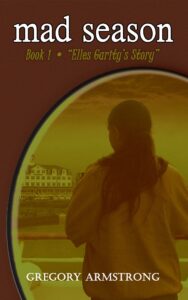
Mad Season: Elles Garity’s Story by Gregory Armstrong – Spotlight and Giveaway

This post is part of a virtual book tour organized by Goddess Fish Promotions. Gregory Armstrong will be awarding a $25 Amazon/BN gift card to a randomly drawn winner. Click on the tour banner to see the other stops on the tour.

Fifteen years ago, Elles Garity’s world came crashing down, in more ways than one. Now in her mid-twenties, long since removed from the small island town that she grew up in and never dealing with the pain of her loss, life is calling her back home. In the affirmant of recent unfortunate events Elles finds herself at a turning point once more. This time though, she’ll be forced to confront both her unresolved grief and the people and places she left behind. It won’t be easy. Along the way Elles will learn the truth behind a new friend’s dark connection to her tragic past and be the last to uncover unthinkable family secrets that will unravel everything she ever knew about the family she thought she lost.
Enjoy an Excerpt

Now, I was questioning all of it. I didn’t deal with things well. I didn’t allow anyone to help me deal with things. My life, the road I was on, the lane I had shifted into when I took the wheel, to put it quite figuratively, looked dark and dismal. I was solely responsible for switching my life into cruise control before ever giving myself a chance to learn to drive the damn car.

All these things ran through my head. I didn’t speak to Loyal about any of it. Where would I start? How could she possibly understand my position? Not that I gave her a fighting chance. Time sort of stood still as I sat there frozen, empty. I started this. I made this mess. I had no fucking clue how to fix it. I closed my eyes for a while, and when I opened them, it hit me like a slap to the head. The answer was staring me in the face. Where it all went wrong is where it needed to begin again.

“Grace, I’m worried about you.”

She had never said those words to me before. Ironic, though, how it came across, how I took it—her spotting the wreckage and expressing concern to the very person who was entangled in the heap. Out of upheaval, I took solace in a clouded idea to uproot myself once more. I emerged partially from my funk, oddly enough,

with a wayward smile and slightly brighter outlook. I turned to Loyal, sincere. “Everyone must think I’m horrible.”

About the Author:
Born in Westerly, Rhode Island, and a Connecticut native all my life, my family eventually moved to Norwich in 1977, where I grew up. I attended and graduated from Norwich Free Academy in 1991. It was there, in my final two years, where I acquired a passion for writing. At the time, the school provided a writing center, a classroom filled with computers, designated as a creative writing outlet for the students, and overseen by the now accomplished author Wally Lamb. Here, we were free to use our time working on our own projects, developing, learning, and sharpening our writing skills. Each class, we would gather in a circle to show and share our work with Mr. Lamb and the rest of the class by either reading or having our material read aloud, and hearing feedback from our peers.

Mr. Lamb’s writing center instilled a desire in me to one day write a book and become an author, just as he was doing, putting the final touches on his debut novel, She’s Come Undone. Unfortunately, for me, that is when that dream of mine became a struggle that would last decades. At the age of three, I contracted meningitis, which caused me to go completely blind and left me hospitalized for several weeks. Despite doctors believing my vision would never return, it did, slowly and to a certain degree, although my optic nerve had sustained too much damage and I was declared legally blind.

Growing up was a struggle. Socially, I was quiet, shy, uncomfortable knowing I was different from all of the other kids, because of my physical limitations and lack in self-confidence. Reading was also a challenge. Even though I soon got my first pair of glasses, which made my vision clearer, being able to see the print on a page was still a major issue. For those reasons, I have never been much of a reader, and how does someone who doesn’t read, who doesn’t study the art of literature through books, because it was a strenuous activity on my eyes, learn how to write?

The fact that I found myself stuck, without the necessary tools and unsure of my own talents and abilities to be a quality writer, all the other insecurities of my childhood at play, I gave it up for a time. My active imagination for storytelling did not. As I got older, and into my teenage years I started listening to more music to fill a void. The more I listened, the more I began to broaden my tastes in artists, groups and genres, and the more I heard stories in the songs. Music, along with television and movies, were combining to strengthen my inspiration to be an aspiring author.

One such movie, which mirrored many of my own self-imposed hurdles, was Eddie and the Cruisers. The character of Eddie Wilson, lead singer of a fictional rock and roll band, was consumed by the notion that his music was never good enough, that if they were going to be a band, they had to be great, if they were going to release an album, it had to be great as well. I had obviously grown-up learning and hearing about the great authors and novelists of all time, the great classic books. I had always put that pressure on myself, the same way Eddie Wilson did. I was convinced that I didn’t know how to write, and even if I did, would it be good enough? I had been told, taught by teachers and others, that there were rules to the writing game, including creating a story outline, character development, a whole assortment of proper steps to follow and processes before the writing even began.

Over the years, I started a novel a time or two, hating it, and giving up again. I met my future wife, got married, started a family, and quit my average job to become a stay-at-home dad. Through all of it, thirty-plus years, that ever-present need to write gnawing at me, the urge still there, my vivid imagination still running wild—I couldn’t ignore it anymore. I had to let that creativity out and give it a real and focused purpose. With the rough idea of a plot in mind, I sat down at the computer and finally let all of those insecurities go. With a shot of determination and a relaxed mind, I slowly but surely discovered my own writing style, and found my storytelling voice. To hell with all the rules, the unrealistic expectations I placed upon myself, the result—a deeply, emotionally charged story of tragedy, personal reflection, and redemption, that is Mad Season.

Website | Facebook

a Rafflecopter giveaway

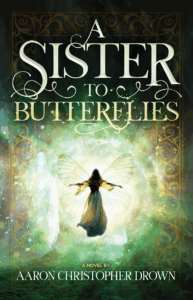
Guest Post from Aaron Christopher Drown author of A Sister to Butterflies

There are books that sparkle with surface magic—and then there are books like A Sister to Butterflies, which glow from within. This is a quiet, aching story of transformation, told through the lens of grief and memory.

The narrator, an ancient voice speaking to an infant, reveals the story of a fateful choice: the moment she left her realm of light for the world of flesh. There, she met a boy who taught her about love—but also about loss. The relationship between them becomes a thread that pulls at the seams of reality, and what begins as a fairy tale becomes something deeper, sadder, and far more human.

Aaron Christopher Drown is a multidisciplinary storyteller with a deep love for nuance and language. With roots in Maine and a home in Washington, he’s published widely in fantasy and speculative fiction. He’s received numerous literary accolades, including the Darrell Award, BIBA, and Imadjinn Awards. When not writing, he speaks at events on topics like branding, authorship, and design. His creative world blends art, myth, and emotional truth—and this latest novel may be his most resonant yet.

Enjoy a guest post from the author:

You’ve heard it before. A hundred times. A thousand times.

It’s the track that almost didn’t make the album that wins the Grammy. It’s the actress who’d been passed over but then given one last look who takes home the Oscar. It’s the idea just about everyone dismissed as crazy that ends up taking the world by storm.

For writers, amateur and established alike, the lesson there is that it takes just one person to say yes. Just one person who’s willing to accept a little risk on your behalf is often all that lies between you and your deserved triumph. Which is why the task that’s even more arduous than all the long days and late nights of writing, editing, and changing is simply not to give up until you find that one person who recognizes your work for the worthy thing it is.

Someone told me early on that if you’re not receiving a steady supply of rejection letters, then you’re not doing it right. You’re not really trying to break through as a writer. Because everyone gets rejected, repeatedly and mercilessly. But that’s the game. That’s the lottery you can’t win if you don’t play. And as you persist, take comfort in the impressive company of rebuffed authors you’re keeping:

Stephen King’s Carrie received dozens of rejections before finally selling—but only because his wife found the manuscript in the trash and insisted he try one more time. The Lord of the Flies was turned down twenty times. One publisher who read Anne Frank’s diary found it scarcely worth reading because it didn’t “have a special perception or feeling which would lift that book above the ‘curiosity’ level.” John Grisham’s A Time to Kill had to make its way through a dozen publishers and sixteen agents before seeing the light of day. Dune received twenty-three rejections. Publishers dismissed Watership Down repeatedly because no one thought children would understand its prose. A Wrinkle in Time has twenty-six rejection letters under its belt. Gone with the Wind has that beat with thirty-eight. A publisher thought the collective verdict of H.G. Wells’ War of the Worlds would be, “Oh, don’t read that horrid book.” Even Chicken Soup of the Soul, which went on to sell a metric-gazillion of copies, let alone its infinite list of follow-ups, was turned down more than one hundred times. And the first book of the Harry Potter series was rejected by nearly every publisher in the U.K. before going on to make J.K. Rowling literally richer than the Queen of England.

If you believe in your work, if you can look in the mirror and say wholeheartedly what you’re submitting is the cleanest, tightest, absolute best you can possibly make it, then keep going. Don’t stop. Send it out again. And again. And again. Don’t dare let those interested in merely capitalizing on what’s safe—on what others have heard before a hundred times; a thousand times—decide whether your writing is worth being read by the world. That one person’s out there. Right now.

But keep in mind, sometimes that one person is you.

About the book:

There are lures irresistible regardless of peril, because some yearnings renounce all wisdom.

There are bonds that compel no matter how faraway, because some needs are dire enough to defy all cost.

But when reason, distance, and danger go unheeded, that price can be devastating despite all the magic in one’s grasp.

A Sister to Butterflies tells a different sort of once upon a time, a shimmering tale of a creature torn between worlds, whose wondrous deeds would become fable, and whose terrible mistakes would alter the destinies of everyone around her.

Enjoy an excerpt:

This is not the first time you’ve heard this. Nor, I hope, will it be the last.

What’s amusing—or shameful, depending on how you come to see it—is how often I think I’ve sufficiently untangled my mind to tell my tale, yet still find myself uncertain where to begin. Part of me wishes not to have to begin at all since you’re too tiny to understand it anyhow. But the rest of me knows this is much more for my own benefit than yours—for the time being—and that as far as penance goes, what I’ve apportioned myself can hardly be considered severe.

So, for both our sakes, I’ll muddle through as best I can. Again.

The thing I always try to explain first, so that what I have to tell you makes any sense at all, is that there are indeed other worlds than this. A great many people take a great deal of comfort from believing that what they can reconcile with their eyes and ears constitutes the summation of existence. But I dearly hope you believe me when I say that creation is much too grand to contain but a single realm and a single way of being.

Some of these other worlds are far removed from here. Others press right up against this particular where and when but lie hidden—in the shade of a high hill, within the eddies of a brook, or even under one’s bed at a certain time of day. A drifting speck of dust flaring in a beam of afternoon sun might easily be the birth, life, and demise of an entire civilization.

And how can I state this so unequivocally?

Because one of those other worlds is mine.

And though it still grieves me to think about my home, worse is knowing I no longer remember it correctly. Not the tall, prismatic grasses of the countryside through which I ran and hid. Not the apricot scent of my father’s pipe after supper each evening. I know there are colors there that simply cannot exist here, hues so vibrant and tinges so subtle no mortal could ever appreciate them, but I also know they are beyond me now even in my imagination. The distance between myself and what I once held most dear has grown so great, it’s become nonsensical.

But my tale begins not so much with my world as it does with what lies at its edge, with what separates it from yours—
A shimmering veil of mist.

The first time I ever crossed the mists is still as clear to me as the day you were born. Of course, as I said, there’s little comfort in that clarity since I’m certain my recollection is entirely wrong.

I finished my regular chores that bright blue morning as quickly as I could. I threw some odds and ends into a knapsack and slipped away before my father could invent more for me to do. Father, a broad man browned and bleached by the sun, disapproved of my gadding about. He believed the best ways in life were fashioned from hard work and sweat and that, as far as he was concerned, having a few tasks too many was just the right amount to keep me out of trouble. That’s not to suggest any sort of cruelty on his part, though he could be quite stern—and quite remote—and he was most assuredly set in his ways.

The dew still clung cold and heavy on the ground as I headed out, so I sloshed to the nearby meadow to meet up with my two best friends—my two only friends, really—Whistle and Smudge.

Those weren’t actually their names, mind you. Just the names my human self has given them.

I most often picture Whistle as tall and spindly with a disheveled tabby coat of white and orange fur. His face was long and oval, and on either side of his mouth drooped lengthy mustaches like a catfish. When he spoke it was the merry chirp of a piccolo, which belied his normally dour nature.

Smudge, however, never let anything bother him, and among us he was often the voice of reason. While all of my kind can work magic to an extent, those who display exceptional talent are schooled in the deeper arts, and Smudge was that sort. I remember him looking like a field mouse that some prankster had inflated into a sphere. The ends of his grey fur always seemed strangely indistinct, as though he’d been scribbled with charcoal and then blurred by the artist’s thumb. That made staring at Smudge uncomfortable and might be why Whistle rarely won arguments with him. Smudge had a low, soothing croak of a voice and a fondness for peppering his language with mild vulgarities—a harmless and amusing trait, because he didn’t do it very well.

I found my friends that morning where we normally gathered—amidst the pink and tangerine hillocks by the forest’s edge—already engaged in some game. Against a backdrop of crimson trees, Whistle brandished with theatrical flourishes a sword he’d made from two bits of stick tied together. Smudge stood impassively facing the opposite way with a wooden shield strapped to his back. Whistle bellowed things like, “Have at you!” and “Back, foul beast!” and then for all he was worth whacked the shield Smudge wore. Rather than respond in kind, Smudge instead gave his attentions to conversing with a speckled butterfly wobbling past. Like most apprentice magicians, he preferred games like Stone, Paper, Dagger—which, by the way, he never, ever lost.

“Good morning!” I called.

Smudge turned, causing Whistle to miss his target and tumble into the wet grass.

“Good morning!” he replied, with a smile.

Whistle picked himself up, brushing dirty clots from his soggy fur.

“Yes, yes,” he muttered. “Good morning, good morning.”

“Did you have a lovely breakfast?” Smudge asked. For some reason he’d always concerned himself with whether I’d eaten recently and whether what I’d eaten had been sufficiently nourishing. Well, not for some reason; I’d been known to make myself sick by getting so caught up in whatever I happened to be doing that I simply forgot to eat.

“Yes, thanks,” I said. “Berry jam on toast and orange blossom tea.”

“Oh, that does damn sound lovely,” Smudge agreed.

“So, what’s in store for us this time?” Whistle asked, ignoring Smudge and sounding impatient to get the day started.

Of the three, it usually fell to me to make the plans. Smudge was happy to go along with whatever activities crossed his path, and Whistle knew that if he thought something up and it turned out less than entertaining it’d be his fault, leaving him no room to complain. Normally, I concocted our amusements on the spot, whether it was a game or contest or other such sport. But that day I’d arrived with an aim already well in mind.

“Today,” I said, “we undertake a harrowing expedition.”

Smudge seemed intrigued. “What sort of expedition?”

“Another trip out to the Duchess’s cottage, I’ll wager,” Whistle said.

It was true that our missions to the Duchess’s summer home had been numerous, but it was also true those missions yielded Whistle a considerable haul of underwear from her laundry line. The Duchess, being rather gigantic, had unwittingly provided him enough material to fashion a roomy tent after only our second trip, so in my opinion Whistle had no room to grouse—unlike Smudge, who’d toppled headfirst into her fishpond trying to yank down a particularly heavy garment.

But the Duchess was not what I had planned.

“My comrades,” I said, “today I am heading deep into the forests … to cross the mists!”

Whistle sighed loudly. Smudge looked disappointed.

“Oh, pleh,” Whistle grumbled. “We do that almost as much as we go to the Duchess’s.”

“We damn do go there a lot,” Smudge agreed.

“Ah,” I said, “but this time will be different.”

Whistle crossed his arms. “And how’s that?”

“Because today,” I said, “I really am going to venture through.”

My friends looked at one another, then at me.

“Like we haven’t heard that before, either.” Whistle said.

I’m obliged to admit he had another point. Many times, my boasting had painted me into corners from which there’d been no escape without considerable bruising to my pride. This particular corner had one wall comprised of my incessant desire to explore the mists and the other of my unfailing reluctance to actually do so. I still can’t say what it was about that morning that set my mind to finally going through with it. I don’t recall the sky being any bluer or myself feeling any taller. All I know is I awoke that day with an unshakable certainty of what I wanted to do, and there was no question in my mind that in the end, one way or another, I’d be doing it.

“Well,” I said, “I suppose the only way you’ll find out is to come along and see for yourself.”

With that, I strode between the two of them, pushing Whistle’s stick sword aside, and headed toward the forest. They didn’t take long to fall into step behind me.

About the Author:

Aaron Christopher Drown is a native of Brunswick, Maine, who’s lived all over and whose stories have appeared in equally numerous magazines and anthologies. His debut novel, A Mage of None Magic, won the 2010 Darrell Award for Best Novel, and as he’s promised his publisher for years, he’s hard at work on the follow-up. An award-winning graphic designer as well, Aaron resides in Washington state with his wife, Sarah, their dog and cat, and his trusty Macbook, Sancho.

🔗 aaronchristopherdrown.com
📸 @aaronchristopherdrown
👍 Facebook

Amazon: https://bit.ly/4desf8s

Goodreads: https://www.goodreads.com/book/show/232027101-a-sister-to-butterflies

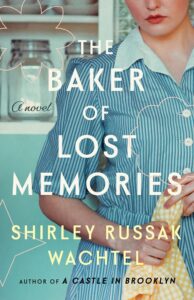
THE BAKER OF LOST MEMORIES and My Life Experiences by Shirley Russak Wachtel

We are excited to introduce THE BAKER OF LOST MEMORIES, now available as an !! Check out this pick by Amazon for only $1.99!!

THE BAKER OF LOST MEMORIES and My Life Experiences

As with all my writing, aspects of my own experiences are evident. Like Lena, I am a child of Holocaust survivors who was born in Brooklyn. However, while Lena’s parents find it difficult to speak of their trauma, my parents often freely discussed their closeknit families in Poland and their devastating losses.

My mother and two brothers were the only survivors in a family of eight, while my father was the only survivor, his mother, two sisters and a brother having died in the fires of Auschwitz. He was a runner in the black market in the Lodz ghetto, just like Josef in THE BAKER OF LOST MEMORIES. In researching the book, consequently, I was satisfying my own curiosity about his experience.

I came upon the idea of a bakery because I thought it was a good setting to span the past with the present; but I also recall that my mother told me of an aunt, Tante Rachel, who owned a bakery in Poland and how she often assisted her there. As a child, I was obsessed with learning all I could about my grandparents, the aunts, uncles and cousins I never knew. I have only a few photos of them, none of my grandparents. As my younger brother and I were born after World War II, I couldn’t imagine how I would feel if I had
had a sibling who was murdered by the Nazis. Although it was emotionally difficult for me to write, I wanted to explore this idea with Lena and how such a loss might have affected her life so many years later.

Other aspects of the novel also stem from my life. The bungalow colony which appears in the introduction is drawn from my memories of visiting my aunt and uncle in the Catskills and babysitting my younger cousins there. Some Brooklyn scenes including Lena’s visit to Doc’s, a real place from my childhood where we would order egg creams and Rock and Root root beer sodas in frozen glasses; walking to the library, going to the Loews Theater, and taking early morning classes at Brooklyn College are all fond memories. One interesting note is Lena’s meeting with Luke on the bus. I did have the
same meeting with a charismatic student who was not my usual type. However, unlike Lena, I did not give him my real telephone number. I have often wondered what would have happened if I had. With Lena, I was able to find out.

Growing up in 1960s Brooklyn, Lena wants to be a baker just like her mother was back in Poland prior to World War II. But questions about those days, and about a sister Lena never even knew, are ignored with solemn silence. It’s as if everything her parents left behind was a subject never to be broached.

The one person in whom Lena can confide is her best friend, Pearl. When she suddenly disappears from Lena’s life, Lena forges ahead: college, love and marriage with a wonderful man, the dream of owning a bakery becoming a reality, and the hope that someday Pearl will return to share in Lena’s happiness—and to be there for her during the unexpected losses to come.

Only when Lena discovers the depth of her parents’ anguish, and a startling truth about her own past, can they rebuild a family and overcome the heart-wrenching memories that have torn them apart.

About the Author: Shirley Russak Wachtel is the author of A CASTLE in BROOKLYN, the moving story of a Holocaust survivor whose dream of building his own home and raising a family in Brooklyn is threatened when unexpected tragedy occurs. This highly touted debut novel reflects the aspirations of anyone who dreams of a better life. Other of her books include THREE for a DOLLAR, an anthology of her short stories, THE STORY of BLIMA, the journey of the author’s mother in the Holocaust, IN THE MELLOW LIGHT, a book of poetry, and several books for children. Her short stories and poems have appeared in various literary journals. Born and raised in Brooklyn, Wachtel is now a college professor in New Jersey where she lives with her husband, Arthur. She has earned a Doctor of Letters Degree from Drew University, and in 2017 she received the Middlesex County College Scholar of the Year Award. But her proudest achievement are her three sons and two granddaughters, Zoey and Emmy.

Website

Buy the book at Amazon.

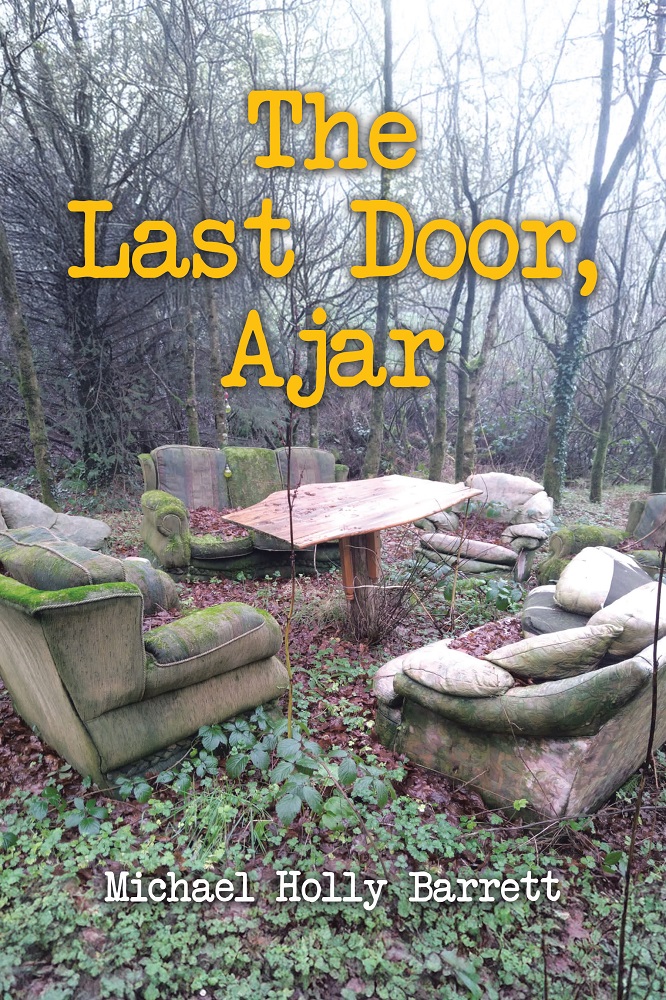
The Last Door, Ajar by Michael Holly Barrett – Spotlight and Giveaway

This post is part of a virtual book tour organized by Goddess Fish Promotions. Michael Holly Barrett will be awarding a $10 Amazon/BN gift card to a randomly drawn winner. Click on the tour banner to see the other stops on the tour.

It is 1945. The infamous Max Smartz, superspy; Eva Braun, wife of Adolf Hitler; Joseph Goebbels, propaganda minister; and Otto Klugg, intelligence officer, do not die at the end of World War II, but trick the guards in the Fuhrerbunker tunnels, allowing them to make their escape. Their escape plan is to reach war-neutral Southern Ireland, where Maxwell Smartz has an established base and is familiar with rural south Kerry and its people. They evade capture and eventually reach France. Here, they meet with a good friend and colleague, an undercover agent called Maurice Le Blanc, who asks them to assist him in retrieving some stolen gold bars.

After finding the fortune, the friends attempt to retrieve it in an old Dutch van but are continually thwarted and risk losing everything. To complicate matters, they learn that Max’s brother, Victor, has been incarcerated in the notorious Spandau prison and is being tried for Nazi war crimes. They hatch a plot to save him, but is it worth the danger of going back to Berlin and being caught?

Enjoy an Excerpt

After the D-Day landings, things started to go all wrong for Hitler and his Third Reich. Even before that, things started to go wrong for Hitler. He was not a good military strategist, in fact he was a bad one, and he meddled where he shouldn’t have poked his nose in. Invading Russia and attacking England were two big mistakes. That weakened his former strength. When 1945 came, it was near the end for him. By April the 20th, his birthday, it was almost all over for Germany. The bunker was built as a last resort, tunnels were dug out as escape routes when the worst came to the worst, and the worst did come to the worst. But all was not lost for Herr Hitler and he didn’t know it; his wife of only a few weeks, had other plans. She was not about to give up her life to some mad dog Russians or Yankee Americans. Now she was scheming on how to broach the subject with the boss. When is the best time to let him know of their plans of escape? She already had made contact with people on the outside who could help her, them. The Russians and the English, Yanks were all involved in a race to get into Berlin first and claim the head of the monster, Hitler. Goebbels was given implicit instructions when the final day would come to commit suicide, and he would have to dig a hole outside the bunker and then set fire to their bodies and fill in the hole. It was all so depressing for the newly-wed woman — the honeymoon was short-lived, and her grave was just a few hundred yards away.

About the Author: My humble beginnings in a terrace house with an outdoor toilet and indoor rats. The drinking water was got from a public pump in the street. We were all sailing in the Titanic,Third Class, but we were not aware of anything better. We had so much fun, swimming in the river. As kids we had wonderful imaginations.The only luxuries we ever saw were in the Cinema, usually American films, people smoking and drinking alcohol.

Everyone in the town of County Cork, Ireland seemed to be in the same boat; we made the best of it until the swinging sixties came along and changed everything. In spite of our poverty, I managed to get a College education. But opportunities were as scarce as rich Uncles. The Christian Brothers were brutal, and handy with the cane, in National School. I was lucky like many fellows my own age to get an apprenticeship as a diesel mechanic. Soon developed a taste for Alcohol, and got into trouble pretty soon, was lucky again to find A.A. and get my act together in 1978.

My hero died in 1977, Elvis Presley, the music stopped, the sixties was over, the Beatles were broken up, CCR, too. So getting sober was the best thing to do, under the miserable circumstances. I got a job as a Pipe Welder with ASME 1X certificate and began working around Europe, finally settling in warm Spain, Barcelona and met a Catalunya woman. Started writing for the first time, mostly comedies, Peter Sellers style, another hero of mine.

This is my second published book, I also self published earlier works Like ,’Gorilla Days in Ireland’ by Michael Barrett, on Amazon. The Frankie Stein Enigma, and others, I paint oil and acrylic pictures, write mountains of poetry, sing and play the guitar.

‘ I do just about everything, that doesn’t make any money for me.’ But love doing what I do, writing poetry is mind stimulating, energising.

My favourite actors are William Holden, Warren Oates, Gregory Peck, and favourite detective the great Peter Falk in Columbo, a genius and Clouseau, Peter Sellers, and Peter Ustinov.

Facebook | LinkedIn

Buy the book at Amazon, Amazon CA/a>, Booktopia , Abe Books, or Better World Books.

a Rafflecopter giveaway