With Her Baby on Her Back by Suzette D. Harrison
Publisher: Bookouture
Genre: Contemporary, Historical
Rating: 3 stars
Reviewed by GingerWill she ever see freedom for her babies?
Mississippi, 1848. Enslaved midwife Zinnie is forced to walk two thousand miles behind the slavers’ wagons, her newborn strapped to her back and her two little girls clinging to her hands. Through pain, cruelty and unimaginable hardship, she holds on to one hope: keeping her children safe. And when they cross state lines, Zinnie sees a chance to fight for her family’s freedom…
Texas, present day. Like generations of women before her, Lynette is trying to build a better future for her child. Then she discovers a sapphire brooch hidden in her grandmother’s attic… As she uncovers the extraordinary story of an ancestor she never knew about, can Lynette unlock the strength she needs now more than ever?
Inspired by the remarkable true story of Biddy Mason, an African American woman and midwife, this sweeping, emotional novel celebrates the courage of a woman who fought for her family’s freedom and saved countless lives.
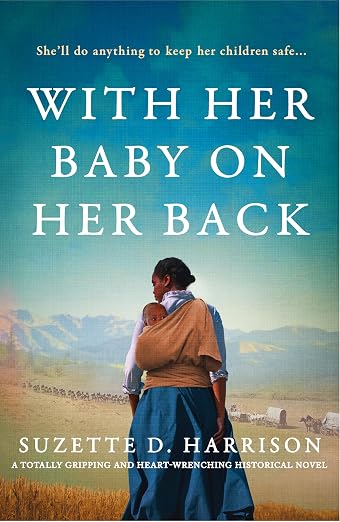

With Her Baby on Her Back offers a powerful dual‑timeline story rooted in the real life courage of Biddy Mason. The historical storyline following Zinnie is compelling, emotional, and often heavy, filled with hardship, pain, and moments that are uncomfortable but important to know. Her determination, resilience, and commitment to her children make her journey unforgettable, and the ending, centered on legal freedom and strength, is truly inspiring. The blend of historical fact with fiction is one of the book’s strongest elements.
However, the modern-day storyline with Lynette didn’t work as well for me. While her search for the truth about her family was interesting, her personal struggles pulled me away from the historical narrative I was most invested in. I wasn’t as drawn to keep reading during her chapters, even though I appreciated the connection between past and present.
I’m not sure whether the book ever clarified the level of education available to the enslaved characters, but some of the dialogue didn’t fully align with what felt authentic for the time period. Lines such as “A dead snake’s the only good snake. But you walloped those eggs like they were proxy for something,” or descriptions like “My youngest raced toward me, indignant,” occasionally pulled me out of the historical setting and made certain moments feel slightly inconsistent with the character as portrayed.
Still, the novel highlights strong women, motherhood, and generational resilience. I enjoy historical fiction, and although this one wasn’t quite for me, I’m glad I read about their strength and the adversities they overcame. For someone else, this style may be perfect. Just because I didn’t love it doesn’t mean you won’t.









Speak Your Mind