Ali Baba and the Forty Thieves by Author: Anonymous and Albert Seligman (Editor)
Publisher: Dulacebooks
Genre: Sci-Fi/Fantasy, Historical
Rating: 5 Stars
Reviewed by AstilbeThe story is about two brothers whose father died and left them little. Ali Baba married a poor woman and lived frugally, but Cassim married a woman who soon inherited a fortune and lived in luxury. One day while Ali Baba was in the forest cutting wood to sell he saw a great cloud of dust approaching and the sound of many riders. He feared for his life, so he hid his three donkeys and hid himself in a tree. The band of forty riders and their leader stopped in front of a cave. When the leader said “ Open Sesame” the door of the cave magically opened. The whole troop went inside while Ali Baba stayed hidden. When he was sure they had gone, he approached the cave door and said “ Open Sesame” himself as the cave door magically opened to his command. Inside the cave he saw vast riches and golden coins, which he liberally took for himself and returned home with his donkeys, remembering to properly close the cave door with the “Shut Sesame “ command.
His wife was astonished at all the gold coins he brought home and wanted to count them before Ali buried them in his yard. As there were too many to count, she borrowed a measuring cup from her sister-in-law. She was curious as to what they might have to measure something, so she cleverly put some suet on the bottom to see what would stick. After the cup was returned with a gold coin stuck to the bottom, she called her husband Cassim to tell him what happened.
Cassim went to Ali’s house and demanded to know how he got a gold coin, and Ali told him everything, including the magic password. Cassim was very greedy, so the next day he set out with many donkeys to find the cave and removed as much treasure for himself as possible. In his haste, he forgot the magic words to open the cave and was trapped inside when the robbers returned. They killed him and cut his body in pieces.
When Cassim didn’t return, Ali feared the worst and returned to the cave to find him. He found his brother’s body and returned to town. He knew the robbers would find out if anyone had been murdered in such a fashion, so they sewed Cassim’s body back together and pretended he died a natural death.
The robbers sent scouts to town to determine if anyone had died and discovered Ali Baba’s house. The captain of the robbers disguised himself as an oil merchant and hid his band in leather jars planning to murder all the household. When Morgiana, Ali Baba’s clever slave girl discovers the ruse, she murders all the robbers. The captain flees, but soon returns in another disguise to take his revenge. Again she discovers him, plunges a dagger into his heart and saves her master.

Moderation is the key to survival.
I once again loved the way this tale transported me to a time and place in the past that I would otherwise know very little about. This is part of the reason why I continue to give new instalments in this series such high ratings. It’s not always easy to make a reader feel immersed in what they’re reading, much less give them a taste of what life was like for some people in the far east over eleven hundred years ago, but Mr. Seligman had all sorts of intriguing ways to close that gap for his modern audience that new fans should discover for themselves.
Many old legends are sanitized for modern audiences, so I appreciated the fact that not every character remained safe from harm and that there were choices made here that are less common in modern adaptations. That is to say, this is something I’d particularly recommend to readers who enjoyed the older versions of fairy tales before The Brothers Grimm began collecting and softening up their sharp edges for younger audiences.
It’s not necessary to know anything about the plot in advance, but readers who do might notice some interesting twists that often seem to be left out of more recent translations of Ali Baba’s life. I thought I knew exactly what to expect going in, but I was still pleasantly surprised by a few things I didn’t realize were part of this universe in at least some retellings. The editor excels at this sort of thing which is yet another reason why I try to read as much of his work as I possibly can. There’s nothing like learning new facets of old favorites thanks to fairly recently uncovered versions of them.
This is part of a series that does not have to be read in any particular order.
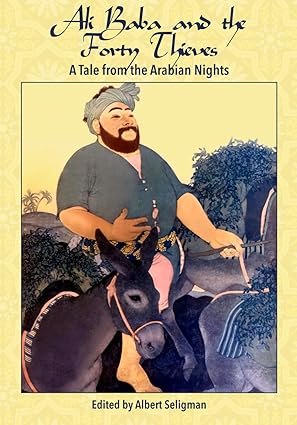
Ali Baba and the Forty Thieves was a fantastic and beautifully illustrated adventure.