Search Results for: A Symbol of Time

A Return to French Foreign Legion Adventure Fiction by Edward Parr – Guest Post and Giveaway

This post is part of a virtual book tour organized by Goddess Fish Promotions. One randomly chosen winner via rafflecopter will win a $25 Amazon/BN.com gift card. Click on the tour banner to see the other stops on the tour.

A Return to French Foreign Legion Adventure Fiction

A few years ago I began looking at novels written in the early 1900’s thinking to compliment the First World War trilogy I had previously written and I found and read many of the terrific action-adventure stories written about the French Foreign Legion set in the tumultuous northern Africa of that time period. While I was drawn to the format, I did not want to write anything pro-colonialist or anti-Muslim – biases which are deeply embedded in some (but not all) of the stories written in that time period. But I also did not want to dismiss the honor and fortitude of the men who served in the French Foreign Legion, what they brought to that brotherhood, and what they sacrificed in the sands of the Sahara.

I ended up writing a broader novel with four main protagonists, one of whom is a French Foreign Legionnaire. The novel is entitled Tamanrasset: Crossroads of the Nomad, a work of historical fiction, set in the Maghreb in the early 1900s, which traces multiple intersecting storylines: French Foreign Legionnaires engaged in desert campaigns, Moroccan tribal resistance, a Swedish widow living in Fez, and an American archaeologist searching for lost treasure. While many French Foreign Legion memoirs depict the lives of new recruits to La Legion, one of my four main characters is an older, long-time Foreign Legion NCO, Sergent Jacques Demoreau, who has made a home for himself in the fortresses of the Sahara. Fact-based episodes in the story include the Doui-Menia attack near Igli in 1900, the battle at Taghit in 1903, and the French bombardment of Casablanca in 1907. Through these narratives, the book depicts military actions, cross-cultural encounters, and the challenges of survival in the Sahara, at a time when the old Maghreb was rapidly being changed by French colonialism. But I also want to convey something of the camaraderie of the Legionnaires and their sense of honor and tradition.

Certainly in researching the novel, I read many adventure stories from the old pulp fiction magazines, but these mostly helped me with writing an adventurous narrative. For hard facts, I mostly used memoirs of actual Legionnaires of that time period (and memoir-based fiction) like these: A Soldier of the Legion by George Mannington (1907); In the Foreign Legion by Erwin Rosen (1911); Life in the Legion: From a Soldier’s Point of View by Frederic Martyn (1911); The Wages of Virtue by P.C. Wren (1914); A Soldier of the Legion by C. N. Williamson and A. M. Williamson (1914); and The French Foreign Legion by Douglas Porch (2010).

I hope it’s a novel that anyone interested in the French Foreign Legion would enjoy and appreciate.

TAMANRASSET is historical fiction set on the edge of the Sahara as the ancient world begins to fade and great empires collide. Four strangers—a mature Foreign Legionnaire, a Sharif’s wrathful son, an ambitious American archaeologist, and an abandoned Swedish widow—become adrift and isolated, but when their paths intersect, the fragile connections between them tell a story of survival and fate on the edge of the abyss. Blending the sweep of classic adventure with the horror of a great historical calamities, Edward Parr’s TAMANRASSET is a saga about the crossroads where nomads meet.

Enjoy an Excerpt

The Sun had not yet risen above the ruins of the Mechouar Palace, but at the mosque nearby many Muslim people of the city of Tlemcen were already at their morning prayer. It was a great privilege to be admitted to one of the oldest mosques in Algeria, over eight hundred years old, and an even greater privilege to be allowed to pray before the mihrab there among the great white columns that lined the enormous hall. As the prayers ended, there was a gentle rustling of movement as the faithful rose and exited to the open and airy marble-tiled courtyard of the mosque, still quiet in the twilight of dawn. Isabel retrieved her leather boots and exited a side door beneath the shadow of the towering brick minaret. Covered by her tightly drawn dark brown burnouse, khaki pants, white shirt, and a black hijab, Isabel walked along the great stone wall to the main gate of the palace. The few buildings in the complex that were still usable had been made into offices for the French army, but the pool and gardens of the central courtyard were peaceful and shadowy. She passed an alcove that featured Islamic calligraphy carved into the stucco, and Isabel stopped to read it: “Allah is God, there is no god but He: the King.”

A quiet voice behind her asked: “Madame Pedersen?”

She turned to find a short, elegantly dressed French officer approaching her. His flat-topped white hair was soldierly, but his crisp, tailored uniform, polished boots, and wide waxed mustache displayed a carefully composed appearance.

“Peace be with you,” she said, casting her eyes downward and crossing her arm over her chest as she nodded.

“Peace be with you, Madame. I apologize if I disturbed you; will you come inside?”

“As you wish.”

She followed the French colonel to a charming wood-paneled room overlooking an orchard of citrus trees bearing large green fruit. The colonel sat on a bare wood chair beside a wide wooden table, crossed his legs, and twirled the end of his wide mustache. Isabel stood silently before him in a respectful posture.

“I have the greatest respect for your beliefs, my dear, but it would be helpful to me if you would sit and speak to me informally. Would you be so kind?”

“Of course,” she said and she sat on the chair beside his. Her demeanor now expressed more of her experience and self-assurance, her hijab more a symbol of her confidence than of her humility. The colonel raised an eyebrow in appreciation of her serene face and brilliant blue eyes.

© 2025 by Edward Parr and Edwardian Press (New Orleans, Louisiana)

About the Author: Edward (“Ted”) Parr studied playwriting at New York University in the 1980’s, worked with artists Robert Wilson, Anne Bogart, and the Bread and Puppet Theater, and staged his own plays Off-Off-Broadway, including Trask, Mythographia, Jason and Medea, Rising and an original translation of Oedipus Rex before pursuing a lengthy career in the law and public service. He published his Kingdoms Fall trilogy of World War One espionage adventure novels which were collectively awarded Best First Novel and Best Historical Fiction Novel by Literary Classics in 2016. He has always had a strong interest in expanding narrative forms, and in his novel writing, he explores older genres of fiction (like the pulp fiction French Foreign Legion adventures or early espionage fiction) as inspiration to examine historical periods of transformation. His main writing inspirations are Charles Dickens, George Eliot, Bernard Cornwell, Georges Surdez, and Patrick O’Brien.

Website | LinkedIn | Goodreads | Amazon Author Page | Reddit | Instagram | Facebook

Buy the book at Amazon or
Barnes and Noble
.

Her Holiness by Dustin Dunbar – Spotlight

Can an extraordinary young woman alter the course of history for the better……or will the forces of power and greed extinguish her light forever?

Find out in Dustin Dunbar’s new novel, Her Holiness.

Adopted by a loving Irish couple in Rome, young Kate Murphy is plagued by haunting visions that defy explanation—until a priest’s blessing unleashes a torrent of prophetic imagery, including chilling scenes of a man crucified upside down. As whispers of her power spread, she captures the attention of a radical Vatican sect, while across the world, evangelical zealot Edhir Souza builds an army to topple the Church and claim its influence. As Kate’s visions grow stronger, leading her toward a long-lost archaeological treasure, she becomes both a symbol of hope and a threat to entrenched power. With enemies closing in, her quest to challenge the Church’s patriarchy and awaken a new spiritual truth could cost her everything.

Enjoy an Excerpt

At the base of the towering monument, a crude wooden cross awaited him, stark and foreboding against the canvas of their revelry. Panic rose within him as he caught sight of it, and he struggled against his captors’ grip. Laughter erupted around him, jagged and cruel. “Stop wasting your energy, old man,” one of them taunted, tightening his hold. “I am not worthy,” he gasped, his voice cracking, hoarse from disuse. “Do not crucify me as you crucified my Lord.” The guards merely smirked. “You are going to die on that cross, old man. Now be silent and face your fate with some dignity.” He could feel his heart pounding, the weight of his pleas hanging heavy in the air. “Do not!” He shouted now, desperation coloring his words. The eyes of the crowd turned toward him, curiosity morphing into a darker hunger.

The leader of the guards sighed, annoyance flickering across his features. “What would you like us to do with you, old man? How should we kill you?” He closed his eyes for a moment, gathering what little strength he had left.
“You may crucify me if you wish. I cannot stop you. But hang me… upside down.” His voice was barely a whisper now, laced with a reverence he could not shake. “I am not worthy to die as he died.” The guard shrugged, laughter spilling from his lips like venom. “Dead is dead.”

He waved a hand at two of the men, and they stepped forward with a grim eagerness. “Upside down it is.” With a chilling efficiency, they laid him upon the cross, nailing his hands and feet, securing him to the brutal instrument of his execution. He felt the sharp surge of pain with each blow, but he offered no resistance, no cry of anguish escaped his lips. They lifted the cross, hoisting it high until its base struck the ground with a dreadful thud. His head hung low, nearly touching the earth, while his feet rose into the air—an inverted position that felt like a mockery of everything he stood for.

As the crowd roared and the sun beat down mercilessly, memories flashed through his mind—moments of laughter, love, and fervent faith. He thought of his Lord, of the love that had driven him to endure so much for the sake of others. Time stretched painfully, each agonizing minute a reminder of the suffering he had seen inflicted upon others.

Yet amidst the torment, a profound peace washed over him as the hours passed, the pain blurring into a distant hum. In those final moments, as darkness encroached upon his vision, he summoned the last vestiges of his strength. With every ounce of love that had filled his heart across the decades, he breathed his final words in Latin, a prayer woven into the very fabric of his soul. “Ignosce, diligatis envicem, nunc coepi.” Forgive, love one another, now I begin.

About the Author:Dustin Dunbar is an author, visionary, and transformative voice running for president in 2028 on a platform of common sense, compassion, and a refusal to play politics as usual. A survivor of generational addiction, his hard-won personal triumph—chronicled in his memoir You’re Doing Great! (And Other Lies Alcohol Told Me)—propelled him into the worlds of psychology and spirituality, where he earned a doctorate and built a thriving coaching practice. With Her Holiness, a bold religious thriller, Dunbar turned his gaze to the intersection of faith and corruption. Now, as a presidential candidate, he is driven by a singular mission: to awaken America to its vast potential and shared humanity. He lives in San Diego, where his two daughters remain his greatest inspiration.

Website> | Instagram | Facebook
Buy the book at Amazon.

The Brave Prince in the Enchanted Forest by Beverly Brown – Spotlight and Giveaway

This post is part of a virtual book tour organized by Goddess Fish Promotions. Beverly Brown will be awarding a $15 Amazon/BN gift card to a randomly drawn winner. Click on the tour banner to see the other stops on the tour.

In the heart of a lush, beautiful serene forest, where butterflies, birds and bees freely dance in the gently breeze, a magical tale unfolds. Meet Prince, a majestic Cavalier King Charles Spaniel, who loves this serene place that they call The Enchanted Forest. As the appointed guardian of this homeland by the beautiful Forest Fairy Princess Jenna Joy, Prince learns things about himself, makes new friends and protects the sanctity of the forest. This story is a heartwarming tale of courage, friendship and the beauty of nature. Follow Prince’s pawprints as he navigates his way through the forest and you will be immersed into a world of wonder and joy. You will be enchanted and reminded of all the magic and extraordinary powers that lie within the hearts of our loyal, furry companions.

Enjoy an Excerpt

In recognition of the Cavalier’s promise, Princess Jenna Joy placed a golden crown with red jewels, a symbol not only of royalty but also of untapped magical powers, atop his little head. She named him Prince, in honor of becoming the first leader of the forest.

At that time, a bolt of energy went through Prince’s body.

He felt different.

He felt special.

He felt more responsible.

He even felt taller.

About the Author: Beverly Brown is an author who has a passion for storytelling. With a 20-year career as a Human Resources Leader, she has honed her understanding of people and their unique stories – a skill she brings to her writing, infusing her tales with warmth, empathy, and insight.

Beyond the pages of writing and outside the corporate world, Beverly is a culinary enthusiast who finds joy in cooking and sharing meals with her family in Atlanta, Georgia.

She is an avid traveler, seeking inspiration in the diverse cultures and landscapes she encounters, and a dedicated gardener, nurturing her plants with the same care she pours into her storytelling. As a lifelong learner, Beverly is constantly seeking new knowledge and experiences, whether in her professional field or her personal pursuits.

Beverly is a certified Pet Grief Counselor and uses those skills to support families in managing the grief cycle of their beloved family pet. Through her Facebook group Paws in Paradise Support Group, she is helping to build another community where members support each other with compassion and understanding.

Her writing reflects this curiosity, offering readers stories that are as enriching as they are enchanting. Drawing inspiration from her personal experiences with her own fur babies, her stories are a testament to the gentle nature and loyal spirit of these charming canines.

Website | YouTube | Facebook | Facebook Group | Instagram

Buy the book at Amazon or Barnes and Noble

a Rafflecopter giveaway

Winter Blogfest: Marianne Plunkert

This post is part of Long and Short Reviews’ Winter Blogfest. Leave a comment for a chance to win a digital copy of the new historical romance WHAT MIGHT HAVE BEEN.

The Yule Log

Around this time of year, a delicious chocolate cake treat, decorated to look like a tree log, can be found on bakery shelves: the Bûche De Noël. Some holiday gift shops sell real logs, adorned with greenery, cranberries, pinecones, and cinnamon sticks, with three holes drilled in them to hold candles for those who like to celebrate the holiday with a nod to an old tradition. And television networks and streaming services air their individual versions of a program titled Yule Log, which is essentially a continuous video of a log burning brightly in a fireplace. But what exactly does a Yule Log represent and what is its relevance to this holiday season?

The tradition of the Yule log is said to predate medieval times. The word “yule,” which means Christmas in Old English, is closely related to the Old Nordic word, “jōl,” which referred to a 12-day winter solstice festival. A large log or tree was ceremoniously chosen to be burned for twelve days at the end of December. The Celts, a pagan group, noticed that the sun seemed to be motionless during this period and believed if the log was kept burning for the length of the festival, the sun would be encouraged to move once more, resulting in longer days again. If the fire died, bad luck would follow. After the festival, ashes from the log were sometimes collected and kept to ward off evil spirits.

It wasn’t until centuries later that the Yule log was adopted by Christians. For some, the lighting of the log symbolized the birth of Jesus, the light of the world. For others, it signified Jesus’s triumph over sin. For still others, the modern-day Yule log sold in shops today is regarded to represent the three wise men. The candles on the log (the men) are lit every evening of the 12 days of Christmas, ending with January 6th, the Christian holiday known as the Epiphany, or Three Kings’ Day.

Today the burning of the Yule log has become a secular tradition, but it remains a symbol hope with the birth of a new season, just as it has been for pagans and Christians alike throughout history.

Desperate to escape a lecherous uncle, Melissa Sullivan stows away in a wagon departing Nebraska City for the Colorado territory. She has resolved she will never be subservient to any man as her aunt was, and especially not to the high-handed Union Army Lieutenant Nathaniel Bellamy, who seems to think he can make decisions for her just because he happened to find her hiding in his wagon.

Upon arriving at their destination, Lieutenant Bellamy reports to his post while Melissa is given an opportunity to fulfill her goal of being self-sufficient by a kind, considerate, and handsome mine owner but wonders if her choice is worth the price. How can two strong-willed people set aside their pride to give love a chance?

After spending 25 years in academia, teaching finance and authoring finance textbooks as an independent contractor for major publishing companies, Marianne retired early to devote more time to her lifelong dream: writing a novel and having it published. What Might Have Been, her debut novel, was inspired by the rich history of the Denver, Colorado, area she discovered while living there. She currently resides in western North Carolina.

Website | Facebook

Winter Blogfest: Barbara Robinson

This post is part of Long and Short Reviews’ Winter Blogfest. Leave a comment for a chance to win a $25 Amazon E-giftcard.

A Yule Log on the eve of the Winter Solstice

As a Christmas tree farmer’s daughter, I am fonder than most of holiday greenery. I still make my own wreaths and garlands, and I still go out to harvest a Christmas tree from our land each year. My husband and I bought a red pick-up back in April, and in a week or two we’ll be coming down off Folly Mountain looking like a 2023 version of those little trucks that decorate throw pillows and wall plaques in Christmas discount stores this time of year. Finding and decorating a Christmas tree is a cherished tradition, and I could write pages about the history, symbolism and beauty of evergreens, but today I thought I’d write about the yule log, and the part that this lesser-known tradition plays in my own holiday celebrations.

In its earliest guise, a yule log was a massive thing, dragged into a hall at the darkest time of the year, and meant to burn all through the yuletide celebrations. Pre-dating electricity by more than a millennium, the light from the yule log would have been an important reminder that that sun’s strength would soon increase, and light and life return to the land. Many charms and traditions grew up around the log, like saving a small piece from the previous year to light the new yule log, and some of these have survived with variations into modern times. Now, yule logs might be made from confectionary, or they might be ceramic decorations with electric lights, but some people still use an actual log, decorated with candles and greenery.

We use a birch log, in part because the white birch bark is decorative when paired with greenery and red or white candles, but also because it is deeply symbolic. The rune representing birch is Berkana (Beorc), and it is associated with fertility and new beginnings, holding the promise of the new year ahead. We usually decorate our yule log and leave it on display, then remove the greenery on the eve of the winter solstice so we can light the candles without risk of stray spark igniting the tinder-dry boughs and pinecones. We have been using the same piece of birch for many years now, saving the log and replacing the candles and greenery each yuletide.

After supper, I will light the candles, and watch them burn down until they are spent. In early Anglo-Saxon England, the eve of the winter solstice was known as Modranigt , the night of the Mothers, and it was a time to pay homage to the female ancestral guardian spirits who watch over families and are concerned with fate and destiny. I usually leave a small offering of food for these guardian spirits, in gratitude for their care and protection throughout the year. Though not actively scrying, I think about the year to come as I watch the yule log, and ideas will often come to me as I watch the candle flames dance. Once the candles have burned away, the yule log is safely stowed away for the next year’s celebrations. Lecouteaux, Claude. (2016) Encyclopedia of Norse and Germanic Folklore Mythology and Magic. Inner Traditions, Vermont, USA.

For centuries, Gamekeepers have used their magical abilities to create a buffer between the creatures who dwell in the enchanted forest and the sleepy coastal town that sits in its shadow.

When Gamekeeper Stan Ross’s magic begins to fail, he must find out what went wrong, then fix it before the two worlds collide. His hit or miss magic has already led to a few close calls so he journeys to the Sacred Isle searching for answers and advice. Finding a cure proves elusive—until Stan encounters a kitchen witch who captivates him body and soul.

Lynnette Peters is healing from her own wounds, however, and it isn’t clear whether she’s ready to open herself to the possibility—or the peril—of love.

Barbara Robinson is a debut paranormal romance author who writes novels and short stories with an otherworldly flair. She is an unrepentant optimist who believes that lasting love is possible, and her stories feature happily-ever-after endings.

Most of her writing includes an element of magic, rooted in the cultural and spiritual traditions of pre-Christian Europe. She finds inspiration in myths and folktales, poems and ballads, historical sources and academic writing.

She also draws inspiration from nature. Barbara lives in Nova Scotia, Canada, in the shadow of ancient mountains that lie along the Bay of Fundy coast. New Scotland has a magic all its own, with mist covered valleys and wild, windswept shorelines. These rugged vistas shape her story settings, while providing the perfect backdrop for life with her husband, three hounds and a dragon (Pogona Vitticeps).

Facebook | Website

Researching Tips by Hildebrand Hengest Hermannson – Guest Blog and Giveaway

This post is part of a virtual book tour organized by Goddess Fish Promotions. One randomly chosen winner via rafflecopter will win a $25 Amazon/BN.com gift card. Click on the tour banner to see the other stops on the tour.

Researching Tips

Find accurate sources of information when researching material for your book. Many guru books and websites are well-intentioned but inaccurate; even quality authors can have biases. Ask yourself—what are their sources? Is the information being accurately relayed? Can you find those sources and read them yourself? It is always best to find the primary source.

A mountainous thundering bull breaks up battling tribesmen, summoning three struggling youths, as an insidious unseen enemy turns tribes against tribes—pitting rich against poor, sons against fathers, and men against gods. Its insatiable hunger for division threatens to plunge mankind into a dystopian realm ruled by man-eating wolves.

A miraculous seven-headed horse, a symbol of unity, assembles the struggling youths of extraordinary origin into a journey of self-discovery. There Sunu the Saxon Poet, Rufus the Roman Stoic, and Keresaspa the Sarmatian Priestess must overcome pride, aversion, and unforgiveness; there they must learn from historical heroes, philosophers, and amazingly similar gods to battle the unseen monster and its rising wolfmen.

Fated to part ways to face the demons at home, Sunu, Rufus, and Keresaspa must reunite as they bring divided peoples together to fight the source tearing everyone apart. They must heed the divine wisdom of the seven-headed horse and justly wield the seven magic weapons they’ve mysteriously been given to overcome the unseen enemy and understand the higher purpose of the mountainous thundering bull.

Enjoy an Excerpt

Sunu meets the seven-headed, winged horse, Long Ears (CH 4 of The Fate of Our Union).

Sunu’s breath caught in his throat as he stared at a white stallion with seven handsome heads, spreading a glorious pair of wings. It towered at twenty-one hands, and its seven heads encircled its neck like temple pillars; one faced forward, one angled to the left, one angled to the right. A head was on each side, while two in the back angled left and right. “You are the one we’re speaking to,” its pink lips uttered under black nostrils, the words echoing in Sunu’s ears like a divine melody.

“It’s as if all seven were as one!” Sunu imagined the sacred horses merging, gazing breathlessly as they surrounded the seven-headed, winged stallion inside the birch grove. His heart raced in suspense, his eyes wide with wonder, as he awaited its next move.

The stallion’s seven heads repeated, “As one.”

“I’ve heard of a horse with eight legs.” Sunu imagined Woden’s horse, Sleipnir. “But never one with seven heads . . . that can speak . . . and has wings!” Visually high, Sunu gaped at every beautifully mane-draped head under the dreamily feathered wings.

The stallion’s forward-facing head replied in a deep, resonant voice, “It’s time you heard.”

About the Author: Hildebrand Hengest Hermannson’s deep-rooted fire for Indo-European culture and Western Philosophy ignites his first novel, The Fate of Our Union, the inaugural piece in a planned series. His work draws inspiration from the national epics The Saga of the Volsungs (Norse), Mahabharata (Indian), Aenid (Roman), Odyssey (Greek), Táin Bó Cúailnge (Celtic), and Shahnameh (Iranian), weaving these rich cultures into original stories featuring fantasy world-building, dynamic characters, and intricate plots and themes. His Wild Hunt of thought breathes life into his spiritual, ethical, and cultural interests, inspiring us all to strive for imperishable virtue.

Website | Facebook | Twitter | Instagram | Pinterest | Goodreads

But the book at Amazon.

a Rafflecopter giveaway

Spirience by Mahāmahopādhyāya Bhadreshdas Swami, V.I. Lakshmanan, and S. Kalyanasundaram – Spotlight and Giveaway

This post is part of a virtual book tour organized by Goddess Fish Promotions. The authors will be awarding a $10 Amazon/BN gift card to a randomly drawn winner. Click on the tour banner to see the other stops on the tour.

Spirience: Experiencing Peace and Prosperity through Spirituality and Science is a unique and comprehensive look at the importance of spirituality and science to guide our day-to-day living at a personal level, and to achieve peace and prosperity at a global. The term ‘spirience’ is a blend of two words: spirituality and science. It captures the essence of spirituality in its prefix “spiri-,” and the domain of science in its suffix “-ence”.

The importance of such a work lies in the challenges faced by the world today, conflicts between nations and ideologies at the global level and the explosion of mental health issues at a personal level. The book will first set the scene to understand the challenges faced by humanity today and the tools that we have to overcome them. An in-depth look at the treasure trove of texts from India’s Vedic past, highlighting the spiritual as well as scientific aspects, will be complemented by a study of the evolution of mankind over the past millennia, changes in the way of life and the current levels of extreme discontinuity brought on by an onrush of technological innovations.

Recommendations for going forward will be presented for the readers to ponder and hopefully incorporate in their personal, professional and social lives. The book will be of great value to anyone interested in or active in personal well-being and global peace and prosperity.


Enjoy an Excerpt

Spirience: A Fusion of Experiences
By knowing a single lump of earth, you know all objects made of earth. All changes are mere those of words . . .
Chāndogya Upaniṣad 6.1.4
Spirience is an experience. It’s my experience, your experience, everyone’s experience. It is an experience that celebrates the solidarity between spirituality and science. Spirituality and science are like flowers and their fragrance; they share an inseparable bond. When it comes to prosperity and achieving inner peace, integrating these two fields proves immensely beneficial. Any discovery or reflection that strays from life proves fruitless. The union of spirituality and science forms a magnificent connection to life’s more profound experiences. While our bodies are crafted from “star stuff,” our souls seek peace and prosperity. We’ve all observed how deeply woven they are into the fabric of our existence, even if only in simple ways.

Today, we live in an era where understanding the interwoven relationship between spirituality and science has become essential. Our connections have extended beyond our families to include those of the larger world. We are even exploring life on other planets, signifying our desire to expand our relationships even further. Our existence now extends from our homes to the cosmos. Today’s human beings see themselves as part of the universe. The ancient Indian scriptures often mention pinḍeṣu brahmāṇḍeṣu—likening the individual self to the cosmos. The microcosm of humankind is reflected in the macrocosm of the universe and vice versa.

The term “spirience” is a blend of two words: spirituality and science. It captures the essence of spirituality in its prefix “spiri-,” and the domain of science in its suffix “-ence.” This innovative term goes beyond its grammatical structure to emphasize the sentiments integrated within. It represents a harmonious fusion of life’s two great streams encapsulated in a single word that symbolizes the profound interconnection between these two realms.

My Journey with Spirience

My journey with the title Spirience is deeply intertwined with a few experiences I’ve had. The concept and title of this book took shape last year when I was in America. I had the fortunate opportunity to witness the creation of the Swaminarayan Akshardham complex in Robbinsville, New Jersey. Akshardham is a beacon of spirituality and culture. While observing its construction, I was captivated by the seamless blend of spirituality and science that expressed itself. It was as though they were intertwined in dance to co-create a rejuvenating spring of inspiration for all of society. It repeatedly felt as though science had lifted spirituality on its shoulders or spirituality had extended a welcoming invitation to science.

About the Authors:

Mahamahopadhyay Bhadreshdas Swami

An esteemed Swami of BAPS Swaminarayan Sanstha and Head of the BAPS Research Institute in New Delhi, Bhadreshdas Swami’s scholarly work Svāminārāyaṇabhāṣya is a profound Sanskrit commentary on the Prasthānatrayī. With a Ph.D. in Sanskrit and multiple honorary degrees, his contributions to the field are widely recognized.

V. I. Lakshmanan, O.C., Ph.D.

Co-founder of Process Research ORTECH and a leader in sustainable technology, Lakshmanan holds numerous patents and has published over 150 scientific works. His accolades include being named an Officer of the Order of Canada and receiving the Pravasi Bharatiya Samman Award from the Government of India.

S. Kalyanasundaram

With 25 years of experience in advanced technologies for telecommunication networks and serving as the former Executive Director of the Canada India Foundation, Kalyanasundaram enriches the book’s exploration of the synergy between ancient knowledge and modern science.

Spirience is available through major retailers. Discover how this book’s unique integration of spirituality and science can guide you toward a more peaceful and prosperous life.

Buy the book at Amazon.

a Rafflecopter giveaway

Heart and Soul by Toby Negus – Spotlight and Giveaway

This post is part of a virtual book tour organized by Goddess Fish Promotions. Toby Negus will be awarding a $10 Amazon/BN gift card to a randomly drawn winner. Click on the tour banner to see the other stops on the tour.

Truths beautifully expressed

Toby Negus, author and illustrator of The Heart Knows What the Mind Cannot See, has created a collection of lyrical inspirational prose messages coupled with colorful and mesmerizing symbolic illustrations that speak to the soul.

The author has continued his exploration of the most transformational psychospiritual concepts that lie deeply within all humans, bringing the wisdom of heart and soul into the light for our minds to connect with and grow from. He weaves his messages through a variety of topics, including love, freedom, choice, truth, self-awareness, the now moment, healing, peace, and most importantly, the role of the heart and soul in enlightening humanity’s journey on Planet Earth. Connections are made among these concepts to help readers make the same connections in order to find peace in their own lives.

As an artist, the author takes his ethereal subject matter, fuses it with the colors and shapes presented by his own spiritual muse, and gives the reader a visceral inner transformation through symbol, intense color, and cosmic shape.

Heart and Soul creates a deep and beautiful immersion for the reader into their own heart’s beautiful depths.

Enjoy an Excerpt

There is a direct correlation between the amount of love we feel in life and the freedom we give to our soul.

It is true that the heart knows what the mind cannot see, and it is also true that the soul lives in what the heart loves.

The loves we have in life allow us to know the soul’s resolve. They are urges of the soul’s wish to know life. They give us signposts of our soul’s intention, and where the heart can find joy.

They are the aspects of life where the soul seeks freedom; the times and places where we become, in that loved moment, set free from our labour and become the dream that we love.

We are then both lost and found at the same time. Lost to the mystery of life and found within the company of the love we have made.

If we do not love we confine our soul, for it is in the quest of love that the soul fulfils its purpose on earth.

Our love may be known from a sight in nature, a piece of art, a song, within the company of loved ones, or any of the thousand things that lighten the heart and inspire the mind.

Our loves are always close, beckoning us to adventure. Their presence has pushed and pulled us throughout our life.

Their persuasion is for us to make a way that is true to ourselves; an indigenous journey that honours the deeper truth of who we are.

They light the path to our true happiness, and often, to our greatest self-learning. For the journey that loves take us on is often not what we expect.

They will cause us to dig deep into the mystery of ourselves in order to summon the courage to surrender our old security for the adventure that love will always bring.

But when we love what we do, put our heart into it, then love’s providence empowers the heart and inspires the mind.

About the Author: Toby Negus is an artist, both with paints and of the spirit. His work reflects a deep commitment to meeting life on its terms and an equally deep understanding of human nature.

Toby has studied and taught spiritual and personal development in the UK and around the world for over two decades. He is qualified in advanced counselling, as a life coach and as a Cognitive Behaviour therapist. He is an Amazon best-selling author of a collaborative Conscious Creators book and has illustrated and self published two books on the subject of self-awareness and the spiritual journey. He has articles published in national magazine and has given talks and run workshops in support of his published work within the UK.

In the last few years, he has created many pieces of artwork that are a reflection of his spiritual journey. These have appeared in magazines and have been exhibited in the UK.

Website | YouTube | Facebook | Amazon Author Page | Twitter | Instagarm

Buy the book at Amazon.

a Rafflecopter giveaway

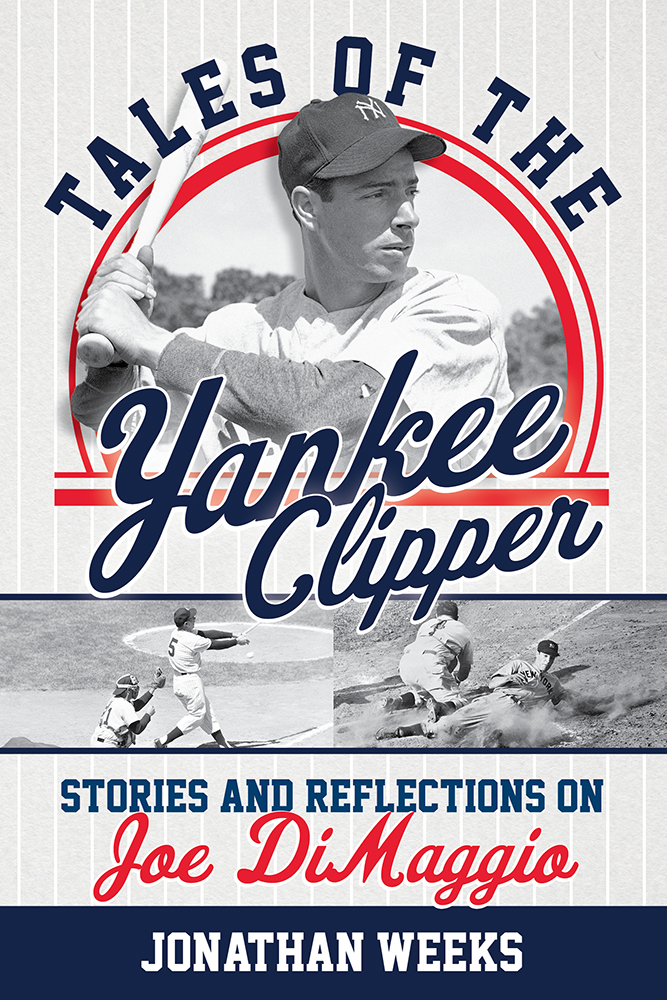
Tales of the Yankee Clipper by Jonathan Weeks – Interview and Giveaway

This post is part of a virtual book tour organized by Goddess Fish Promotions. Jonathan Weeks will award a randomly drawn winner a $25 Amazon/BN gift card. Click on the tour banner to see the other stops on the tour.

What would you tell a new author?

I’ve been asked this several times before and I always say the same thing: As an author, you have to have thick skin. It’s tough finding a publisher for your work and, even if you do, it doesn’t guarantee that you will sell many copies. It’s best to write for the sheer enjoyment of it. Don’t worry about becoming the next Stephen King or James Patterson. Write because you can. Write for yourself. And if your work ends up being published, DON’T read the reviews!

What scares you the most as an author?

As a non-fiction writer, there are actually two things that scare me. One is the idea that someone will publish a book on the same topic while my own book is in the production phase. I understand that books on identical topics can peacefully co-exist, but it’s discouraging when another author beats you to the punch. Another thing that scares me is live interviews. I have never been comfortable with public speaking in any shape or form. I used to do a radio show with a friend when I was in college. I was okay if I was reading off of a script, but was never completely relaxed when we would improvise.

What is the hardest part about writing?

That’s a tough question because there are so many difficult things about writing. For me, the hardest part has always been accepting the finished product. I am a harsh critic of my own work. And I tend to over-edit. There are days when I absolutely hate the work that I have produced and want to start over from the beginning. But I resist because I know that’s just me being me.

What is your ideal writing space?

I’ve found over time that I can write just about anywhere as long as I have a comfortable place to sit and there are few distractions. One thing I can’t do while writing is listen to music. Music is one of my passionate interests and, if it’s on in the background, it commands my attention. There’s no way I’m going to produce a coherent sentence in competition with song lyrics. I have tried listening to guitar instrumentals and classical music while writing but that distracts me as well. I prefer a quiet place.

There has probably never been a professional baseball player more of a puzzle than Joe DiMaggio. DiMaggio had a talent for keeping his emotions suppressed and his innermost thoughts to himself. Few could say that they really knew him. And even the ones who did found him to be unpredictable. He was a walking contradiction. He was quiet, but not necessarily shy. He could be both gracious and abrupt, approachable or aloof depending on the situation. Although he came across as humble, he had a tremendous sense of entitlement. He was complex, secretive, inscrutable. There were many layers to the man who came to be affectionately known as the “Yankee Clipper.” DiMaggio always felt that his actions on the field should do the talking for him. And for the most part, they did. To many, DiMaggio personified elegance, style, and grace. An impeccable dresser, he was married to two glamorous actresses. On the field, he glided almost effortlessly, never having to dive for a ball and rarely (if ever) making a mistake on the basepaths. He became the living embodiment of the American dream and a symbol of the country’s so-called “greatest generation.” But as time marched on, DiMaggio grew increasingly distrustful of the people around him. It was understandable—inevitable even. The third book in Jonathan Week’s Yankees trilogy contains an abundance of anecdotes, statistics, and other little known facts about the Yankee Clipper.

Enjoy an Except

CASE OF THE PURLOINED BAT

DiMaggio suffered a major scare during his 56-game hitting streak. On June 29, 1941, the Yankees traveled to Washington for a double-header against the Nationals (often referred to as the Senators). Joe had hit in 40 straight games and was poised to break the modern record set by George Sisler in 1922. His double in the opener tied Sisler’s mark. In the first inning of the evening game, Tommy Henrich was on his way to the plate when he heard DiMaggio shouting across the diamond. Joe couldn’t locate his favorite bat and wondered if Henrich had done something with it.

Joe was very attached to that particular piece of lumber, naming it “Betsy Ann.” He had been using it throughout the streak and worried that he might fall into a slump without it. A frantic search turned up nothing. The bat was gone. Forced to hit without “Betsy Ann,” DiMaggio flied out. Two innings later, he switched bats and lined out to short. In the seventh inning, Henrich gave Joe his own bat to use. Averting disaster, The Yankee Clipper lined a clean single to left field, claiming Sisler’s record for himself. Still, the loss of his favorite bat vexed him.

“Of course the guy had to pick out the best one,” Joe told reporters after the game. “I had three of my bats on the ground in front of the dugout but he got the one I wouldn’t take money for…the bat was just right for me. I liked the feel of it. I hate to lose it.”

About a week later, “Betsy Ann” was delivered by courier to the Yankee clubhouse in a plain brown package. Behind the scenes, one of Joe’s assistants—a wise-guy named Jimmy “Peanuts” Ceres—had spent five days looking for the bat. As it turned out, the thief had ties to the Newark underworld (which was Jimmy’s domain) and also happened to be a braggart. When the thief’s identity was revealed, Jimmy paid the guy a visit with one of his associates. Specific details of how they persuaded the man to return Joe’s prized bat have never been disclosed.

About the Author: Jonathan Weeks has written several sports biographies and two novels, one of which was a posthumous collaboration with his father. He grew up in the Capital District region of New York State and currently works in the mental health field.

Website | Goodreads

Buy the book at Amazon.

a Rafflecopter giveaway

Winter Blogfest: Barbara Robinson

This post is part of Long and Short Reviews’ Winter Blogfest. Leave a comment for a chance to win a $25 Amazon E-gift card as a prize to one of the readers who visits the LASR Winterfest blog and comments on my post.


A Yule Log on the Eve of the Winter Solstice by Barbara Robinson

As a Christmas tree farmer’s daughter, I am fonder than most of holiday greenery. I still make my own wreaths and garlands, and I still go out to harvest a Christmas tree from our land each year. My husband and I bought a red pick-up back in April, and in a week or two we’ll be coming down off Folly Mountain looking like a 2023 version of those little trucks that decorate throw pillows and wall plaques in Christmas discount stores this time of year. Finding and decorating a Christmas tree is a cherished tradition, and I could write pages about the history, symbolism and beauty of evergreens, but today I thought I’d write about the yule log, and the part that this lesser-known tradition plays in my own holiday celebrations.

In its earliest guise, a yule log was a massive thing, dragged into a hall at the darkest time of the year, and meant to burn all through the yuletide celebrations. Pre-dating electricity by more than a millennium, the light from the yule log would have been an important reminder that that sun’s strength would soon increase, and light and life return to the land. Many charms and traditions grew up around the log, like saving a small piece from the previous year to light the new yule log, and some of these have survived with variations into modern times. Now, yule logs might be made from confectionary, or they might be ceramic decorations with electric lights, but some people still use an actual log, decorated with candles and greenery.

We use a birch log, in part because the white birch bark is decorative when paired with greenery and red or white candles, but also because it is deeply symbolic. The rune representing birch is Berkana (Beorc), and it is associated with fertility and new beginnings, holding the promise of the new year ahead. We usually decorate our yule log and leave it on display, then remove the greenery on the eve of the winter solstice so we can light the candles without risk of stray spark igniting the tinder-dry boughs and pinecones. We have been using the same piece of birch for many years now, saving the log and replacing the candles and greenery each yuletide.

After supper, I will light the candles, and watch them burn down until they are spent. In early Anglo-Saxon England, the eve of the winter solstice was known as Modranigt, the night of the Mothers, and it was a time to pay homage to the female ancestral guardian spirits who watch over families and are concerned with fate and destiny. I usually leave a small offering of food for these guardian spirits, in gratitude for their care and protection throughout the year. Though not actively scrying, I think about the year to come as I watch the yule log, and ideas will often come to me as I watch the candle flames dance. Once the candles have burned away, the yule log is safely stowed away for the next year’s celebrations.

For centuries, Gamekeepers have used their magical abilities to create a buffer between the creatures who dwell in the enchanted forest and the sleepy coastal town that sits in its shadow. When Gamekeeper Stan Ross’s magic begins to fail, he must find out what went wrong, then fix it before the two worlds collide. His hit or miss magic has already led to a few close calls so he journeys to the Sacred Isle searching for answers and advice. Finding a cure proves elusive—until Stan encounters a kitchen witch who captivates him body and soul. Lynnette Peters is healing from her own wounds, however, and it isn’t clear whether she’s ready to open herself to the possibility—or the peril—of love.


Barbara Robinson is a debut paranormal romance author who writes novels and short stories with an otherworldly flair. She is an unrepentant optimist who believes that lasting love is possible, and her stories feature happily-ever-after endings.

Most of her writing includes an element of magic, rooted in the cultural and spiritual traditions of pre-Christian Europe. She finds inspiration in myths and folktales, poems and ballads, historical sources and academic writing.

She also draws inspiration from nature. Barbara lives in Nova Scotia, Canada, in the shadow of ancient mountains that lie along the Bay of Fundy coast. New Scotland has a magic all its own, with mist covered valleys and wild, windswept shorelines. These rugged vistas shape her story settings, while providing the perfect backdrop for life with her husband, three hounds and a dragon (Pogona Vitticeps).

Website | Facebook