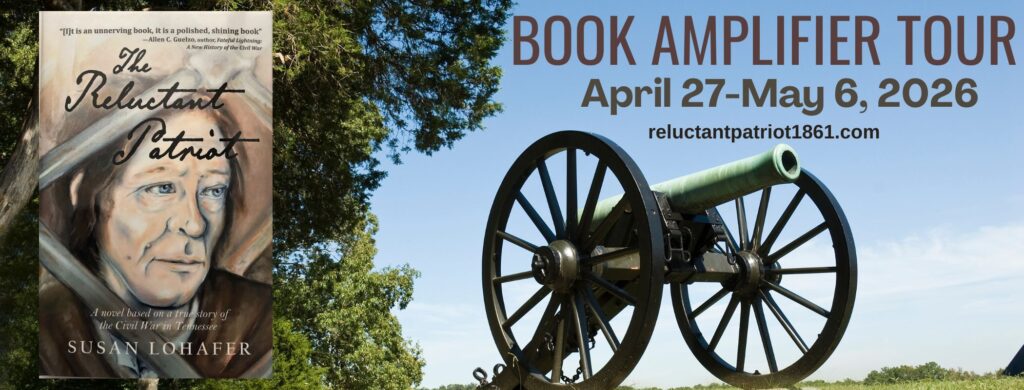
Not every part of the Civil War was loud or immediate. In some places, it unfolded slowly—through divided households, strained trust, and the growing sense that staying neutral might not be possible for long. In The Reluctant Patriot, Susan Lohafer focuses on that kind of tension as it builds.
In East Tennessee during the Civil War, divisions within communities created an environment where loyalties were constantly questioned. Harrison Self, a farmer determined to remain neutral, believes he can keep his life separate from the conflict surrounding him.
That belief begins to collapse when his son is linked to a Unionist conspiracy to burn Confederate railroad bridges. The resulting arrests and trials bring the conflict directly into his life, exposing him to suspicion and scrutiny.
Accused of treason, Harry is drawn into military courts where outcomes depend heavily on testimony and shifting allegiances. In a system where justice is uncertain and trust is fragile, he must navigate a reality that offers little stability. As the situation unfolds, the story explores how neutrality, once seen as protection, becomes something far more complicated.
A father. A son. A war that turns neighbor against neighbor.
In the divided mountains of East Tennessee, loyalty isn’t a matter of politics-it’s a matter of survival.
Harrison Self is a farmer who wants nothing to do with the Civil War. He believes in staying out of it, keeping his land, and protecting his family. But when his teenage son is drawn into a dangerous Unionist plot to burn Confederate railroad bridges, that distance collapses overnight.
Within days, Harry is arrested, accused of treason, and thrown into a system where trials are little more than theater and a single accusation can end in the noose.
What follows is not a battlefield story, but something closer, more dangerous. A world where neighbors watch each other too closely, where loyalties shift without warning, and where survival depends on choices no one should have to make.
Inspired by the true story of Harrison Self and the 1861 East Tennessee bridge burnings, The Reluctant Patriot is a work of Civil War historical fiction that brings to life a lesser-known chapter of American history-one where the war was fought not just between armies, but within families and communities.
As violence closes in and trust erodes, Harry is forced to confront the question he’s spent his life avoiding: what do you stand for when staying neutral is no longer an option?
Rich in historical detail and grounded in real events, this is a story of divided loyalties, moral courage, and the quiet, devastating cost of war-perfect for readers drawn to character-driven historical fiction and overlooked stories from the Civil War era.
Enjoy an Excerpt
As he stepped carefully among the saddled horses, Harry could hear them moving their hobbled weight in the gloom. Their warm breath clouded the November chill. Here and there, he stroked a muscled neck, lifting the nap of coarse hair. In the dark, he was wary of their stamping hooves. “Pay me no mind,” he whispered. Time was short, and yet he slowed in their midst, feeling their inner heat, their careless strength, their indifference to the road they traveled. They were as tolerant of him as if he’d once had four legs.
Peering up into the heavens, he lost his gaze in the liquid dark, hoping to catch God’s eye. All he saw was the paleness above the tree line. All he knew was what he’d learned in half a century. Must be about nine, he judged, as if he’d heard nature’s clock chime. Then the pain flooded back, gushing through his veins and pooling in his stomach. How much simpler it would be if his toes were mashed to pulp. His heart on a spit wouldn’t satisfy Corniah if he failed to bring their son back.
Harry crossed the patch of swept earth and mounted the single stair. He leaned into the solid wood he’d helped Jake saw and plane and settle into place on hinges strong enough to stop a bull. The planks gave an inch, then resisted, heaving with the crowd on the other side.
Harrison Self firmed his jaw. This was his brother-in-law’s house, where, on any other day, he could enter without knocking. From his own front door, it was only a mile’s walk, though tonight he’d forced Castor to a gallop that surprised them both. Nor had he expected what followed. To be standing on this doorstep, fighting to gain a toehold, was like milking a wooden cow. If you had sense, you lost interest.
But he couldn’t give up. They had his son in there, he was sure of it, and there was no going home without Hugh. When an opening appeared, he lodged his foot in the crack. They would not keep him out, no, they would not, though earlier in the day he’d refused to be one of them, said it was none of his affair. “Only a fool lights a match in his own barn,” he’d said, thinking he had clinched the argument.
Yet his son had trailed after them, so here was Harry, come to pull the child back, lest he burn himself.
No one’s fault, then, but Hugh’s, that his father looked ridiculous as he fought with the stubborn door, though no one saw him but the waiting horses. It was a sizable herd, and he reckoned most of the able-bodied men of Greeneville must be visiting the Harmons.
About the Author: 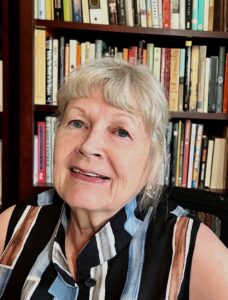 Susan Lohafer is the author of The Reluctant Patriot, a historical novel based on true events from the Civil War in East Tennessee.
A graduate of Harvard University (B.A., magna cum laude), Stanford University (M.A. in Creative Writing), and New York University (Ph.D. in American Literature), she spent her academic career at the University of Iowa, where she specialized in short fiction theory and narrative structure.
Her previous books include Coming to Terms with the Short Story and Reading for Storyness: Preclosure Theory, Empirical Poetics, and Culture in the Short Story, as well as the co-edited volume Short Story Theory at a Crossroads. Her shorter works have appeared in publications such as The Southern Review, and a 2011 essay was on the ‘Notable’ list in The Best American Essays.
She lives in Tennessee.




Speak Your Mind