Long and Short Reviews welcomes Gabriel Tate, author of MEEKS and THE RANLEIGH TAPES.
What inspired you to start writing?
The original idea for Meeks came to me in my early twenties. It wasn’t very well developed, but I thought it was solid. Since I wasn’t a writer, I used to offer it to friends who were writing or starting out in filmmaking. None of them took me up on it. That’s where the whole Ranleigh Meeks story began, although I had no idea then who Ranleigh Meeks was. I’ve basically been expanding on that idea ever since.
How long have you been writing?
I started writing Meeks in October 2019, when I was fifty. I finished the first draft on May 4, 2020, about seven months later. There were six more drafts after that. Starting late meant I came to writing with a lot of life behind me, including nearly twenty years of sobriety at the time.
What advice would you give a new writer just starting out?
Write about what you know. Draw on places you know or have been, places that inspire you. But consistency is the most important thing. Write every day until the first draft is done.
Do you ever suffer from writer’s block? If so, what do you do about it?
If I’m writing a chapter and getting tangled up, and I don’t know where to go, I stop that chapter and move to the next one and the next setting. Momentum is important to me. If something is blocking that momentum, I drop it and keep going elsewhere.
Who is your favorite author and why?
Stephen King is one of my favourite authors. His work influenced me to tell the story straight, without a lot of flourish. I also admire Cormac McCarthy’s directness and read Philip Roth and Jack Kerouac.
What, in your opinion, are the most important elements of good writing?
Honesty makes the best writing. Authenticity is key. Writing that really works shows you a world in its entirety and captures the essence of its characters. What doesn’t work for me is writing full of clichés, with no originality and an overuse of ten-dollar words.
How do you develop your plot and characters?
With Meeks, I had a basic idea I had been carrying around for years. Other than that high-level framework, I let the story guide me. I let Ranleigh guide me. The characters came easily, but getting the timelines right was tricky business. I write the entire rough first draft and fix it later.
What comes first, the plot or characters?
The human experience draws me toward character-driven stories, but my first novel is also very structured as it relates to plot. With Meeks, the basic premise came first, but Ranleigh became the force that guided the story once I began writing.
Tell us something about your newest release that is NOT in the blurb.
The Ranleigh Tapes centres on Ranleigh doing his fifth step in a twelve-step program. Before I wrote the book, I wrote out his fourth step, his written inventory, to guide the narration. Ranleigh is telling his story, and it is not a flattering one. Ron is the man listening.
Are you working on anything at the present you would like to tell us about?
I’m working on the final installment of the Meeks trilogy. The third book is titled Echo and is slated for release in late 2027.
What are you reading now?
I’m currently rereading Underworld by Don DeLillo.
What books or authors have most influenced your own writing?
Stephen King, Cormac McCarthy, Philip Roth and Jack Kerouac are major influences. King influenced me to tell the story straight, without a lot of flourish. McCarthy’s directness has influenced me too. More broadly, I am drawn to writers who create an entire world while remaining honest about their characters.
Describe your writing space.
For The Ranleigh Tapes, I set up a little writing space out back in the garage, at an actual workbench. I surrounded myself with things that inspired me, including a poster of Meeks and the letter M that I was able to snag from the original movie theater marquee photo shoot for my first cover. I liked writing that book in the evenings.
What is the hardest part about writing for you?
When the flow stops. If I’m writing a chapter and getting tangled up, I stop that chapter and move to the next one and the next setting. Momentum is important to me, so I would rather keep the book moving than sit there forcing one scene.
What do you like to do when you are not writing?
Reading. I’m in the library once a week, and I both buy and borrow books.
How many books have you written? Which is your favorite?
I’ve written two novels, Meeks and The Ranleigh Tapes. I’d have to say The Ranleigh Tapes is my favourite, because I wrote it. I am now working on Echo, the third and final book in the trilogy.
Do you hear from your readers much? What do they say?
The first review I ever got from a reader I didn’t know, who had very positive things to say about my first novel, was quite an experience. What stayed with me was not simply that the review was positive. It was the fact that someone with no connection to me had found the book, read it and felt strongly enough to say something about it.
Are you a plotter or a pantser?
Plantser. I begin with a rough idea and allow the characters and story to lead me. I do not plan every chapter in detail. I write the complete rough draft first and fix it later.
Where are you from and what do you love best about your hometown?
I was born and raised in Toronto, Canada, and I still live here. It is the world I know, so it naturally informs the places, rhythms and people in my fiction.
Do you listen to music while writing? If so what?
No. I never listen to music when I’m writing. I’m fully immersed in the world I’m creating.
Do you write in multiple genres or just one? If just one, do you ever consider straying outside your genre?
Meeks is a psychological thriller. I like the genre, and some of Stephen King’s work helped inspire me. But I very deliberately changed genres for The Ranleigh Tapes, and my upcoming book, Echo, will take another left turn. I’m complicated to market because I don’t like repeating the same thing over and over again.
What is something you’d like to accomplish in your writing career next year?
I want to make substantial progress on Echo, the final installment of the Meeks trilogy. It is slated for release in late 2027, and I want it to complete Ranleigh’s story without simply repeating either of the first two books.
Ranleigh Meeks believes a better life is waiting for him. He is right. That is where the trouble begins.
Meeks follows one man’s increasingly desperate pursuit of the person he believes he was meant to become. Darkly funny, emotionally raw and deeply unsettling, it asks how much of ourselves we can abandon before there is no one left to come home.
The tape recorder is running.
Ranleigh Echo Meeks has nowhere left to hide. In addiction recovery’s most brutal requirement, the Fifth Step, he must confess everything to his sponsor. Every secret. Every lie. Every moment that drove him to rock bottom.
In this devastating sequel to Gabriel Tait’s Meeks, The Ranleigh Tapes pulls you into the room for a confession so raw and unguarded, you won’t be able to stop listening.
About the Author: 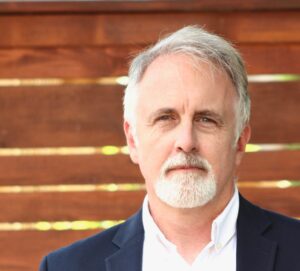 Gabriel Tait is a Toronto novelist and the author of Meeks and The Ranleigh Tapes. He began writing fiction at fifty, after carrying the original idea for Meeks since his early twenties. He started the first draft in October 2019 and completed it in May 2020, followed by six more drafts. His work explores addiction and identity, continuing Ranleigh Meeks’s story while changing genre and narrative form from one book to the next. Sober since October 27, 2001, he brings that perspective to his fiction. He is working on Echo, the final installment of the Meeks trilogy, planned for late 2027.





Speak Your Mind