The Asia Code-A Million-Dollar Handshake-How to Build Relationships that Win in Asia by Gadi Sznajder
Publisher: Vanguard Executive Publishing
Genre: Non-Fiction, Contemporary
Rating: 4 Stars
Reviewed by AstilbeForget AI. The Most Powerful Business Tool in Asia is Still a Handshake.
As technology accelerates and markets become more automated, the ability to build authentic human connections has become the most valuable and rarest skill in business. Nowhere is this truer than in Asia, where deals are made between people, not companies. A deep personal connection, grounded in cultural understanding, is what separates a transactional relationship from a transformative, multi-million-dollar partnership.
The Asia Code is the essential playbook for any professional looking to scale up their game in the world’s most dynamic markets. This is not a theoretical guide; it is a practical, hands-on toolkit for mastering the human element of business in Asia. It provides the cultural intelligence you need to decipher the unwritten rules that govern success across the three critical markets that will define the future of the global economy:
Japan
South Korea
ChinaInside, you will learn to:
Decode the Asian Mindset: Go beyond surface-level etiquette to understand the cultural logic that drives decisions in each country.
Master the Art of Connection: Build the trust and rapport that are the foundation of all successful ventures in Asia.
Navigate the Deep Waters: Turn cultural complexity from a barrier into your greatest strategic asset.
Close with Confidence: Learn the unwritten rules of negotiation, communication, and marketing that truly win deals.In a world that thinks AI will replace us, The Asia Code is a powerful reminder that in Asia, the human factor is, and always will be, the key to outstanding success. This is the one book every professional serious about succeeding in Asia must have in their toolbox.
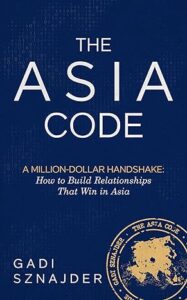

Sometimes unwritten rules are the most powerful ones of them all.
The most meaningful sections of this book, in my opinion, were the ones that described some of the weaknesses of western business culture and how building professional cross-cultural relationships through body language and understanding the subtext of written or spoken communication can help to correct these deficiencies. This is not at all something limited to the west either, and I appreciated the passages that were dedicated to exploring what westerners can teach people from these parts of Asia as well. Diversity builds strength and resilience in everyone.
There was a little too much repetition in this book for me to give it a full five-star rating. This was something I especially noticed in the case studies that discussed businessmen who understood the etiquette around topics like sharing business cards but did not internalize the importance of building genuine relationships with those one hopes to broker a deal with. While the points that were made were quite important, I did find myself wishing that other examples had been chosen to illustrate the author’s advice instead.
Building meaningful and genuine relationships isn’t a fast process, but it is an important one. I was not aware of this cultural difference between the west and certain parts of Asia, and I enjoyed learning more about how South Korea, China, and Japan approach business deals through the slow and methodical testing of a potential business partners character, ethics, and background instead of viewing those interactions as a transactional relationship.
The Asia Code – A Million-Dollar Handshake – How to Build Relationships that Win in Asia was filled with detailed and thoughtful advice.
















Speak Your Mind